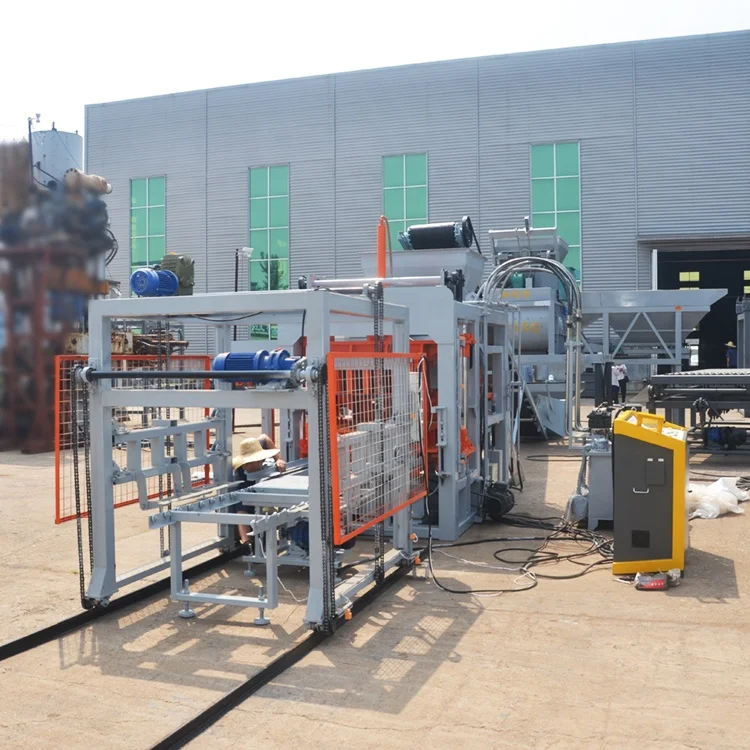
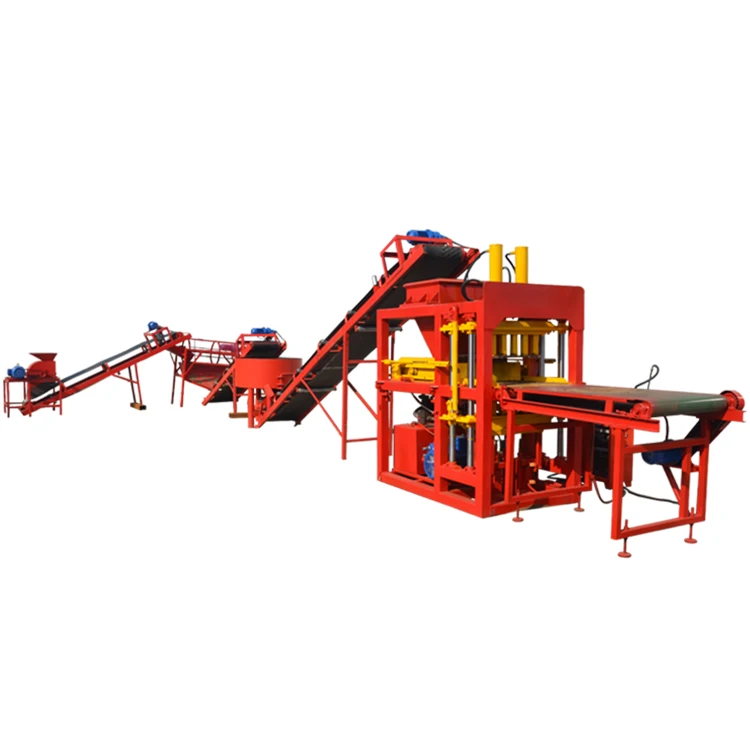
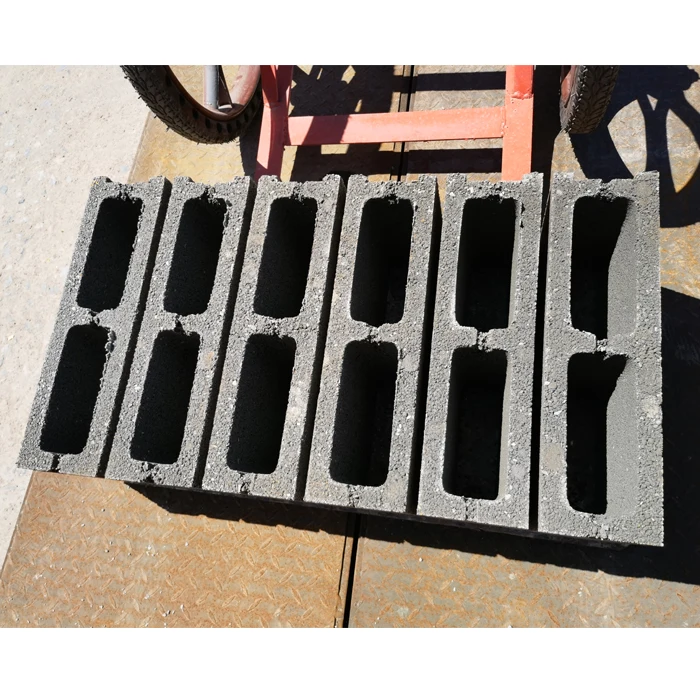
Single-Machine Focus — the QTJ4-35 anchors the entry tier of a range that scales from manual presses to fully automatic lines, letting buyers start small and step up without switching suppliers.
Technical Specifications
| Parameter |
Value |
| Model |
QTJ4-35 |
| Product Type |
Mechanical Manual Block Making Machine |
| Overall Dimensions (L×W×H) |
2050 × 1660 × 1900 mm |
| Main Vibration Form |
Motor Vibration |
| Vibration Force |
35 kN |
| Pallet Size |
850 × 450 × 20 mm |
| Moulding Cycle |
35–40 s (basis to be confirmed per block format and material) |
| Overall Power |
9.8 kW |
| Automation Level |
Mechanical manual with four-lead guiding, upper and bottom mould compression |
| Output Capacity (400×200×200 mm hollow block, 4 pcs/mould) |
360–408 pcs/h |
| Output Capacity (400×150×200 mm hollow block, 5 pcs/mould) |
360–510 pcs/h |
| Output Capacity (240×115×53 mm solid brick, 21 pcs/mould) |
1512–1890 pcs/h |
| Output Capacity (200×100×60 mm paver, 14 pcs/mould) |
1008–1260 pcs/h |
| Output Capacity (225×112.5×60 mm interlocking brick, 9 pcs/mould) |
648–810 pcs/h |
| Mould Formats Supported |
Hollow block, solid brick, paving block, interlocking brick |
| Control System |
Mechanical manual (no PLC) |
| Voltage & Frequency |
Configurable to buyer’s local supply (to be confirmed before production) |
Application Suitability
| Application |
Material or Output |
| Small-scale hollow block production |
Cement, sand, crushed stone aggregate — 400×200×200 mm and 400×150×200 mm formats |
| Solid clay-format brick runs |
Cement and fine aggregate blends — 240×115×53 mm standard brick |
| On-site paver production for housing projects |
Cement, sand, and pigment mixes — 200×100×60 mm interlocking pavers |
| Interlocking brick for retaining walls |
Cement and graded aggregate — 225×112.5×60 mm format |
| First-plant entrepreneurs evaluating block formats |
Multiple mould swaps within a single shift to test market demand |
Why the Capacity Number on the Quote Sheet Is Not the Whole Story
Every output figure here is tied to a specific block size, cavity count, and cycle range — because a single "pieces per hour" number without those details tells you nothing about what your plant will actually produce.
When I first started doing after-sales work in the Pearl River Delta, the most common call I got was from buyers who had purchased a machine rated at a certain hourly output, only to find their daily volume fell far short once production started. The reason was almost always the same: the quoted capacity assumed a small solid brick format, but the buyer’s market was buying hollow blocks. A QTJ4-35 block machine manufacturer should make this distinction visible before the contract is signed, not after the container arrives. [NEED_CITE: mismatch between quoted and actual block output in small plant operations]

Where the QTJ4-35 Sits in the Full Machine Range
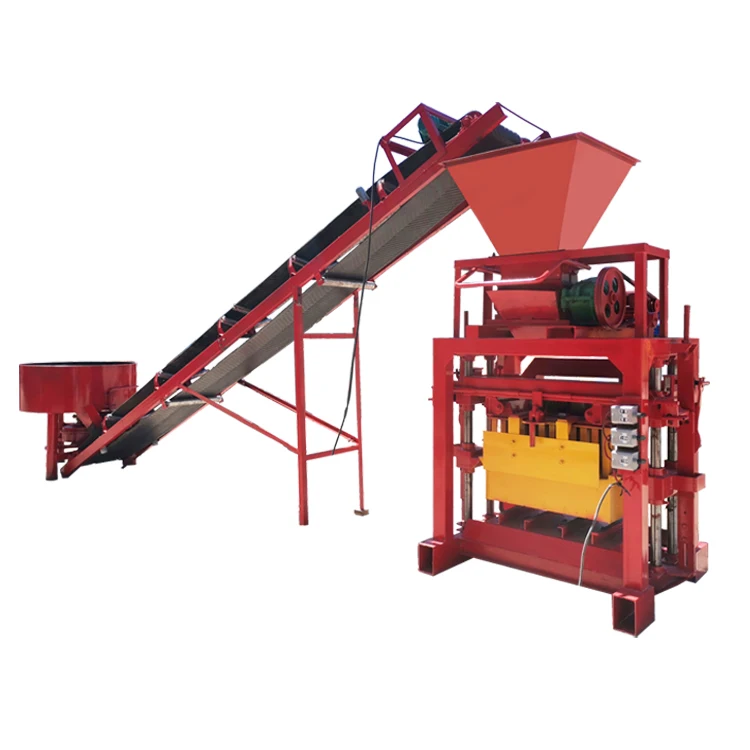
The QTJ4-35 occupies the entry tier of the Shiyue block machine lineup. It is a mechanical manual press — no PLC, no automatic pallet feeder, no stacker. Buyers operate the mould compression and pallet handling by hand, which keeps the initial investment low and the electrical demand at just 9.8 kW. For an entrepreneur setting up a first block plant or a contractor who needs to produce pavers on a specific job site, this machine provides a starting point without locking you into a large fixed installation.
The Upgrade Path That Keeps the Same Mould Family
What makes the entry tier meaningful is that it connects upward. When your volume grows past what a manual press can deliver in a single shift, the same Shiyue range offers semi-automatic configurations with pallet feeding and higher vibration force, and fully automatic lines with batching, stacking, and cubing. The mould formats — hollow block, solid brick, paver, interlocking brick — carry across tiers, so the QTJ4-35 block machine manufacturer relationship does not end when you outgrow the first machine. [NEED_CITE: block plant upgrade paths from manual to automatic production lines]
Reading the Specifications Against Your Actual Production Needs
The 35 kN vibration force and motor-driven vibration system on the QTJ4-35 are matched to the 850 × 450 × 20 mm pallet size. This pallet dimension determines how many blocks you get per cycle: four cavities for a 400×200×200 mm hollow block, but twenty-one cavities for a 240×115×53 mm solid brick. The cycle time of 35–40 seconds applies across formats, but actual throughput depends on how quickly your operators can handle pallets manually. The four-lead guiding system with upper and bottom mould compression keeps block density consistent across the pallet surface, which matters when your local building code requires minimum compressive strength.
What Happens When the Mould Does Not Match Your Market
I have watched buyers spend months negotiating price and lead time, only to arrive at commissioning and discover that the mould included in the quotation produces a block format their local market does not buy. The machine runs fine, but the blocks sit in the yard. On a mechanical manual press like the QTJ4-35, mould change is a physical process involving bolts and alignment — it is not a quick-release system. If you need to produce multiple formats in a single shift, you should know the changeover time before you commit. [NEED_CITE: mould change procedures on mechanical manual block presses]
Why Buying Here Is Different from Assembling a Line from Separate Sources
The QTJ4-35 is specified as one system — press, mould, pallet, and handling are matched to each other rather than sourced from different suppliers and forced to work together. The vibration force, pallet size, and mould cavity count are calculated against your target block format and local aggregate, not pulled from a catalogue default. Mould design covers the formats your market actually sells, and custom drawings are available if your region uses a non-standard dimension. Voltage, frequency, and control language are confirmed before production begins, so there are no surprises at commissioning.
Documentation & Verification
- Line layout showing QTJ4-35 footprint with pallet flow and curing area dimensions
- Capacity calculation sheet listing output per block format with cavity count and cycle time
- Mould drawing set with dimensional details for each supported block type
- Pallet specification matched to 850 × 450 × 20 mm size and curing rack spacing
- Factory test record on buyer’s target block format before dispatch
- Wear parts and mould replacement list for first-year maintenance planning
Installation, Commissioning & Support
- 2050 × 1660 × 1900 mm footprint requires a level concrete pad with drainage access
- 9.8 kW total power draw needs a dedicated circuit matching confirmed voltage and frequency
- Mechanical manual design means on-site assembly focuses on alignment of the four-lead guides
- First-run commissioning includes mould-to-pallet clearance adjustment and vibration tuning
- Operator training covers manual pallet handling sequence and mould changeover procedure
- Spare wear parts shipped with the machine to cover the first replacement cycle
Before You Request a Quote
To size the QTJ4-35 correctly for your project, share the block formats your market demands, the daily volume you need per format, and the raw materials available locally — especially aggregate type and grading. Confirm your site’s voltage and frequency, and whether your existing curing area and forklift are compatible with the 850 × 450 mm pallet. If you are comparing this machine against a higher tier, tell us what output gap you are trying to close.
Frequently Asked Questions
Q: How is the QTJ4-35’s hourly output verified, and which block format is each capacity figure based on?
A: Each output figure is stated alongside the exact block dimensions, cavity count per mould, and the 35–40 second cycle range. For example, 360–408 pieces per hour applies to a 400×200×200 mm hollow block at four pieces per mould. No single aggregate number is used — every capacity claim is tied to a specific format so you can calculate realistic daily volume for the blocks your market actually buys.
Q: Where does the QTJ4-35 sit in the full Shiyue machine range, and what does upgrading involve?
A: It is the entry-tier mechanical manual press. Upgrading means moving to a semi-automatic model with pallet feeding or a fully automatic line with batching and stacking. The mould formats carry across the range, so your existing tooling remains usable. The QTJ4-35 block machine manufacturer relationship continues through the upgrade without switching to a different equipment supplier.
Q: What voltage and frequency options are available, and how is this confirmed before shipment?
A: Voltage and frequency are configured to your local supply — this is confirmed during the quotation stage, before production begins. The QTJ4-35’s 9.8 kW power demand is low enough for most workshop-level installations, but the exact electrical specification must match your site to avoid commissioning delays.
Q: What plant footprint and utility connections does the QTJ4-35 require compared to higher-tier models?
A: At 2050 × 1660 × 1900 mm, the QTJ4-35 fits into a workshop bay that would not accommodate a full automatic line. It needs a level concrete pad, a dedicated power circuit at the confirmed voltage, water for the mix, and a curing area sized for the 850 × 450 mm pallets. No compressed air or hydraulic power unit is required for the mechanical manual configuration.
Q: Which mould formats are available, and how long does a mould change take on this mechanical manual model?
A: Supported formats include hollow block, solid brick, paving block, and interlocking brick, each with a specific cavity count. Mould change on the QTJ4-35 is a manual process involving bolt removal and guide alignment — it is not a quick-release system. If your production plan requires frequent format switches within a single shift, discuss the changeover procedure with your QTJ4-35 block machine manufacturer before ordering.

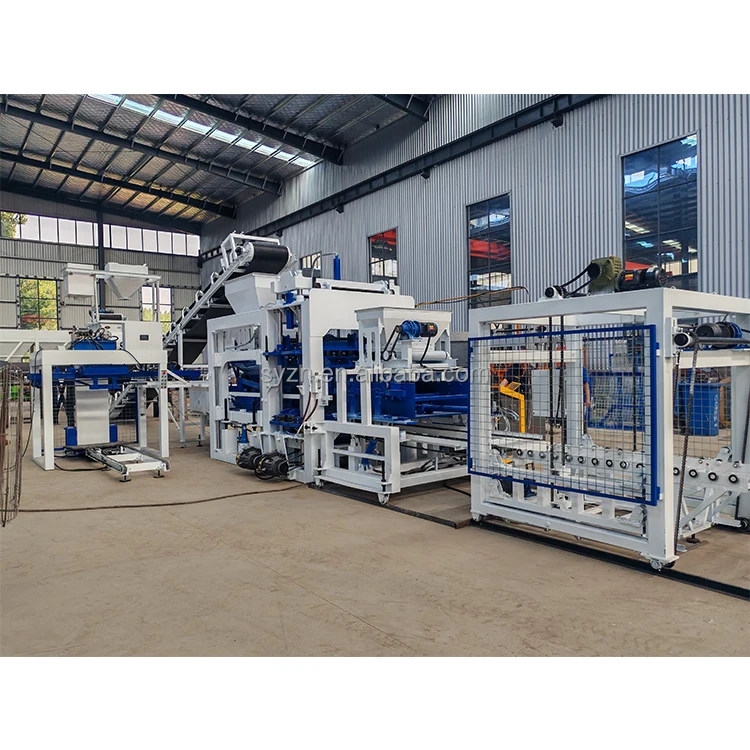 High quality block machine