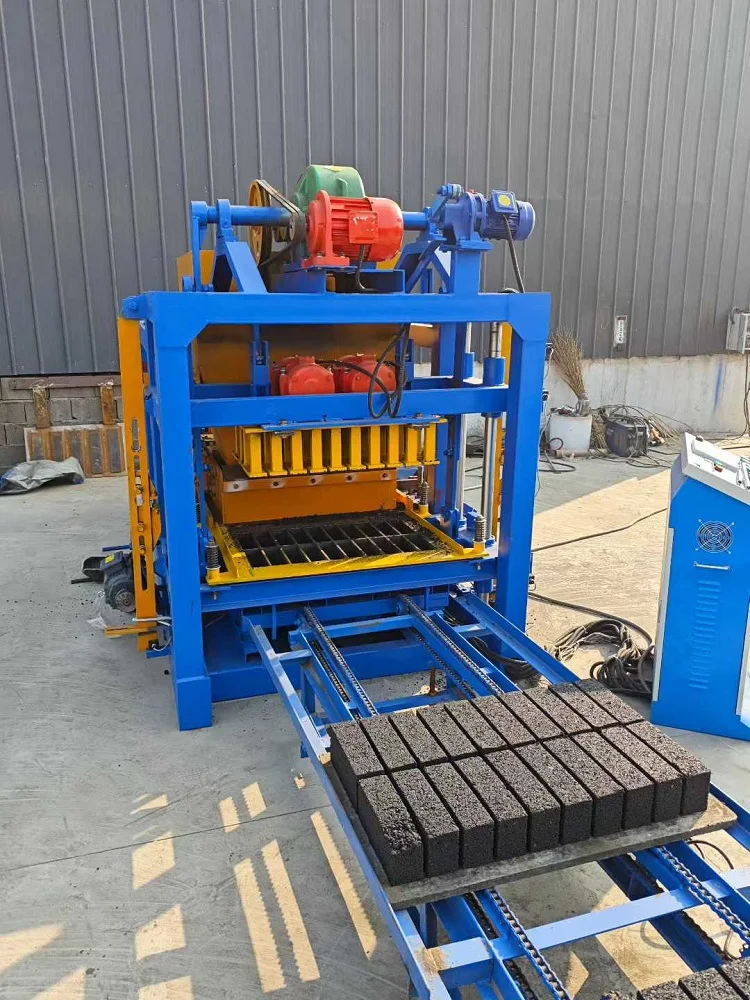
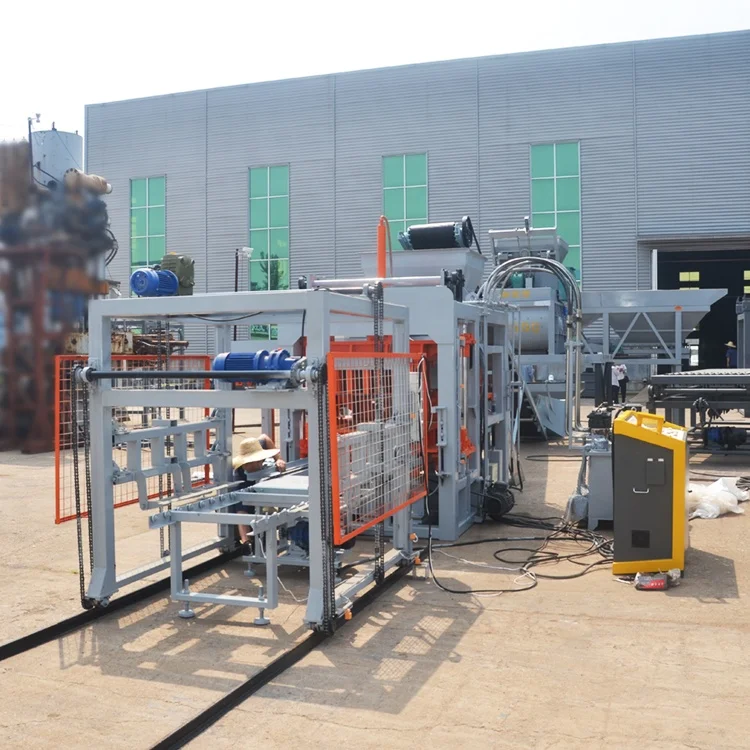
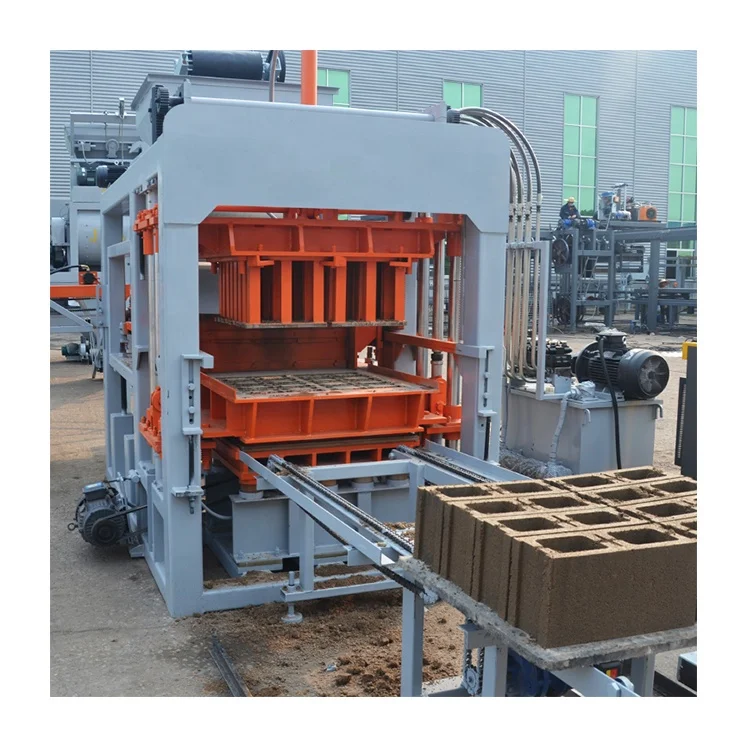
Positioning the Mid-Tier Correctly — the QTJ4-25D bridges the gap between manual pallet handling and high-capacity hydraulic lines, so buyers see the full range before committing to an investment level.
Technical Specifications
| Parameter |
Value |
| Model |
QTJ4-25D |
| Product Type |
Automatic Concrete Hollow Block Making Machine |
| Control System |
PLC controlled, fully automatic |
| Machine Power |
16.58 kW |
| Molding Cycle |
25 seconds |
| Capacity |
4600 pcs/8 hours (basis not stated in source — confirm block format) |
| Machine Weight |
5000 kg |
| Overall Size |
6400 × 1500 × 2700 mm |
| Pallet Size |
850 × 480 mm |
| Vibration System |
Vibration motor with large vibration box |
| Hydraulic Pressure |
Non-hydraulic (mechanical vibration based) |
| Motor Brand |
Siemens motor |
| Frame Construction |
Thickened steel |
| Automation Level |
Fully automatic — pallet feeding, material feeding and scraping, block stacker |
| Voltage |
Configurable to local voltage and frequency |
| Raw Materials |
Concrete, sand, cement, fly ash, crushed stone, lime, water |
| Warranty |
One year |
Application Suitability
| Application |
Material or Output |
| Hollow block production for medium-scale plants |
Crushed stone, cement, sand, fly ash blends |
| Solid brick manufacturing |
Sand-cement and fly ash-lime mixes |
| Paver stone and interlocking brick |
High-density aggregate with cement binder |
| On-site production for construction contractors |
Locally sourced aggregate and cement |
| First plant setup for entrepreneurs |
Standard concrete mix with common regional materials |
What "4600 Pieces per Shift" Actually Means for Your Format
Capacity figures only matter when tied to the exact block you intend to sell.
I spent years on the assembly floor before moving into technical sales, and the most common complaint I hear from buyers is that daily output fell short of what the brochure promised. The reason is almost always the same: the quoted capacity assumes a specific hollow block format, and the buyer’s target product is a different size or wall thickness entirely. When an automatic block machine manufacturer lists a single headline number without naming the reference format, that number becomes misleading the moment you swap moulds [NEED_CITE: block format impact on cycle-based capacity]. The QTJ4-25D completes a molding cycle in 25 seconds, but how many blocks that yields per shift depends entirely on the cavity count of the mould fitted — and cavity count changes with every format.

Where the QTJ4-25D Sits on the Range
This model occupies the mid-tier of the automatic block machine range. Below it, semi-automatic machines require operators to handle pallets and stacking by hand, which limits daily volume and increases labour cost. Above it, high-capacity hydraulic lines use pressurised compaction alongside vibration to achieve higher density and faster cycles — but they demand a larger investment and a bigger plant footprint. The QTJ4-25D offers full PLC automation with automatic pallet feeding, material scraping and block stacking, giving buyers a complete production loop without stepping into hydraulic press territory.
How Automation Level Defines Your Plant Layout
At this tier, the automatic block machine manufacturer configures the line so the press is never left waiting on manual pallet handling. Pallets feed in automatically, raw material is distributed and scraped across the mould cavity, and finished blocks are stacked without operator intervention. This matters because it removes the bottleneck that typically caps output on semi-automatic machines — the operator’s speed [NEED_CITE: automation level and output consistency in block production]. The trade-off is that supporting equipment such as the pallet return conveyor and stacker must be included in the initial layout, otherwise the automation loop is incomplete.
Vibration Box, Pallet Size and Frame Weight Explained
The QTJ4-25D relies on a vibration motor paired with a large vibration box rather than hydraulic pressure to compact the mix. This design choice places it firmly in the mechanical vibration tier of the range, meaning block density depends on vibration force amplitude, duration and the stiffness of the concrete mix. The 850 × 480 mm pallet size determines how many blocks fit per cycle and must match your existing curing racks and forklift fork spacing — a mismatch here forces a separate pallet purchase or a curing area reconfiguration. At 5000 kg with a thickened steel frame, the machine mass absorbs vibration energy that would otherwise travel into the foundation, so the floor slab must be poured to handle concentrated dynamic load at the mounting points rather than distributed static weight alone. The 16.58 kW total power draw requires a dedicated circuit with voltage and frequency confirmed before the motor and PLC are wired at the factory.
The Cost of Skipping Format-Level Capacity Checks
When a buyer orders based on a headline capacity number and the actual block format yields significantly fewer pieces per cycle, the shortfall compounds across every shift. The plant runs at full operating cost — power, labour, raw material — but output does not cover the volume commitments made to distributors or project timelines. Pallet handling and stacking equipment sized for the quoted capacity then sits partially idle, and the curing area fills unevenly because each cycle produces fewer blocks than planned [NEED_CITE: capacity shortfall and plant scheduling]. Rectifying this after installation means either accepting the lower throughput or investing in a different mould and recalibrating the entire cycle, which delays revenue while fixed costs continue.
Why Source This Tier Here
Block machinery is our single focus, which means the QTJ4-25D is specified as a matched system — machine, mould, pallet and handling equipment are designed to work together rather than assembled from separate suppliers. Every configuration is set against your actual mix design and local aggregate, not a catalogue default, because vibration parameters that work for one sand-cement ratio may fail with a different fly ash content. Mould design covers the formats your market sells, including custom drawings when standard cavity layouts do not fit. The automation level is selectable within the range, so a buyer can start with the QTJ4-25D’s full automation and move to a hydraulic tier later without replacing the entire supporting line. Installation support includes operator training so the team understands cycle settings, mould change procedure and daily maintenance from the first week.
Documentation & Verification
- Line layout drawing with capacity calculation broken down per block format you intend to produce
- Machine specification sheet listing Siemens motor rating, vibration motor specs and frame dimensions
- Mould drawing and format list confirming cavity count for each block type on the 850 × 480 mm pallet
- Pallet specification covering material, thickness and quantity matched to your curing rack spacing
- Voltage, frequency and PLC display language confirmation form signed before production begins
- Factory test record showing cycle timing and block sample output for your confirmed mix design
Installation, Commissioning & Support
- Foundation slab engineered for 5000 kg dynamic load at the vibration box mounting points
- Dedicated electrical circuit sized for the 16.58 kW total draw with confirmed voltage and frequency
- Machine arrives in shipping configuration with frame and vibration box reassembled on site
- PLC parameters calibrated to your raw material mix during commissioning with test cycles run
- Operator training covers mould change procedure, vibration force adjustment and daily inspection routine
- Wear parts list provided with reorder intervals for vibration motor components and mould liners
What to Share Before Requesting a Quotation
Tell us which block formats you plan to produce — hollow, solid, paver or interlocking — along with the exact dimensions for each. Share your target daily output per format and the raw material sources available in your region, particularly the aggregate type and any industrial by-products like fly ash. We also need your local voltage, frequency and the preferred PLC display language so the control system is configured before the machine leaves the factory.
Frequently Asked Questions
Q: Where does the QTJ4-25D sit compared to semi-automatic and hydraulic models on the range?
A: It occupies the mid-tier, offering full PLC automation with automatic pallet feeding and block stacking — capabilities that semi-automatic machines lack. High-capacity hydraulic models above it add pressurised compaction for higher density and faster cycles, but require a larger investment and plant footprint. The QTJ4-25D gives buyers complete automation without the capital commitment of a hydraulic line.
Q: What block format is the 4600 pcs per 8-hour shift based on?
A: That figure requires confirmation of the exact block format, wall thickness and mould cavity count. A 400 × 200 × 200 mm hollow block yields a different piece count per cycle than a smaller solid brick. Request the capacity sheet broken down per format so you can see the realistic output for your specific product before placing an order.
Q: What plant footprint does this tier need compared to the next tier up?
A: The QTJ4-25D measures 6400 × 1500 × 2700 mm, and the full line including pallet return and stacker requires additional floor space for material feeding and block curing. The next hydraulic tier up typically demands a larger footprint for the press itself plus higher-capacity supporting equipment. Confirming your available floor area early ensures the line layout fits without compromising workflow.
Q: Can I start with the QTJ4-25D and move to a higher tier later?
A: The automation level and supporting equipment within the range are designed to allow progression. Starting with the QTJ4-25D establishes your pallet handling, material feeding and stacking infrastructure. When you later step up to a hydraulic press tier, portions of the supporting line can be retained, reducing the total cost of the next investment.
Q: How do voltage and PLC language options work across the range?
A: Voltage and frequency are configurable to your local supply standard, and the PLC display language is set before production based on your confirmation. This applies across every tier in the range, so whether you start with the QTJ4-25D or move to a different model later, the control system arrives ready for your electrical infrastructure and operator language.

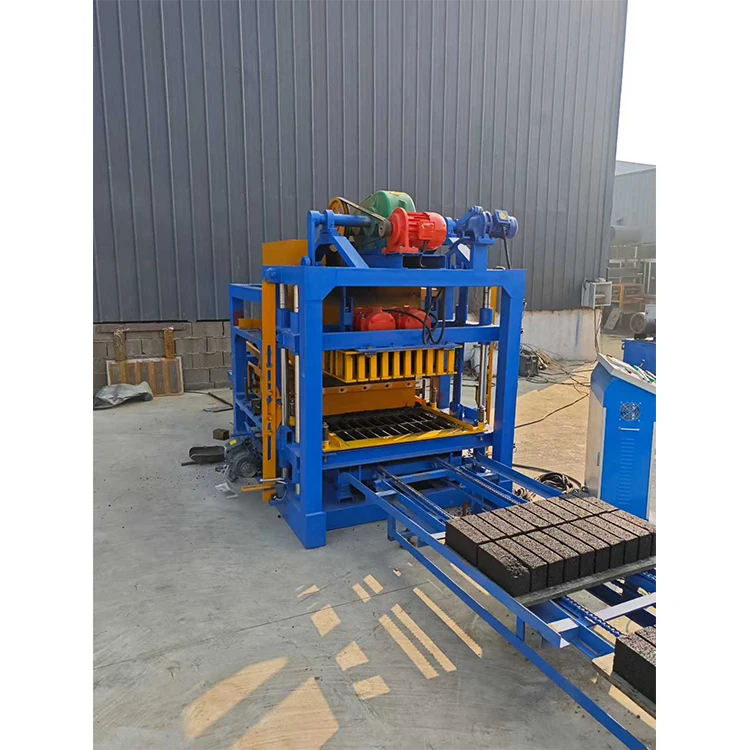
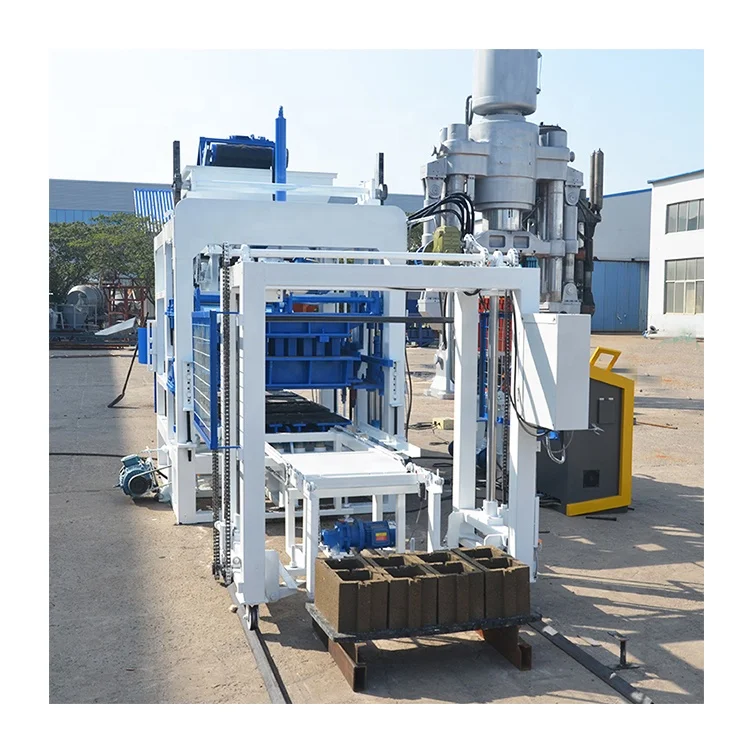 Automatic block machine