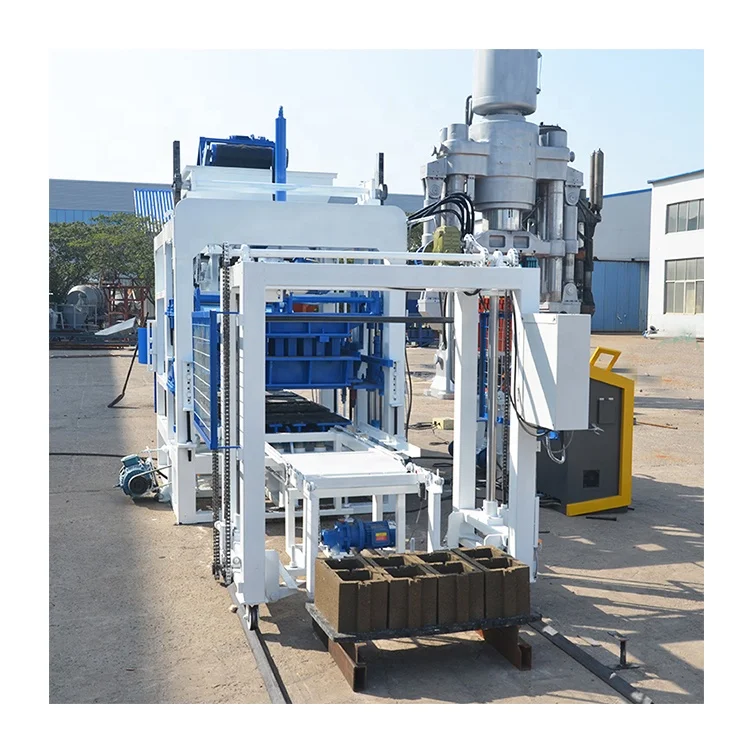
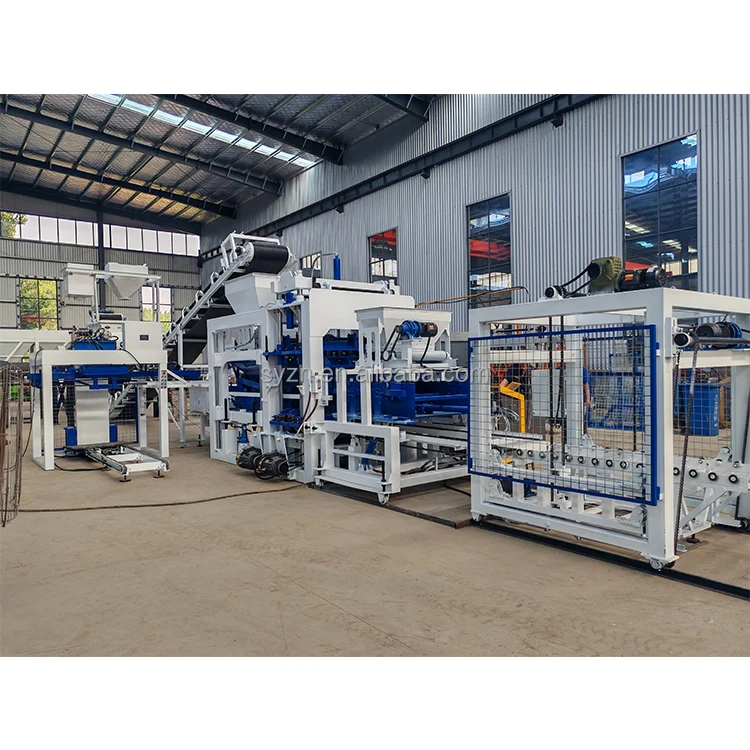
System-Matched Block Line Sizing — every QTJ4-25 configuration ships as a press, mixer, pallet, and mould set verified against your actual block format rather than a catalogue default.
Technical Specifications
| Parameter |
Value |
| Model |
QTJ4-25 |
| Product Type |
Semi-Automatic Concrete Block Making Machine |
| Overall Dimensions (L×W×H) |
6400×1500×2700 mm |
| Molding Cycle |
25 s |
| Vibration Frequency |
2800–5100 r/min |
| Exciting Force |
60 kN |
| Total Power |
17.9 kW |
| Mixer Model |
JQ350 |
| Pallet Size |
850×550×20 mm |
| Total Weight |
2500 kg |
| Automation Level |
Semi-automatic |
| Output — Hollow Block 390×190×190 mm |
4 pcs/mould, 480 pcs/h, 3800 pcs/8 hr |
| Output — Hollow Block 400×150×200 mm |
5 pcs/mould, 600 pcs/h, 4800 pcs/8 hr |
| Output — Solid Brick 240×115×53 mm |
18 pcs/mould, 2100 pcs/h, 17000 pcs/8 hr |
| Raw Materials |
Crushed stones, sand, cement, dust, fly ash |
| Control System |
(basis to be confirmed) |
| Voltage & Frequency |
(basis to be confirmed) |
| Hydraulic Pressure |
(basis to be confirmed) |
| Stacking Method |
Manual with pallet and trolley |
Application Suitability
| Application |
Material or Output |
| Small block plant producing 6-inch and 8-inch hollow blocks |
Crushed stone, sand, and cement mix |
| Contractor on-site block production for masonry walls |
Fly ash, dust, and local aggregate blends |
| First-time entrepreneur building a block yard |
Solid brick 240×115×53 mm at 18 pcs per mould |
| Distributor adding paver formats to existing range |
Paver moulds swapped onto the same host press |
What the QTJ4-25 Capacity Number Actually Means
Real output depends on which block you press, not the headline cycle time.
I spent years watching buyers compare machines on a single "pieces per hour" figure that silently assumed a small brick mould. When those same buyers switched to the 8-inch hollow block their market actually demanded, daily volume dropped and the semi-automatic concrete block making machine manufacturer they trusted looked unreliable. With the QTJ4-25, each output row above names the exact block size, cavity count, and mould behind it, so your production plan starts from a number you can verify on day one. [NEED_CITE: block format assumptions in machine quotations]

Where the QTJ4-25 Fits Across the Full Range
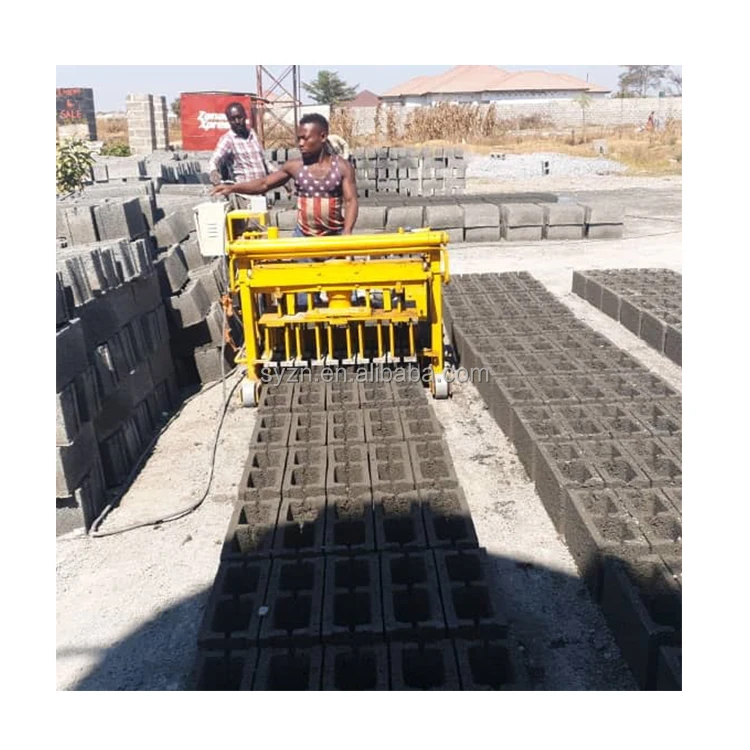
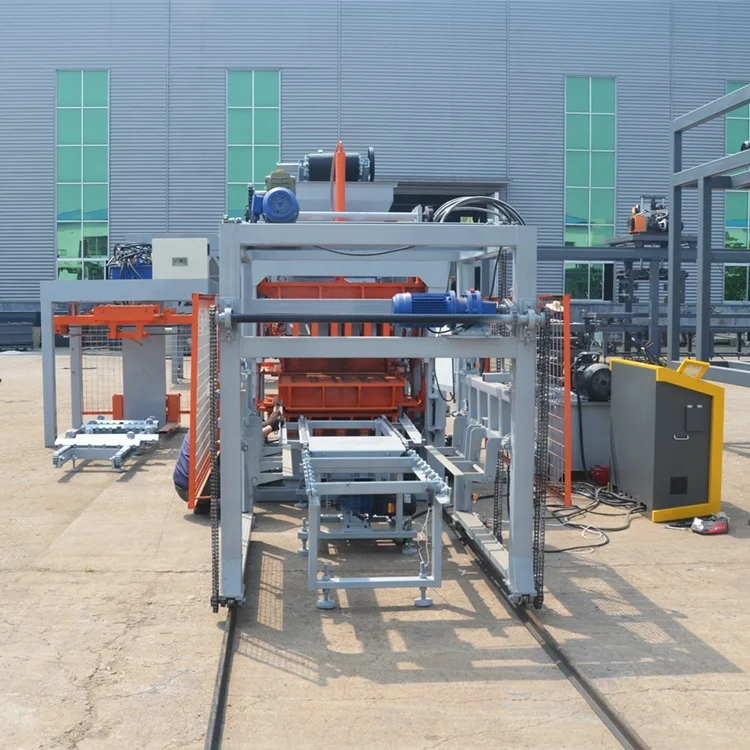
The Shiyue line spans mobile egg-laying presses, mid-tier semi-automatic machines, and high-capacity fully automatic plants. The QTJ4-25 occupies the semi-automatic tier — a fixed-position press with vibration and mechanical compaction, fed by the JQ350 pan mixer and discharging onto 850×550 mm pallets moved by hand trolley. Buyers at this tier are typically setting up a first production yard or adding a second line alongside an existing operation.
Choosing Your Automation Level Without Over-Building
A semi-automatic concrete block making machine manufacturer often faces pressure to quote the largest press available. We size the QTJ4-25 against your daily target per format, not against a theoretical maximum. Pallet handling stays manual at this tier, which keeps capital cost contained while still leaving a clear path to add automatic stacking and cubing later. The key decision is whether your curing area and labour force match manual pallet movement. [NEED_CITE: automation upgrade paths in block production]
How Vibration Force and Mould Cavity Count Shape Block Density
The 60 kN exciting force, adjustable between 2800 and 5100 r/min, drives aggregate particles into tight contact inside the mould box. On a 4-cavity hollow block mould that force concentrates per cavity differently than on an 18-cavity solid brick mould. Matching vibration frequency to your aggregate’s particle size and moisture content is where block strength consistency begins. A mix with high fines or clay content will absorb vibration energy differently than clean crushed stone, and the QTJ4-25’s frequency range gives the operator room to adjust on the shop floor.
The Cost of Skipping the Pallet and Curing Area Conversation
Arriving at a project site to find pallets that do not fit the curing racks you already built is a recurring complaint in this industry. The QTJ4-25 specifies 850×550×20 mm pallets — that dimension must match your trolley width, rack spacing, and forklift forks. If you source pallets locally to save freight cost, confirm thickness tolerance so they seat flat on the vibration table. Buyers who treat pallets as a commodity afterthought regularly lose output to breakage and uneven compaction in the first weeks of production. [NEED_CITE: pallet specification mismatches in block plant startups]
Why Buyers Source the QTJ4-25 From Shiyue
Block machinery is our single product focus, so the press, JQ350 mixer, mould set, and pallet specification arrive as one system rather than assembled from separate vendors. We set the configuration against your local aggregate and target block format before production begins — not after the container is loaded. Mould design covers the hollow block and solid brick sizes your regional market actually sells, and custom mould drawings are reviewed before steel is cut. Voltage, frequency, and control language are confirmed in writing so commissioning is not delayed by a wiring mismatch. Operator training at your site covers mould change, vibration adjustment, and daily maintenance routines.
Documentation & Verification
- Capacity calculation document naming block format, cavity count, and mould assumed
- Machine specification sheet with vibration force and power values for your order
- Mould drawing and format list covering every block size in your quotation
- Pallet dimension and material specification matched to your curing rack layout
- Voltage and frequency confirmation sheet signed before production begins
- Factory test record with blocks pressed using your confirmed mix ratio
Installation, Commissioning & Support
- Foundation pad must be level and cured before the 6400×1500 mm frame is positioned
- 17.9 kW total load requires a dedicated circuit matching your site voltage
- Press arrives partially assembled; vibration motor and mixer are bolted on-site
- First run tests every mould cavity with your local aggregate to verify cycle time
- Operator training covers 25-second moulding cycle adjustment and pallet handling sequence
- Wear parts list identifies vibration springs and mould liners for your reorder schedule
What to Share Before Requesting a Quotation
Send us the block sizes your market currently buys, the daily volume you need per format, and a sample or description of your local aggregate including fines content. Confirm your site voltage and frequency, the control panel language your operators read, and the curing area dimensions you have available. With those details the QTJ4-25 configuration and pallet quantity recommendation can be sized to your actual yard, not a generic layout.
Frequently Asked Questions
Q: How is the output capacity calculated, and which block format does each number assume?
A: Every capacity figure for the QTJ4-25 is tied to a named block size and mould cavity count — for example, 480 pieces per hour assumes the 390×190×190 mm hollow block on a 4-cavity mould at a 25-second cycle. Different block formats produce different hourly and daily volumes, which is why the specification table lists each format separately.
Q: What voltage, frequency, and control language options are available for my country?
A: Voltage and frequency must be confirmed before production so the wiring and motor specification match your local grid. Control panel language is also agreed at the quotation stage. Raise these details early in your inquiry to avoid commissioning delays when the machine arrives.
Q: Can I start with the QTJ4-25 semi-automatic and add automation later?
A: Yes. The QTJ4-25 operates with manual pallet handling at this tier, keeping initial investment contained. Automatic pallet feeding, stacking, and cubing modules can be added to the line later as your output volume grows and your curing yard layout supports the additional stations.
Q: What pallet material and quantity do I need for the QTJ4-25?
A: Pallets are specified at 850×550×20 mm and should be ordered in quantities matched to your curing cycle — typically three hundred to five hundred pieces so pressed blocks can rotate through curing without bottling the press. Local sourcing is possible if thickness tolerance and flatness meet the vibration table requirements.
Q: How do I know if my local aggregate works with this machine?
A: Send us a description or sample of your sand, crushed stone, or fly ash, including any fines or clay content. High fines can extend the moulding cycle and reduce density. We adjust vibration frequency and compaction settings against your actual material before finalising the QTJ4-25 configuration.

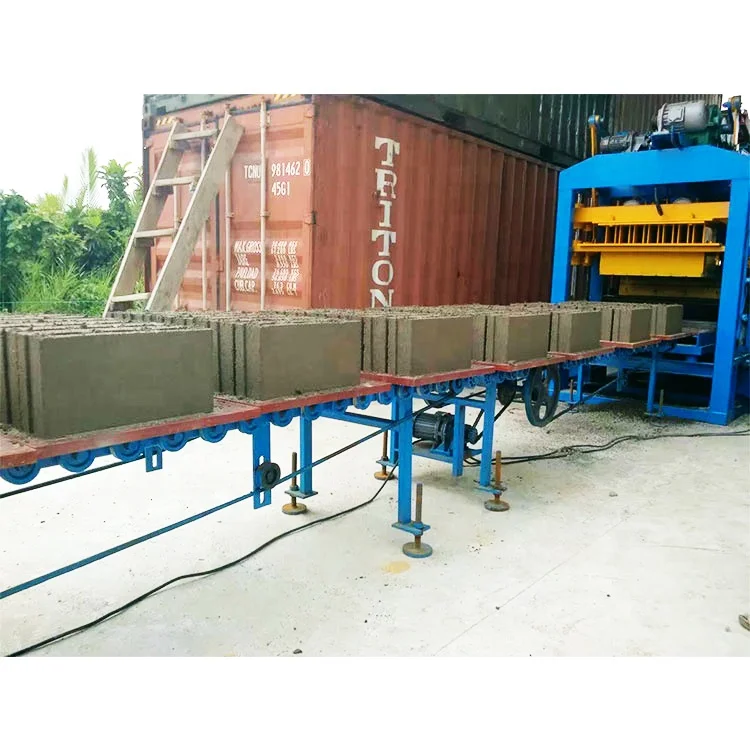
 High quality block machine