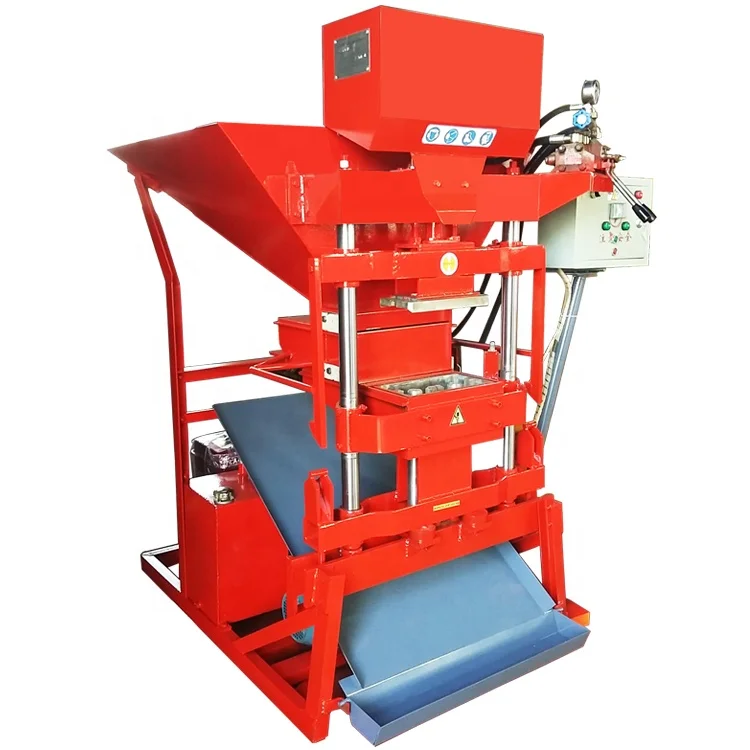
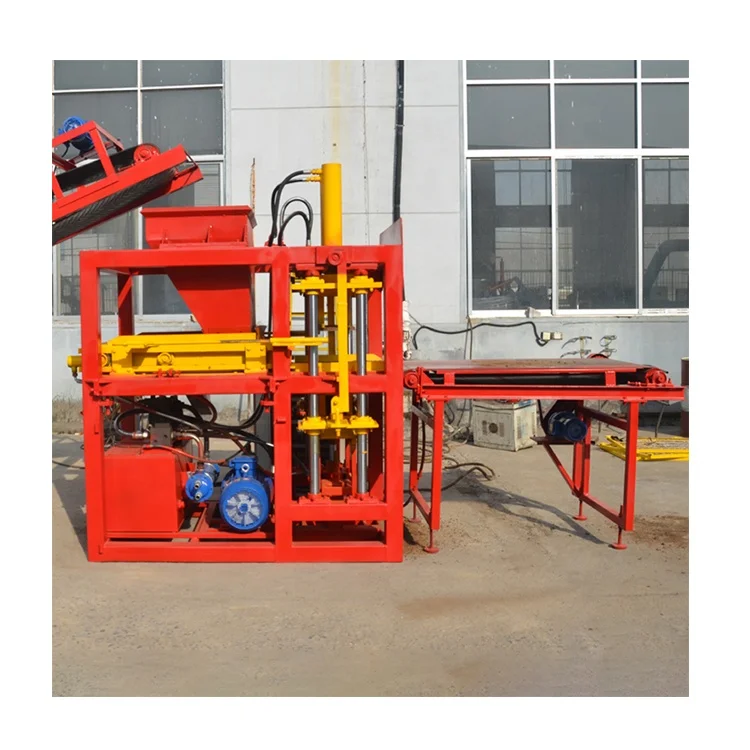
Single-focus machinery — every QTJ4-25 configuration we ship pairs the press, mould and pallet as one matched system, not a collection of separate components that never quite synchronize.
Technical Specifications
| Parameter |
Value |
| Model |
QTJ4-25 |
| Product Type |
Semi-Automatic Concrete Block Making Machine |
| Overall Dimensions (L×W×H) |
3000×1800×2680 mm |
| Total Mass |
3.5 T |
| Overall Power |
16.58 kW |
| Vibration Force |
60 kN |
| Main Vibration Form |
Platform Vibration |
| Vibration Frequency |
2800–4500 r/min |
| Pallet Size |
850×480 mm |
| Molding Cycle |
25 s |
| Demolding Method |
Mechanical |
| Guide Column |
Four-column, overlong guide design, chrome-plated surface |
| Frame Material |
National standard manganese steel |
| Applied Products |
Hollow blocks, solid blocks, pavers, interlocking blocks, curbstone, colored pavers |
| Raw Materials |
Crushed stone, sand, cement, fly ash, gravel, slag, dust |
| Factory Area Required |
300 m² |
| Output Capacity |
580 pcs/h based on 400×200×200 mm hollow block, 4 pcs/mould |
| Output Capacity |
1400 pcs/h based on 240×115×90 mm brick, 9 pcs/mould |
| Output Capacity |
3300 pcs/h based on 240×115×53 mm solid brick, 21 pcs/mould |
| Daily Output (8 h) |
4640 pcs based on 400×200×200 mm hollow block |
| Daily Output (8 h) |
11200 pcs based on 240×115×90 mm brick |
| Daily Output (8 h) |
26400 pcs based on 240×115×53 mm solid brick |
| Voltage & Frequency |
Configurable — confirm before order |
| Control System |
Available with PLC or relay logic — confirm before order |
| Automation Level |
Semi-automatic, mechanical demolding, manual pallet handling |
| Warranty |
1 year for the whole machine, excluding spare parts |
Application Suitability
| Application |
Material or Output |
| Hollow block production for residential walls |
Crushed stone, sand and cement at 400×200×200 mm format |
| Solid brick runs for load-bearing structures |
Fly ash, gravel and cement at 240×115×53 mm format |
| Interlocking paver runs for driveways and walkways |
Colored aggregate and cement blends |
| On-site block supply for housing projects |
Local aggregate, sand and cement with mobile pallet circuits |
| Small distributor format expansion |
Curbstone and specialty shapes on 850×480 mm pallets |
Why "Pieces per Hour" Tells Only Half the Story for a QTJ4-25 Semi-Automatic Block Machine
Every output figure on this page is anchored to a named block format and mould cavity count — no generic peak numbers.
Buyers comparing quotations often see a single cycle-per-hour rating and assume it applies across every block they plan to produce. In reality, a 25-second cycle yields markedly different hourly counts depending on whether the mould produces four hollow blocks or twenty-one solid bricks per press. I once saw a West African contractor plan an entire housing phase around a catalogue number, only to discover his local high-clay sand slowed the cycle and reduced block density below the structural standard he needed. The QTJ4-25 semi-automatic block machine manufacturer you choose should always tie capacity to the exact format and raw material you will use. [NEED_CITE: common block format standards across export markets]

Where the QTJ4-25 Sits on the Machine Range
The QTJ4-25 occupies the semi-automatic tier — above mobile egg-laying units that cure blocks on the ground, below fully automatic lines with robotic stacking and cubing. Its 16.58 kW total power draw and 3.5-tonne mass keep installation demands modest, while the 850×480 mm pallet size leaves room for growth into larger formats later. Buyers moving up from manual production find the mechanical demolding and 25-second cycle a practical step without the capital outlay of a full hydraulic automatic line.
Matching Automation Level to Your Labour Reality
Semi-automatic operation means the press handles vibration, compaction and demolding, while operators move pallets between the press and the curing area by hand. This keeps the QTJ4-25 semi-automatic block machine straightforward to maintain — no hydraulic hoses, no stacker sensors, no PLC tuning on the curing racks. For plants where local technician availability is limited, mechanical demolding with the four-column chrome-plated guide system gives operators something they can inspect and adjust with basic tools. [NEED_CITE: typical maintenance requirements for mechanical versus hydraulic block presses]
Reading the Specs That Shape Daily Output
The 60 kN vibration force delivered through the platform, combined with dual super motors and an upper mould vibration motor, determines how densely the mix compacts before demolding. Higher density means stronger blocks but also longer curing times if the mix moisture is not matched. The 850×480 mm pallet size must align with the curing rack spacing and the forklift already on site — ordering pallets that are too large for the curing yard forces an expensive re-layout. Vibration frequency adjustability between 2800 and 4500 r/min lets the operator tune the cycle to the aggregate grading available locally, which is essential when sand sources change between dry and wet seasons. The manganese steel frame and overlong guide columns resist the lateral forces that distort lighter machines over thousands of cycles.
The Cost of Skipping the Voltage Conversation
I have seen QTJ4-25-class machines arrive on site with 380 V motors wired for a 50 Hz supply, only to find the local grid runs at 60 Hz. The result is a motor that spins faster, overheats and burns out within weeks — downtime that no warranty clause fully covers. Confirming voltage, frequency and control language before production starts avoids this entirely. When the control panel arrives in a language the operator cannot read, every parameter adjustment becomes guesswork, and the semi-automatic block machine that was supposed to simplify production ends up producing inconsistent blocks. [NEED_CITE: voltage and frequency standards by export market]
What Buying Here Actually Means
Block machinery is our single focus, so the QTJ4-25 you receive ships with moulds and pallets specified as one matched set rather than sourced separately. Every configuration is checked against the buyer’s local aggregate and target block format, not pulled from a catalogue default. Custom mould drawings are available for formats the buyer’s market actually sells, including non-standard interlocking profiles. Automation level is selectable, so a buyer can start with manual pallet handling and add conveyor or stacker modules later as output grows. Factory testing runs the exact mould and pallet combination ordered, so the test record reflects the machine the buyer will operate on site.
Documentation & Verification
- Line layout drawing showing the QTJ4-25 footprint with curing rack and pallet circuit
- Capacity calculation sheet stating the block format assumed for every output figure
- Mould drawing and format list covering hollow, solid, paver and interlocking options
- Voltage, frequency and control language confirmation signed before production begins
- Factory test record run on the ordered mould and pallet size
- Packing photographs and customs documentation support
Installation, Commissioning & Support
- 300 m² factory area minimum, with level concrete floor rated for the 3.5 T machine mass
- Dedicated power circuit matching the confirmed voltage and the 16.58 kW total draw
- Machine arrives partially assembled; guide columns and vibration box bolted on site
- First-day commissioning covers vibration frequency tuning to the buyer’s mix design
- Operator training on mechanical demolding sequence and mould change procedure
- Wear parts list and mould inventory provided at handover
What We Need to Quote Accurately
To size the QTJ4-25 semi-automatic block machine correctly, share the block formats you intend to produce, your target daily output per format, the raw materials available locally, and the voltage and frequency at your site. If you already have curing racks or forklifts, tell us the pallet dimensions they accept so the 850×480 mm standard can be adjusted if needed.
Frequently Asked Questions
Q: How is QTJ4-25 capacity verified, and which block format does each output figure assume?
A: Every capacity figure we publish is tied to a named block size and cavity count — 580 pieces per hour assumes a 400×200×200 mm hollow block with four cavities, while 3300 pieces per hour assumes a 240×115×53 mm solid brick with twenty-one cavities. The capacity calculation document shipped with the machine states these assumptions clearly.
Q: Where does the QTJ4-25 sit compared to fully automatic and mobile models?
A: It occupies the semi-automatic tier: mechanical demolding with manual pallet handling, sitting above mobile egg-laying machines and below fully automatic lines with robotic stacking. This keeps power and maintenance demands moderate while still delivering consistent block density through platform vibration.
Q: What voltage, frequency and control options must be confirmed before production?
A: We need your local supply voltage, frequency and preferred control language before the machine enters production. The QTJ4-25 can be configured for various electrical standards, and the control system is available with PLC or relay logic depending on your maintenance capability.
Q: How much factory area and curing space does the QTJ4-25 require?
A: The press itself needs a 300 m² factory area including raw material storage and pallet circulation. Curing space depends on daily output and the block format; the line layout document we provide calculates the rack count based on the formats and cycle times you confirm.
Q: What mould formats are available, and how long does a change take?
A: Moulds cover hollow blocks, solid bricks, pavers, interlocking blocks and curbstones on the 850×480 mm pallet. Change time depends on the mould clamping type specified; we confirm the exact procedure and required tools during commissioning so operators can plan format switches within a single shift.

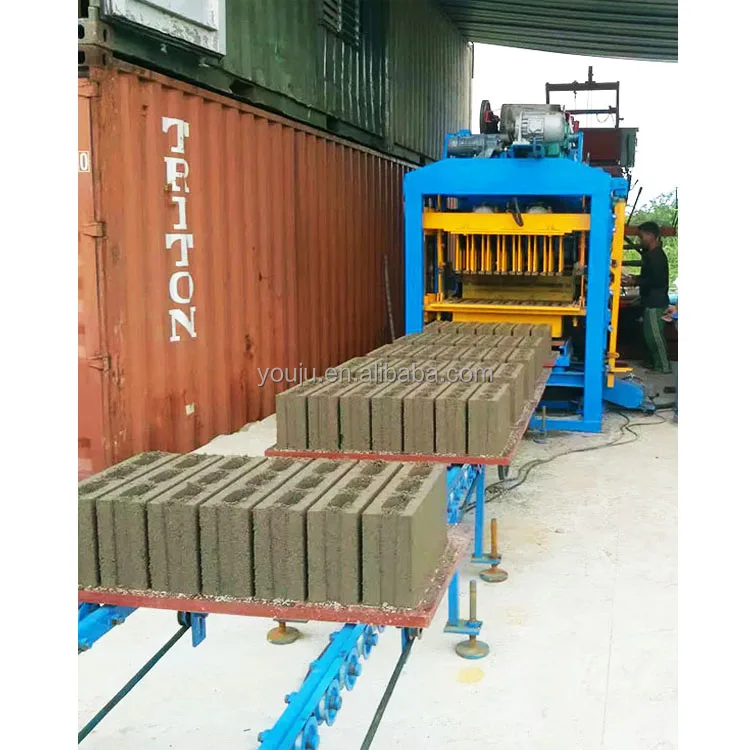
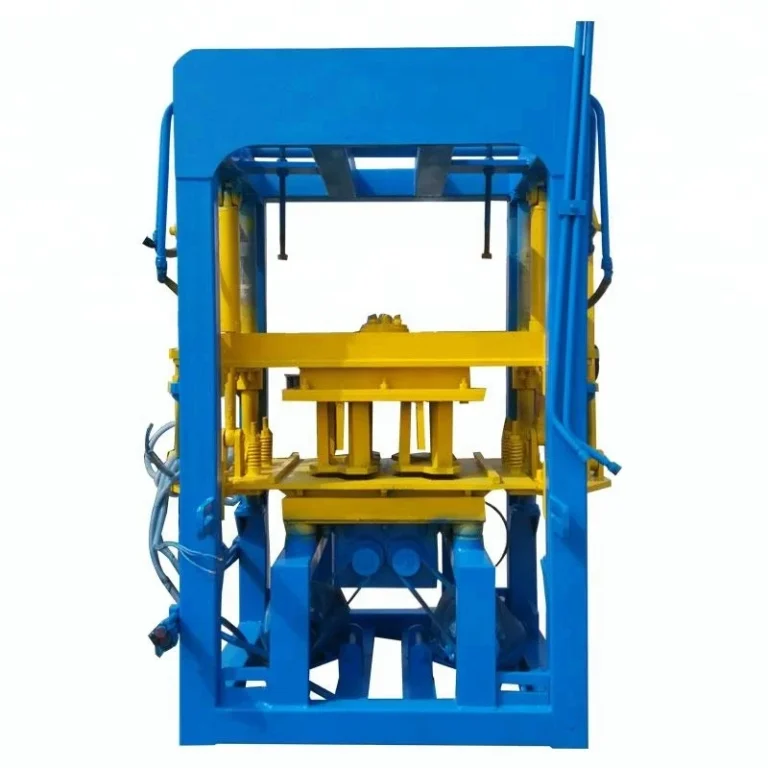 Semi automatic block