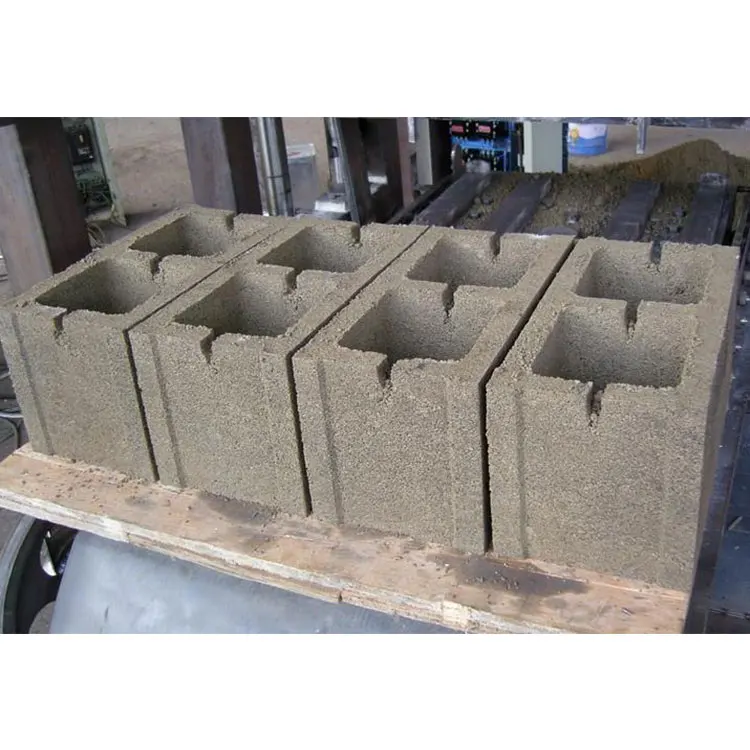
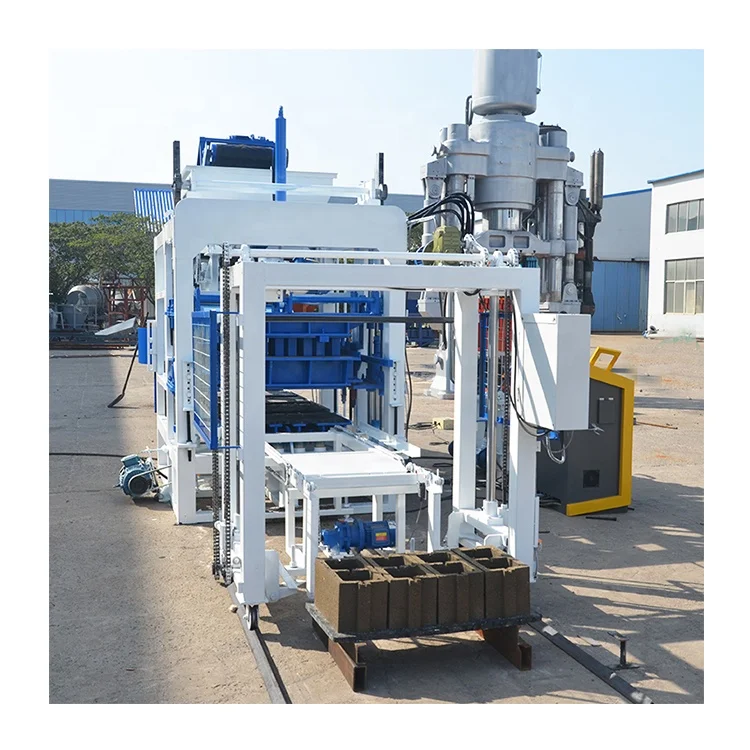
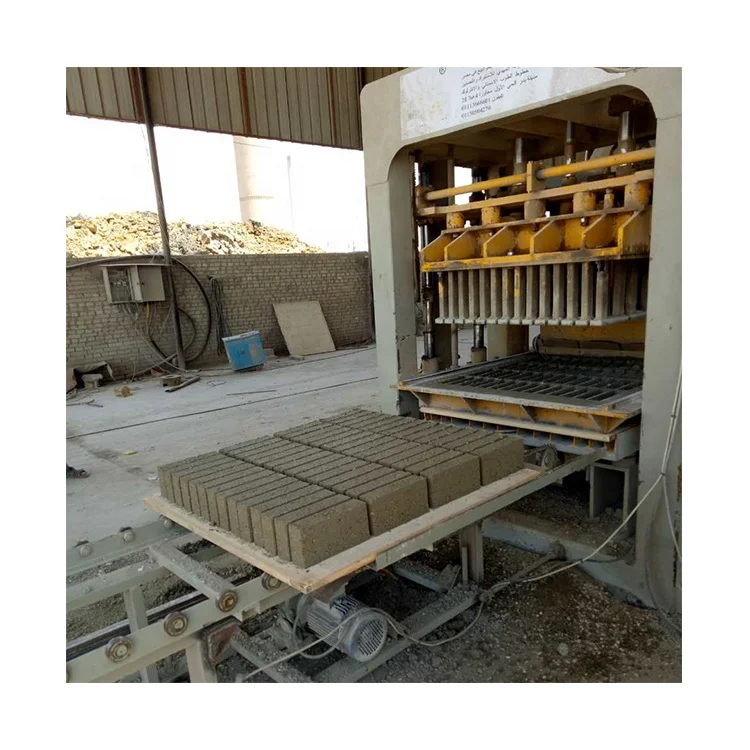
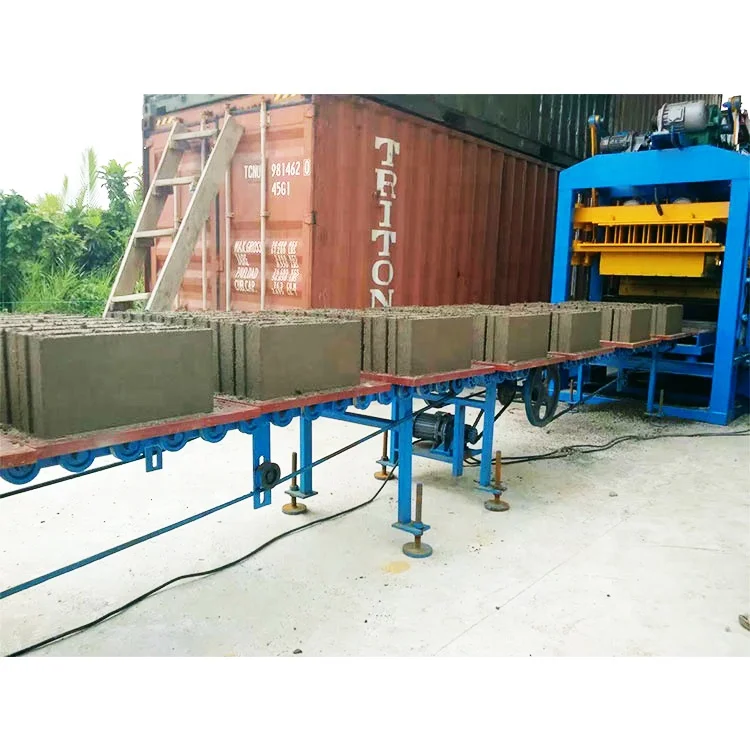
Matched System Supply — the QTJ4-25 block press, moulds, pallets and handling gear are specified together as one line, not sourced from separate vendors and bolted on site.
Technical Specifications
| Parameter |
Value |
| Model |
QTJ4-25 |
| Product Type |
Automatic Concrete Block Making Machine |
| Control System |
PLC controlled, fully automatic |
| Machine Power |
16.58 kW |
| Molding Cycle |
25 seconds |
| Capacity |
4600 pcs / 8 hours (basis not stated in source — confirm block format) |
| Machine Weight |
5000 kg |
| Overall Dimensions (L×W×H) |
6400 × 1500 × 2700 mm |
| Pallet Size |
850 × 480 mm |
| Vibration System |
Vibration motor with large vibration box |
| Motor Brand |
Siemens |
| Hydraulic Pressure |
Not applicable (vibration-based forming) |
| Voltage |
Configurable to buyer’s local voltage |
| Automation Level |
Fully automatic pallet feeding, material feeding & scraping, block stacking |
| Stackable Block Formats |
Hollow blocks, solid blocks, paver stones |
| Warranty |
1 year with free parts supply |
Application Suitability
| Application |
Material or Output |
| Hollow block production for medium-scale factories |
Concrete, sand, cement, crushed stone, water |
| Solid brick manufacturing |
Fly ash, lime, sand, cement blends |
| Paving stone output for municipal and residential projects |
Crushed stone and cement mixes with pigments |
| On-site block production for housing developments |
Locally sourced aggregate and cement |
| Building material distributor inventory |
Multiple format runs per shift using mould changes |
What "4600 Pieces per 8 Hours" Actually Means for Your Plant
That figure only holds if the block format, mix design, and pallet cycle all align with the test conditions — and those conditions are rarely stated on the quotation.
When I was commissioning a QTJ4-25 in Nigeria, the customer expected the brochure capacity from day one. We ran standard sand first, and the bricks collapsed on demoulding because the local red clay had much higher cohesion than the test mix. The number on the spec sheet assumed a material profile that did not exist on his site. We spent two days adjusting vibration parameters and moisture ratios before the line stabilized. Capacity claims without a stated format and material assumption are starting points for conversation, not guarantees [NEED_CITE: block format assumptions in capacity quotations]. Any automatic concrete block making machine manufacturer quoting output should specify which block size and mix produced that number.

Where the QTJ4-25 Sits in the Full Machine Range
The QTJ4-25 occupies the mid-range tier in our automatic block machine lineup. It targets medium-sized block plants that need consistent daily production across hollow blocks, solid bricks, and pavers without the capital outlay or floor space of a high-capacity hydraulic press line. Buyers moving up from manual egg-laying machines or semi-automatic setups find this model covers the volume gap while keeping the automation learning curve manageable. The PLC-controlled cycle handles pallet feeding, material distribution, scraping, and stacking, which removes the most labor-intensive steps from the operator’s shift.
Comparing Tiers: Semi-Auto, QTJ4-25, and High-Capacity Hydraulic Lines
Semi-automatic machines in the range require manual pallet handling and stacking, keeping investment low but demanding more workers per shift. The QTJ4-25 eliminates those manual stations through its automatic pallet feeder and stacker, so the operator monitors the PLC screen rather than moving blocks by hand. Above this tier, high-capacity hydraulic lines add hydraulic pressure on top of vibration, producing denser blocks at faster cycles — but they require larger foundations, higher power supply, and bigger curing areas [NEED_CITE: power and foundation requirements for hydraulic block lines]. Choosing between tiers depends on your daily output target, available curing space, and whether your market demands the higher compressive strength that hydraulic compaction delivers.
Reading the Specs That Matter on Site
The 16.58 kW total power rating means the QTJ4-25 can run on a standard industrial supply in most African and Southeast Asian markets, but you must confirm voltage and frequency before production starts — a 50 Hz motor on a 60 Hz grid runs at the wrong speed and shortens bearing life. The 850 × 480 mm pallet size was chosen to balance blocks per cycle against the curing area and forklift capacity typical of medium plants; if your existing pallets are a different dimension, the moulds and pallet feeder must be matched accordingly. The 25-second molding cycle governs how many pallets move through the press per hour, but the actual daily throughput also depends on mixer capacity, pallet return speed, and how quickly your curing racks fill. The Siemens motor driving the vibration box is specified for continuous duty, which matters when you run two shifts back-to-back in hot climates where motor cooling becomes a constraint.
The Cost of Skipping Configuration Details
When voltage and PLC display language are not confirmed before shipment, the machine arrives and sits idle while you source a transformer or wait for a technician who reads the interface language. I have seen pallet return systems added as an afterthought, which means the press completes its cycle and then waits for a worker to carry the pallet back — the automatic concrete block making machine manufacturer rated the cycle at 25 seconds, but the actual loop stretches far longer because the pallet station was never included in the line design [NEED_CITE: pallet handling impact on effective cycle time]. Moulds ordered without checking the curing rack spacing can produce blocks that do not fit the racks you already built, forcing a re-order or a rack rebuild.
Why Source This Range Here
Block machinery is the single focus of this operation, so the QTJ4-25 press, its moulds, pallets, and handling equipment are specified as one matched system rather than assembled from separate suppliers after arrival. Configuration decisions are made against your actual mix design and local aggregate, not pulled from a catalogue default. Mould design covers the formats your market sells, including custom drawings when your buyers demand a block shape the standard range does not include. The automation level is selectable — you can start with semi-automatic pallet handling and add the automatic stacker later as volume grows. Installation support includes operator training on the PLC interface and vibration parameter adjustment, which matters when local materials differ from the factory test mix.
Documentation & Verification
- Line layout showing the QTJ4-25 footprint with pallet return and stacking zones
- Capacity calculation stating the exact block format behind the 4600-piece figure
- Mould drawing and format list covering hollow, solid, and paver options included
- Voltage, frequency, and PLC language confirmation sheet signed before production
- Factory test record with photographs of the QTJ4-25 running your target block format
- Packing photographs documenting machine condition before container loading
Installation, Commissioning & Support
- 6400 × 1500 mm footprint requires a level concrete slab with anchor bolt provisions
- 16.58 kW total load needs a dedicated breaker and voltage confirmation on arrival
- Machine ships dismantled; reassembly and vibration box alignment done on site
- First production run uses your local aggregate to dial in vibration and moisture settings
- PLC operator training covers cycle adjustment, fault codes, and mould change sequence
- Wear parts list identifies vibration motor bearings and scraper blades for first reorder
Before You Send the Inquiry
To match the QTJ4-25 to your plant, we need your target block formats and the daily volume you plan to run per format. Share your local raw materials — sand type, aggregate size, cement grade — so the vibration parameters can be set against your actual mix. Confirm your site voltage, frequency, and preferred PLC display language to avoid commissioning delays. If you have existing pallets or curing racks, send the dimensions so the pallet feeder and mould layout align with what is already on the ground.
Frequently Asked Questions
Q: Which block format does the 4600 pieces per 8 hours capacity assume?
A: That figure requires confirmation of the specific block size, wall thickness, and mix design used during testing. Hollow blocks, solid bricks, and pavers each have different cycle counts per pallet and different pallets per hour. Request the capacity calculation document that states the assumed format, then compare it against your target product to get a realistic daily output figure for your market.
Q: Where does the QTJ4-25 sit compared to semi-automatic and high-capacity models?
A: The QTJ4-25 is the mid-range option — fully automatic with PLC control, positioned between manual pallet-handling machines and high-capacity hydraulic lines. Semi-automatic models cost less but require more labor per shift. Hydraulic models above this tier produce denser blocks at faster cycles but need larger foundations, more power, and bigger curing areas. The right tier depends on your output target and site constraints.
Q: What supporting equipment does the QTJ4-25 need alongside it?
A: The full line includes a mixer, raw material feeder, pallet return system, and stacking station. The 6400 × 1500 mm machine footprint does not count these stations. Mixer capacity must match the 25-second molding cycle so the press is never waiting for material. Pallet return speed must keep pace with the press output to avoid bottlenecks in the loop.
Q: Can I start semi-automatic and upgrade the automation level later?
A: Yes. The QTJ4-25 platform allows you to begin with manual pallet handling and add automatic pallet feeding and stacking as your volume grows. The PLC control system is already installed, so adding automation modules later does not require replacing the main controller. This path suits buyers who want to manage initial investment while keeping the upgrade option open.
Q: How long does a mould change take, and how many formats can one machine run per shift?
A: Mould change time depends on whether you have the quick-change system fitted and how practiced your operator is. Running two or three formats per shift is realistic if the moulds are staged and the pallet feeder is adjusted for each block height. More than three formats per shift usually means production time is lost to changeover rather than output.

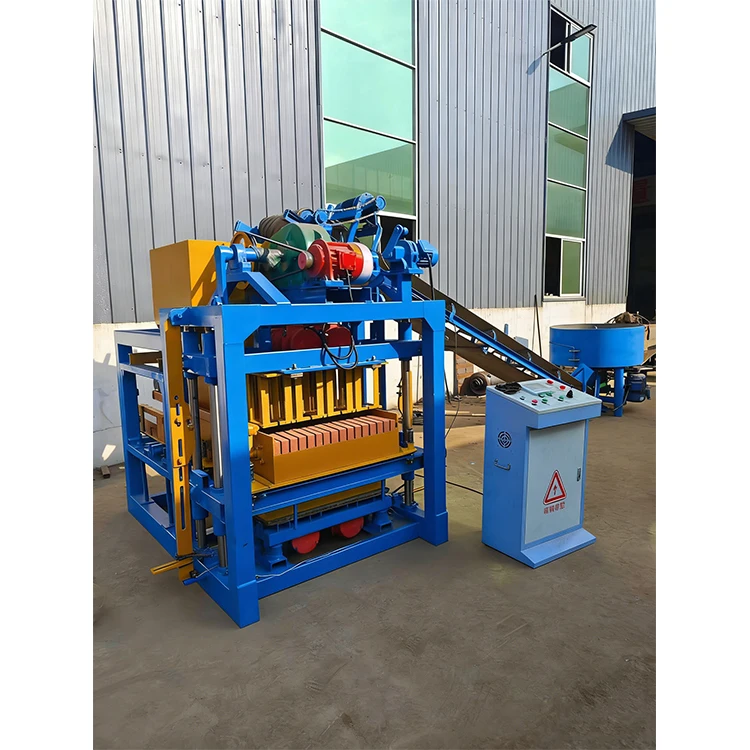
 Automatic block machine