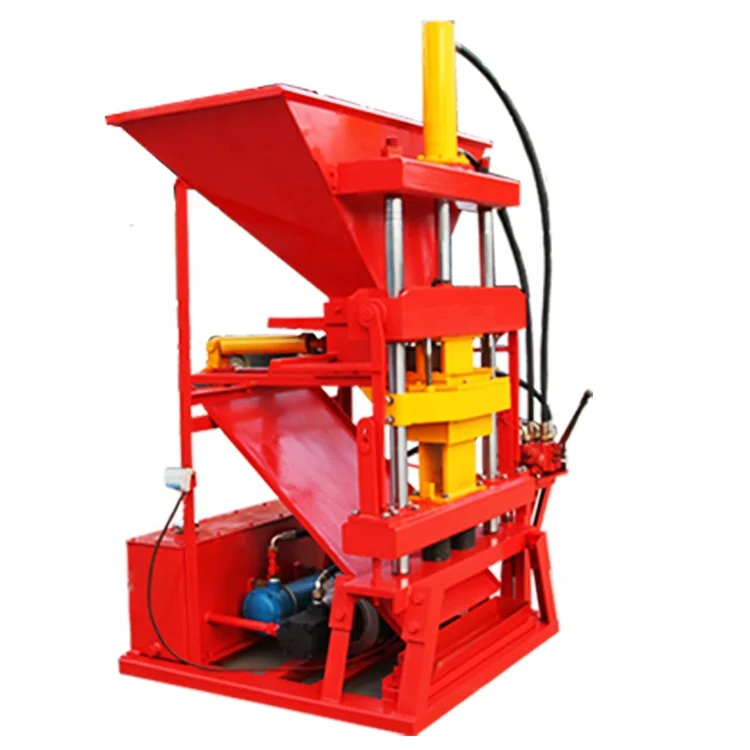
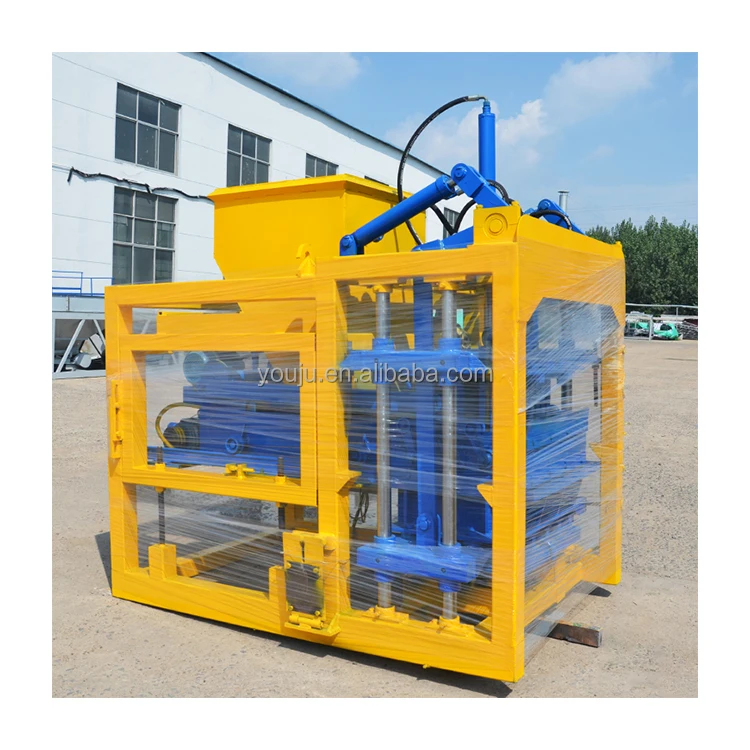
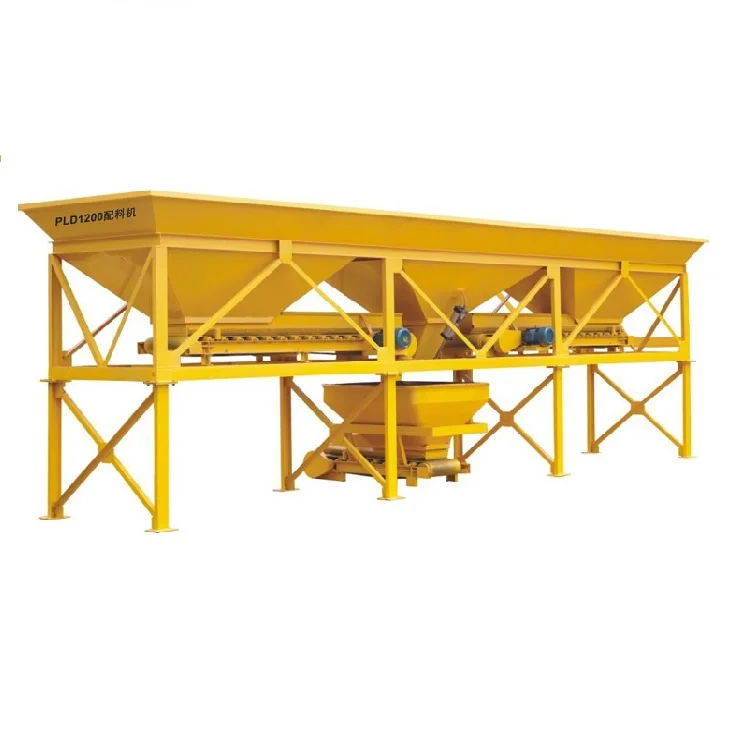
System-Level Matching — the QTJ4-25 is specified alongside its pallet, mould and handling requirements rather than quoted as a standalone press, so the line performs as one coordinated unit from raw feed through to stacking.
Technical Specifications
| Parameter |
Value |
| Model |
QTJ4-25 |
| Product Type |
Automatic Concrete Block Making Machine |
| Control System |
PLC controlled, fully automatic |
| Automation Level |
Fully automatic (automatic pallet feeding, material feeding and scraping, block stacking) |
| Molding Cycle |
25 seconds |
| Output Capacity |
4600 pcs/8hours (basis not stated in source — confirm block format / material / thickness) |
| Vibration System |
Vibration motor with large vibration box (non-hydraulic) |
| Rated Power |
16.58 kW |
| Pallet Size |
850×480 mm |
| Overall Dimensions |
6400×1500×2700 mm |
| Net Weight |
5000 KGS |
| Frame Construction |
Thickened steel frame |
| Motor Brand |
Siemens motor |
| Voltage & Frequency |
Configurable to buyer’s local supply (value to be confirmed before production) |
| Block Formats Supported |
Hollow blocks, solid blocks/bricks, paver stone bricks |
| Raw Material Compatibility |
Concrete, sand, cement, fly ash, crushed stone, lime, water |
| Warranty |
One year (free parts supply during warranty period) |
Application Suitability
| Application |
Material or Output |
| Medium-sized block factory mass production |
Hollow and solid blocks from cement, sand, crushed stone and fly ash blends |
| First block plant setup by entrepreneurs |
Multiple format output with automatic stacking to reduce manual labour at startup |
| Paver stone manufacturing |
Interlocking and solid paver formats using fine aggregate mixes |
| Contractors producing blocks on-site |
Hollow and solid blocks using locally sourced sand and aggregate |
| Existing manufacturers adding formats |
Mould changeovers between hollow, solid and paver production runs |
Why "Pieces per Hour" Means Nothing Without a Block Format
A cycle time only translates to real daily output when the block format, mix design and pallet size are all stated together.
Many quotations in the block machinery trade quote a single output figure — say, thousands of pieces per shift — without disclosing which block size that number assumes. A buyer expecting 150mm hollow block output may receive a machine tuned for 60mm solid pavers, and the real production falls far short. I have seen buyers sign off on a number only to discover weeks after commissioning that their actual target format runs at barely half the quoted rate. With this automatic block machine manufacturer, the capacity calculation must be restated per format, per mix, before any order is confirmed [NEED_CITE: block format assumptions in capacity quotations].
Where the QTJ4-25 Sits Across the Output Tier Chart
The QTJ4-25 occupies the mid-tier of the full range, positioned between semi-automatic workshop machines and higher-capacity hydraulic lines. For a buyer surveying options, this tier delivers PLC-controlled fully automatic operation — including pallet feeding, material feeding, scraping and stacking — without the footprint and investment of a high-volume plant. The 25-second molding cycle and 850×480 mm pallet define the production envelope, making it a practical choice for factories stepping beyond manual pallet handling.
Scaling the Line Without Replacing the Press
Choosing an automatic block machine manufacturer that treats the press, mould, pallet and handling equipment as one system avoids the mismatch problems that arise when components are sourced separately. The QTJ4-25 tier supports a clear upgrade path: a buyer can start with semi-automatic pallet handling and later add automatic stacking and cubing as production volume grows. The pallet size is also selectable within the range, so it can align with the curing racks and forklifts already on site [NEED_CITE: pallet standardisation in block curing areas].
How Vibration, Frame Mass and Pallet Size Shape Every Block
The non-hydraulic vibration system on the QTJ4-25 relies on a vibration motor coupled to a large vibration box. Without hydraulic pressure assisting compaction, the vibration force must be well-matched to the buyer’s mix — particularly the aggregate grading and cement content — to achieve consistent block density. The thickened steel frame adds mass to absorb reactive vibration, reducing energy lost to the floor rather than directed into the mould. The 850×480 mm pallet must also match the curing area: a pallet too large for the available rack space forces double-handling, while one too small leaves output capacity underutilised. Buyers should confirm the motor rating and Siemens motor specification against their expected shift pattern to ensure continuous operation without thermal derating.

What Happens When the Pallet Specification Is an Afterthought
Selecting a pallet size without checking the curing rack spacing and forklift tine width means blocks arrive at the curing area and cannot be slotted in without manual re-stacking. This adds labour at exactly the point where automation was supposed to remove it. Pallet material matters equally: timber pallets absorb moisture and warp under repeated wet cycles, while steel or bamboo-composite alternatives carry different weight and maintenance profiles. A buyer who overlooks this ends up replacing pallets far earlier than expected and absorbing hidden downtime [NEED_CITE: pallet material degradation in wet curing environments].
What This Manufacturer Brings to the Table
Block machinery is the single focus here, so the QTJ4-25 is never sold as a press alone — the mould, pallet and handling are specified as one matched system. Machine configuration is set against the buyer’s actual mix design and local aggregate, not a catalogue default. Mould design covers the formats the buyer’s market actually sells, including custom drawings where needed. Automation level is selectable, so a first-time buyer can begin semi-automatic and upgrade later without replacing the core press. Factory testing is completed before dispatch with records provided, and installation support includes operator training on site.
Documentation & Verification
- Line layout with capacity calculated per block format for the QTJ4-25 tier
- Machine specification sheet confirming voltage, frequency and PLC display language
- Mould drawing and format list covering hollow, solid and paver options
- Factory test record on buyer’s target block format before shipment
- Packing photographs and customs documentation support for export
Installation, Commissioning & Support
- Foundation must accommodate the 6400×1500 mm footprint and 5000 KGS operating mass
- Electrical supply matching confirmed voltage and frequency on a dedicated 16.58 kW circuit
- Machine arrives dismantled for container loading with reassembly on site
- PLC parameters and molding cycle set to buyer’s mix during commissioning
- Operator training covers mould change procedure and vibration system maintenance
- Wear parts list and Siemens motor service intervals provided at handover
- Pallet handling alignment verified against curing racks and forklifts on site
Before You Request a Quotation
Share your target block formats with dimensions, your daily output requirement per format, and the raw materials you source locally — especially aggregate type and any fly ash availability. Confirm your site voltage, frequency and preferred PLC display language. Providing your curing area dimensions and existing forklift specification helps match the pallet size correctly from the start.
Frequently Asked Questions
Q: How is the output capacity of the QTJ4-25 calculated, and which block format does it assume?
A: The capacity figure shown in the specification is based on a 25-second molding cycle, but the exact block format, wall thickness and mix assumed for that number must be confirmed before ordering. Different formats — hollow versus solid versus paver — fill the pallet differently and change the realistic pieces-per-shift total. Always request a per-format capacity calculation.
Q: Where does the QTJ4-25 sit compared to semi-automatic models and higher-tier automatic lines?
A: It occupies the mid-tier, offering full PLC automation with integrated pallet feeding and stacking, while higher tiers add hydraulic compaction and larger pallet sizes. Semi-automatic models suit lower investment and smaller footprints. The right choice depends on your daily volume target, available curing space and whether you plan to scale output over time.
Q: What voltage, frequency and PLC language options are available, and when must they be confirmed?
A: Voltage and frequency are configured to your local supply standard, and the PLC display language is set before production begins. These must be confirmed at the quotation stage — not after shipment — to avoid commissioning delays on site. Buyers in markets with multiple voltage zones should specify the exact destination plant supply.
Q: Can I start with the QTJ4-25 and later upgrade to a higher automation tier or larger pallet size?
A: The range supports a progression path. A buyer can begin with the QTJ4-25 and semi-automatic handling, then add automatic stacking and cubing as volume grows. Pallet size can also be adjusted within the range. Discussing the upgrade plan at the initial configuration stage ensures the press and foundation accommodate future expansion.
Q: What block formats and mould options are available, and how does mould change time compare across the range?
A: The QTJ4-25 supports hollow blocks, solid bricks and paver stone bricks, with moulds designed to the buyer’s market formats including custom drawings. Mould change time varies by tier — hydraulic quick-change systems on higher models reduce the changeover to minutes, while manual bolt-secured moulds at this tier take longer. Confirming your required format list early ensures moulds are ready at commissioning.

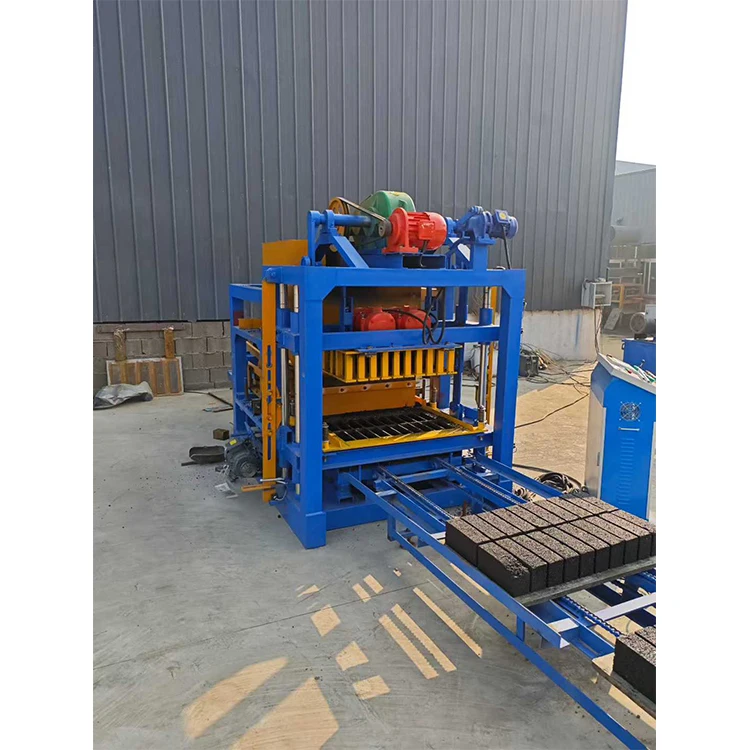
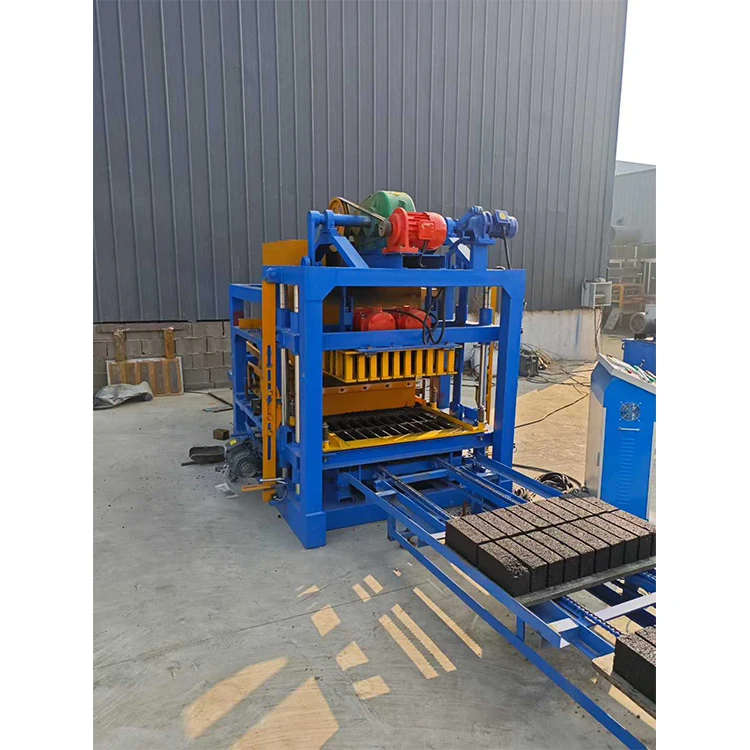 Automatic block machine