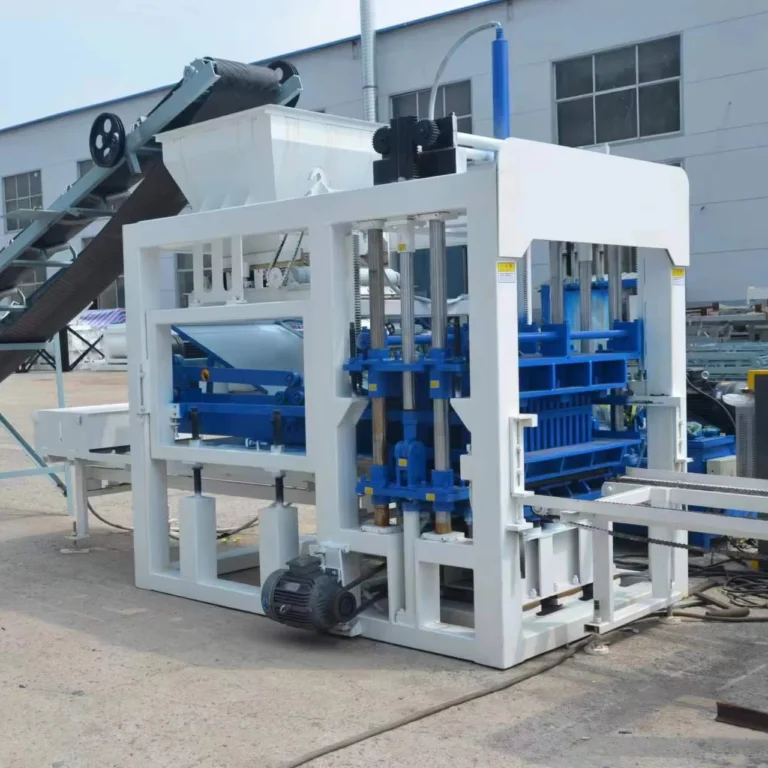
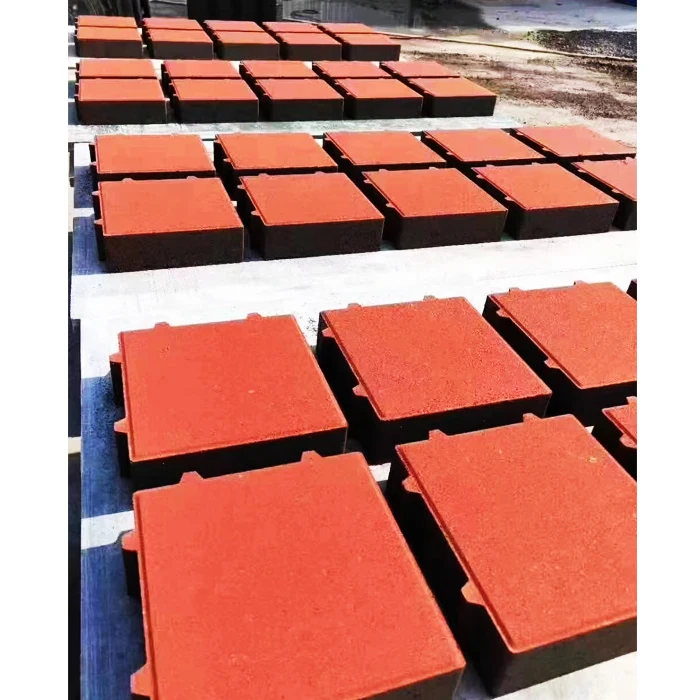
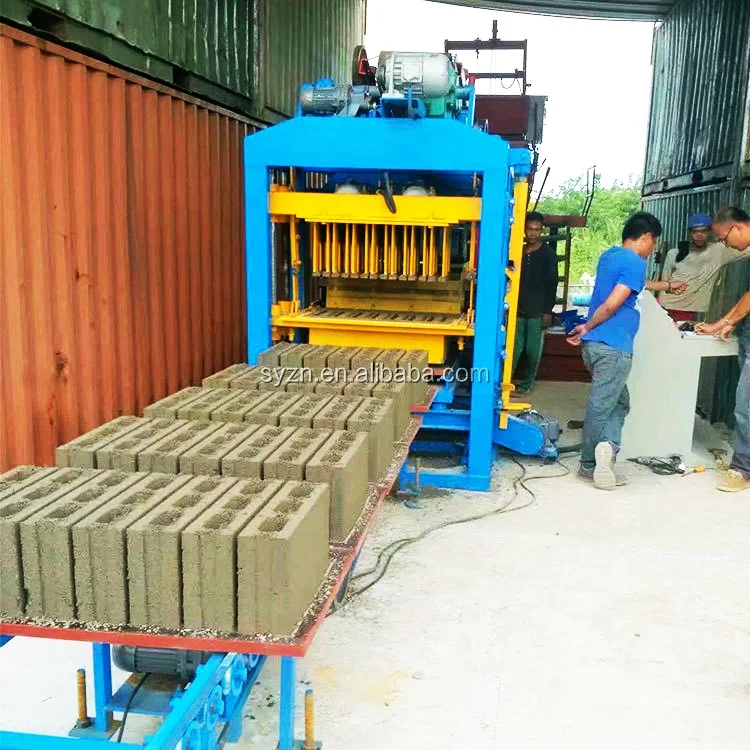
QTJ4-24 Small Semi Automatic Block Machine – Factory Supply
Configuration matched to your local mix and block format — the QTJ4-24 is supplied as a complete system with pallet size, mixer, and conveyor specified together, not pulled from a catalogue default.
Technical Specifications
| Parameter |
Value |
| Model |
QTJ4-24 |
| Product Type |
Semi-Automatic Concrete Block Making Machine |
| Machine Configuration |
Stationary small table vibration concrete block machine |
| Operation Mode |
Semi-automatic (mechanical and manual combination) |
| Feeding Method |
Manual feeding, two feed ways available |
| Vibration System |
Table vibration feeding, fluctuation vibration molding |
| Main Machine Power |
11.95 kW |
| Overall Dimensions (L×W×H) |
3600 mm × 1700 mm × 2560 mm |
| Total Mass |
3.5 T |
| Pallet Size |
900 mm × 450 mm |
| Molding Cycle |
24–26 s |
| Hollow Block 400×200×200 mm |
4 pcs/mould |
| Hollow Block 390×240×190 mm |
3 pcs/mould |
| Hollow Block 390×120×190 mm |
6 pcs/mould |
| Solid Brick 240×115×53 mm |
21 pcs/mould |
| Recommended Mixer |
JQ350 or JQ500 vertical mixer |
| Recommended Conveyor |
6 m or 8 m belt conveyor (no-dig installation) |
| Electrical Wire Spec |
Main 3×6 mm²; Mixer 3×4 mm²; Conveyor 3×2.5 mm² |
| Control Cabinet |
Electrical interlock between upper and lower vibrators |
| Warranty |
1 year for whole machine (excluding spare parts) |
Application Suitability
| Application |
Material or Output |
| First block plant for entrepreneurs |
Concrete mixes using local crushed stone, sand, and cement |
| On-site production for housing projects |
Standard hollow and solid blocks from vibration-compatible mixes |
| Expanding format range at existing plants |
Hollow blocks, solid bricks, and standard masonry units per mould list |
| Low-footprint production workshop |
Lightweight aggregate or fly ash blends compatible with table vibration molding |
Why "Pieces per Hour" Means Nothing Without the Block Format Named
The QTJ4-24 runs a 24–26 s cycle, but that number translates to very different daily totals depending on whether you are pressing four large hollow blocks or twenty-one solid bricks per mould.
Many semi-automatic block machine manufacturers quote a single headline output figure and leave it at that. I have watched buyers celebrate a machine’s arrival only to realize the capacity was calculated on a small solid brick while their market actually demands 200 mm hollow blocks. The real output drops to a fraction of the promised number, and the business plan built around the higher figure collapses within the first month. Always ask which exact block format and mould the cycle time was measured against before you sign off on a quotation. [NEED_CITE: block format impact on daily output calculation standards]

Where the QTJ4-24 Sits in the Machine Range
This model occupies the entry-to-mid tier for buyers who need steady block production without committing to a fully automatic line. The semi-automatic block machine manufacturer configures the host press alongside the correct pallet dimension, mixer capacity, and conveyor length so nothing bottlenecks the 24–26 s cycle. Buyers planning future expansion can later step up to higher-automation tiers while keeping the same pallet format across the plant.
Footprint and Line Composition on a Small Site
The 3600 mm × 1700 mm host machine footprint fits workshops where floor space is limited or rented. A JQ350 or JQ500 vertical mixer feeds the press via a 6 m or 8 m belt conveyor that requires no excavation to install. Because the pallet size is locked at 900 mm × 450 mm, curing yard layout and forklift selection can be finalized before the machine arrives. [NEED_CITE: typical curing yard layout for small block plants]
How Vibration, Pallet Size, and Mixer Capacity Interact
Table vibration molding relies entirely on vibration force and the weight of the concrete mix to compact the block, since the QTJ4-24 does not use a hydraulic press. The 900 mm × 450 mm pallet must be rigid enough to transmit vibration without absorbing energy, which is why pallet material matters as much as pallet size. If the JQ350 mixer cannot keep pace with the 24–26 s cycle, the operator ends up waiting for fresh material and the real output slips below what the cycle time suggests. Wire specifications — 3×6 mm² for the main machine — must be confirmed against local supply so the vibration motor receives consistent power.
When the Wrong Pallet Choice Cancels Out the Rest of the Line
I once helped a buyer in West Africa who ordered a small vibration press but chose pallets based on price alone. The thin wooden pallets warped within two weeks of curing yard exposure, and every block came out with uneven height. The machine was running fine — the pallets were destroying the product. With the QTJ4-24, confirming pallet material and thickness against your curing conditions and forklift tine spacing avoids this quiet failure. [NEED_CITE: pallet material degradation in block curing environments]
Why Buy This Configuration Here
Block machinery is the sole focus of the supply scope, so the QTJ4-24 press, its 900 mm × 450 mm pallets, the JQ350/JQ500 mixer, and the conveyor are specified as one matched system. Capacity calculations are stated per block format, not as a single headline number. Moulds are designed for the formats your local market actually sells, and custom drawings are accepted. Voltage and control language are confirmed before production begins so commissioning is not delayed by mismatched electrical standards.
Documentation & Verification
- Line layout showing capacity calculated per block format, not as a generic figure
- Machine specification sheet confirming 11.95 kW rating and 3.5 T mass
- Pallet specification listing 900×450 mm size and recommended material
- Electrical schematic with wire gauge matched to confirmed voltage and frequency
- Factory test record on buyer’s selected mould formats before dispatch
- Operation and maintenance manual covering mould change and vibrator servicing
Installation, Commissioning & Support
- Main machine arrives pre-assembled; only conveyor and mixer require on-site installation
- 3600 mm × 1700 mm footprint requires a level concrete pad, no excavation for the 6–8 m conveyor
- Electrical cabinet with interlock verified at factory, reducing mis-operation risk during first shift
- JQ350/JQ500 mixer matched to cycle time so the press is never starved of material
- Mould and wear parts list provided at shipment so first replacements can be ordered in advance
- Operator training covers manual feeding sequence and vibrator maintenance intervals
What to Include in Your Inquiry
To size this semi-automatic block machine manufacturer’s offering correctly, share the block formats you plan to sell, your target daily output, and the raw materials available locally. Confirm your site voltage and frequency so the 11.95 kW motor and control cabinet are built to match. If you already have a curing yard and forklift, note the pallet dimensions you are using so the 900 mm × 450 mm pallet spec can be verified or adjusted.
Frequently Asked Questions
Q: How is daily output calculated from the 24–26 s molding cycle?
A: Each cycle produces a different number of blocks depending on the mould fitted — four pieces for 400×200×200 mm hollow blocks, six pieces for 390×120×190 mm blocks, or twenty-one pieces for 240×115×53 mm solid bricks. Daily output is the pieces-per-mould figure multiplied by the number of achievable cycles in a working shift, minus time spent on mould changes, pallet handling, and breaks.
Q: Which voltage and frequency does the machine ship with?
A: Voltage and frequency are confirmed with the buyer before production starts. The 11.95 kW main motor and the electrical cabinet are wound and configured to match the destination market’s grid. Control language on the cabinet labeling is also confirmed at this stage so operators can read instructions on day one.
Q: How does the 900×450 mm pallet size fit my existing curing yard?
A: The pallet dimension determines curing rack spacing, forklift tine width, and yard capacity. If your current forklift or rack system uses a different pallet size, the mismatch will slow down handling and stacking. Confirming pallet compatibility before shipment avoids costly yard modifications after the machine arrives.
Q: Where does the QTJ4-24 sit if I plan to scale later?
A: This model is the entry-to-mid tier in a range that extends through higher-capacity automatic lines. Starting with the 900×450 mm pallet format means a future upgrade can reuse the same pallet stock and curing yard layout, keeping the transition cost lower than switching to an entirely different system.

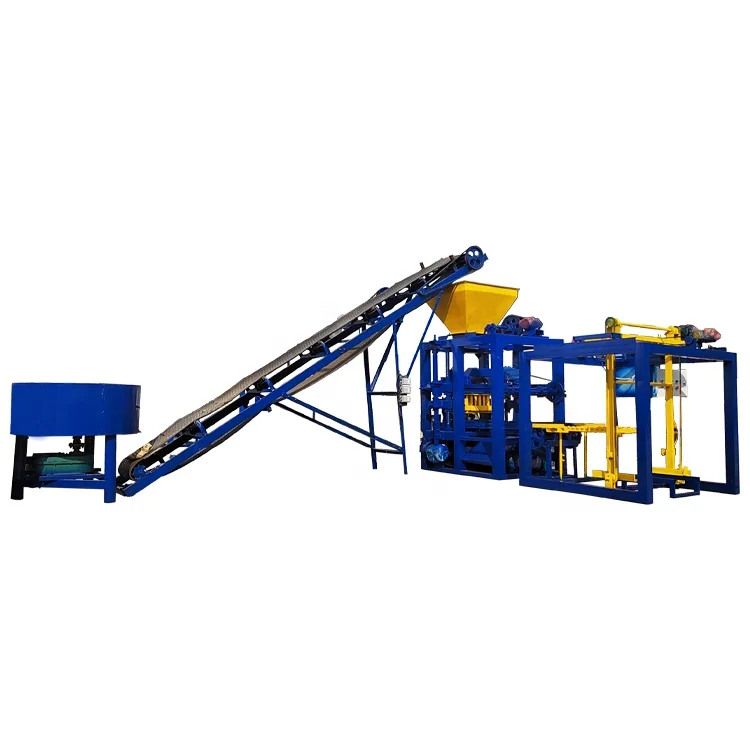
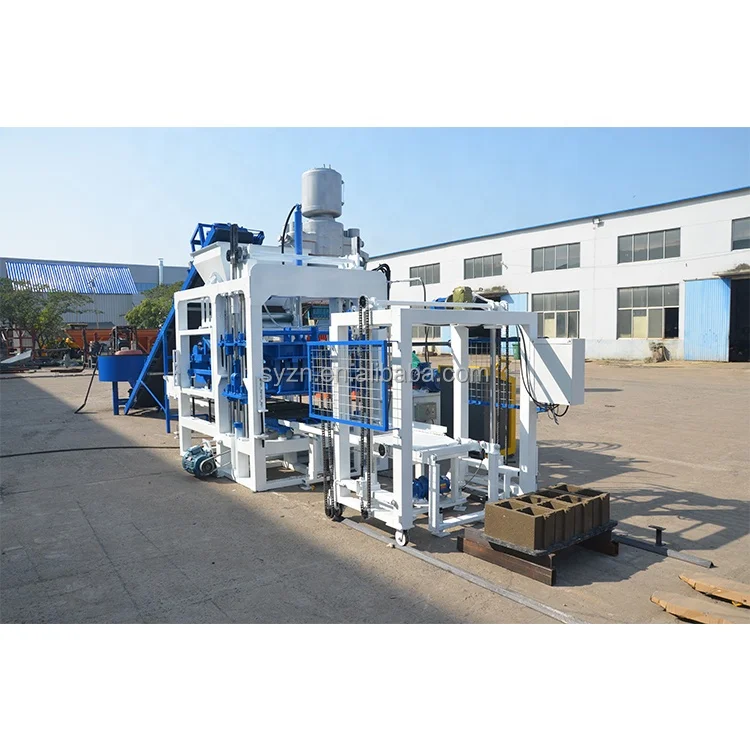 High quality block machine