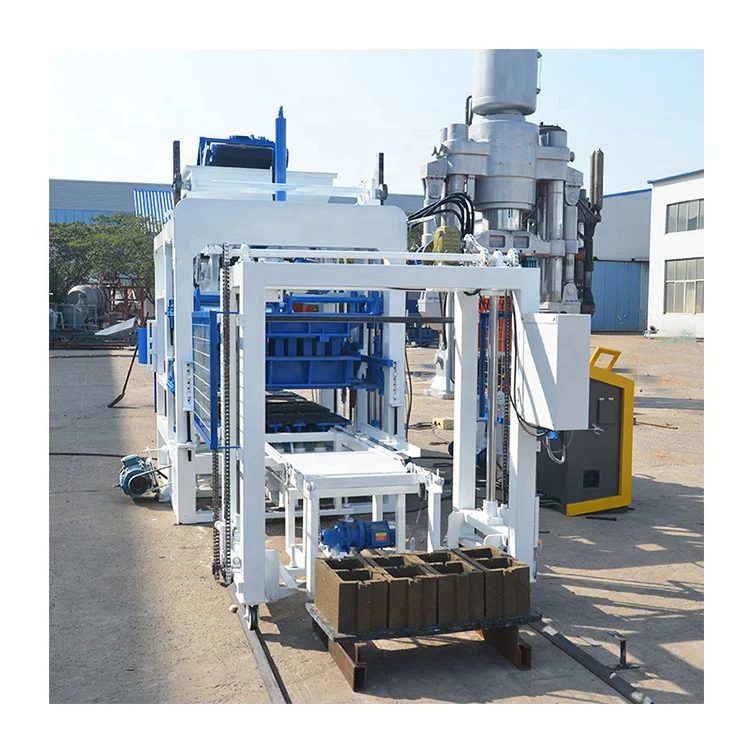
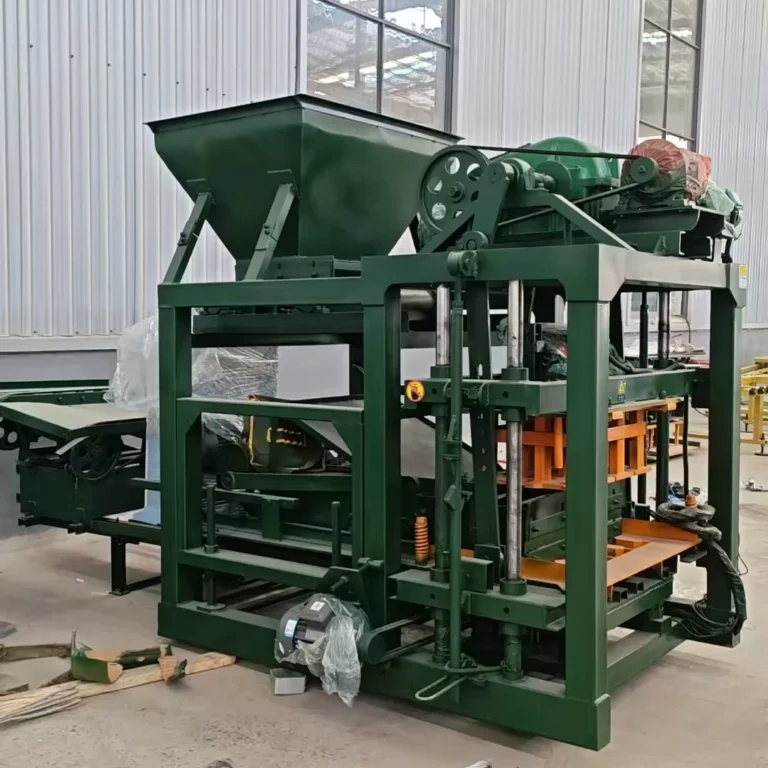
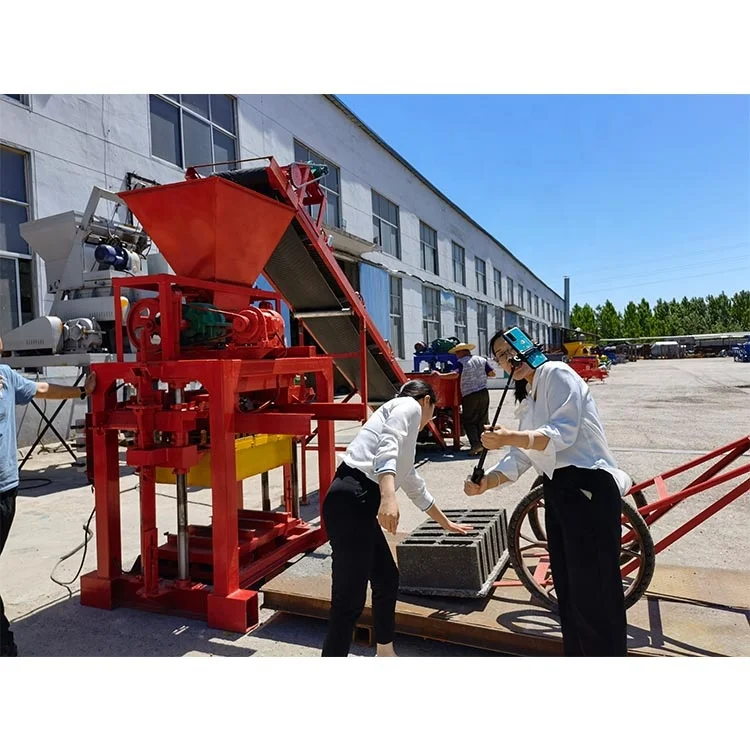
Matched system design — we specify the QTJ4-24 block machine, mould, pallet and handling equipment as one coordinated line rather than assembling from separate sources, ensuring every component aligns with your actual production requirements.
Technical Specifications
| Parameter |
Value |
| Model |
QTJ4-24 |
| Product Type |
Semi-Automatic Concrete Block Making Machine |
| Molding Type |
Platform Vibration |
| Overall Dimensions (L×W×H) |
3600mm × 1700mm × 2560mm (working state) |
| Net Weight |
1750kg |
| Pallet Size |
850mm × 450mm |
| Overall Power |
14.25kW |
| Vibration System |
Lower platform vibration (2 × 3kW motors) + Upper platform vibration (1.5kW attached device) |
| Mould Format |
390mm × 190mm × 190mm (4 pcs/mold); 240mm × 115mm × 53mm (21 pcs/mold) |
| Machine Frame |
Dragon gate style, super steel construction, four vertical wear-resisting shafts |
| Elevating System |
Cone-shape motor with JZQ250 speed reducer, V-belt drive |
| Delivery Device |
Cycloidal pin wheel speed reducer with chains and V-belt |
| Material Storing Device |
Top-mounted releasing hopper + lower storing hopper |
| Automation Level |
Semi-automatic (mechanical and electronic combination) |
| Support Equipment Compatibility |
JQ350 pan mixer, 6m belt conveyor, optional auto stacker, trolley |
| Hydraulic Pressure |
Not applicable — mechanical vibration system |
| Output Capacity |
(basis not stated in source — confirm block format, material and thickness) |
| Cycle Time |
(basis not stated in source — confirm block format and material) |
| Voltage & Frequency |
(basis not stated in source — confirm voltage, frequency and phase) |
| Control System |
Electronic controlling part (PLC or relay logic basis not stated in source) |
Application Suitability
| Application |
Material or Output |
| Small-scale hollow block production |
Crushed stone, river sand and cement mixes for 390×190×190mm hollow blocks |
| Solid brick production for masonry |
Standard aggregate blends forming 240×115×53mm solid bricks |
| On-site block production for housing projects |
Locally sourced aggregate with portable semi-automatic setup |
| Entry-level block plant for entrepreneurs |
Basic format production with manual pallet handling and small curing yard |
What "Output per Hour" Leaves Out When Sizing a Semi-Automatic Block Machine Manufacturer Line
Capacity numbers mean nothing unless the block format behind them is named.
Many quotations state cycles per hour without clarifying which block size, wall thickness or material density that figure assumes. A semi-automatic block machine manufacturer might advertise a daily output that only holds true for a thin solid brick — switch to a 390mm hollow block and the cycle extends, mold fill volume changes, and real throughput drops significantly. I have watched buyers sign off on equipment based on a headline number, then discover on commissioning day that their target format produces barely half the promised volume. That mismatch stalls project timelines and forces unplanned capital into additional machines [NEED_CITE: block format impact on cycle time in vibration press operations].

Where the QTJ4-24 Sits on the Full Machine Range
The QTJ4-24 occupies the entry tier of our stationary block machine lineup, targeting buyers who need a functional production setup without the footprint and investment of a fully automatic plant. For a first-time block producer or a contractor manufacturing on their own job site, this tier provides platform vibration forming with semi-automatic control — enough consistency to meet basic strength requirements while keeping the capital threshold manageable. As volume grows, buyers can move up through higher-output semi-automatic tiers and into fully automatic lines with integrated stacking and cubing, all within the same product family.
Matching the Machine Tier to Your Plant Footprint
Every tier in the range demands a different curing area, pallet inventory and material handling arrangement. The QTJ4-24 requires a modest curing yard sized around its 850×450mm pallet format, with manual trolley transport keeping the initial setup simple. Higher tiers demand expanded curing racks, forklift-compatible pallets and automatic stacking stations that add length and width to the line layout. Confirming the available site area before choosing a tier prevents the situation where a machine arrives but the curing space cannot support its output [NEED_CITE: stationary block plant layout planning by output tier].
Reading the Specifications Against Real Production Conditions
The dual 3kW lower vibration motors combined with a 1.5kW upper vibration device generate platform vibration suited to standard concrete aggregate mixes — but local material characteristics change how that force translates into block density. If your region relies on lightweight volcanic ash or high-fines crusher dust rather than clean river sand, the vibration amplitude and cycle duration must be adjusted accordingly, or block strength will vary across batches. The dragon gate frame with four vertical wear-resisting shafts maintains mold alignment over extended production runs, which matters when you switch between hollow block and solid brick formats using the same machine. Pallet size at 850×450mm should be checked against your existing curing racks and transport trolleys before confirming an order.
The Hidden Cost of Choosing the Wrong Tier
Buyers who select a machine tier based solely on price often find that missing support equipment erases any initial savings. A semi-automatic line quoted without pallet handling, stacking or curing rack equipment leaves workers moving heavy wet pallets by hand — output bottlenecks immediately shift from the press to the yard. Similarly, specifying a pallet size that does not match existing forklifts or rack dimensions forces a facility redesign after installation. These downstream corrections frequently exceed the cost difference between machine tiers, and the production delay compounds the financial impact [NEED_CITE: hidden costs in block plant equipment specification].
Why Source This Semi-Automatic Block Machine Manufacturer Range Here
Block machinery remains our single focus, so the QTJ4-24 is never treated as a standalone press — every quotation pairs it with matched molds, pallets and handling equipment sized to your chosen format. We configure the vibration parameters against your actual mix design and local aggregate rather than shipping a catalogue-default setting. Mould design covers the formats your market demands, and custom drawings are accommodated when standard formats do not apply. The semi-automatic starting point includes a clear upgrade path, meaning buyers can add automatic stacking and cubing as production volume justifies the investment. Installation support includes on-site commissioning with operator training so the line runs at its configured capacity from the first week.
Documentation & Verification
- Line layout with capacity calculation stating the block format assumed for daily output
- Machine specification sheet covering vibration ratings, pallet size and power requirements
- Mould drawing and format list for every included mold set
- Pallet specification matched to curing area dimensions and handling equipment
- Voltage, frequency and control display language confirmation before production
- Factory test record and operation manual included with shipment
Installation, Commissioning & Support
- Foundation pad sized to 3600mm × 1700mm footprint with vibration isolation provisions
- Dedicated power circuit rated for 14.25kW total draw at confirmed voltage and frequency
- Machine shipped in working-state configuration with bolting points for rapid reassembly
- On-site vibration parameter tuning against buyer’s local aggregate and mix proportions
- Operator training covering mold change procedure between 390mm hollow block and 240mm solid brick
- Wear parts list with recommended replacement intervals for shafts, belts and vibration motors
What We Need to Build Your Quotation
Send your target block format with dimensions, the daily output you need to meet project deadlines, and a sample or description of your local aggregate material. Include your site’s available curing area dimensions and the voltage and frequency standard at your location. If you already own forklifts, trolleys or curing racks, provide their specifications so pallet sizing aligns with your existing equipment.
Frequently Asked Questions
Q: How do I verify real daily output for my specific block format on the QTJ4-24?
A: Request a capacity calculation that names the exact block format, wall thickness and material density behind each output figure. The QTJ4-24 produces different volumes for 390×190×190mm hollow blocks versus 240×115×53mm solid bricks, and local aggregate properties further affect cycle time. A proper quotation states the assumed format alongside every throughput number.
Q: Where does the QTJ4-24 fit compared to higher tiers in this semi-automatic block machine manufacturer range?
A: The QTJ4-24 sits at the entry tier for buyers starting with limited capital and a compact curing yard. Higher semi-automatic tiers add larger pallets, greater vibration force and faster cycle times. Fully automatic tiers integrate stacking and cubing. The range is structured so buyers can move upward as production volume grows.
Q: What voltage options are available and can the control display show my local language?
A: Voltage and frequency must be confirmed before production begins — the QTJ4-24 electronic control system is configured to match your site’s power supply. Control display language is set during manufacturing. Specify your requirements at the inquiry stage so commissioning is not delayed by incompatible electrical standards.
Q: How much curing space and what handling equipment do I need for the 850×450mm pallets?
A: Plan a curing area that accommodates multiple days of pallet inventory, with spacing for air circulation and worker access. The QTJ4-24 uses manual trolley transport by default, so trolley track or floor path layout must connect the press to the yard. Confirm rack dimensions match the pallet size before ordering.
Q: Can I begin with the QTJ4-24 semi-automatic setup and add automatic stacking later?
A: Yes. The QTJ4-24 supports an optional auto stacker capable of three to six layer stacking, which can be integrated after initial production is established. This upgrade path lets buyers start with manual pallet handling and add automation as volume justifies the additional equipment investment.

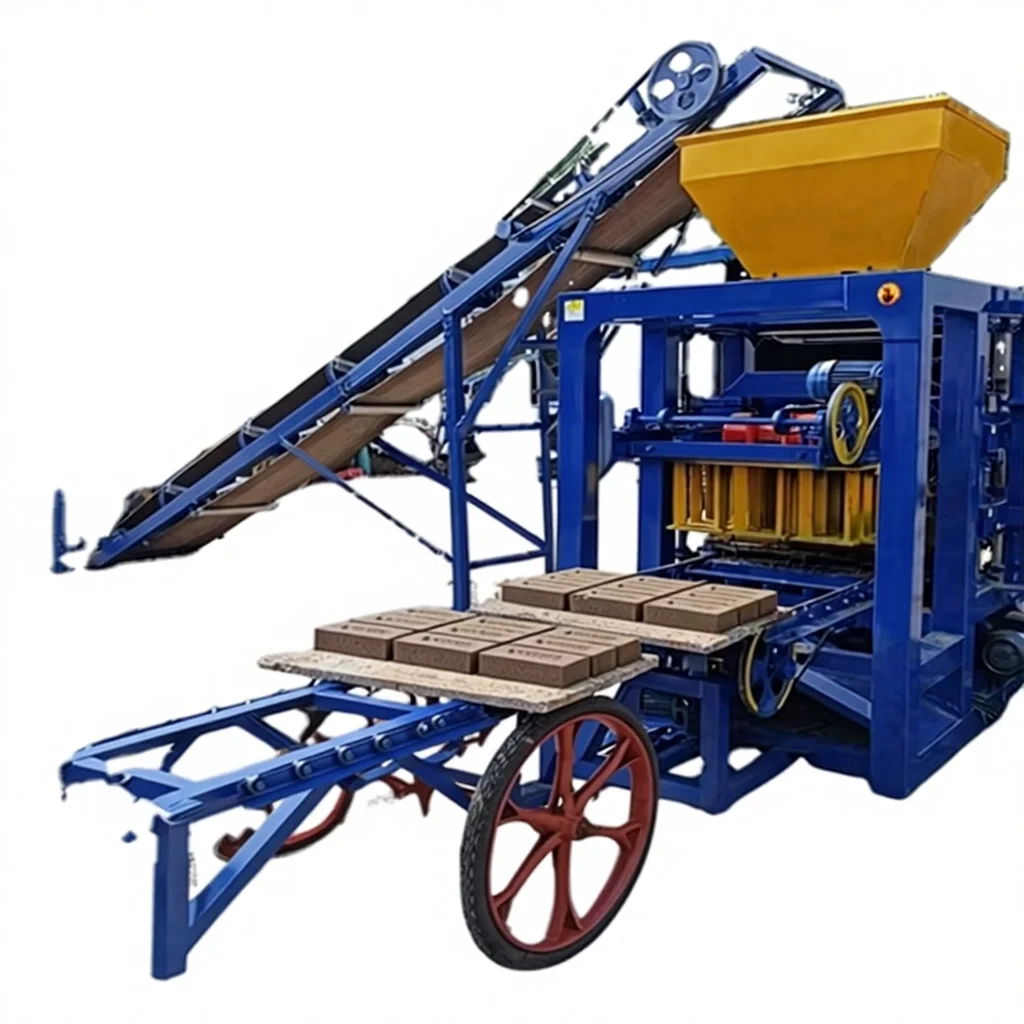
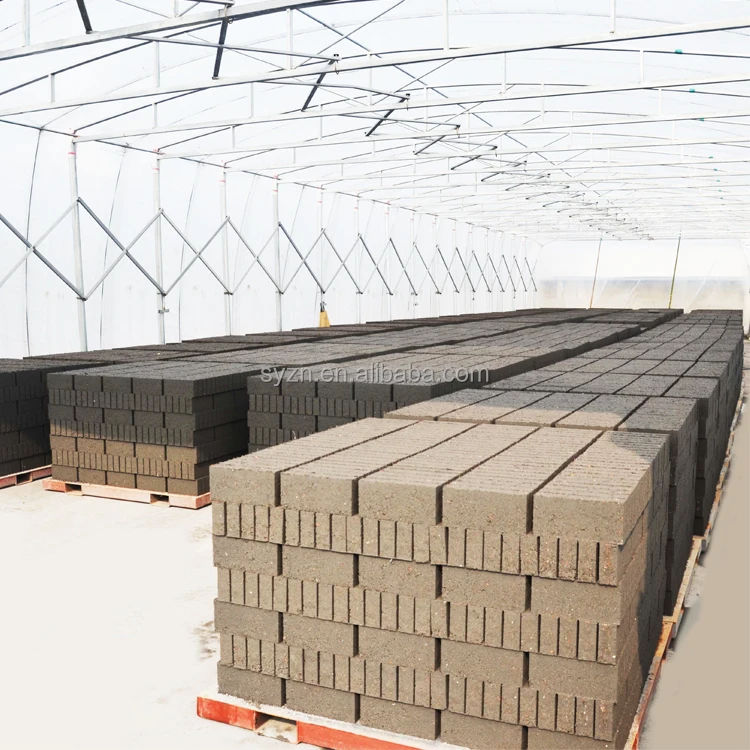 Stationary block machine