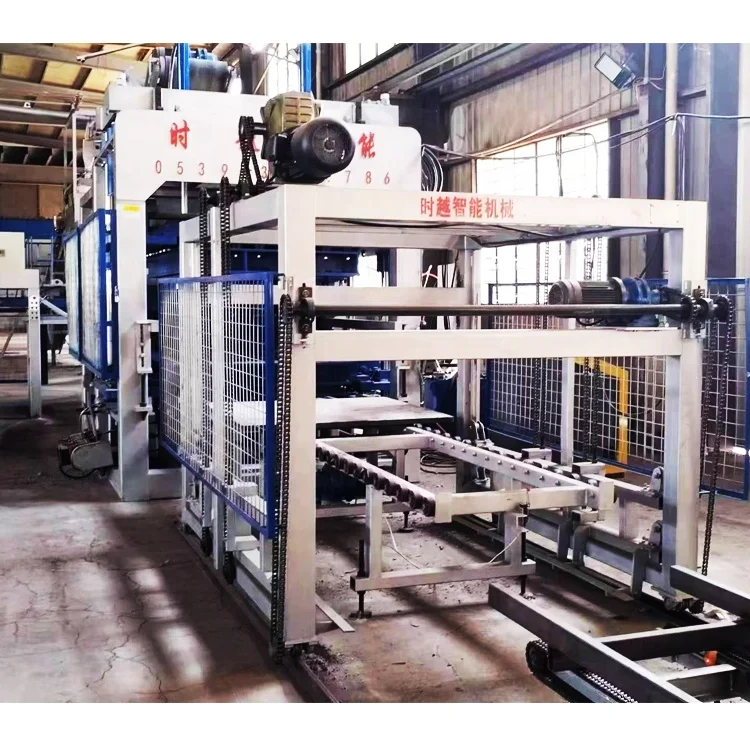
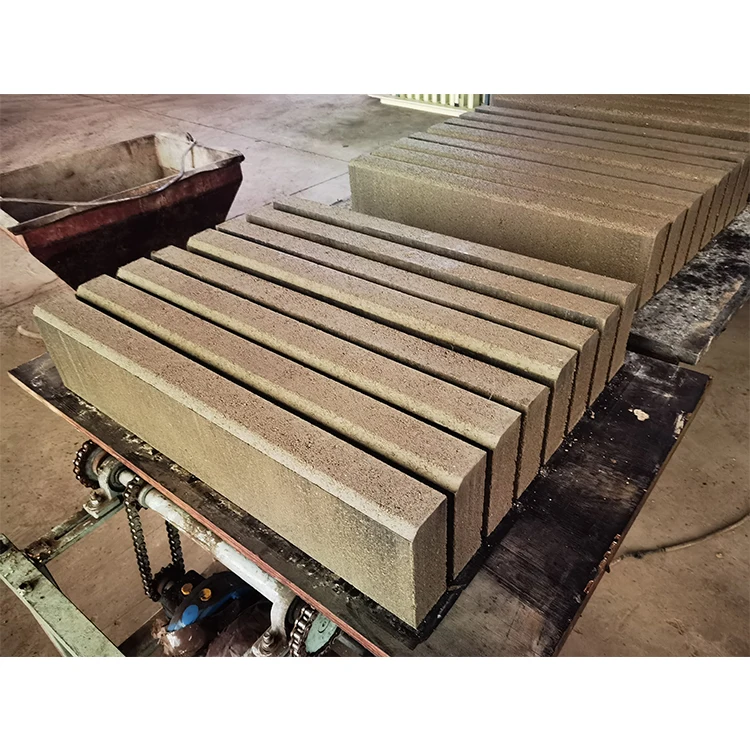
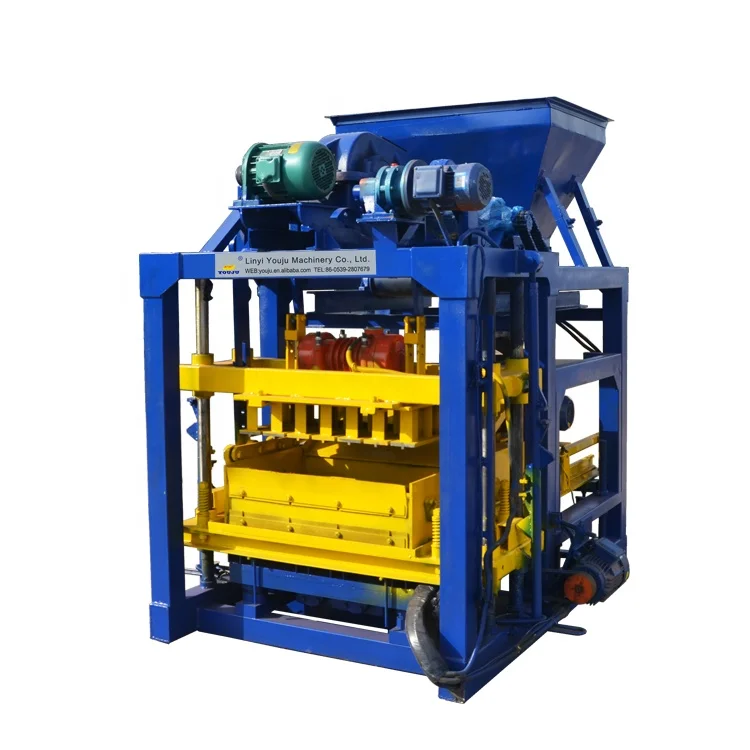
Matched System Focus — the QTJ4-24 semi-automatic block machine is specified as one coordinated unit with pallets, moulds and handling sized to your actual block format rather than assembled from mismatched catalog parts.
Technical Specifications
| Parameter |
Value |
| Product Type |
Semi-Automatic Concrete Block Making Machine |
| Model |
QTJ4-24 |
| Molding Type |
Platform Vibration |
| Vibration System |
Lower platform vibration (two 3kW motors) + Upper platform vibration (1.5kW attached vibrator) |
| Pallet Size |
850mm × 450mm |
| Overall Power |
14.25 kW |
| Overall Dimension |
3600mm × 1700mm × 2560mm (working state) |
| Total Mass |
1750 kg |
| Machine Frame |
Dragon gate style, super steel construction, four vertical wear-resisting shafts |
| Elevating System |
Cone-shape motor with JZQ250 speed reducer, V-shape triangle belt drive |
| Delivery Device |
Cycloidal pin wheel speed reducer, chains, V-shape triangle belt, self-conveying frame |
| Material Storing Device |
Material releasing hopper (top of frame) + material storing hopper (below releasing hopper) |
| Automation Level |
Semi-automatic (mechanical and electronic combined operation) |
| Mould Format |
390mm × 190mm × 190mm (4 pcs/mold) / 240mm × 115mm × 53mm (21 pcs/mold) |
| Output Capacity |
(basis not stated in source — confirm block format / material / thickness) |
| Cycle Time |
(basis not stated in source — confirm block format / material / thickness) |
| Control System |
Electronic controlling part (PLC / MCC option to be confirmed) |
| Hydraulic Pressure |
Not applicable (mechanical vibration system) |
| Support Equipment Compatibility |
JQ350 pan mixer, 6m belt conveyor, optional auto stacker (3-6 layers), trolley for curing yard |
Application Suitability
| Application |
Material or Output |
| Small-scale concrete block production |
Hollow blocks (390×190×190mm) from crushed stone, sand, cement and water |
| On-site construction block production |
Solid bricks (240×115×53mm) from locally sourced aggregate and cement |
| First plant setup for entrepreneurs |
Standard concrete masonry units for residential and commercial building |
| Supplementary production for distributors |
Entry-tier format runs before scaling to a higher-capacity automatic line |
What "Output per Hour" Leaves Out When Sizing a Semi-Automatic Block Machine Manufacturer
Capacity figures only mean something when the block format, mix design and local aggregate are stated alongside them.
Buyers often receive a single cycles-per-hour number and assume it applies equally to every mould they plan to run. On the QTJ4-24, the vibration cycle and material feed behave differently when pressing a 390×190×190mm hollow block versus a 240×115×53mm solid brick. The mould cavity count alone shifts from four pieces to twenty-one pieces per cycle, and the compaction demand changes with the block geometry. Without a format-specific capacity calculation, daily production targets become guesswork [NEED_CITE: block format influence on realistic daily output].

Where the QTJ4-24 Sits in the Full Machine Range
The QTJ4-24 occupies the entry-level stationary tier, designed for buyers who need a dependable first plant without the floor space or capital commitment of a fully automatic line. It bridges the gap between mobile egg-laying machines that produce on bare ground and higher-tier stationary presses that demand a full curing rack system. For a semi-automatic block machine manufacturer, this model is the starting point where pallet-based production begins and where mould interchangeability becomes a real operational factor.
Matching the Machine Tier to Your Site Footprint
A semi-automatic configuration means the operator handles pallet transfer between the press and the curing yard, typically using a trolley. The 850×450mm pallet size and 1750 kg total mass keep the installation footprint compact enough for a small production yard or a construction site with limited space. Buyers who plan to scale later can start with this tier, learn their local market’s format demand, and move to an automatic stacking and cubing line once volume justifies the investment [NEED_CITE: semi-automatic to automatic upgrade path considerations].
Vibration Force, Frame Rigidity and Block Density
The QTJ4-24 uses two 3kW lower platform vibrators combined with a 1.5kW upper attached vibrator, delivering vibration from both directions during the compaction cycle. This dual-direction approach helps consolidate the mix evenly across the mould cavity, which matters when local aggregate varies in particle shape and size. The dragon gate frame with four vertical wear-resisting shafts maintains mould alignment over repeated cycles, preventing the uneven wall thickness that leads to rejected blocks. With 14.25 kW overall power and no hydraulic system, the machine relies entirely on mechanical vibration and gravity-fed material delivery, keeping maintenance demands within what a small workshop can handle.
The Cost of Overlooking Pallet and Voltage Details
Ordering a stationary press without confirming pallet dimensions against your existing curing racks and handling trolleys creates a bottleneck the moment the machine arrives. If your curing yard spacing was built for a different pallet size, you either re-rack the entire yard or accept manual restacking that slows daily output. Voltage and frequency mismatches cause similar delays — a control panel wired for the wrong supply standard sits idle until an electrician reconfigures the system, and commissioning slips by days or weeks [NEED_CITE: voltage and frequency standards by export market]. These are avoidable holds that have nothing to do with the press itself.
Why Source This Tier from a Focused Block Machinery Builder
Block machinery is our single product focus, so the QTJ4-24 is not a generic press repackaged with mismatched peripherals. The pallet size, mould formats, mixer capacity and conveyor length are specified together so the line runs as one system. Configuration is set against your actual mix design and target block format rather than a catalogue default, and mould design is available for the formats your local market demands, including custom drawings. Automation level is selectable, so a buyer can start with this semi-automatic tier and move upward without replacing the entire plant layout.
Documentation & Verification
- Machine specification sheet listing the QTJ4-24 power, pallet size and vibration motor ratings
- Mould drawing and format list showing cavity count per block type
- Pallet specification confirming 850×450mm dimensions and material grade
- Factory test record on your requested block format before dispatch
- Voltage and control language confirmation sheet signed before production
Installation, Commissioning & Support
- Foundation must support 1750 kg operating mass on a level concrete pad with anchor provisions
- Dedicated power circuit sized for 14.25 kW total draw with correct voltage and frequency
- Machine ships in working-state dimension (3600×1700×2560mm) and requires on-site assembly of hopper and conveyor
- First-cycle parameter setting covers vibration duration and material feed volume per mould format
- Operator training addresses pallet loading sequence and mould change procedure
- Wear parts list covers vibration motor mounts, shaft guides and belt replacements
Before You Request a Quote
To configure the QTJ4-24 accurately, share the block formats you plan to produce, your target daily output per format, and a sample of your local aggregate or mix design. Confirm the voltage and frequency at your site, the control display language your operators need, and whether you already have a curing yard and handling trolleys in place. This information lets the proposal address your actual production conditions rather than generic defaults.
Frequently Asked Questions
Q: How is the QTJ4-24’s daily output calculated for hollow blocks versus solid bricks?
A: Output depends on the mould format running at the time. The QTJ4-24 holds four 390×190×190mm hollow blocks or twenty-one 240×115×53mm solid bricks per cycle, and cycle duration varies with material and compaction requirements. A format-specific capacity calculation is provided with each proposal so daily targets reflect the block you actually sell.
Q: Where does this model sit compared to higher tiers in investment and footprint?
A: The QTJ4-24 is the entry stationary tier, requiring less floor space and capital than a fully automatic line with stacking and cubing. It suits first-plant buyers and on-site contractors who need pallet-based production without a large curing rack system or high automation overhead.
Q: What voltage, frequency and control language options are available?
A: Voltage and frequency are confirmed during the proposal stage to match your local supply standard, and the control display language is set before production. This step prevents commissioning delays that occur when electrical specifications are left unconfirmed until the machine arrives.
Q: Can the automation level be upgraded from semi-automatic later?
A: The QTJ4-24 is designed within a range that allows progression to higher automation tiers. Buyers who start semi-automatic can add automatic stacking or pallet handling as volume grows, keeping the initial investment aligned with current demand while preserving an upgrade path.
Q: Which support equipment is included and which is optional?
A: The standard package is compatible with a JQ350 pan mixer and a 6m belt conveyor. An auto stacker capable of three to six layers and a curing yard trolley are available as optional additions, configured based on your production layout and handling preference.

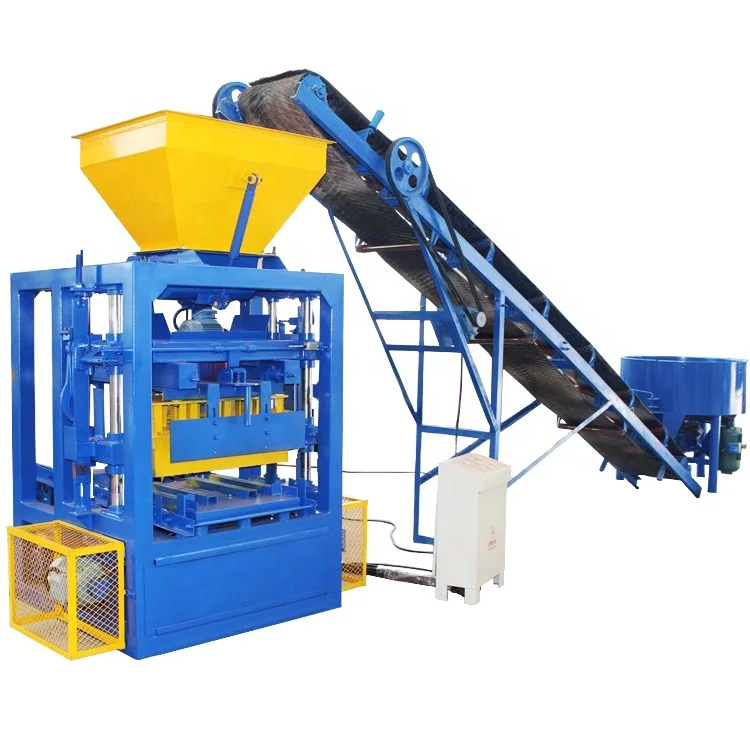
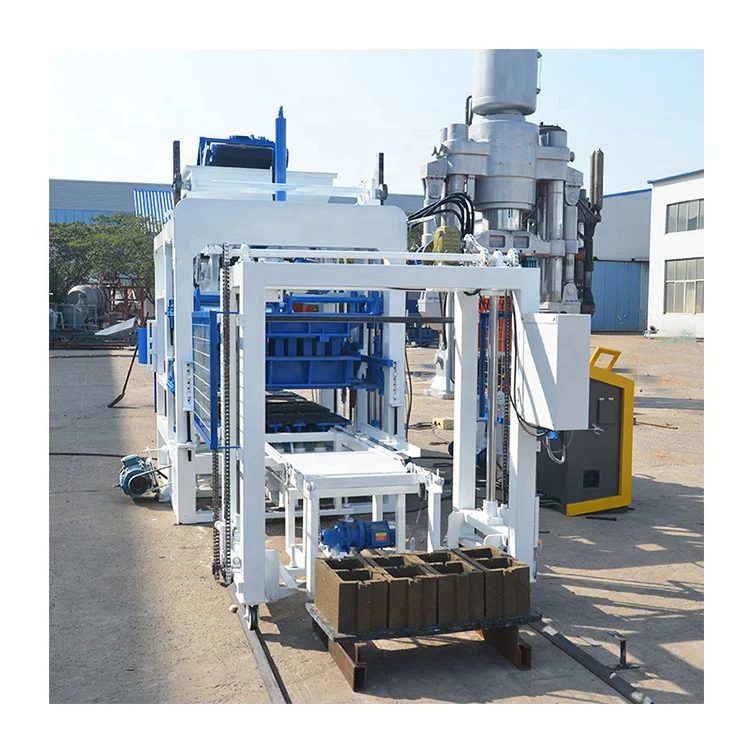 Stationary block machine