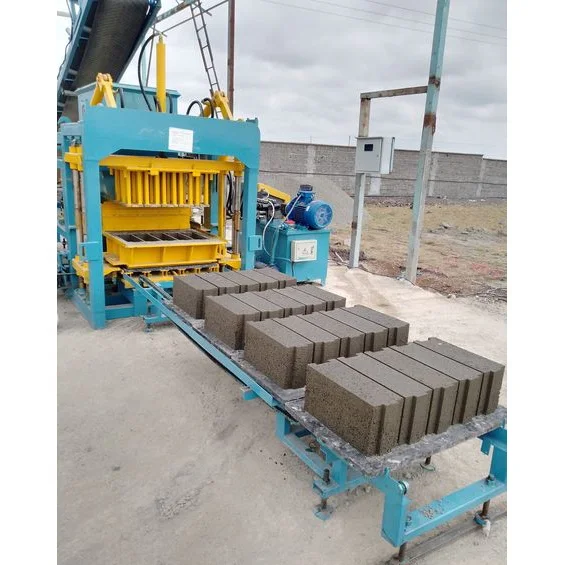
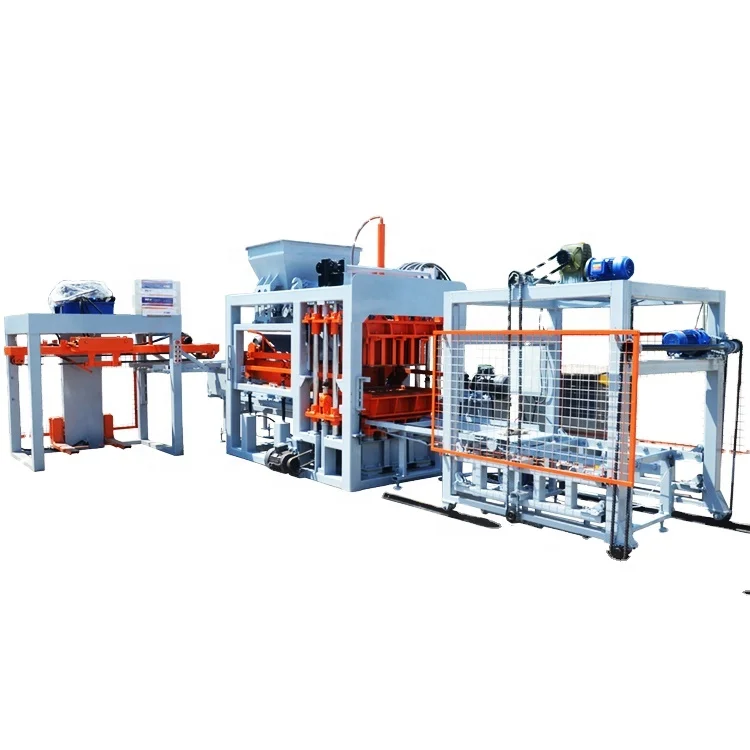
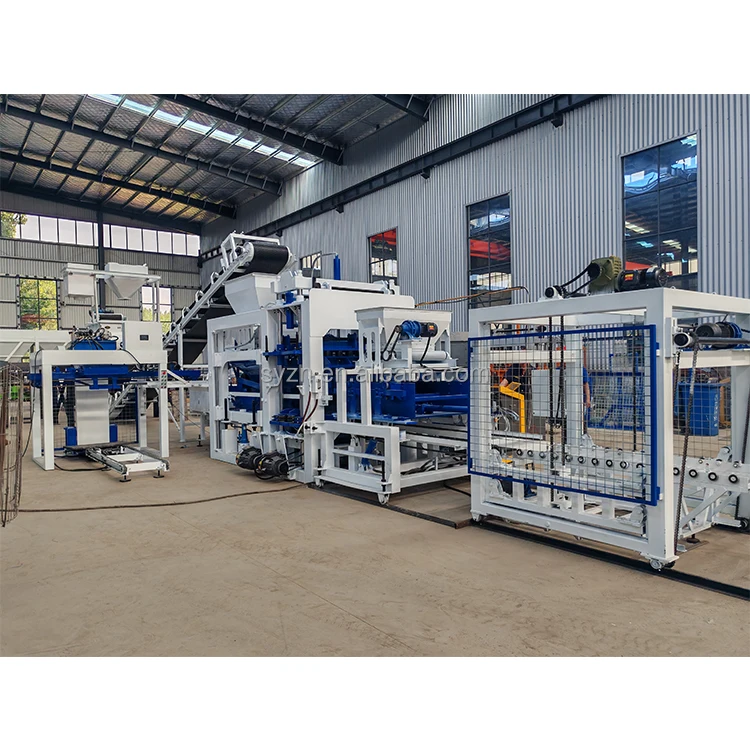
Configuration set against the buyer’s actual mix design, local aggregate and target block format — the QTJ4-24 capacity calculation is stated per mould format rather than a single catalogue figure, so your daily output estimate matches your real production conditions.
Technical Specifications
| Parameter |
Value |
| Model |
QTJ4-24 |
| Product Type |
Semi-Automatic Concrete Block Making Machine |
| Main Machine Power |
11.95 kW |
| Overall Dimensions (L×W×H) |
3600 mm × 1700 mm × 2560 mm |
| Net Weight |
3.5 T |
| Pallet Size |
900 mm × 450 mm |
| Moulding Cycle |
24–26 s (basis not stated in source) |
| Mould Formats |
400×200×200 mm (4 pcs/mould), 390×240×190 mm (3 pcs/mould), 390×120×190 mm (6 pcs/mould), 240×115×53 mm (21 pcs/mould) |
| Vibration Method |
Table vibration feeding, fluctuation vibration moulding |
| Control System |
Electrical control cabinet with mechanical interlocking |
| Automation Level |
Semi-automatic with manual pallet handling |
| Matching Line Equipment |
JQ350 or JQ500 vertical mixer, 6 m or 8 m belt conveyor |
| Assembly State |
Stationary on precast concrete ground |
| Certification |
CE declaration where applicable |
Application Suitability
| Application |
Material or Output |
| Small-scale hollow block production |
Crushed stone, sand, cement and water |
| Solid block manufacturing for masonry walls |
Local aggregate blended with Portland cement |
| Standard brick production for residential builds |
Clay-free concrete mix with fine sand |
| On-site block making for construction contractors |
Site-sourced aggregate within mix design limits |
| Workshop production for first-time block plant entrepreneurs |
Interchangeable moulds across hollow, multicellular, paving and brick formats |
What "24–26 Second Cycle" Actually Means for Your Output
Cycle time alone does not determine daily capacity — block format, mould piece count, and raw material behaviour all change the final number.
When buyers evaluate a QTJ4-24 block machine manufacturer, the moulding cycle is often the first figure they compare. But a 24–26 second cycle producing four 400×200×200 mm hollow blocks per press tells a very different story from the same cycle producing twenty-one 240×115×53 mm standard bricks per press. I once worked with a buyer who assumed the cycle time applied uniformly across all formats and was surprised when his daily brick output was five times his hollow block output from the same machine. Without knowing which format the quoted cycle assumes, you cannot build a realistic production schedule. [NEED_CITE: block format impact on cycle-based capacity calculation]

Placing the QTJ4-24 Within the Full Machine Range
The QTJ4-24 occupies the entry-level tier of the stationary block machine lineup. It sits below fully automatic lines with PLC-controlled batching, pallet feeding and stacking, and above smaller mobile egg-laying machines that produce directly on the ground without pallets. For a buyer surveying the full range, this model represents the point where production becomes predictable and repeatable through mechanical interlocking and controlled table vibration, without requiring the investment of a high-capacity automatic plant.
Where Semi-Automatic Fits Your Project Timeline
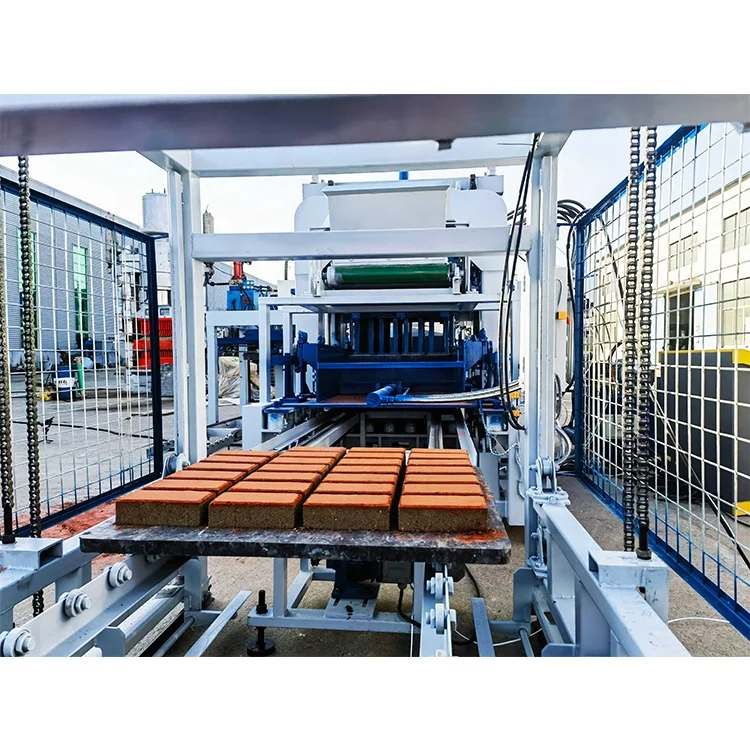
Semi-automatic operation means the press cycle runs under electrical-mechanical interlocking, but pallets are loaded and removed by hand. This keeps the initial investment lower and reduces the electrical infrastructure required at the site. Buyers who are setting up a first block plant or producing blocks on a construction site often choose this tier because it can start generating output with a small crew. The upgrade path to higher automation levels remains open if production volume grows. [NEED_CITE: automation tier selection for block plant startups]
Reading the Specs That Shape Real Production
The 900 × 450 mm pallet size is one of the most consequential specifications on the QTJ4-24. It must match your existing curing racks and the forklift you plan to use for moving loaded pallets to the curing area. A mismatch here means either replacing your forklift or losing pallets off the rack during transport. The 11.95 kW main machine power draws from a three-phase supply, and the wiring specification calls for 3×16 mm general feed with dedicated circuits for the mixer and conveyor. The four mould formats cover hollow blocks for load-bearing walls, multicellular blocks for partition walls, and standard bricks for infill — each with a different piece count per press, which directly changes your hourly and daily totals. The JQ350 or JQ500 vertical mixer paired with a 6 m or 8 m belt conveyor completes the line without requiring trench work for conveyor installation.
The Hidden Cost of Skipping Voltage Confirmation
Voltage, frequency and control display language are often treated as minor details until the machine arrives and will not start. A QTJ4-24 wired for 380V/50Hz will not run correctly on a 220V/60Hz supply without a transformer, and commissioning delays from mismatched voltage are among the most common complaints from first-time importers. Confirming these values before production begins avoids weeks of downtime while replacement components are sourced. [NEED_CITE: voltage and frequency standards by export market]
Why Sourcing the Full Line from One Manufacturer Matters
Block machinery as a single focus means the QTJ4-24, its moulds, pallets and handling equipment are specified as one matched system rather than assembled from separate suppliers. Configuration is set against your actual mix design and local aggregate, not a catalogue default. Mould design covers the formats your market sells, including custom drawings when your buyers need a non-standard size. The automation level is selectable, so you can start semi-automatic and add pallet feeding or stacking later. Installation support includes operator training so your crew understands mould change procedures and vibration adjustment from the first production run.
Documentation & Verification
- Line layout and capacity calculation stating the block format assumed for each mould
- Machine specification sheet with confirmed voltage and frequency
- Mould drawing and format list matching your local market demand
- Pallet specification confirming size and material against your curing area
- Factory test record run on your target block format before dispatch
- Operation and maintenance manual with wear parts and mould replacement list
Installation, Commissioning & Support
- Stationary installation on precast concrete ground with no trench required for the 6 m or 8 m belt conveyor
- Three-phase power supply with 3×16 mm general feed circuit for the 11.95 kW main machine
- Machine shipped as a single unit at 3.5 T net weight with standard container loading
- First-day commissioning includes vibration force adjustment to match your local aggregate
- Operator training covers mould change sequence and mechanical interlocking safety procedures
- Wear parts list provided with recommended replacement intervals for vibration table and hydraulic contacts
- Routine maintenance schedule aligned with pallet handling and mixer servicing
Preparing Your Inquiry for an Accurate Proposal
To receive a QTJ4-24 block machine manufacturer proposal that reflects your actual production conditions, include your target block format, the raw materials available locally, and your site power supply specifications. Knowing your daily volume target helps determine whether the semi-automatic tier matches your needs or whether a higher-capacity line is more appropriate. Share your curing area dimensions so the pallet size and handling equipment can be matched before the quotation is finalised.
Frequently Asked Questions
Q: How is the QTJ4-24 output capacity calculated per block format?
A: The moulding cycle of 24–26 seconds applies differently depending on the mould loaded. A 400×200×200 mm hollow block mould produces 4 pieces per cycle, while a 240×115×53 mm standard brick mould produces 21 pieces per cycle. Daily output must be calculated per format, not assumed from a single figure.
Q: Where does the QTJ4-24 sit in the full machine range?
A: It is positioned in the entry-level stationary tier, above mobile egg-laying machines and below fully automatic lines with PLC batching and stacking. It suits first-time plants and contractor sites where semi-automatic operation and lower investment are priorities.
Q: What voltage and frequency options are confirmed before shipment?
A: Voltage, frequency and control display language are confirmed during the quotation stage. This prevents commissioning delays caused by mismatched power supply or unreadable control interfaces at the installation site.
Q: What plant footprint does the QTJ4-24 require?
A: The main machine measures 3600 × 1700 × 2560 mm and is installed stationary on precast concrete ground. The matching mixer and belt conveyor require additional space but no trench work for conveyor placement.
Q: Can I start with semi-automatic and upgrade later?
A: The automation level is selectable. A buyer can begin with manual pallet handling on the QTJ4-24 and later add automatic pallet feeding, stacking or cubing as production volume grows.

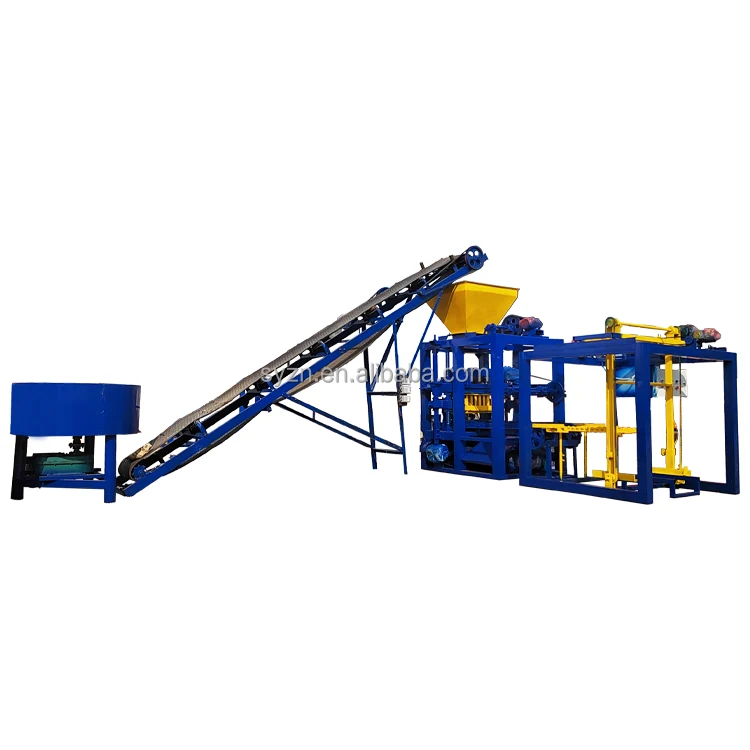
 High quality block machine