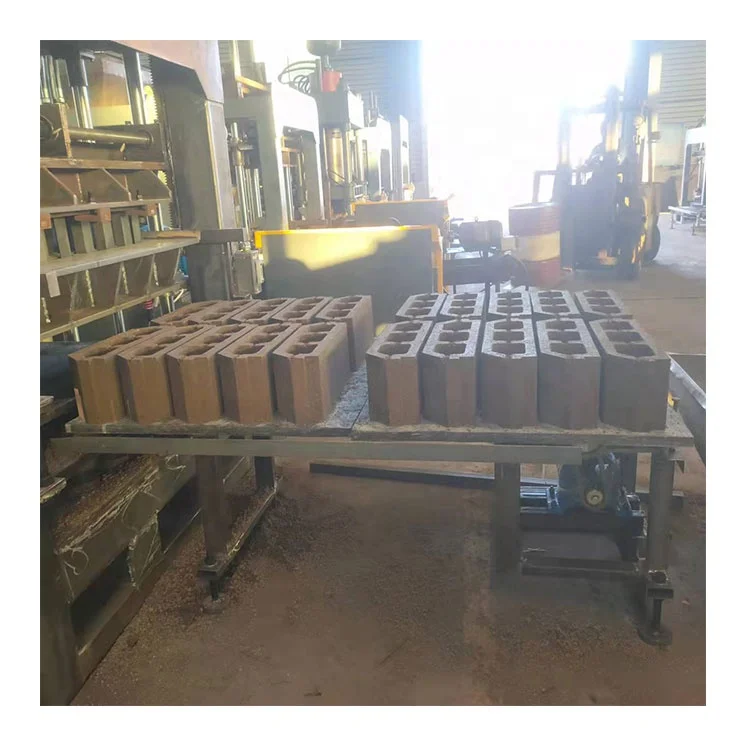
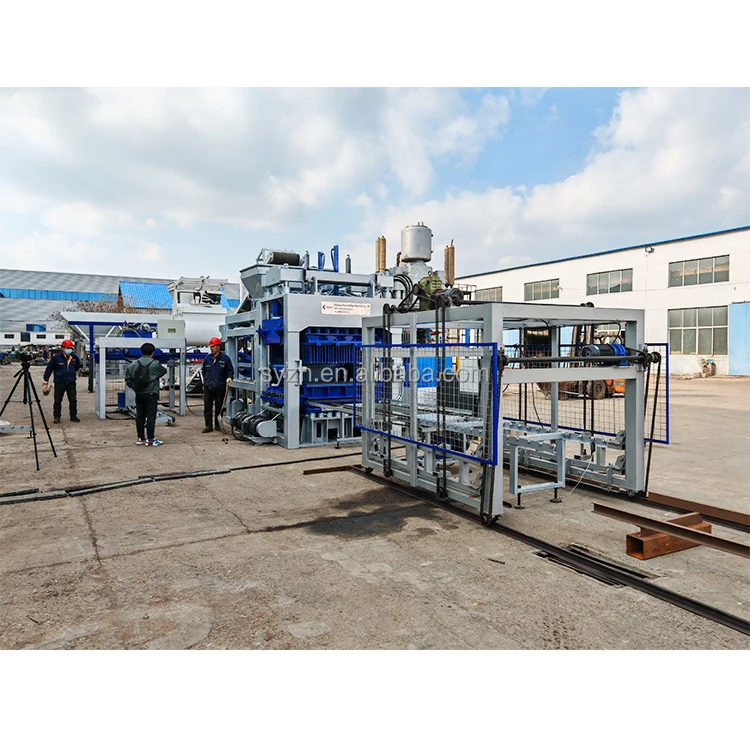
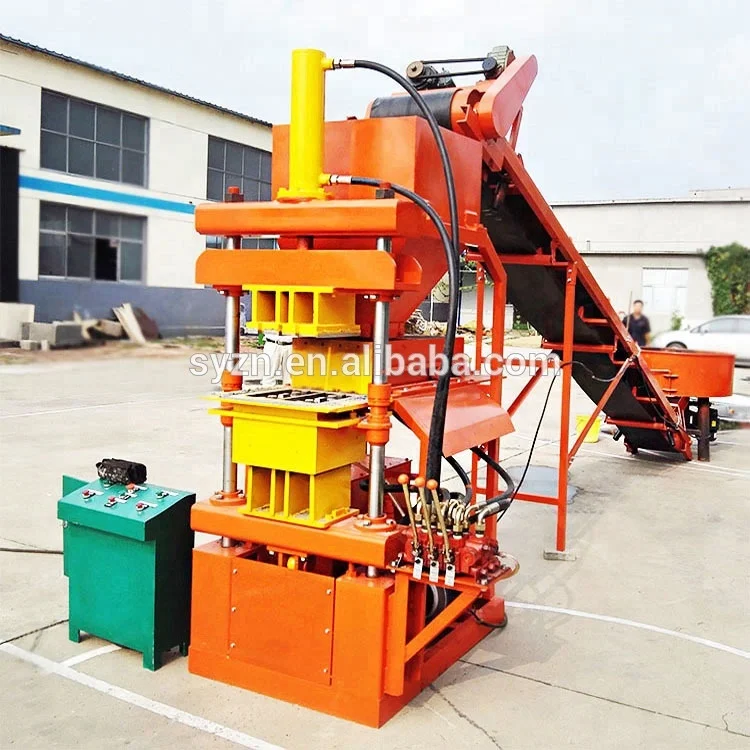
System-Matched Line Configuration — Every QT8-15 quotation we issue starts by matching the hydraulic pressure, vibration force, and pallet format to your specific block design and local aggregate, not a catalogue default.
Technical Specifications
| Parameter |
Value |
| Model |
QT8-15 |
| Product Type |
Hydraulic Concrete Block Making Machine |
| Overall Dimensions (L×W×H) |
8300×1860×3000 mm |
| Rated Pressure |
21 MPa |
| Main Vibration Form |
Platform Vibration |
| Vibration Frequency |
2800-4500 r/min |
| Pallet Size |
950×900 mm |
| Molding Cycle |
15-20 s (basis to be confirmed per block format) |
| Overall Power |
55.5 kW |
| Vibration Force |
45 kN |
| Total Mass |
8 T |
| Demolding Method |
Hydraulic |
| Factory Area |
300 m² |
| Voltage & Frequency |
Configurable to site requirements (confirm before dispatch) |
| Control System |
PLC configurable (confirm brand and display language) |
| Automation Level |
Semi-automatic to fully automatic line options available |
Application Suitability
| Application |
Material or Output |
| Hollow and solid block production |
Crushed stone, sand, cement, gravel, and slag blends |
| Paver and interlocking brick manufacturing |
Fine aggregates, fly ash, dust, and colored pigments |
| Kerbstone and heavy-duty block runs |
High-density crushed stone and cement mixes |
| On-site contractor production for housing projects |
Locally sourced aggregates including fly ash and gravel |
What the "15-20 Second Cycle" Actually Means for Your Daily Tonnage
A cycle time is only meaningful when tied to a specific block format, thickness, and mix design.
Buyers frequently see a 15-20 second molding cycle and multiply it out to an hourly output, only to discover on commissioning day that their actual daily tonnage falls short. The reason is usually one of three things: the cycle time was measured on a small solid block, not the 200 mm hollow block the buyer intends to run; the local aggregate has higher clay content than the test mix, requiring longer vibration to reach density; or the pallet return and stacking stages were not counted in the cycle calculation. When sizing a QT8-15 block machine manufacturer proposal, ask for a capacity table that states the assumed block format, wall thickness, and mix proportions for each cycle time figure [NEED_CITE: block cycle time calculation standards by format and thickness].

Where the QT8-15 Sits in the Full Machine Range
The QT8-15 occupies the mid-to-high tier of the block machine range, bridging the gap between small workshop presses and high-volume automatic plants. Its 8-ton mass and 55.5 kW power draw reflect a machine built for sustained daily shifts rather than intermittent use. Buyers stepping up from a mobile egg-laying machine or a small semi-automatic press will find the platform footprint and output tier a natural progression.
Choosing Between Semi-Auto and Automatic Line Tiers
This model can be configured as a standalone press with manual pallet handling, or integrated into a fully automatic line with pallet feeding, stacking, and cubing. The right tier depends on your labour cost, daily volume target, and available curing space. A semi-automatic setup reduces initial investment and works where pallets can be moved by hand or forklift to an adjacent curing yard. A fully automatic configuration removes the operator from the pallet handling loop, which matters when the daily output requires hundreds of pallets to be cycled through the curing area each shift [NEED_CITE: automation level selection criteria for concrete block plants].
Reading the Pressure and Vibration Numbers Together
The 21 MPa rated hydraulic pressure and 45 kN vibration force must be evaluated as a pair, not in isolation. Hydraulic pressure compresses the mix from above while platform vibration at 2800-4500 r/min rearranges particles from below; if either force is too low for the mix design, the block emerges with uneven density. The adjustable vibration frequency range allows the operator to tune compaction for different formats — a lower frequency suits large hollow blocks where the concrete must flow into deep cavities, while a higher frequency compacts fine aggregate into dense pavers. The 950×900 mm pallet size defines the maximum molding area per cycle and must match your existing curing racks and forklift fork spacing to avoid double-handling after demolding.
The Hidden Cost of Skipping Line Integration Checks
A press that runs perfectly in isolation can still bottleneck the entire plant if the upstream and downstream stations are not matched. If the mixer output rate cannot keep pace with the QT8-15’s molding cycle, the press idles waiting for material. If the pallet return conveyor is too slow, finished blocks queue at the press exit and risk edge damage. These mismatches rarely show up in a single-machine quotation but become expensive once the line is running and daily output disappoints [NEED_CITE: block production line bottleneck analysis].
Why Source the QT8-15 Through This Range
Block machinery is the single focus here, meaning the press, moulds, pallets, and handling equipment are specified as one matched system rather than assembled from separate suppliers. Configuration is set against your actual mix design and local aggregate, not a catalogue default. Mould design covers the formats your market sells, with custom drawings accepted. Automation level is selectable so you can start semi-automatic and upgrade the stacking and cubing stations later. Installation includes commissioning support and operator training on your specific block formats.
Documentation & Verification
- Line layout drawing showing capacity calculation stated per block format for the QT8-15
- Machine specification sheet confirming voltage, frequency, and PLC display language before production
- Mould drawing and format list covering all products your local market requires
- Factory test record run on your specified mix design and pallet type prior to dispatch
- Pallet specification matched to your curing area dimensions and forklift capacity
Installation, Commissioning & Support
- 300 m² factory area required for the press, mixer feed, and pallet circulation zones
- 55.5 kW overall power demands a dedicated circuit with confirmed voltage and frequency before energizing
- Machine ships dismantled for container loading and requires reassembly of the vibration platform and hydraulic frame on site
- Commissioning includes cycle time tuning on your specific block format and mix proportions
- Operator training covers mould change procedure, PLC navigation in confirmed language, and daily maintenance checkpoints
- Wear parts list and mould spares provided with the initial shipment for first replacement cycles
Before You Request a Quotation
To size the QT8-15 correctly within the range, share your target block formats with dimensions, your daily output requirement, and the local aggregate you plan to use. Confirm your site voltage, frequency, and preferred PLC display language so the control system can be specified before production begins. If you have an existing curing yard or forklift fleet, provide the pallet dimensions and rack spacing so the handling equipment can be matched from the start.
Frequently Asked Questions
Q: What block format is the QT8-15’s cycle time based on, and how does daily output change?
A: The 15-20 second molding cycle varies by block format, wall thickness, and mix design. A small solid block may cycle at the lower end of that range, while a 200 mm hollow block requires longer vibration and hydraulic hold. Request a capacity calculation that states the exact format assumed so daily output projections reflect your actual product mix.
Q: Where does the QT8-15 sit between semi-automatic and fully automatic tiers?
A: This model spans both tiers. As a standalone press, it operates semi-automatically with manual or forklift pallet handling. It can also anchor a fully automatic line with automatic pallet feeding, stacking, and cubing. The right choice depends on your daily volume target, labour availability, and curing space layout.
Q: What plant footprint does the QT8-15 require including curing space?
A: The press and immediate line stations need approximately 300 m² of factory area. Curing space is additional and depends on your daily pallet volume, stacking height, and whether you use open-air yard curing or enclosed steam curing racks. Factor pallet circulation paths into the total site plan.
Q: How are voltage, frequency, and PLC language confirmed before dispatch?
A: These are confirmed during the proposal stage, before production begins. Your site electrical specifications determine the motor and control panel build. The PLC display language is set to your operator preference. Factory testing then runs on the confirmed voltage and frequency to verify performance before the machine is dismantled for shipment.
Q: Which mould formats are available and can custom moulds be built?
A: Standard moulds cover hollow blocks, solid blocks, pavers, interlocking bricks, and kerbstones in common dimensions. Custom moulds can be designed and manufactured to your drawings or to a format specific to your local market. Mould change systems on the QT8-15 allow format switching within a single shift when the correct tooling is on hand.

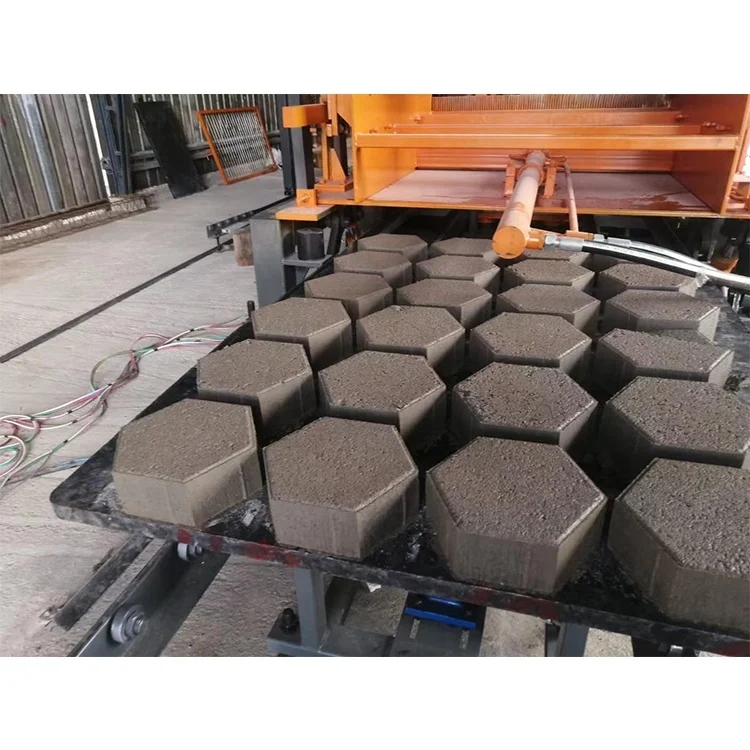
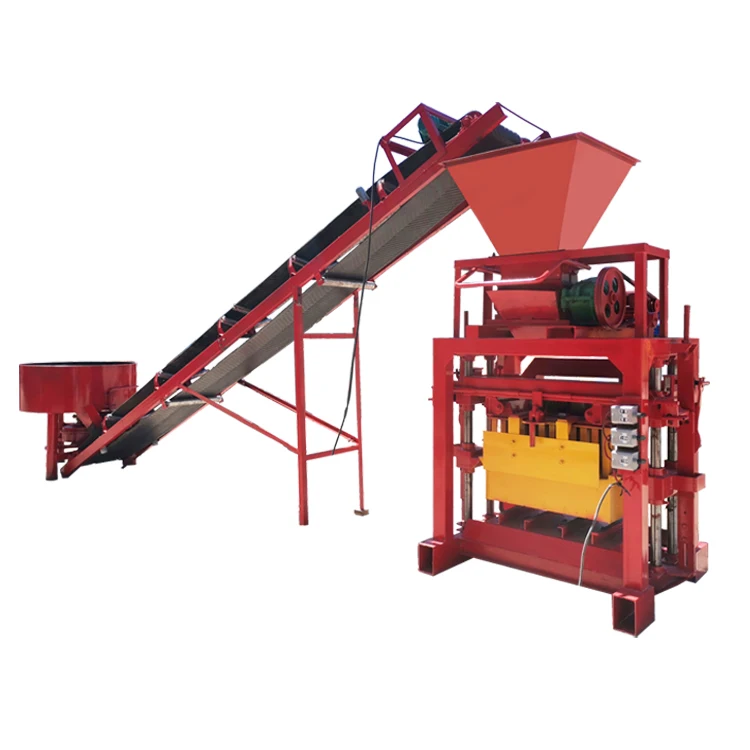 High quality block machine