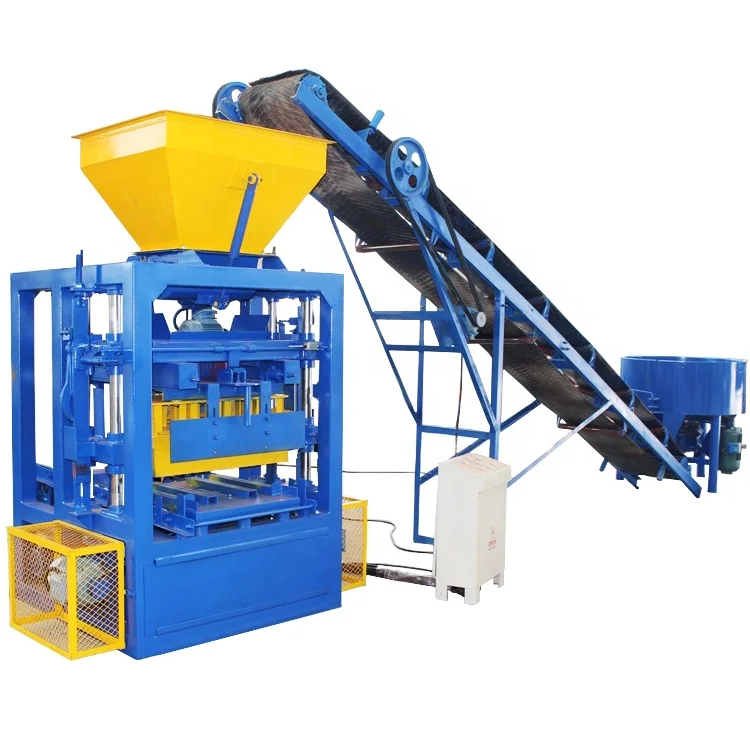
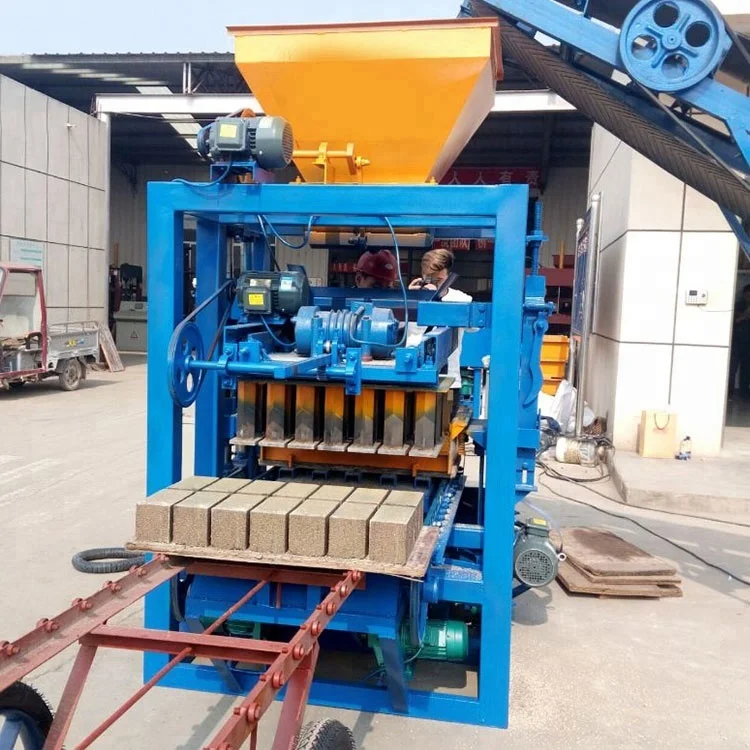
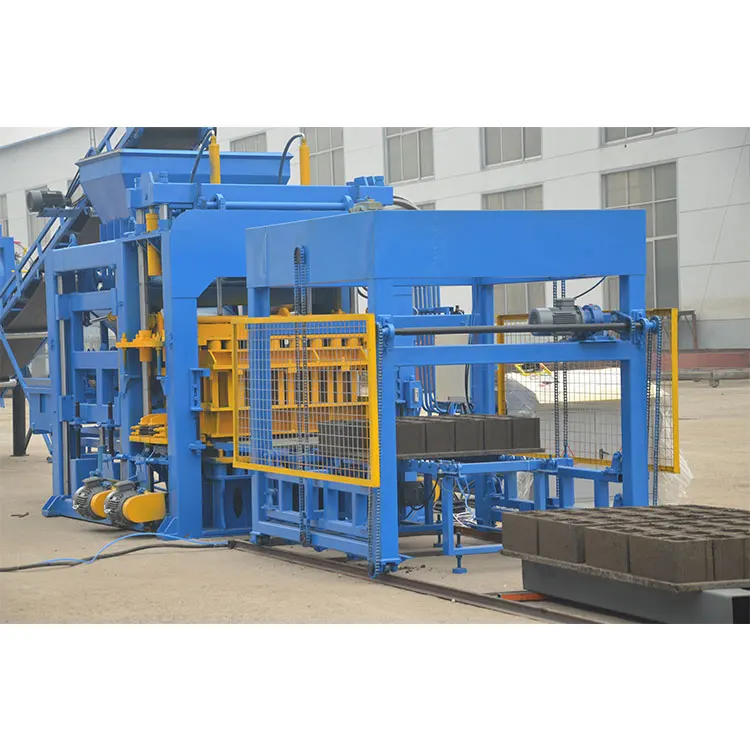
Single-Focus Configuration — The QT8-15 is specified as a matched system of press, mould, pallet and handling, not assembled from separate suppliers, so every component works toward the same density and cycle target.
Technical Specifications
| Parameter |
Value |
| Model |
QT8-15 |
| Product Type |
Automatic Block Making Machine |
| Control System |
PLC with Siemens electronics, remote diagnostics capable |
| Motor Power |
37 kW (Siemens motors) |
| Rated Pressure |
21 MPa |
| Vibration Force |
100 kN |
| Overall Dimensions |
8300 x 1860 x 3000 mm |
| Pallet Size |
950 x 900 mm |
| Mould Format: Hollow Block |
390 x 190 x 190 mm (8 pcs/mould) |
| Mould Format: Solid Block |
240 x 115 x 53 mm (39 pcs/mould) |
| Mould Format: Interlock Paver |
225 x 112.5 x 60 mm (18 pcs/mould) |
| Mould Construction |
Wire cutting, carburizing heat treatment |
| Stacking Method |
Automatic stacker (lifting pallets with finished blocks) |
| Color Feeder |
Optional, for surface pigment on paving bricks |
| Output Capacity |
basis not stated in source (to be confirmed per block format and material) |
| Voltage & Frequency |
Configurable to buyer’s site supply (basis to be confirmed) |
| PLC Display Language |
Configurable (basis to be confirmed) |
| Container Loading |
40ft HQ |
Application Suitability
| Application |
Material or Output |
| Hollow block production for commercial and residential walls |
Crushed stone, sand, cement, and fly ash blends |
| Solid brick manufacturing for load-bearing structures |
Local aggregate mixes with standard cement ratios |
| Colored interlocking pavers for driveways and walkways |
Surface pigment layers over a base concrete mix |
| Grass blocks and kerbstones for landscaping projects |
Porous concrete mixes with larger aggregate fractions |
Why Stated Cycle Times Miss the Real Daily Output
Capacity only becomes meaningful when tied to a specific block format, mould, and local material blend.
Catalogue sheets for an automatic block making machine for sale often quote a single cycles-per-hour figure. That number typically assumes an ideal hollow block on standard aggregate. When the buyer switches to a denser paver or a local volcanic aggregate that absorbs vibration differently, the actual cycle stretches and daily output drops. I have seen lines where the press was the bottleneck simply because the quoted capacity never accounted for the buyer’s real product mix. [NEED_CITE: block density standards and testing methods vary by region]
Placing the QT8-15 in the Full Machine Range
The QT8-15 occupies the mid-to-high tier of the full automatic block making machine range, sitting above workshop-scale models and below high-capacity plant lines. Its 8300 x 1860 mm footprint means it needs a dedicated production bay, but does not require the extended conveyor runs of larger tiers. Buyers setting up a first block plant or replacing an ageing semi-automatic press typically land on this model when daily volume demands exceed what smaller units can sustain.
How Vibration and Pressure Work Together on Block Density
Achieving consistent block density depends on matching vibration force to hydraulic pressure across every stroke. The QT8-15 delivers 100 kN of vibration force alongside 21 MPa of rated hydraulic pressure, meaning the mould fill compacts fully before the press head completes its stroke. On lightweight aggregate blends, vibration can be tuned downward to avoid over-segregation, while dense crushed stone mixes need the full force range. This pairing is what separates a block that passes compressive strength tests from one that crumbles during pallet handling. [NEED_CITE: vibration and hydraulic pressure interaction in concrete block forming]
Reading the Specs That Actually Affect Your Line
Motor power at 37 kW drives both the hydraulic pump station and the vibration system, so the electrical supply must accommodate sustained peak draw during compaction cycles rather than just nominal running load. The 950 x 900 mm pallet size determines how many blocks cure per rack level and which forklift tines can handle loaded pallets — specifying pallets without checking the buyer’s existing curing yard leads to double-handling on day one. The carburizing heat treatment on wire-cut moulds extends wear life when abrasive aggregates like river gravel or crusher dust are part of the daily mix, reducing the frequency of mould swaps. Siemens PLC electronics with remote diagnostics capability mean that a fault code can be read from a distance, cutting the time between a stoppage and a resolution. [NEED_CITE: PLC remote diagnostics standards in industrial machinery]

What Happens When Automation Gaps Are Discovered Late
Quotations that list the press alone leave pallet handling, stacking, and curing as manual afterthoughts. Workers end up lifting loaded pallets by hand while the automatic stacker sits in a separate line item that was never approved. Colour feeder omissions mean paver orders go unfilled until a retrofit is sourced locally, often at a premium. Voltage and PLC language left unconfirmed until the machine arrives can delay commissioning by weeks while transformers are ordered or control screens are reprogrammed. These gaps do not show up on the spec sheet, but they consume real shifts once the line should be producing. [NEED_CITE: industrial machinery commissioning delays from unconfirmed electrical specifications]
Why Sourcing the QT8-15 Through This Range
Block machinery is our single focus, so the press, mould, pallet, and handling equipment are specified as one matched system rather than sourced from separate vendors. Every configuration is set against the buyer’s actual mix design and local aggregate, not pulled from a catalogue default. Mould design covers the formats the buyer’s market sells, with custom drawings available when standard sizes do not match local building codes. Automation level is selectable — a buyer can start with manual pallet handling and add the stacker and colour feeder as volume grows. Installation includes operator training on the specific PLC language and voltage confirmed before production begins.
Documentation & Verification
- Line layout and capacity calculation stating the block format assumed for each output figure
- Machine specification sheet confirming Siemens motor brand, PLC components, and hydraulic ratings
- Mould drawing and format list with pallet size matched to curing area and forklift
- Voltage, frequency, and PLC display language confirmation document signed before production
- Factory test record run on the buyer’s target block format before dispatch
Installation, Commissioning & Support
- Foundation plan based on the 8300 x 1860 x 3000 mm footprint and 15 t operating weight
- Dedicated electrical circuit sized for the 37 kW sustained peak draw of the Siemens motor set
- Machine dismantled into press, hydraulic station, and stacker modules for 40ft HQ container loading
- On-site commissioning with PLC parameters tuned to the buyer’s confirmed voltage and frequency
- Operator training covering mould change procedure, cycle adjustment, and daily lubrication points
- Wear parts list with mould and hydraulic seal reorder intervals based on local aggregate abrasiveness
What to Include in Your First Inquiry
To place the QT8-15 correctly within the full range, share the block formats your market sells most, the local aggregate type and source, and your target daily volume per format. Confirm the available site voltage, frequency, and the language your operators will need on the PLC screen. If you have existing pallets, forklifts, or curing racks on site, provide their dimensions so the pallet specification can be matched from the start.
Frequently Asked Questions
Q: How is output capacity calculated, and which block format is assumed for each figure?
A: Output capacity is calculated from the cycle time for each specific mould format, accounting for fill, vibration, press, and return strokes. A hollow block cycle differs from a paver cycle, so we state output per format rather than a single headline number. The buyer’s local material blend and target block density also affect the final daily count.
Q: Where does the QT8-15 sit compared to smaller and larger models in footprint and investment?
A: The QT8-15 occupies the mid-to-high tier, requiring a dedicated production bay without the extended conveyor runs of larger plant lines. It suits buyers whose volume exceeds workshop-scale output but who are not yet at the capacity that justifies a high-tier automatic line with full cubing and wrapping stations.
Q: What voltage and frequency configurations are available, and is PLC language confirmed before shipment?
A: Voltage and frequency are configured to match the buyer’s site supply before production begins. The PLC display language is confirmed at the same stage so operators can read fault codes and cycle parameters in their working language on day one, avoiding commissioning delays.
Q: Can I start with a semi-automatic configuration and add the stacker and colour feeder later?
A: Yes. The QT8-15 platform allows a buyer to begin with manual pallet handling and add the automatic stacker and optional colour feeder as production volume grows. The PLC control system supports these additions without requiring a full control cabinet replacement.
Q: What is included in the quotation versus what is quoted separately as auxiliary equipment?
A: The quotation covers the press, mould, pallets, and the agreed automation level. Raw material feeding, mixing, curing rack handling, and cubing stations are quoted separately as part of the line layout. This split ensures buyers see exactly what the press delivers and what the surrounding stations add.

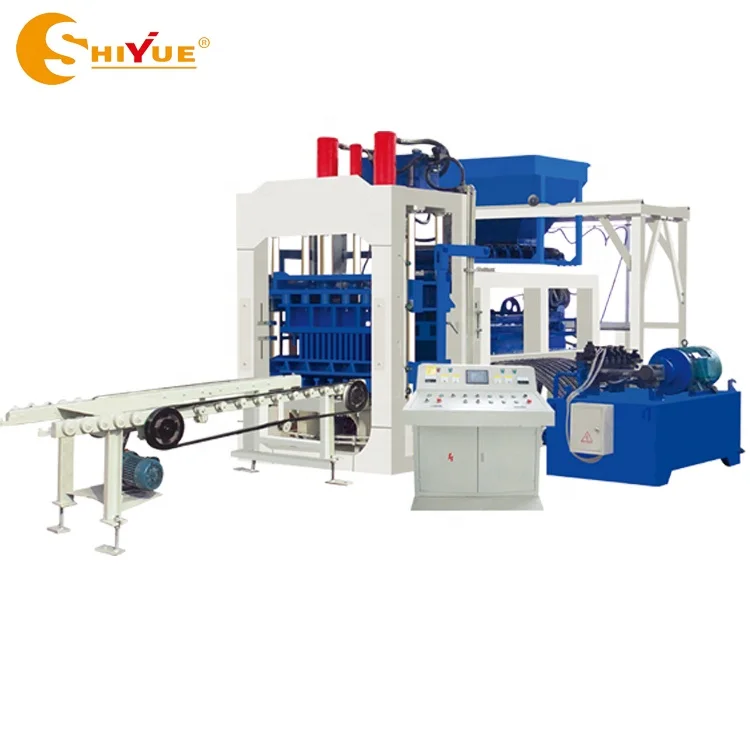
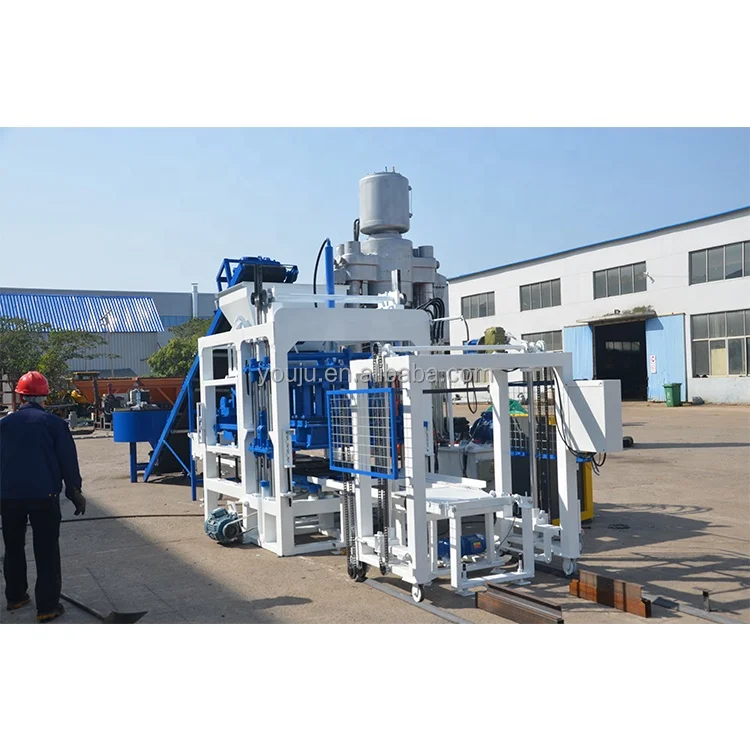 Automatic block machine