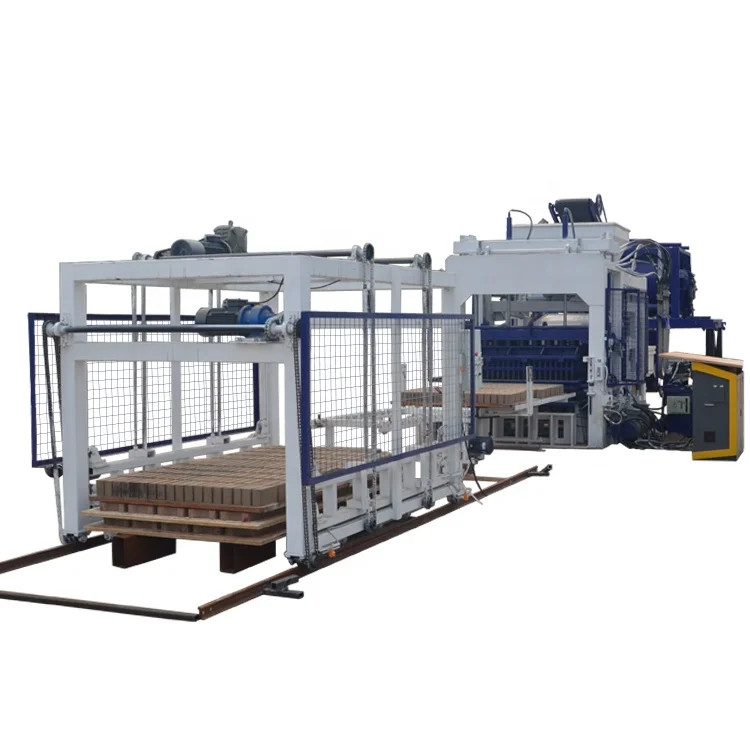
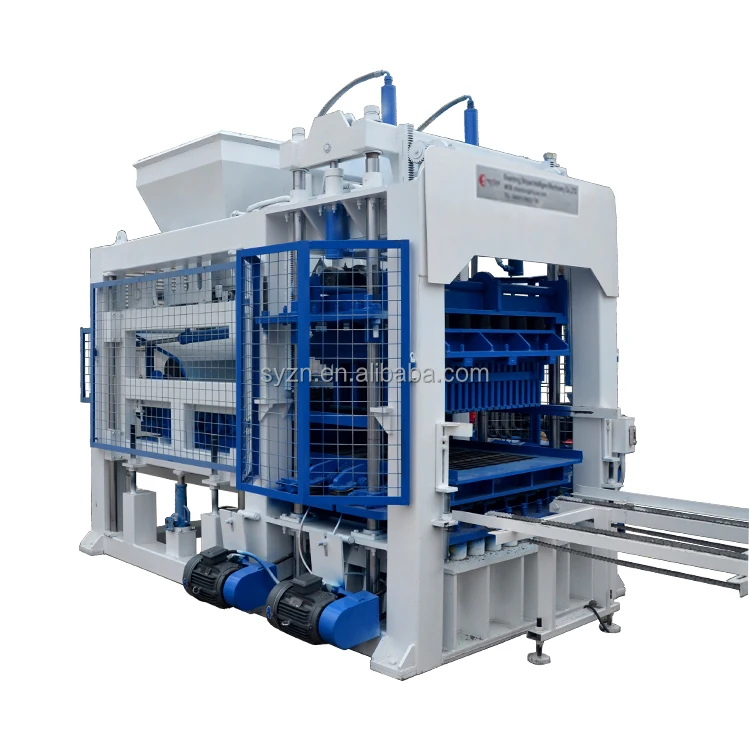
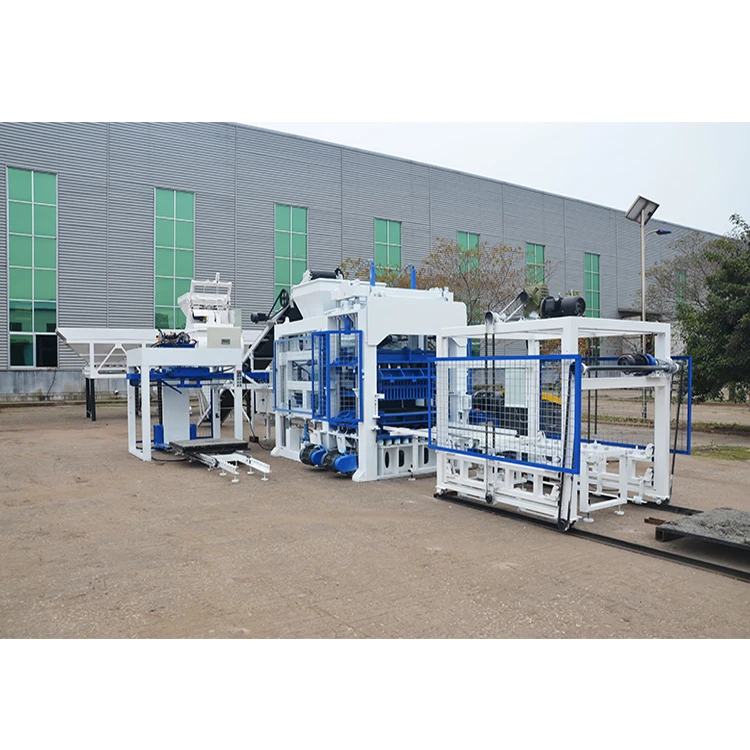
Matched System Sizing — Every configuration starts from your actual mix design and target block format, not a catalogue default, so the press, pallet and handling work as one line.
Technical Specifications
| Parameter |
Value |
| Model |
QT8-15 |
| Product Type |
Automatic Concrete Block Making Machine |
| Overall Dimensions (L×W×H) |
8300 x 1860 x 3000 mm |
| Rated Pressure |
21 MPa |
| Vibration Form |
Platform Vibration |
| Vibration Frequency |
2800–4500 RPM |
| Pallet Size |
950 x 900 mm |
| Molding Cycle |
15–25 s (basis not stated in source — confirm block format, material and thickness) |
| Overall Power |
46 kW |
| Control System |
PLC with touch screen human-computer interface |
| Hydraulic System |
Independent integrated hydraulic station |
| Automation Level |
High degree of automation, intelligent electronic control |
| Support Equipment |
JS750 mixer, 8 m belt conveyor, automatic stacker (two pallets per cycle, 3–6 layers) |
| Included Mould |
One free hollow mould; extra moulds available on request |
| Certification |
CE declaration where applicable |
Application Suitability
| Application |
Material or Output |
| Hollow block production for building walls |
Crushed stone, sand, cement and water |
| Solid block production for load-bearing structures |
Coarse aggregate with cement binder |
| Paving block production for driveways and walkways |
Fine aggregate, pigment and cement |
| On-site block production for housing projects |
Locally sourced sand, gravel and cement |
| Format expansion for existing concrete product plants |
Multiple aggregate grades across mould changes |
What the Quoted Cycle Time Actually Means for Your Daily Output
A 15–25 second molding cycle only translates to realistic daily volume when you know which block format, wall thickness and aggregate density were used to measure it.
When a buyer receives a quotation stating cycles per hour without the reference block, planning a plant around that number leads to missed delivery commitments. The QT8-15 block machine manufacturer configures the line around the specific format you intend to sell — hollow, solid or paving — and the cycle time is then validated during the factory test with your chosen mould installed. [NEED_CITE: importance of format-specific capacity calculation in block plant planning]
Where the QT8-15 Sits in the Full Machine Range
The QT8-15 occupies the automatic tier of the SHIYUE block machine lineup. Below it, semi-automatic models require manual pallet transfer and hand stacking, suitable for lower investment or smaller daily volumes. Above it, higher-output automatic lines add faster cycle rates and larger pallet sizes. The QT8-15 automatic block making machine for sale bridges the gap for buyers who have outgrown egg-laying or mobile machines and need consistent PLC-controlled production without jumping to the largest press available.
Understanding the Automation Level Before You Commit
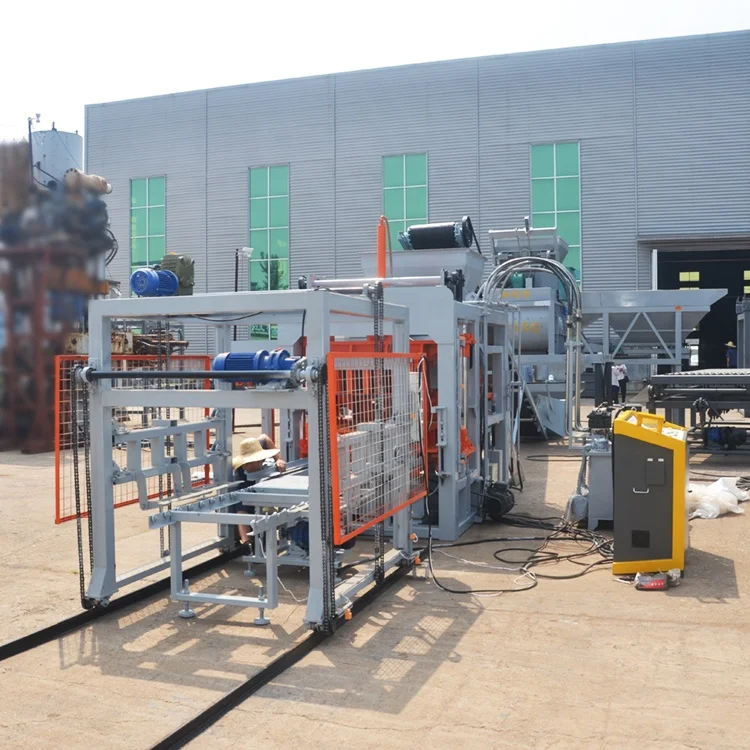
Automation on this QT8-15 block machine manufacturer model covers the full press cycle: material feed, vibration, hydraulic pressing, demoulding and pallet transfer all run through the PLC touch screen. The automatic stacker collects two pallets per cycle and stacks them three to six layers high depending on block height, removing the need for manual pallet handling at the press exit. Buyers can select manual mode for individual stations during mould changes or maintenance, keeping operational flexibility. [NEED_CITE: PLC-controlled automation levels in concrete block presses]
How Pressure, Vibration and Pallet Size Shape Block Quality
The 21 MPa rated pressure and platform vibration at 2800–4500 RPM work together to compact the concrete mix into the mould cavity. Higher vibration frequency suits fine aggregate mixes, while coarser gravel requires sustained hydraulic pressure to achieve target density. The 950 x 900 mm pallet determines how many blocks fit per cycle — a standard hollow block may yield four to six units per mould, while smaller paving formats produce more per press. Pallet material and surface condition directly affect demoulding quality; warped or worn pallets cause sticking and edge damage. The independent hydraulic station sits isolated from main press vibration, which protects seals and valves from premature wear caused by continuous shock loading.

The Cost of Skipping Mix Design Validation Before Ordering
A block machine configured for a standard sand mix will underperform when the buyer’s local aggregate has different moisture content, particle shape or grading. We have seen machines arrive on site and produce blocks that collapse on demoulding because the vibration frequency and pressure settings were calibrated for a material the buyer could not source. Adjusting parameters after installation takes days of trial runs and wastes raw material. [NEED_CITE: impact of local aggregate variation on block strength consistency] The QT8-15 block machine manufacturer requests a sample of the buyer’s actual raw material before finalizing vibration frequency range and hydraulic pressure settings, so the factory test reflects real production conditions.
Why Sourcing the Full Line from One Supplier Matters
The QT8-15 ships as a matched system: JS750 mixer, 8 m belt conveyor, press and automatic stacker are specified together so cycle times align and the press is never left waiting for material or pallets. Mould design covers the formats your market actually sells, including custom drawings when standard hollow or paving moulds do not match local demand. The pallet size is chosen with your existing curing area and forklift capacity in mind, avoiding the mismatch where new pallets do not fit the curing racks already in place. Voltage, frequency and PLC display language are confirmed before production begins, so the control panel is readable and the electrical supply matches on arrival. Factory testing runs the complete line with your selected mould installed, generating a test record that documents actual cycle time and block dimensions.
Documentation & Verification
- Line layout showing QT8-15 footprint with mixer, conveyor and stacker positions
- Capacity calculation stating the block format assumed for the 15–25 s cycle
- Mould drawing and format list for the 950 x 900 mm pallet
- Voltage, frequency and PLC display language confirmation sheet
- Factory test record with your selected mould and mix design
- Hydraulic and electrical schematic for on-site maintenance reference
Installation, Commissioning & Support
- Foundation pad sized to the 8300 x 1860 mm machine footprint with level tolerance
- Dedicated 46 kW power circuit matching confirmed voltage and frequency
- Press, mixer and stacker arrive dismantled for container loading and on-site reassembly
- First production run supervised with parameter adjustment to local aggregate
- Operator training on PLC touch screen, mould change procedure and daily maintenance
- Wear parts and mould replacement list supplied with initial spare recommendations
What to Prepare Before Requesting a Quotation
Provide the block formats you intend to produce, the target daily output per format and a sample or analysis of your local aggregate including grading and moisture range. Share your available workshop dimensions, ceiling height and curing area layout so the line can be arranged to fit. Confirm the local voltage and frequency supply, and specify the language required for the PLC display.
Frequently Asked Questions
Q: Where does the QT8-15 sit compared to semi-automatic and mobile tiers?
A: The QT8-15 is a fixed-plant automatic press with PLC control and an automatic stacker. Semi-automatic models in the range require manual pallet handling and are suited to lower daily volumes or smaller investment. Mobile egg-laying machines produce blocks on the ground without pallets but offer less format flexibility and lower consistency than a fixed automatic line.
Q: What block formats can the QT8-15 produce on the 950 x 900 mm pallet?
A: The press accepts moulds for hollow blocks, solid blocks, paving blocks and other concrete masonry units that fit the 950 x 900 mm pallet. One hollow mould is included; additional moulds for other formats are available on request. The mould drawing and format list confirm exactly which block types and quantities per cycle are achievable before you place an order.
Q: What installation space does a full QT8-15 line require?
A: The press alone measures 8300 x 1860 x 3000 mm. A complete line with the JS750 mixer, 8 m belt conveyor and automatic stacker requires additional length for material feed and stacking area, plus space for curing racks. A line layout drawing is provided during the proposal stage showing all station positions and required clearances.
Q: Can I start with semi-automatic operation and upgrade later?
A: The PLC touch screen allows individual stations to run in manual or automatic mode. Buyers can operate certain functions manually during the initial ramp-up period and switch to full automatic once operators are trained. The control system supports this transition without hardware replacement.
Q: What electrical and control details are confirmed before shipment?
A: Voltage, frequency and PLC display language are confirmed in writing before production begins. This ensures the motor ratings match your local supply and the touch screen interface is readable by your operators. The confirmation is documented in the electrical specification sheet included with the shipping documentation.

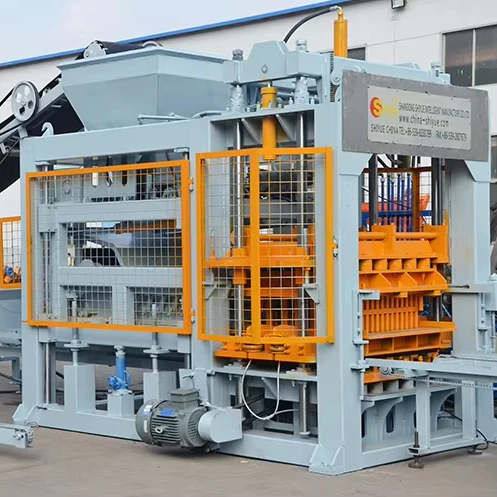
 High quality block machine