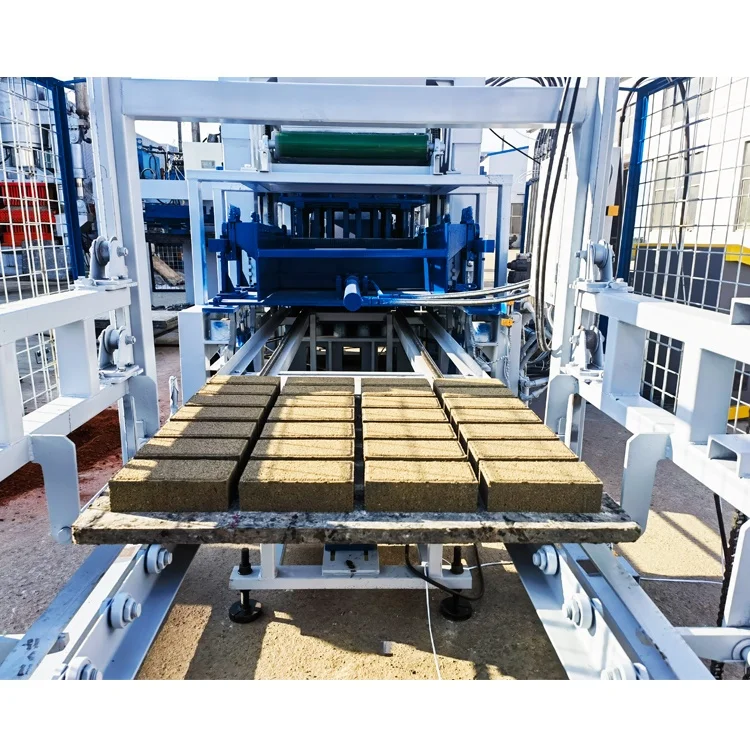
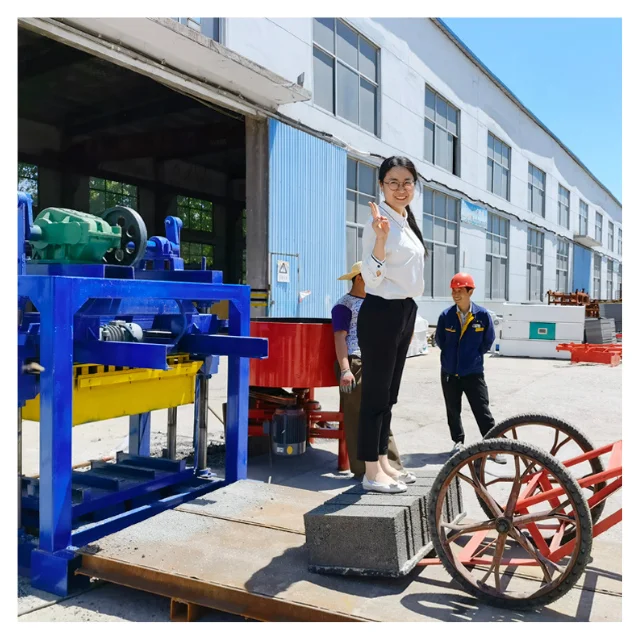
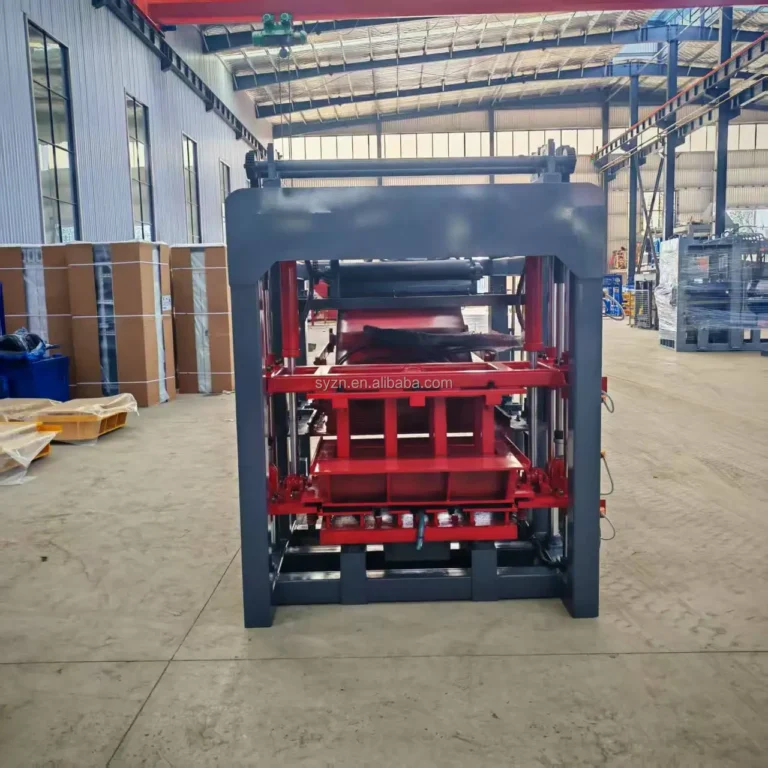
System-Matched Configuration — The QT7-15 block making machine is specified against your actual mix design, local aggregate, and target block format rather than a generic catalogue default.
Technical Specifications
| Parameter |
Value |
| Model |
QT7-15 |
| Product Type |
Automatic Hydraulic Block Making Machine |
| Pallet Size |
1150×700 mm |
| Vibration Force |
100 kN |
| Vibration Frequency |
0–60 Hz (adjustable) |
| Vibration Form |
Platform Vibration |
| Molding Cycle |
15–20 s (basis not stated in source — confirm block format / material / thickness) |
| Overall Power |
45 kW |
| Total Mass |
8 T |
| Demolding Method |
Hydraulic |
| Control System |
PLC with touch screen interface, remote diagnostics supported |
| Output Capacity (Hollow Block 400×200×200 mm) |
1260–1680 pcs/hour, 10080–13440 pcs/8hr |
| Output Capacity (Hollow Block 400×150×200 mm) |
1440–1920 pcs/hour, 11520–15360 pcs/8hr |
| Output Capacity (Rectangular Brick 200×100×60 mm) |
3888–4860 pcs/hour, 31104–38880 pcs/8hr |
| Automation Level |
Automatic (pallet feed, block press, storage hopper, conveyor, hydraulic unit, PLC cabinet) |
| Mould Change System |
Simple mould replacement for multi-format production |
| Standards |
CE (documentation available) |
Application Suitability
| Application |
Material or Output |
| Hollow block production |
Cement, crushed stone, sand, fly ash — 400×200×200 mm and 400×150×200 mm formats |
| Solid block manufacturing |
Dense aggregate or lightweight concrete mixes for load-bearing walls |
| Paving brick production |
Interlocking and rectangular pavers 200×100×60 mm from fine aggregate blends |
| On-site contractor production |
Housing and infrastructure projects producing blocks locally from available raw materials |
| Multi-format plant expansion |
Adding kerbstone, porous brick, or custom formats to an existing product range |
What "15-Second Cycle Time" Leaves Out About the QT7-15 Automatic Block Making Machine
Cycle time only becomes daily output when you know which block format and thickness it was measured on.
I once watched a buyer receive a machine quoted at a fixed cycle time, only to find their local river sand was too fine for the vibration settings dialed in at the factory. Blocks came out weak, daily tonnage dropped sharply, and the whole crew spent weeks trying to compensate manually. The QT7-15 automatic block making machine is no different — a 15-second cycle on a thin rectangular paver is not the same as a 15-second cycle on a 200 mm hollow block. That is why every capacity figure in the table above names the exact format it assumes, so your real-world daily production matches what you planned for [NEED_CITE: block format effect on cycle time and daily output].

Where the QT7-15 Sits in the Full Machine Range
The QT7-15 occupies the mid-to-high output tier among automatic block making machine options, bridging the gap between small workshop presses and large-capacity automatic lines. Buyers moving from semi-automatic production find the PLC-controlled pallet feed and hydraulic demolding remove the most labour-intensive steps without requiring the footprint of a fully automatic cubing line. The 1150×700 mm pallet size keeps curing rack and forklift requirements manageable while still delivering substantial output per shift.
Comparing Tiers: Semi-Auto, QT7-15, and High-Capacity Lines
Semi-automatic machines suit entrepreneurs setting up a first plant where pallet handling and stacking are still done manually. The QT7-15 adds automatic pallet feeding, storage hopper conveyor, and PLC-based fault diagnosis, reducing operator workload and improving batch-to-batch consistency. For buyers targeting higher volumes, our larger automatic lines add automatic stacking and cubing beyond the press itself. The choice depends on your current labour availability, curing area size, and whether you intend to scale output gradually [NEED_CITE: automation tier selection criteria for block plants].
Vibration Force, Hydraulic Pressure, and What They Mean for Block Density
The 100 kN vibration force and adjustable 0–60 Hz frequency on this QT7-15 block machine work together with hydraulic demolding pressure to compact the concrete mix into a dense, consistent block. Platform vibration transmits energy through the pallet into the mould cavity, and the adjustable frequency lets the operator tune the system for different aggregate gradations — coarse crushed stone needs different settings than fine sand. The 45 kW overall power rating covers both the vibration motors and the hydraulic pump, meaning neither system starves the other during the pressing cycle. Pallet size at 1150×700 mm determines how many blocks are produced per cycle, and the 8-tonne machine mass provides the dead weight needed to absorb vibration without transmitting it into the foundation.
The Hidden Cost of Skipping the Mix Design Conversation
When a machine is configured for a standard mix but the buyer’s local aggregate has a different particle shape or moisture behaviour, the vibration and hydraulic settings no longer produce the intended density. Blocks may crack during curing or fail compressive strength tests, and the buyer often blames the press when the real issue is a mismatch between factory defaults and site materials. I have seen production crews add extra cement to compensate, raising material costs without fixing the underlying inconsistency [NEED_CITE: aggregate variation effects on block compressive strength].
Why Buyers Source This Automatic Block Making Machine Here
Block machinery is the single product focus, so the press, mould, pallet, and handling equipment are specified as one matched system rather than assembled from unrelated suppliers. The QT7-15 automatic block making machine is configured after reviewing your target block format, local raw material samples, and site layout — not shipped from a default warehouse setting. Mould design covers the formats your market actually sells, including custom drawings when standard options do not match. Automation level is selectable, meaning you can begin with a simpler pallet handling arrangement and add stacking or cubing later. Installation support includes operator training so your crew understands PLC fault codes and mould change procedures before the first production shift.
Documentation & Verification
- Line layout and capacity calculation stating the exact block format for each QT7-15 output figure
- Machine specification sheet confirming 1150×700 mm pallet, vibration force, hydraulic pressure, and PLC language
- Mould drawing and format list showing all available block types and the mould change procedure
- Voltage, frequency, and control display language confirmation signed off before production begins
- Factory test record on your specified block format before dispatch
- CE declaration and operation manual with wear parts list included
Installation, Commissioning & Support
- Foundation pad sized for the 8-tonne QT7-15 mass and platform vibration isolation requirements
- Dedicated electrical circuit for the 45 kW overall power draw with voltage confirmed before wiring
- Machine shipped in dismantled modules for container loading, with reassembly supervised on site
- PLC touch screen calibrated and remote diagnostics activated during first-run commissioning
- Operator training covers mould change, cycle adjustment, and hydraulic demolding procedures
- Wear parts list and mould inventory reviewed so replacements are available when first needed
Before You Request a Quotation
Share your target block format and daily output requirement so the capacity calculation reflects what you will actually produce. Confirm your local aggregate type and whether you can provide a sample for mix matching. Let us know your site voltage, frequency, and preferred PLC display language so the QT7-15 automatic block making machine arrives ready for commissioning without electrical or interface delays.
Frequently Asked Questions
Q: How is the QT7-15 capacity calculated, and which block format does each output figure assume?
A: Each output figure in the specification table names the exact block format and dimensions it was measured on. Hollow block 400×200×200 mm, 400×150×200 mm, and rectangular brick 200×100×60 mm each have their own hourly and eight-hour range listed. We do not quote a single cycle time without stating the format, because switching block types changes the moulding cycle and total daily output.
Q: Where does the QT7-15 sit compared to semi-automatic and higher-tier automatic models?
A: The QT7-15 is in the mid-to-high tier of the full automatic block making machine range. It adds PLC-controlled pallet feeding, hydraulic demolding, and remote diagnostics beyond semi-automatic presses. Larger lines above it include automatic stacking and cubing systems. The right tier depends on your current labour setup and how much of the line beyond the press you want automated.
Q: What plant footprint and supporting equipment does the QT7-15 require?
A: Beyond the press itself, plan for raw material feeding, a mixer matched to the cycle rate, pallet circulation, and a curing area sized for 1150×700 mm pallets. Forklift or rack handling must be compatible with that pallet dimension. We provide a line layout document showing station spacing and where each piece of supporting equipment connects to keep the press from waiting between cycles.
Q: Can I start semi-automatic and add automation later?
A: The machine platform supports a selectable automation level. You can begin with manual pallet handling at the discharge end and add automatic stacking or cubing equipment when production volume justifies the investment. The PLC control cabinet and hydraulic system remain the same, so the upgrade involves adding mechanical stations rather than replacing the press.
Q: What voltage, frequency, and PLC display language options are confirmed before shipment?
A: Voltage, frequency, and PLC touch screen language are confirmed with the buyer before production starts. This prevents commissioning delays caused by incompatible electrical supply or an interface the operator cannot read. We document these choices in the machine specification sheet so there is no ambiguity when the QT7-15 block machine arrives on site.

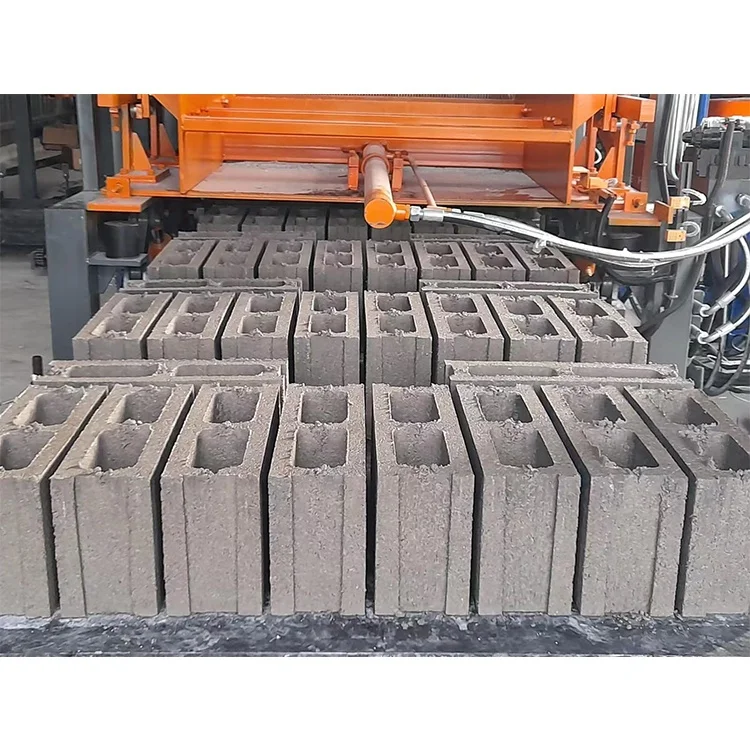
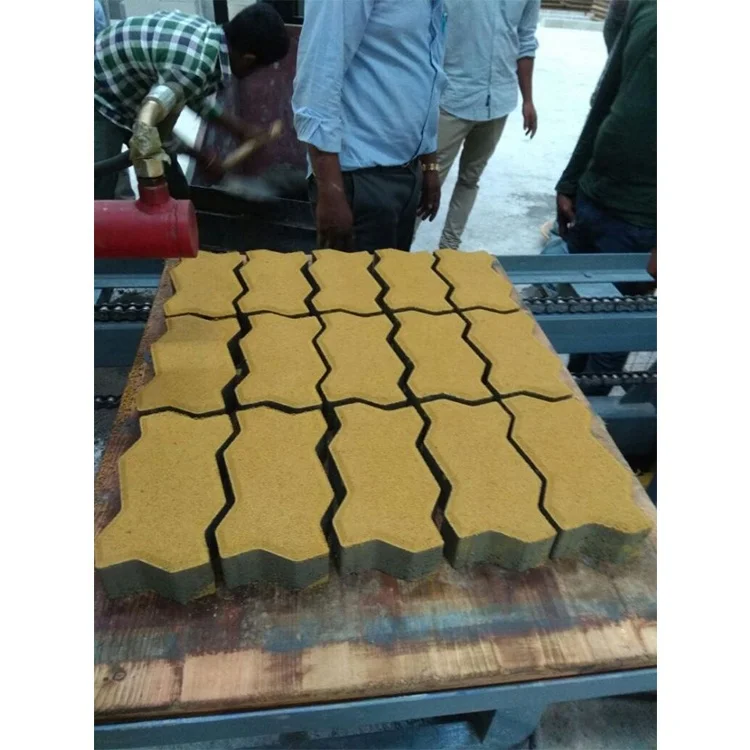 High quality block machine