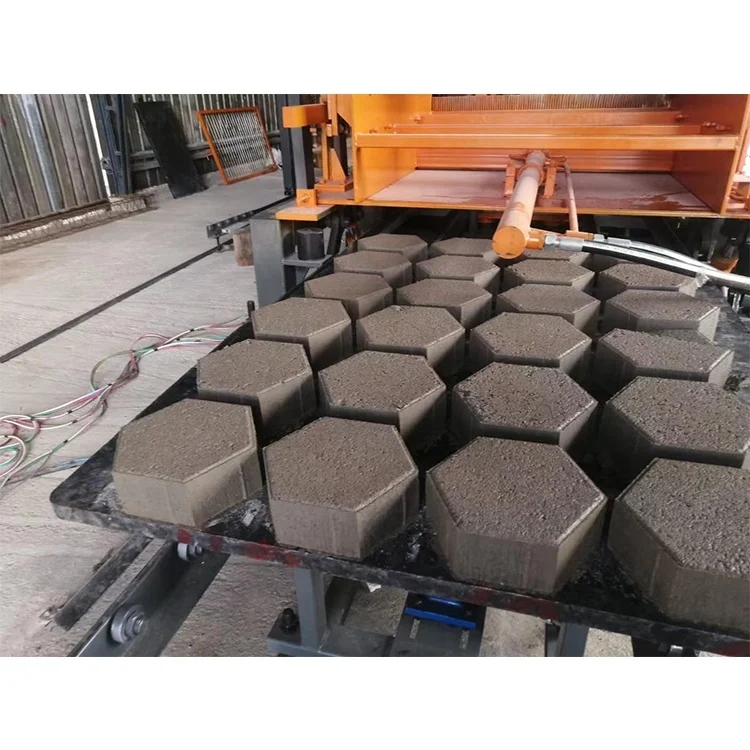
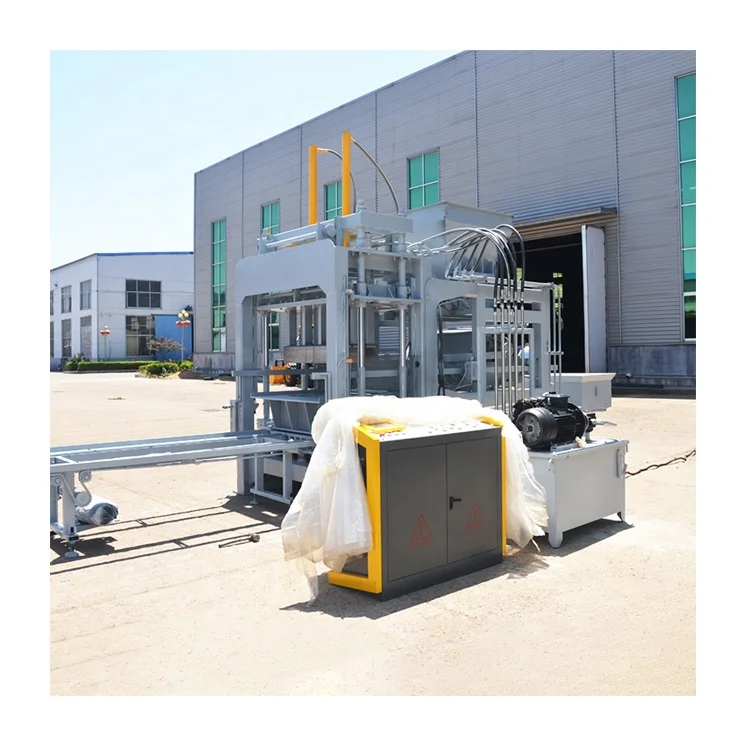
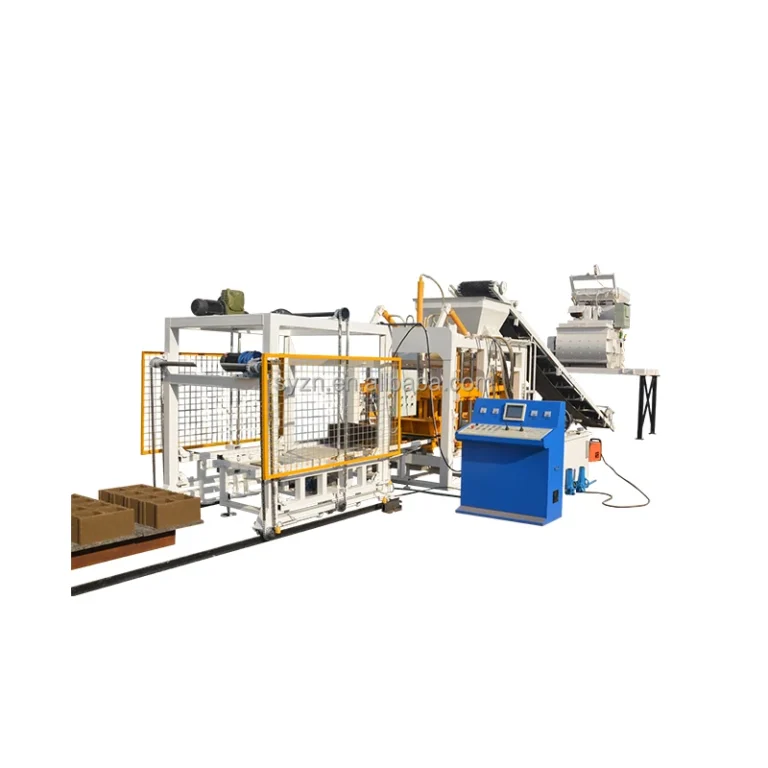
Matched System Configuration — the QT6-15 block machine is specified alongside its mould, pallet, and handling equipment as a single coordinated unit, ensuring capacity figures reflect actual block formats rather than catalogue defaults.
Technical Specifications
| Parameter |
Value |
| Model |
QT6-15 |
| Product Type |
Hydraulic Concrete Block Making Machine |
| Overall Dimensions (L×W×H) |
8200×1700×2950 mm |
| Total Mass |
7 T |
| Overall Power |
37 kW |
| Vibration Frequency |
0–60 Hz (adjustable) |
| Vibration Form |
Platform Vibration |
| Vibration Force |
45 kN |
| Moulding Mode |
Automatic loading, vibration moulding |
| Demolding Method |
Hydraulic |
| Pallet Size |
880×850 mm |
| Molding Cycle |
15–20 s (basis not stated in source — confirm block format / material / thickness) |
| Control System |
PLC with touch screen interface |
| Hydraulic System |
Independent integrated hydraulic station |
| Block Compressive Strength |
>15 MPa (source value — verify against manufacturer catalog) |
| Output: Hollow Block 400×200×200 mm |
1080–1440 pcs/h, 8640–11520 pcs/8 hr (6 pcs/mould, 15–20 s cycle) |
| Output: Hollow Block 400×150×200 mm |
1440–1920 pcs/h, 11520–15360 pcs/8 hr (8 pcs/mould, 15–20 s cycle) |
| Output: Solid Brick 240×115×53 mm |
5760–7680 pcs/h, 46080–61440 pcs/8 hr (32 pcs/mould, 15–20 s cycle) |
| Output: Rectangular Paver 200×100×60 mm |
2160–2880 pcs/h, 17280–23040 pcs/8 hr (21 pcs/mould, 20–25 s cycle) |
| Output: Zigzag Paver 225×112.5×60 mm |
2160–2880 pcs/h, 17280–23040 pcs/8 hr (15 pcs/mould, 20–25 s cycle) |
| Factory Area |
1200 m² |
| Raw Material Adaptability |
Waste ash, slag, and various aggregates; reduced cement dosage capability |
| Assembly State |
Fully assembled main press |
| Warranty |
1 year (excluding spare parts) |
Application Suitability
| Application |
Material or Output |
| Hollow concrete block production for building walls |
Crushed stone, fly ash, and cement blends on 400×200×200 mm and 400×150×200 mm formats |
| Solid brick production for structural and infill use |
Local aggregates and slag mixes on 240×115×53 mm standard brick format |
| Rectangular paving block for roads and walkways |
High-density aggregate blends on 200×100×60 mm paver format |
| Interlocking zigzag paver for yards and driveways |
Pigmented concrete mixes on 225×112.5×60 mm interlocking format |
| On-site or fixed-plant block manufacturing |
Waste ash, slag, and locally sourced aggregates with reduced cement dosage |
What "Pieces per Hour" Actually Means for Your Daily Tally
Every capacity number on this page is tied to a specific block size, mould cavity count, and cycle time — because a single headline figure tells you nothing about real output.
I have watched buyers sign off on a block machine quoted at an impressive hourly rate, only to discover the number assumed a hollow block their market does not buy. When they switched the mould to the solid brick or paver their customers actually order, the cycle stretched and the daily tally dropped well below the projection. The QT6-15 block machine manufacturer approach here is to state output per format, per mould, so the gap between quoted capacity and real production stays visible from the start. [NEED_CITE: common discrepancy between quoted and actual block machine output across formats]

Where the QT6-15 Sits in the Full Machine Range
The QT6-15 occupies the mid-tier of Shiyue’s complete block machine lineup, positioned between semi-automatic entry-level models suited to smaller workshops and high-capacity automatic lines designed for large-scale plants. Buyers evaluating a first fixed-plant investment or replacing an aging press find this tier offers a practical balance: automatic loading and PLC-controlled cycling without the footprint and capital outlay of a fully automated stacking and cubing line. The 880×850 mm pallet size and 7-tonne machine mass keep installation requirements manageable for a 1200 m² factory area.
Understanding the Output Tiers Before You Commit
Choosing a tier is not just about today’s volume. A construction contractor producing blocks for a housing project may start with the QT6-15 running a single shift on hollow blocks, then add paver moulds as the project phases change. The vibration frequency range of 0–60 Hz and 45 kN vibration force allow the press to handle different mix designs across formats, but the cycle time shifts depending on block thickness and material density. That is why each capacity row in the specification table names the format and mould cavity count explicitly. [NEED_CITE: vibration force requirements varying by block format and aggregate type]
Reading the Specs That Determine Real Output
The hydraulic demolding system works alongside platform vibration to compact the mix and release the block without cracking. Vibration force at 45 kN must be matched to the aggregate gradation and cement ratio; too little force on a dense paver mix leaves weak edges, while excessive vibration on a lightweight ash blend can cause segregation. The independent integrated hydraulic station sits apart from the main press frame, reducing the transmission of vibration and dust into seals and valves — a layout choice that matters for long-term reliability in dusty block plant environments. The PLC touch screen interface controls cycle timing and fault diagnosis, allowing the operator to adjust parameters when switching between the 15–20 s hollow block cycle and the 20–25 s paver cycle. Pallet size at 880×850 mm must align with the curing rack spacing and the forklift already on site, otherwise pallets pile up on the floor instead of moving into the curing area.
The Cost of Skipping the Configuration Conversation
When voltage and frequency are left unconfirmed until the machine arrives, commissioning stalls while transformers are sourced or control panels are rewired. PLC display language set to a default the operator cannot read means every fault code requires a phone call instead of a quick on-screen fix. A pallet size chosen without checking the curing rack dimensions forces the buyer to rebuild the rack or handle blocks manually — exactly the kind of hidden cost that erases the efficiency gain the press was supposed to deliver. I have seen projects lose weeks because the mould delivered did not match the block format the local market actually buys, leaving the machine idle while a replacement mould is manufactured and shipped. [NEED_CITE: commissioning delays caused by unconfirmed electrical and control specifications]
Why Source the QT6-15 Through This Range
Block machinery is the single focus here, so the QT6-15 is not sold as a standalone press but as part of a matched system where the mould, pallet, and handling equipment are specified together. Configuration is set against the buyer’s actual mix design and target block format rather than pulled from a catalogue default. Mould design covers the formats the buyer’s market sells, with custom drawings available when standard moulds do not match local demand. The automation level is selectable, meaning a buyer can begin with manual pallet handling and add automatic stacking later without replacing the press itself. Installation support includes operator training so the team running the machine understands cycle adjustments and mould change procedures from day one.
Documentation & Verification
- Line layout and capacity calculation stating the block format assumed for each output figure
- Machine specification sheet confirming voltage, frequency, and PLC display language before shipment
- Mould drawing and format list matching the buyer’s local market demand
- Hydraulic and electrical schematic for on-site maintenance reference
- Factory test record demonstrating actual cycle times per format before dispatch
Installation, Commissioning & Support
- Foundation must support the 7-tonne machine mass across the 8200×1700 mm footprint with level tolerance
- 37 kW overall power requires a dedicated circuit with confirmed voltage and frequency before energizing
- Main press arrives fully assembled, reducing on-site mechanical fitting time
- PLC touch screen parameters set during commissioning to match the buyer’s specific mix design and block format
- Operator training covers mould change procedure, cycle adjustment, and fault diagnosis on the touch screen interface
- Wear parts and mould list provided for planning first replacement orders before stock runs low
What to Include in Your Inquiry
To position the QT6-15 correctly within the full machine range and confirm the right tier for your project, share the block formats your market sells, the daily output you need per format, and the local aggregate and cement you plan to use. Confirm your site voltage, frequency, and the PLC display language your operators require. If you already have curing racks, forklifts, or pallet handling equipment on site, include those dimensions so the pallet and handling configuration aligns with what is already in place.
Frequently Asked Questions
Q: How does the QT6-15 compare to smaller semi-automatic and larger automatic models in the Shiyue range?
A: The QT6-15 sits in the mid-tier, offering automatic loading and PLC control without the footprint and investment of a high-capacity line with full stacking and cubing. Smaller semi-automatic models suit lower volumes and tighter workshops, while larger automatic tiers serve plants running multiple shifts at maximum throughput. The mid-tier gives buyers room to grow by adding automation modules later.
Q: What plant footprint and factory area does the QT6-15 require compared to other tiers?
A: The QT6-15 is rated for a 1200 m² factory area, which covers the press, mixer, pallet circulation, and basic curing rack space. Entry-level machines need less floor space, while high-capacity automatic lines with cubing and rack handling require considerably more. Confirming your available area early ensures the tier you select fits without crowding the curing zone.
Q: Which block formats can this model produce, and how does output vary by format?
A: The QT6-15 produces hollow blocks, solid bricks, rectangular pavers, and zigzag pavers on 880×850 mm pallets. Output varies by format: hollow blocks run at 15–20 s cycles, while pavers require 20–25 s cycles due to higher density requirements. Each capacity figure in the specification table is tied to a specific mould cavity count and cycle time so buyers can plan realistically.
Q: Can the QT6-15 be upgraded later to higher automation with stacking and cubing?
A: Yes. The automation level is selectable, so a buyer can start with manual pallet handling and add automatic stacking and cubing equipment as production volume grows. The press itself does not need replacement; the upgrade path involves adding handling modules around it. This approach spreads investment across phases rather than requiring full automation from the first day.

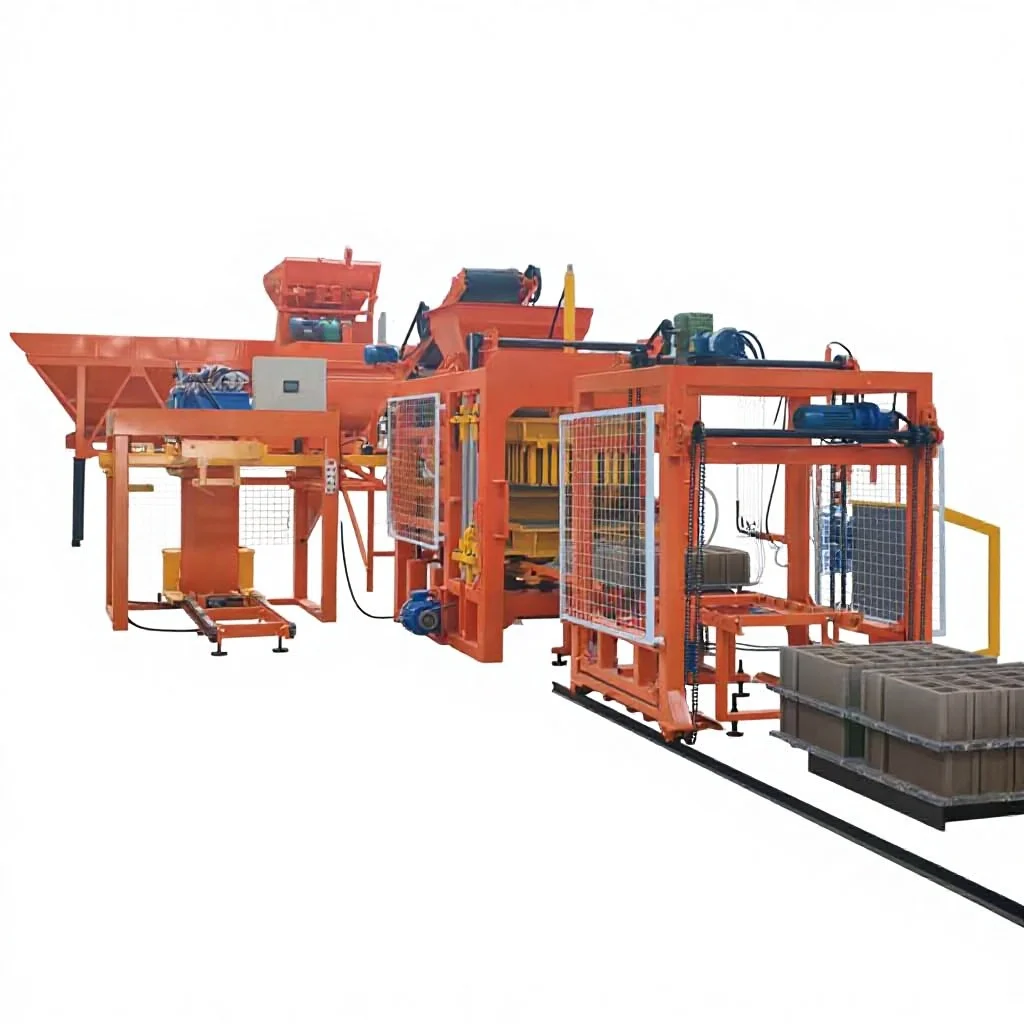
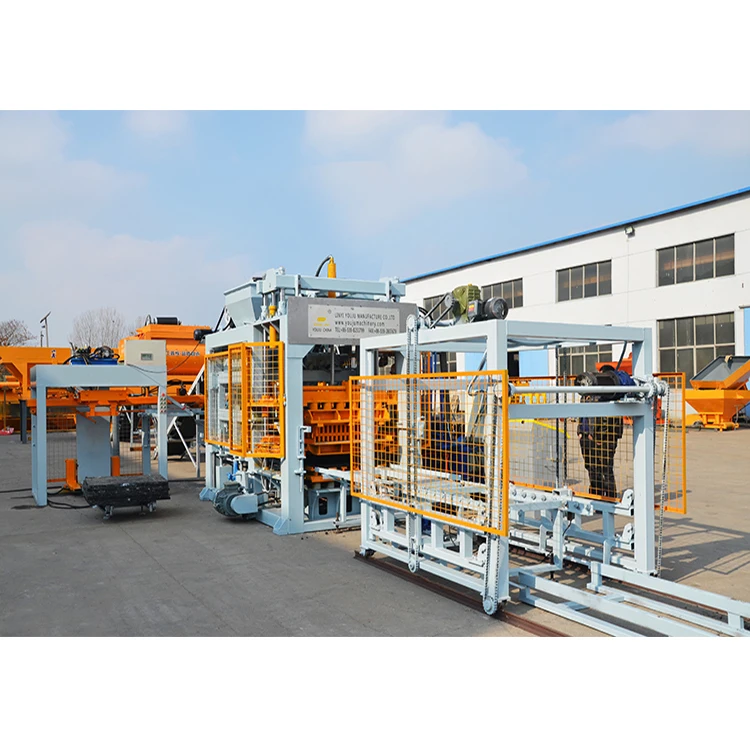 High quality block machine