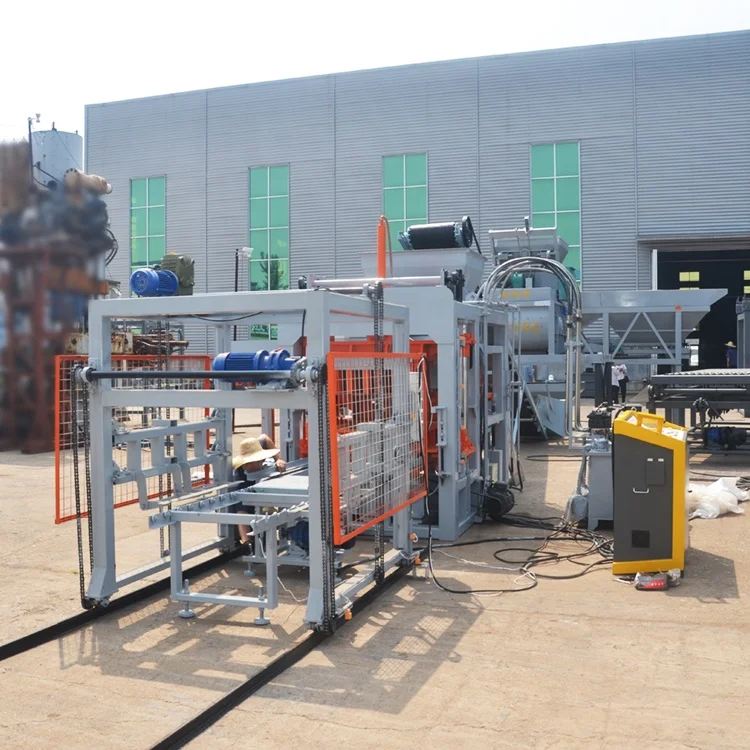
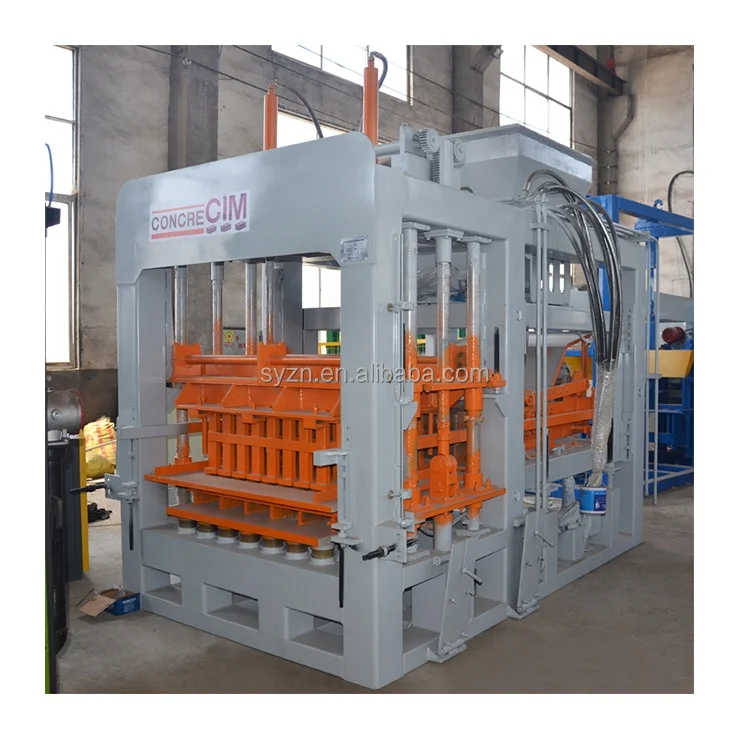
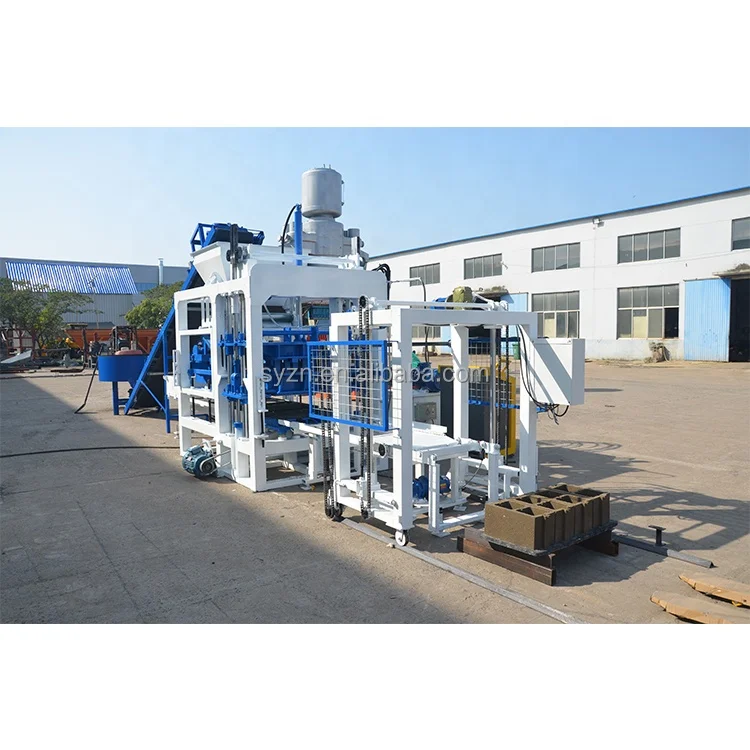
Matched System Specification — the QT6-15 block making machine, hydraulic station, pallet feeder, conveyor and sweeper are engineered as one coordinated line, preventing the common mismatch where ancillary equipment bottlenecks the press.
Technical Specifications
| Parameter |
Value |
| Model |
QT6-15 |
| Product Type |
Automatic Hydraulic Block Making Machine |
| Overall Dimensions (L×W×H) |
7400×1900×2660 mm |
| Molding Cycle |
15–25 s |
| Vibration Frequency |
4600 r/min |
| Vibration Force |
40–50 kN |
| Total Power |
31.25 kW |
| Mixer Model |
JQ350 |
| Pallet Size |
850×550×25 mm |
| Total Weight |
7 T |
| Control System |
PLC |
| Hydraulic Station |
Included |
| Included Equipment |
Block making machine, hydraulic station, PLC control system, pallet feeder, brick conveyor, block sweeper, manual hydraulic trolley, spare parts and tools |
| Mould Format Compatibility |
Hollow block, solid brick, paver, curbstone (via mould change) |
| Output Capacity — Hollow Block 400×200×200 mm |
9,600–13,440 pcs/8 hr (1,200–1,680 pcs/hr, cycle 15–20 s) |
| Output Capacity — Hollow Block 400×150×200 mm |
14,400–19,200 pcs/8 hr (1,800–2,400 pcs/hr, cycle 15–20 s) |
| Output Capacity — Solid Brick 240×115×53 mm |
16,200–19,440 pcs/8 hr (approx. 2,025–2,430 pcs/hr, cycle 15–20 s) |
| Raw Materials |
Crushed stone, sand, cement, dust, fly ash |
| Voltage & Frequency |
(basis not stated in source — confirm with buyer’s site supply) |
| PLC Display Language |
(basis not stated in source — confirm before shipment) |
| Assembly State |
(basis not stated in source — confirm skid-mounted or section-dismantled) |
| Standards |
CE |
Application Suitability
| Application |
Material or Output |
| Block and paver production plants |
Hollow blocks, solid bricks, pavers, curbstones from crushed stone, sand, cement, fly ash |
| Construction contractors on-site production |
Hollow and solid blocks for immediate project use, eliminating transport logistics |
| Concrete product manufacturers expanding formats |
Pavers and kerbstones added to existing ranges via quick mould change |
| Entrepreneurs setting up first block plant |
Mid-tier automatic capacity balancing investment against daily output requirements |
What "9,600 Blocks Per Day" Leaves Out
Capacity figures only mean something when tied to a specific block format, pallet size, and cycle time.
The QT6-15 is rated for 9,600–13,440 pieces per 8-hour shift based on a 400×200×200mm hollow block with a 15–20 second cycle. Switch to a 400×150×200mm hollow block and that same automatic block making machine manufacturer quotes 14,400–19,200 pieces per shift. The difference isn’t the machine working harder — it’s simply more cavities per mould. I’ve watched buyers sign contracts based on the higher number, then discover their primary product format delivers the lower throughput. [NEED_CITE: block format assumptions in capacity quotations]

Where the QT6-15 Sits in the Full Range
The Shiyue lineup spans from semi-automatic workshop machines requiring manual pallet handling through to high-capacity fully automatic lines with robotic stacking and cubing. The QT6-15 occupies the automatic tier with PLC control, automatic pallet feeding, brick conveying, and block sweeping supplied as standard — removing manual pallet movement from the operator’s workflow while keeping investment below the fully automated tier. This positions it for buyers who need consistent cycle times and reduced labor without the capital outlay for complete end-of-line automation.
Plant Footprint and Line Integration
A complete QT6-15 line requires space for raw material feeding, the JQ350 mixer, the press itself at 7400×1900×2660 mm, pallet return system, and a curing area sized for the 850×550×25 mm pallets. The pallet dimension drives everything downstream — forklift compatibility, curing rack spacing, and stacking configuration. [NEED_CITE: plant layout considerations for block production facilities] When the pallet size doesn’t match the buyer’s existing curing infrastructure, the result is either wasted floor space or a forklift that can’t reach the racks. This is why we confirm pallet specifications against the buyer’s actual site conditions before production begins, not after.
How Hydraulic Pressure and Vibration Determine Block Density
The QT6-15 combines a hydraulic station with a vibration system running at 4600 r/min and 40–50 kN exciting force. Hydraulic pressure compacts the mix from above while vibration settles aggregate particles from below — together they achieve the density required for load-bearing hollow blocks. The 15–25 second molding cycle allows sufficient time for both forces to work through the mix. Vibration frequency matters for different aggregate sizes: crushed stone responds to higher frequencies, while fly ash blends need sustained vibration time. The PLC control maintains consistent cycle parameters across shifts, so block strength doesn’t drift when operators change. Pallet size at 850×550×25 mm means the vibration table must distribute force evenly across that entire surface — uneven distribution shows up as density variation between blocks at pallet center versus edges.
The Cost of Skipping Voltage and Language Confirmation
A Turkish client once received an automatic block making machine with the PLC interface locked in Chinese. Day one of commissioning, the operator couldn’t navigate a single menu. Remote reprogramming took two days while the entire crew stood idle. [NEED_CITE: PLC language configuration requirements for export machinery] The QT6-15 ships with configurable PLC display language, but only if someone asks before production starts. Same with voltage and frequency — a 380V/50Hz machine arriving at a 440V/60Hz site requires a transformer or won’t run at all. These aren’t engineering problems; they’re communication failures that cost weeks of project time.
Why Source This Machine Here
Block machinery is our single focus, so the QT6-15 arrives with machine, mould, pallet, and handling equipment specified as one matched system rather than assembled from separate suppliers. Configuration starts from the buyer’s actual mix design and local aggregate — not a catalogue default that assumes materials unavailable at the project site. Mould design covers the formats the buyer’s market actually sells, with custom drawings available for non-standard requirements. Automation level is selectable, meaning a buyer can start with the QT6-15’s semi-automatic pallet handling and upgrade later without replacing the entire press. Installation support includes operator training so the crew understands PLC navigation, mould change procedures, and daily maintenance from day one.
Documentation & Verification
- Line layout showing QT6-15 placement, pallet flow, and curing area dimensions
- Capacity calculation stating block format assumed for each output figure
- Mould drawing and format list covering hollow block, solid brick, paver, curbstone
- Hydraulic and electrical schematic for local maintenance teams
- Factory test record demonstrating cycle time on buyer’s specified block format
- Packing photographs confirming shipment condition before container loading
Installation, Commissioning & Support
- Foundation requirements based on 7 T total weight and vibration forces during operation
- Power supply confirmation for 31.25 kW total load with dedicated circuit protection
- Assembly state verification — skid-mounted or section-dismantled — matching site access constraints
- First-run parameter setting for buyer’s specific mix design and target block density
- Operator training on PLC interface navigation, mould change procedures, and emergency stops
- Wear parts list covering hydraulic seals, vibration motor bearings, and mould liners
Before Requesting a Quotation
We need your primary block format with dimensions, target daily output, and the raw materials available locally — crushed stone gradation, sand type, cement grade, any fly ash or dust you plan to use. Share your site’s voltage and frequency, plus the language your operators read. If you already have curing racks and forklifts on site, tell us what pallet size they’re built for.
Frequently Asked Questions
Q: How is the QT6-15’s output capacity calculated, and which block format does each figure assume?
A: Output is stated per specific block dimension with cycle time range. The 9,600–13,440 pieces per 8-hour shift assumes 400×200×200mm hollow blocks at 15–20 second cycles. Switching to 400×150×200mm hollow blocks yields 14,400–19,200 pieces because more cavities fit per mould. Real daily throughput depends on your primary format, not the highest number on the sheet.
Q: Where does the QT6-15 sit in Shiyue’s range compared to semi-automatic and high-capacity automatic models?
A: The QT6-15 occupies the automatic tier with PLC control and standard pallet feeder, conveyor, and sweeper — removing manual pallet handling while keeping investment below fully automated lines with robotic stacking. It bridges the gap for buyers outgrowing semi-automatic workshop machines but not yet requiring high-capacity continuous production.
Q: What voltage, frequency and PLC language options need to be confirmed before production?
A: The QT6-15 voltage and frequency must match your site’s electrical supply exactly — a mismatch means transformers or delayed commissioning. PLC display language is configurable but requires confirmation before the control panel is programmed. We verify both during the quotation stage so the machine runs on arrival.
Q: Which mould formats can be run on this press, and what is the plant footprint for a complete line?
A: The QT6-15 handles hollow block, solid brick, paver, and curbstone through mould changes. The press itself measures 7400×1900×2660 mm, but complete line footprint includes mixer, raw material feeding, pallet return, and curing area sized for 850×550×25 mm pallets.
Q: Can I start with the QT6-15 and later upgrade to a higher automation tier within the same range?
A: Yes. The QT6-15’s automation level is selectable, allowing you to begin with standard pallet handling and add automatic stacking or cubing systems later. The press core remains the same — only the ancillary handling equipment expands as your production volume and labor costs justify the investment.

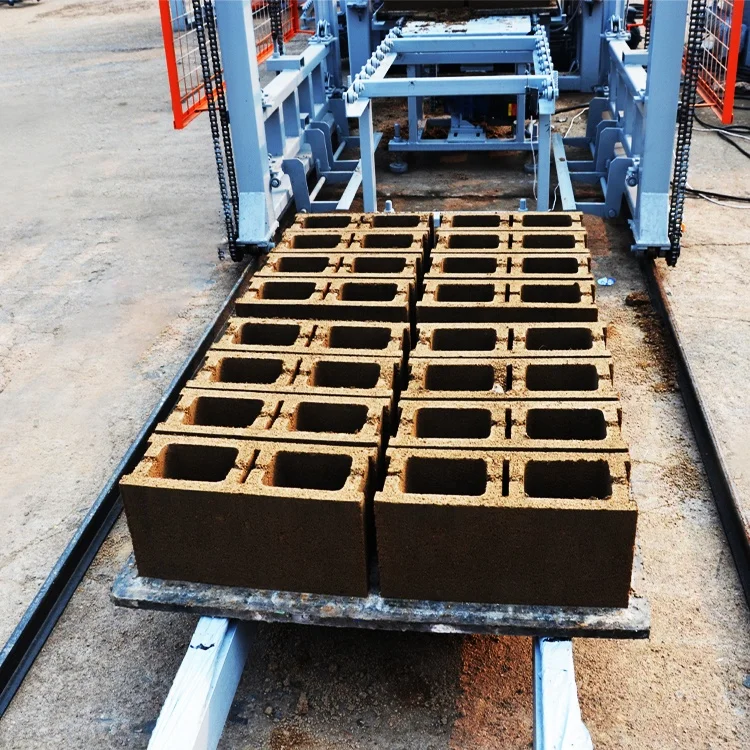
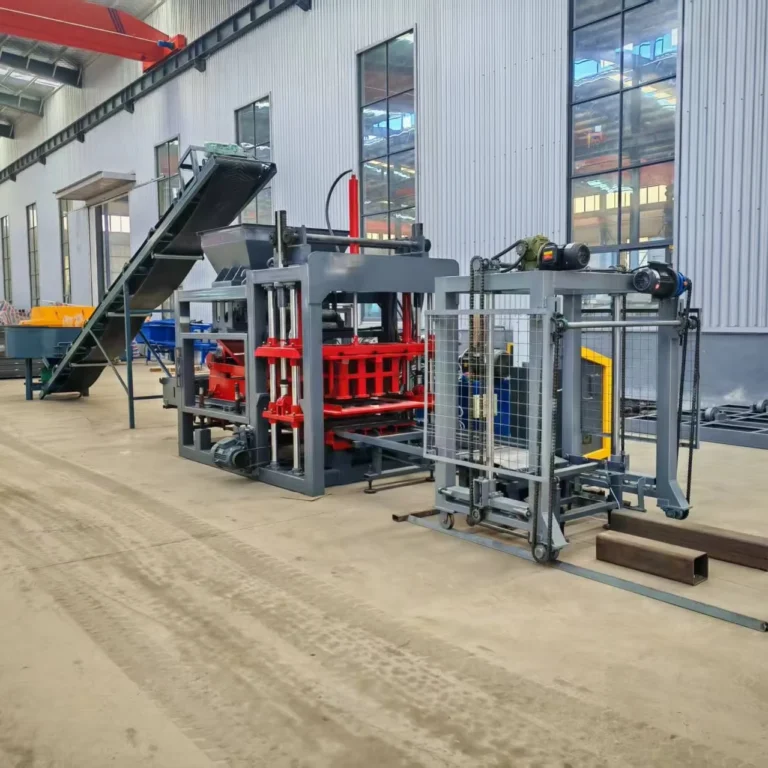 High quality block machine