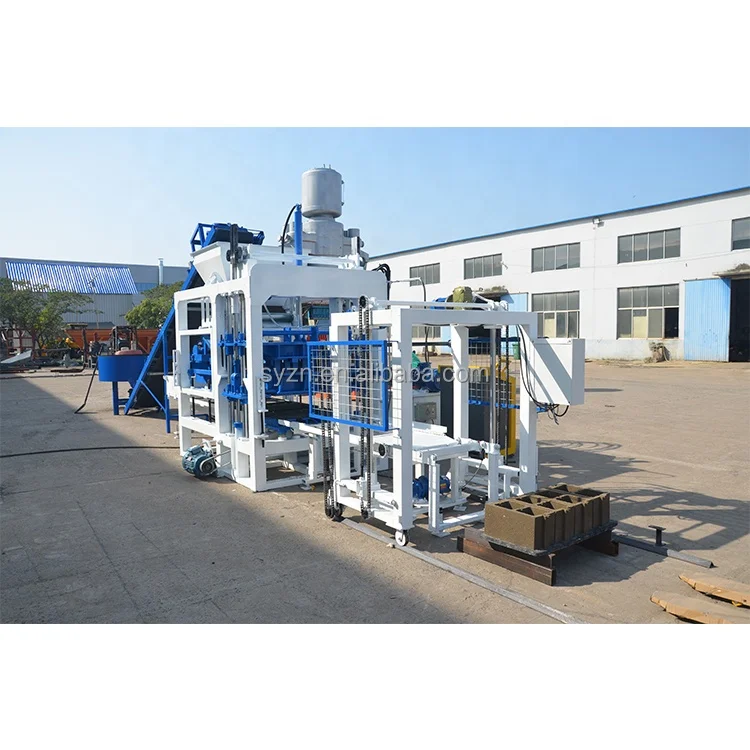
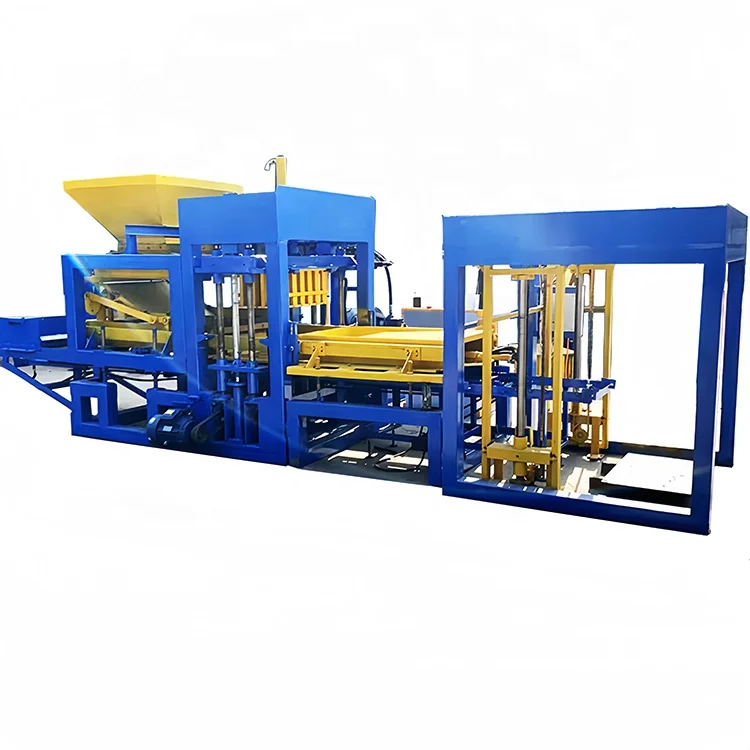
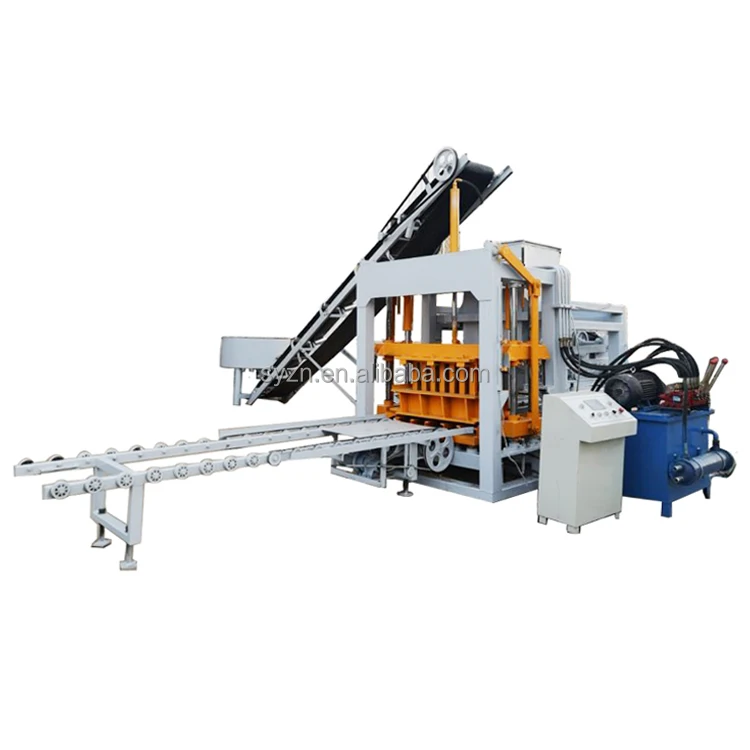
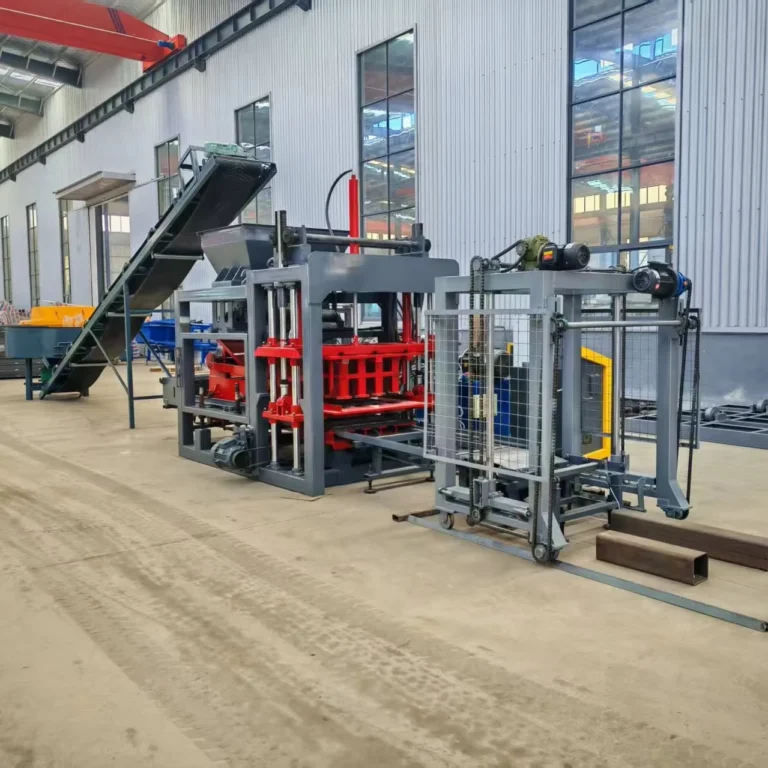
Hydraulic-Vibration Match — pressure and vibration tuned to your mix design and block format, not a catalogue default, so a QT6-15 Automatic Block Making Machine for Hollow Solid Brick reaches its rated density on your local aggregate.
Technical Specifications
| Parameter |
Value |
| Product Type |
Automatic Block Making Machine |
| Vibration Type |
Table mould vibration with hydraulic pressure |
| Pallet Size |
Configurable based on block format and curing area |
| Control System |
PLC with operator-selectable language |
| Hydraulic System |
Independent hydraulic station with proportional valves |
| Mould Change |
Quick-release bolting system |
| Voltage & Frequency |
Configurable to buyer’s site supply |
| Automation Level |
Automatic with optional stacking and cubing |
| Raw Material Feed |
Separate aggregate and cement batching with mixer |
Application Suitability
| Application |
Material or Output |
| Hollow block production |
Crushed stone, sand, cement and water |
| Solid brick forming |
Quarry dust, fly ash or river sand with cement binder |
| Paving block manufacturing |
High-density concrete mix with pigment dosing |
| Kerbstone and interlocking brick |
Coarse aggregate with adjusted vibration cycle |
What a Cycle-Time Quotation Actually Means for Your Daily Output
A machine’s rated cycle only applies to one specific block format under one specific mix.
When I first started selling block lines out of Linyi, I quoted a buyer the catalogue cycle time for a standard hollow block. He took that number, signed a supply contract with a housing developer, and then found out his local river sand had a high clay content. The mix needed more water to work properly, which meant longer vibration and a longer drying time on the pallet. His actual daily output dropped sharply compared to the figure he had planned around. I spent weeks on the phone trying to help him catch up. Since then, I never quote a capacity number without first asking for the sand sample, the target block format, and the exact mix the buyer intends to run [NEED_CITE: effect of aggregate clay content on concrete block cycle time].

Where Each Tier Sits on the Range
The automatic tier, which this QT6-15 Automatic Block Making Machine for Hollow Solid Brick belongs to, is designed for buyers who need a steady daily volume with minimal manual handling between the press and the curing area. It sits above semi-automatic lines, where an operator still moves pallets by hand, and below the highest-output fully continuous plants that run multiple presses in parallel. Choosing the right tier depends on the project timeline, the available curing space, and how many shifts you plan to run.
Matching the Press to Your Plant Footprint
An automatic line needs room for the raw material batching station, the mixer, the press itself, the pallet return circuit, and the stacking area before blocks move to curing. If the site is tight, a shorter pallet return loop and a vertical curing rack system keep the footprint manageable. The press should never be left waiting for empty pallets or a fresh mix — every station upstream and downstream must be sized so the press runs continuously through a shift [NEED_CITE: block plant layout planning for automatic lines].
Reading the Spec Sheet Against Your Actual Block
Hydraulic pressure and vibration force work together: pressure compacts the mix from above while vibration settles the aggregate from below. If the pressure is high but the vibration is weak, the block surface looks good but the core stays loose. If vibration dominates, the block is dense but the top face crumbles. The ratio between the two must match the gradation of your crushed stone and the cement content you plan to use. Pallet size determines how many blocks you press per cycle, and it must align with the forklift and curing rack dimensions you already have or intend to buy. Mould change time decides whether running three different formats in one day is realistic or just a brochure promise. Voltage, frequency, and PLC display language must be confirmed before the machine leaves the factory, because rewiring a control cabinet on site costs time you did not budget for.
The Hidden Cost of Skipping the Mix-Design Conversation
If the machine is configured for a clean, graded sand that you cannot source locally, you end up either paying a premium for imported aggregate or running a substandard mix that produces blocks failing the compressive strength test. Pallet material chosen without regard to your climate can warp in humidity, causing blocks to stick and break during demoulding. A voltage mismatch delays commissioning by days while you wait for a transformer or a new set of contactors [NEED_CITE: common commissioning delays in concrete block plant installation].
Why Sourcing This Machine Through a Single-Focus Builder Matters
Block machinery is the only product line here, which means the press, the mould, the pallet, and the handling equipment are specified as one matched system instead of assembled from separate suppliers. Configuration starts from your actual mix design and target block format rather than a catalogue default. Moulds are designed and manufactured for the formats your market sells, with custom drawings available when standard sizes do not fit. The automation level is selectable, so you can start with an automatic press and add stacking and cubing later as volume grows. Installation and commissioning include operator training on your specific mix, not a generic video walkthrough.
Documentation & Verification
- Line layout drawing showing capacity calculation for your target block format
- Machine specification sheet with confirmed hydraulic and vibration ratings
- Mould drawing and format list matched to your market requirements
- Pallet specification aligned with your curing rack and forklift dimensions
- Voltage, frequency, and PLC language confirmation before production
- Factory test record run on your mix design before dispatch
Installation, Commissioning & Support
- Foundation plan sized to the machine’s vibration load and hydraulic station weight
- Dedicated power circuit matching the confirmed voltage and frequency
- Machine dismantled for container loading and reassembled on your slab
- First-run parameter tuning on your local aggregate and cement
- Operator training covering mould change, daily maintenance, and safety lockout
- Wear parts list with recommended reorder intervals for hydraulic seals and mould liners
What to Prepare Before Requesting a Quotation
Send the block format you sell most, your target daily output, and a sample or analysis of your local sand and aggregate. Include the voltage and frequency at your site, the PLC display language your operators read, and the curing space dimensions you have available. If you already own forklifts or pallet racks, share those dimensions so the pallet size is matched from the start.
Frequently Asked Questions
Q: Can I start with the automatic press and add stacking later?
A: Yes. The automation level is modular. The QT6-15 Automatic Block Making Machine for Hollow Solid Brick can run with manual pallet handling first, and an automatic stacker and cubing station can be added when your volume justifies the investment, without replacing the press.
Q: What if my local sand has high clay content?
A: Send a sample before the quotation. The mix design is adjusted — sometimes by adding a washing step, sometimes by changing the cement ratio — and the cycle time is recalculated so your capacity expectation is realistic from the first shift.
Q: How long does a mould change actually take?
A: The quick-release bolting system allows a trained operator to swap moulds within a shift break, provided the new mould is pre-staged beside the press. Exact time depends on block size and whether core rods need repositioning.
Q: What voltage options are available?
A: Voltage and frequency are configured to your site supply before production. The PLC display language is also confirmed at the same stage so operators can read alarms and settings from day one.
Q: Are spare moulds and hydraulic seals easy to get?
A: A wear parts and mould list is included with the machine, covering hydraulic seals, vibration springs, and mould liners. Replacement moulds can be ordered to the same drawings, keeping format consistency across production runs.

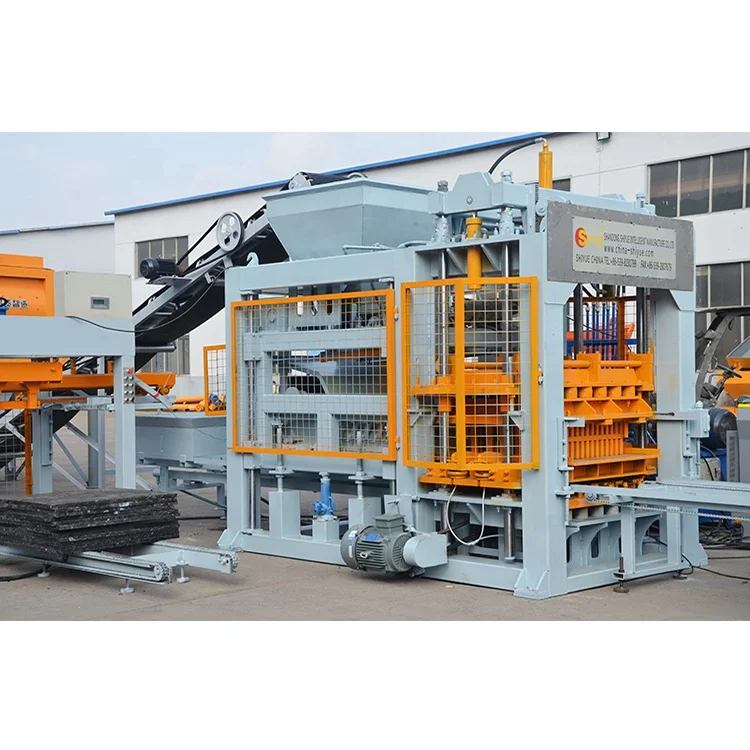
 High quality block machine