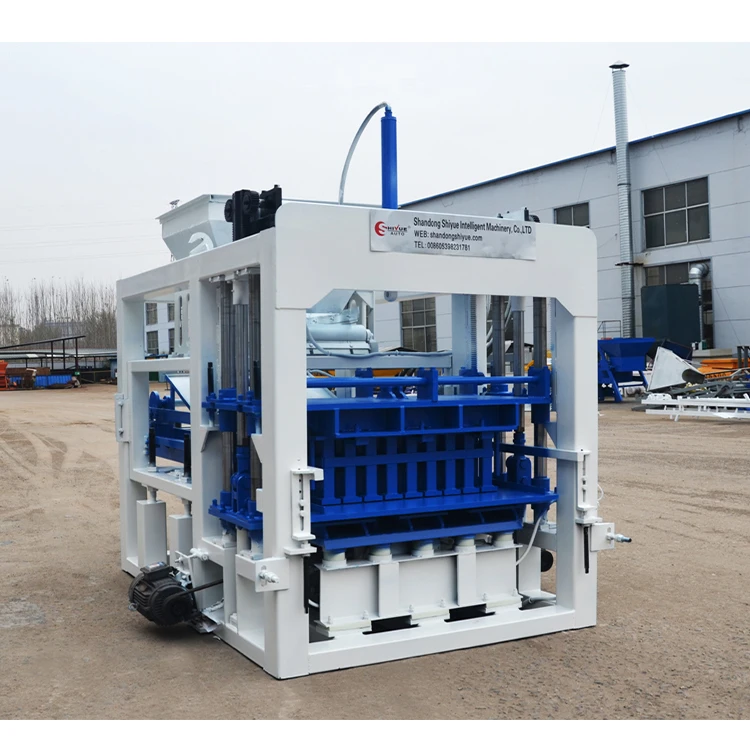
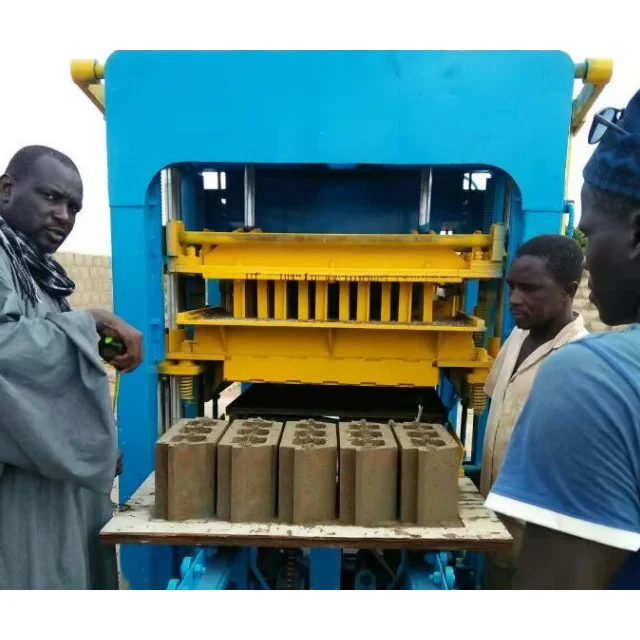
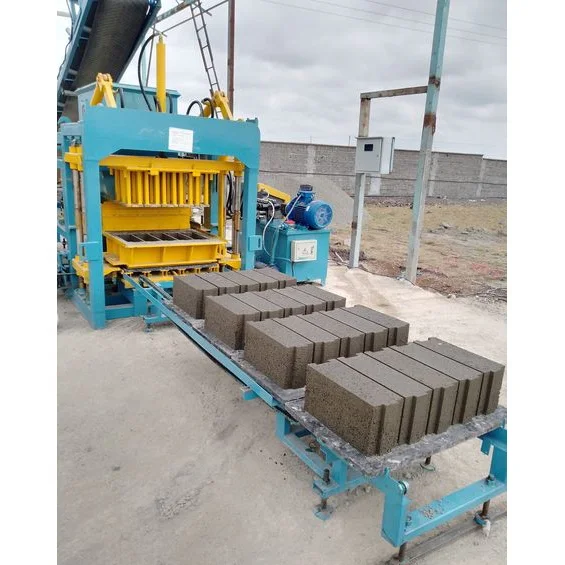
Single-focus machinery scope — the QT6-15 is specified as part of a matched system where block format, pallet size and hydraulic tuning are aligned before the machine leaves the factory.
Technical Specifications
| Parameter |
Value |
| Model |
QT6-15 |
| Product Type |
Automatic Concrete Block Making Machine |
| Machine Power |
31.25 kW |
| Molding Cycle |
15–20 seconds |
| Hydraulic Pressure |
16–21 MPa |
| Main Vibration Form |
Platform Vibration |
| Pallet Size |
850 × 680 mm |
| Machine Weight |
8500 kg |
| Overall Dimensions (L×W×H) |
7100 × 1500 × 3000 mm |
| Voltage |
According to buyer’s local voltage |
| Automation Level |
Automatic (Hydraulic + Vibration) |
| Mould Change |
Supported |
| Output (Hollow Block 400×200×200mm, 6 pcs/mould, 16–20s) |
8640 pcs/day |
| Output (Porous Block 240×115×90mm, 14 pcs/mould, 15–18s) |
22400 pcs/day |
| Output (Standard Block 240×115×53mm, 30 pcs/mould, 14–17s) |
54400 pcs/day |
Application Suitability
| Application |
Material or Output |
| Hollow block production for load-bearing walls |
Crushed stone, sand, cement, fly ash, gravel |
| Porous block manufacturing for infill and partition |
Sand, cement, dust, slag, crushed stone |
| Standard solid block for general masonry |
Gravel, sand, cement, fly ash |
| Paving block and interlocking block for driveways and walkways |
Crushed stone, sand, cement, colored pigments |
| Curbstone and kerb units for road and site infrastructure |
Coarse aggregate, sand, cement |
| Large-scale fixed plant block and paver production |
Multi-format output from single press |
Why Quoted Capacity Often Misses the Mark on Site
The daily output an automatic block machine manufacturer quotes is only meaningful when tied to a specific block format, cycle time and mould cavity count.
I have watched buyers compare machines purely on a single headline number, only to discover after commissioning that their primary product was not the format used for that calculation. When a plant’s main revenue line is 400×200×200mm hollow blocks, the relevant figure is 8640 pieces per day based on 6 pieces per mould at a 16–20 second cycle — not the 54400 standard-block figure that looks impressive on a brochure. [NEED_CITE: block format impact on realistic daily output] Stating the format and cycle behind every capacity number is the minimum baseline for an honest quotation, yet many catalogues omit this context entirely.

Placing the QT6-15 Within the Output Tier Hierarchy
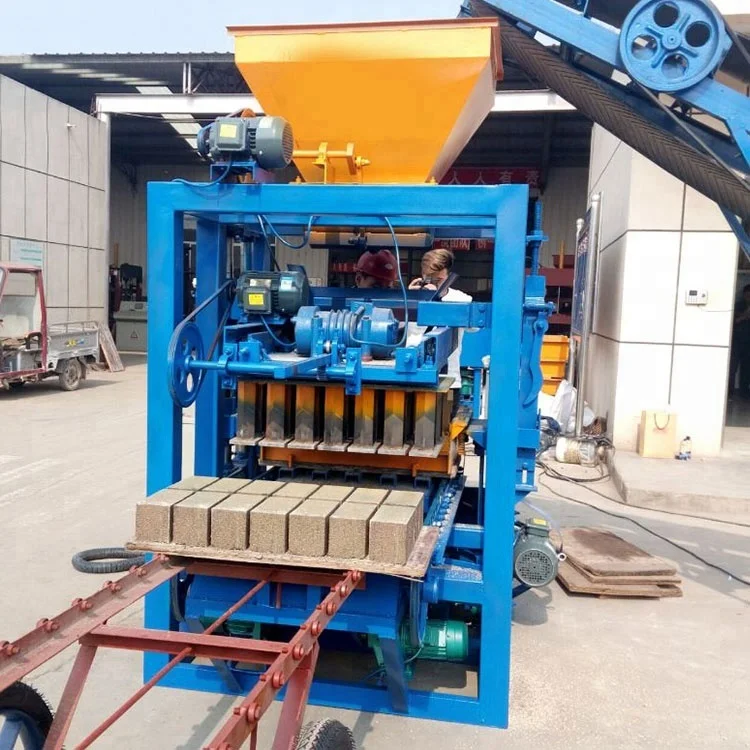
Choosing the right tier starts with understanding where this press sits relative to semi-automatic and mobile alternatives. The QT6-15 occupies the mid-to-high automatic range, suited for fixed plants that need continuous daily volume in hollow and solid block formats. An automatic block machine manufacturer typically offers smaller semi-automatic presses for workshop-scale output and mobile egg-laying units for on-site production without pallets. The QT6-15’s 8500 kg weight and 7100 mm length signal a stationary installation with dedicated curing and pallet-handling infrastructure.
How Footprint and Automation Level Shape Plant Planning
Before committing to this tier, a buyer must confirm the plant envelope can accommodate the press, pallet return system and stacking area. The 850 × 680 mm pallet defines the curing rack dimensions and the forklift aisle width needed for rack loading. [NEED_CITE: block plant layout standards for pallet-based production lines] Automation at this level means hydraulic pressing and vibration are controlled automatically, but the scope of pallet feeding, stacking and cubing can still be configured — a buyer may start with manual pallet handling and add automatic stacking later. Understanding this upgrade path prevents over-investing on day one while leaving room to scale.
Reading the Specs That Actually Determine Block Quality
Hydraulic pressure at 16–21 MPa combined with platform vibration is the core forming mechanism here. Higher hydraulic pressure compresses the concrete mix against the mould walls while platform vibration eliminates air pockets, together determining the block’s compressive strength and surface finish. The 15–20 second molding cycle reflects the time needed for the hydraulic ram to reach full pressure, vibrate, and release — shortening it risks under-compaction, while extending it reduces daily throughput. Pallet size of 850 × 680 mm sets the maximum mould envelope and therefore the largest block format the press can produce. The 31.25 kW machine power covers the hydraulic pump, vibration motor and auxiliary drives simultaneously, which matters when sizing the dedicated electrical circuit at the plant.
The Hidden Cost of Skipping Format-Specific Capacity Checks
When a buyer orders based on a single unqualified output figure, the consequences cascade through the entire operation. The pallet handling system may be undersized for the actual format being produced, leaving blocks stacked by hand at the end of the line. Mould orders placed after delivery delay production by weeks while the correct tooling is manufactured and shipped. [NEED_CITE: mould lead time impact on block plant commissioning schedules] Voltage and frequency mismatches discovered at the port of arrival add rework costs and postpone the first production run. These are not equipment failures — they are specification failures that a format-by-format capacity review before order placement would have prevented.
Why Sourcing This Press Through a Single-Focus Block Machinery Supplier Matters
Block machinery is the sole product category, meaning the press, mould, pallet and handling equipment are specified as a matched system rather than assembled from unrelated vendors. Each quotation begins with the buyer’s target block format and local aggregate, not a catalogue default — the QT6-15’s hydraulic pressure and vibration parameters are set against the actual mix design. Mould design covers the specific formats the buyer’s market demands, including custom drawings when standard formats do not match local building codes. The automation level is selectable, so a first-time plant owner can start with semi-automatic pallet handling and upgrade to full stacking and cubing as volume grows. Factory testing documents cycle time and block density per format before the machine ships, reducing commissioning surprises on site.
Documentation & Verification
- Line layout with capacity calculation stated per block format and cycle time
- Machine specification sheet confirming hydraulic pressure, power and pallet dimensions
- Mould drawing and format list showing included and optional block types
- Hydraulic and electrical schematic with buyer’s voltage and frequency noted
- Factory test record documenting cycle time and density per format before dispatch
- Operation and maintenance manual with wear parts and mould replacement list
Installation, Commissioning & Support
- Foundation plan sized for 7100 × 1500 mm footprint and 8500 kg static load
- Dedicated electrical circuit rated for 31.25 kW at buyer’s confirmed voltage and frequency
- Machine arrives with hydraulic and vibration systems pre-assembled; site hookup covers power and pallet conveyor connection
- First-run commissioning includes cycle time verification and block density check on buyer’s target format
- Operator training covers mould change procedure, PLC navigation and daily maintenance schedule
- Wear parts list with hydraulic seals and vibration components identified for first reorder
What to Prepare Before Requesting a Quotation
To size the QT6-15 accurately within the full machine range, share your primary block formats with dimensions, target daily output per format, and the local aggregate type you plan to use. Confirm your site’s voltage, frequency and available plant footprint so the line layout can be drafted around actual constraints rather than assumptions.
Frequently Asked Questions
Q: How does the QT6-15 compare to semi-automatic and mobile options in the range?
A: The QT6-15 sits in the mid-to-high automatic tier, designed for fixed plants producing hollow, solid and porous blocks at scale. Semi-automatic presses suit smaller workshops with lower daily volume, while mobile egg-laying machines produce blocks directly on the ground without pallets. Each tier differs in automation, pallet requirement and plant infrastructure.
Q: What plant footprint and investment level should I plan for at this tier?
A: The QT6-15 measures 7100 × 1500 × 3000 mm and weighs 8500 kg, requiring a dedicated foundation, pallet return area and curing rack space sized for 850 × 680 mm pallets. Investment at this tier covers the press plus pallet handling and optional stacking equipment. A complete line layout is provided before order to confirm spatial requirements.
Q: Which block formats are included in the capacity calculation?
A: Daily output is stated per format: 8640 pieces for 400×200×200mm hollow blocks at 16–20s cycle, 22400 pieces for 240×115×90mm porous blocks at 15–18s, and 54400 pieces for 240×115×53mm standard blocks at 14–17s. Additional formats can be added through mould changes based on your market requirements.
Q: Can I start semi-automatic and upgrade to full stacking later?
A: Yes. The automation level is configurable, so a buyer can begin with manual pallet handling and add automatic stacking and cubing as production volume increases. The hydraulic and vibration platform remains the same; the upgrade focuses on pallet feeding and output handling systems around the press.
Q: How is voltage, frequency and PLC language confirmed before production?
A: These are confirmed during the quotation stage before manufacturing begins. The buyer provides local voltage, frequency and preferred PLC display language, which are then locked into the electrical schematic and factory test procedure to avoid commissioning delays upon arrival.

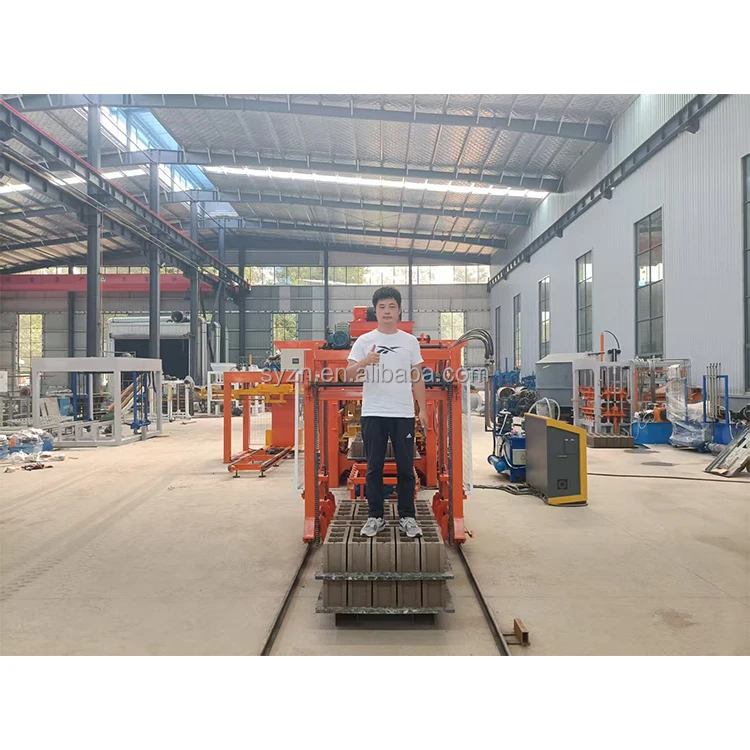
 Automatic block machine