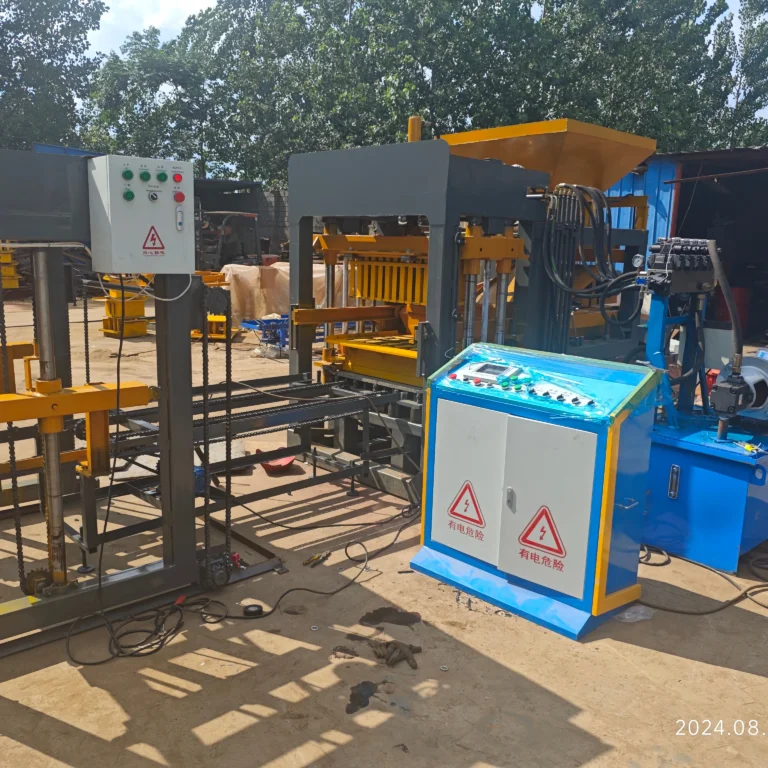
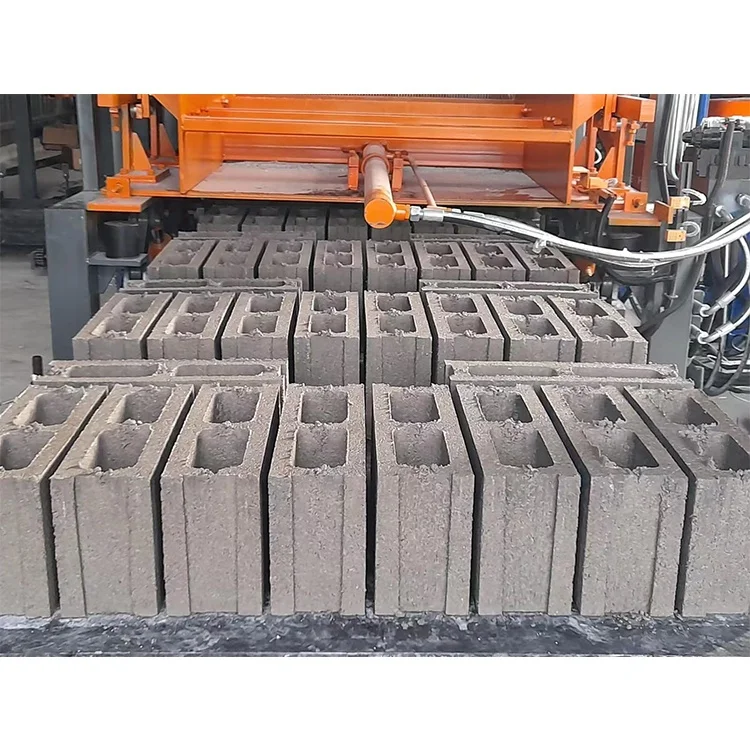
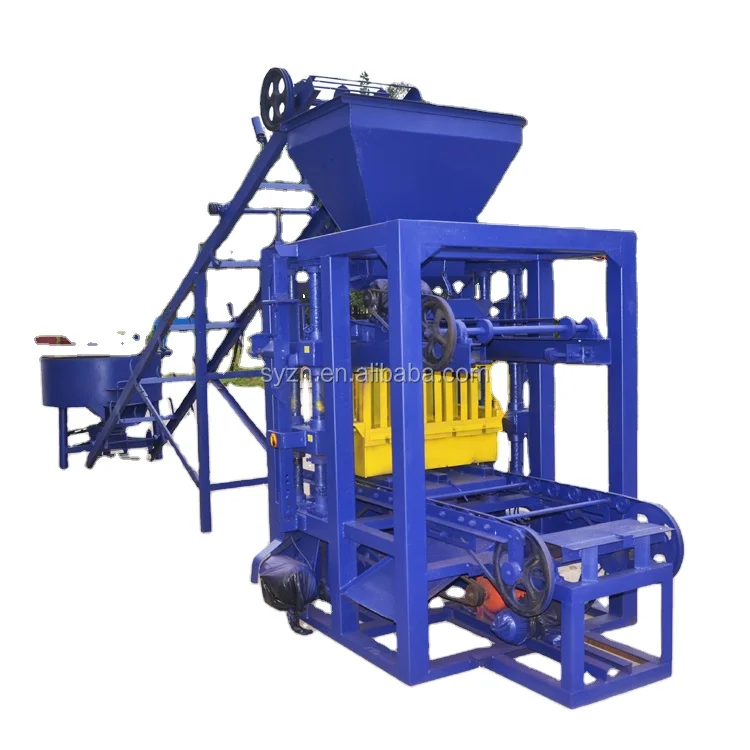
QT5-15 Fully Automatic Concrete Block Machine | Full Range
Mid-Tier Automatic Line — The QT5-15 bridges the gap between manual pallet handling on entry-level machines and fully automated stacking systems, allowing buyers to place themselves accurately within the Shiyue block machine range before committing to a configuration.
Technical Specifications
| Parameter |
Value |
| Model |
QT5-15 |
| Product Type |
Fully Automatic Concrete Block Making Machine |
| Overall Dimensions (L×W×H) |
7400 × 1950 × 2800 mm |
| Pallet Size |
1100 × 550 mm |
| Vibration Form |
Platform Vibration |
| Vibration Frequency |
0–60 Hz |
| Vibration Force |
80 kN |
| Moulding Mode |
Automatic loading, vibration moulding |
| Demolding Method |
Hydraulic |
| Molding Cycle |
15–20 s (hollow blocks), 20–25 s (pavers) |
| Overall Power |
32 kW |
| Control System |
PLC with touch screen interface |
| Automation Level |
Fully automatic (pallet feeding, material feeding, vibrating, demoulding) |
| Hydraulic System |
Independent integrated hydraulic station |
| Total Mass |
5000 kg |
| Recommended Factory Area |
Approx. 1000 m² |
| Block Compressive Strength |
> 15 MPa |
| Raw Material Compatibility |
Fly ash (up to 70%), slag, gangue, sand, crushed stone, cement, water |
| Standards |
CE |
Application Suitability
| Application |
Material or Output |
| Hollow block production |
900–1200 pcs/h (basis: 400×200×200 mm, 5 pcs/mould, 15–20 s cycle) |
| Narrow hollow block production |
1080–1440 pcs/h (basis: 400×150×200 mm, 6 pcs/mould, 15–20 s cycle) |
| Solid brick production |
5760–7680 pcs/h (basis: 240×115×53 mm, 32 pcs/mould, 15–20 s cycle) |
| Rectangular paving block production |
3600–4500 pcs/h (basis: 200×100×60 mm, 25 pcs/mould, 20–25 s cycle) |
| Zigzag paving block production |
2304–2880 pcs/h (basis: 225×112.5×60 mm, 16 pcs/mould, 20–25 s cycle) |
Why the QT5-15 Automatic Block Machine Full Range Matters for First-Time Buyers
Capacity only means something when the block format is named beside it.
A headline number like "1200 blocks per hour" looks convincing on a brochure, but it tells you nothing if your market sells 400×150×200 mm hollow blocks rather than the 400×200×200 mm format the figure assumes. I have watched contractors in West Africa receive machines configured for a single format, only to spend weeks waiting for a different mould because nobody discussed what the local market actually buys. The QT5-15 automatic block machine full range is positioned so that buyers can compare tiers without guessing [NEED_CITE: block format demand surveys by regional construction market].

Where the QT5-15 Sits in the Line
The Shiyue range runs from small workshop semi-automatic machines, where operators feed pallets by hand and stack output manually, through to high-capacity automatic lines with integrated cubing and rack handling. The QT5-15 occupies the middle tier. It delivers PLC-controlled production, automatic pallet feeding, and hydraulic demoulding — removing the most labour-intensive steps without requiring the larger footprint and higher power draw of the top-tier machines. For a buyer surveying options, this is the tier where full automation begins but plant complexity stays manageable.
Matching the Machine Tier to Your Project Volume
A construction contractor producing blocks for a single housing development may need output only in the lower thousands per day. The QT5-15 tier covers that volume comfortably when running standard hollow block formats, and it leaves room to add paver or solid brick moulds if the project scope expands. By contrast, a commercial block plant supplying multiple contractors across a city may find the mid-tier cycle times constraining during peak demand [NEED_CITE: daily output planning for commercial block supply contracts]. The decision hinges on whether your off-take is fixed or growing — and whether you want the flexibility to add formats without moving to a larger machine.
Reading the Specs That Actually Shape Daily Output
Vibration force and hydraulic pressure work together to compact the mix into the mould cavity. The QT5-15 delivers 80 kN of vibration force through platform vibration at frequencies up to 60 Hz, paired with an independent hydraulic station for demoulding. When these two forces are matched to the buyer’s actual mix — say, a fly ash blend at 60% replacement rather than a pure sand mix — the resulting block holds consistent compressive strength above 15 MPa. The pallet size of 1100 × 550 mm determines how many blocks form per cycle and how the curing area must be laid out; a buyer whose existing forklift and curing racks were built around a different pallet dimension will face reconfiguration costs. The 32 kW overall power draw is typical for this tier and should be confirmed against the destination site’s available supply before production begins.
The Cost of Skipping the Format Conversation
When a buyer orders a block machine based on a single capacity figure without confirming which block format that figure assumes, the machine arrives configured for a product the local market does not buy. Mould swaps then consume hours instead of minutes because the changeover procedure was never part of the initial specification discussion. I have seen pallets ordered at the wrong dimension, forcing the buyer to either replace the entire curing rack system or accept lower output per cycle. Voltage mismatches compound the problem: if the PLC and motor ratings are not confirmed against the local grid before the machine ships, commissioning stalls until transformers or replacement components arrive [NEED_CITE: voltage and frequency standards by export market].
Why Buyers Source This Tier Through Shiyue
Block machinery is the sole focus, which means the press, mould, pallet, and handling equipment are specified as one matched system rather than assembled from separate suppliers. The QT5-15 configuration is set against the buyer’s actual mix design and local aggregate, not a catalogue default — if your sand source has a different grading curve, the vibration parameters are adjusted before the machine ships. Mould design covers the formats the buyer’s market actually sells, including custom drawings for non-standard dimensions. The automation level is selectable, so a buyer can start at this mid-tier with full automatic operation and plan an upgrade path without replacing the press itself. Installation support includes on-site commissioning and operator training, which matters when the crew has never run a PLC-controlled line before.
Documentation & Verification
- Line layout showing the block format assumed for each capacity calculation on the QT5-15
- Machine specification sheet with pallet size, vibration force, and hydraulic pressure matched to your target block
- Mould drawing and format list covering every block type in your quotation
- Voltage and PLC display language confirmation signed off before production begins
- Factory test record with photographs taken before packing
Installation, Commissioning & Support
- Foundation must accommodate the 7400 × 1950 mm footprint and 5000 kg mass of the QT5-15 with level tolerance
- Power supply must deliver 32 kW at the confirmed voltage and frequency before the machine arrives on site
- Hydraulic station and PLC touch screen are tested at the factory and re-calibrated after reassembly
- Operator training covers mould change procedure, PLC parameter adjustment, and daily maintenance checks
- Wear parts and mould replacement list provided so the first reorder happens before stock runs out
What We Need to Configure Your Machine
Send us your target block format with dimensions, your estimated daily volume, and the raw materials available locally — especially the aggregate type and grading. Confirm the voltage and frequency at your site along with your preferred PLC display language. If you have existing curing racks or forklifts, share the pallet dimensions they accommodate so the QT5-15 pallet size can be verified against your setup.
Frequently Asked Questions
Q: Where does the QT5-15 sit compared to semi-automatic and higher-capacity models?
A: The QT5-15 is the entry point to full automation in the Shiyue range. Below it, semi-automatic machines require manual pallet handling and stacking. Above it, higher-capacity lines add automatic cubing and rack systems with larger pallets and higher power requirements. The QT5-15 removes the heaviest manual tasks while keeping plant footprint and investment moderate.
Q: How do I read the capacity table for the QT5-15?
A: Each capacity figure states the block format, number of cavities per mould, and cycle time. For example, 900–1200 pieces per hour applies to 400×200×200 mm hollow blocks at five per mould and a 15–20 second cycle. Your actual output depends on which format you produce most often, so identify your primary product before comparing machines.
Q: What plant footprint does the QT5-15 tier require?
A: Plan approximately 1000 m² to accommodate the press, raw material storage, pallet circulation, and a curing area sized for the 1100 × 550 mm pallets. The curing area typically demands the most space, and its layout should match the forklift and racking you already have or intend to purchase.
Q: Can I start with the QT5-15 and add automation later?
A: The automation level in the Shiyue range is selectable. A buyer can begin with the QT5-15 as a fully automatic press with manual stacking, then add automatic stacking and cubing equipment as volume grows. The press itself does not need replacement — the supporting stations are added to the existing line.
Q: What voltage and PLC language options are available?
A: Voltage and frequency are configured to match your destination market before production begins. The PLC touch screen display language is confirmed during the order process so operators can read cycle parameters and alarms in their working language upon commissioning.

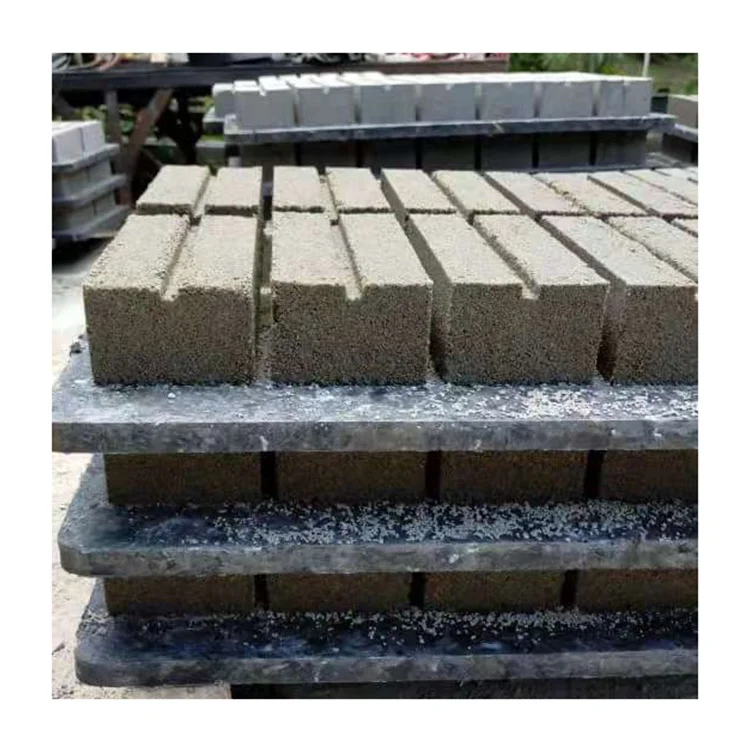 High quality block machine