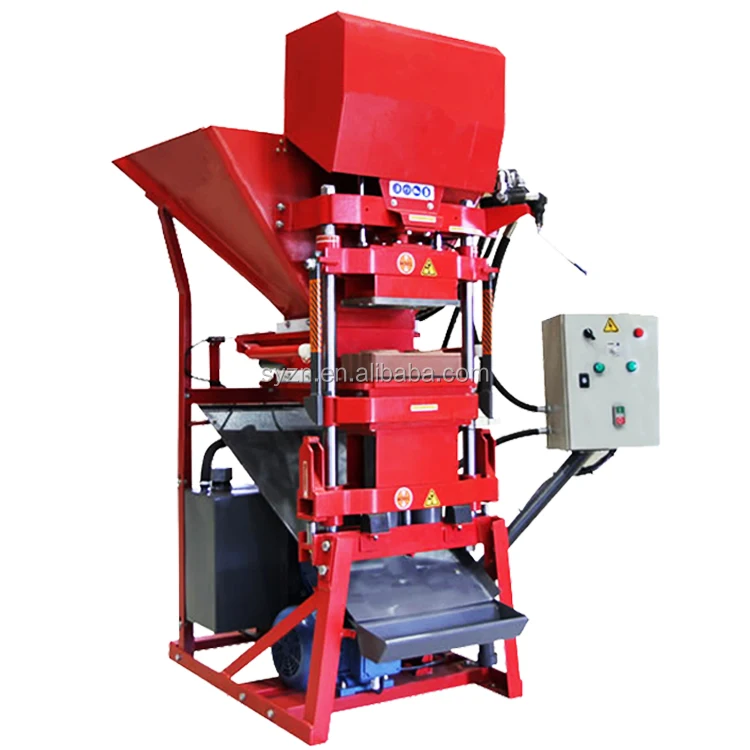
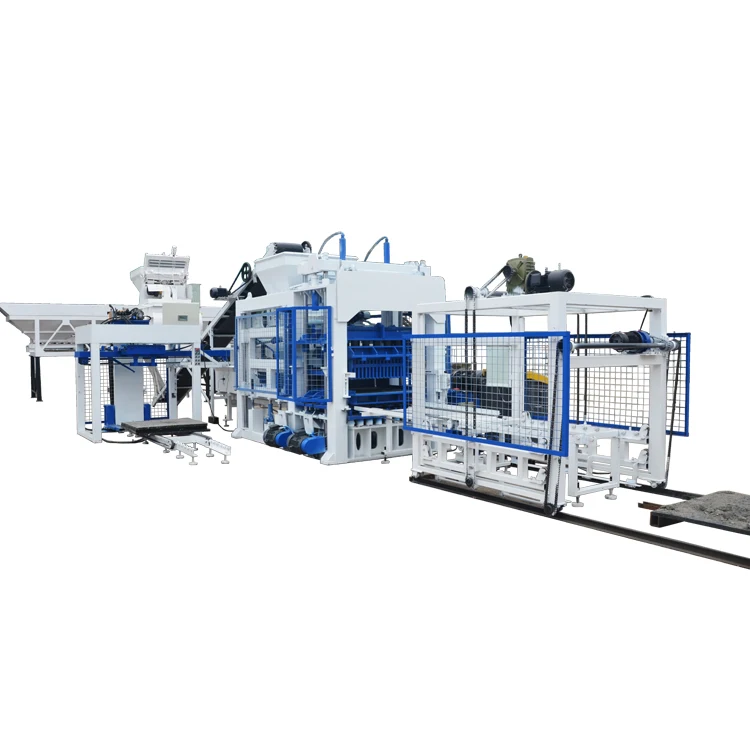
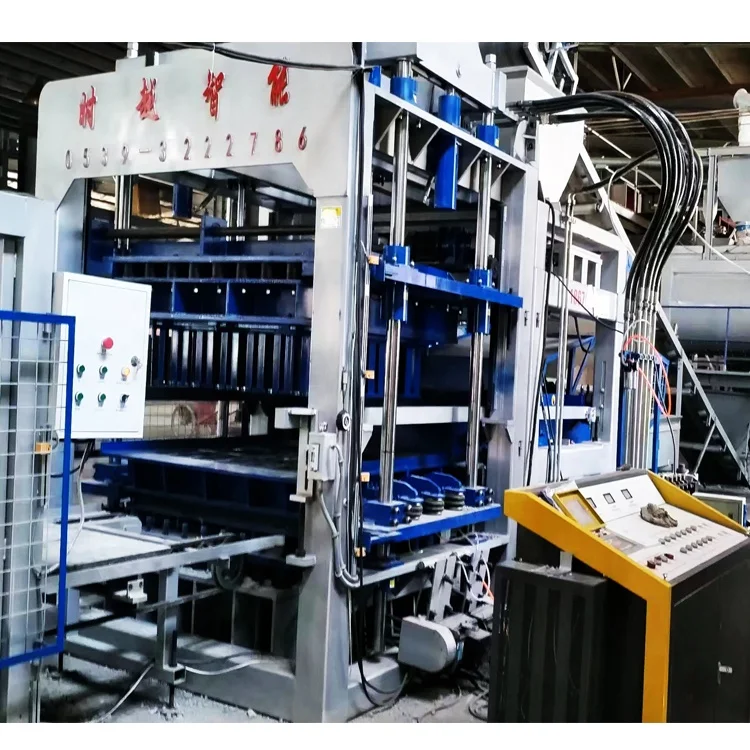
Matched System Design — The QT5-15 automatic block machine is specified alongside its moulds, pallets, and handling equipment as one coordinated line, preventing the mismatches that arise when a press is sourced separately from its supporting stations.
Technical Specifications
| Parameter |
Value |
| Product Type |
Concrete Interlocking Bricks Making Machine |
| Model |
QT5-15 |
| Overall Dimensions |
7400×1950×2800mm |
| Vibration Form |
Platform Vibration |
| Vibration Frequency |
0-60Hz |
| Vibration Force |
80 kN |
| Moulding Mode |
Automatic loading with vibration moulding |
| Pallet Size |
1100×550mm |
| Molding Cycle |
15-20s (basis to be confirmed per format) |
| Overall Power |
32 kW |
| Total Mass |
5000 kg |
| Demolding Method |
Hydraulic |
| Control System |
PLC (Programmable Logic Controller) with touch screen interface |
| Hydraulic System |
Independent integrated hydraulic station |
| Raw Material Compatibility |
Fly ash (up to 70%), slag, gangue, sand, crushed stone, cement, water |
| Block Compressive Strength |
More than 15 MPa |
| Automation Level |
Automatic (PLC-controlled pallet feeding, material feeding, vibrating, demoulding) |
| Warranty |
1 year (excluding spare parts) |
Application Suitability
| Application |
Material or Output |
| Hollow Block Production |
400×200×200mm or 400×150×200mm blocks from sand, crushed stone, and cement |
| Solid Brick Production |
240×115×53mm bricks using fly ash (up to 70%) and industrial residues |
| Rectangular Paver Production |
200×100×60mm interlocking pavers from high-strength concrete mixes |
| Zigzag Paver Production |
225×112.5×60mm interlocking pavers for pedestrian and light-traffic areas |
| Project-Specific Block Plants |
On-site or fixed-plant production for housing contractors and distributors |
Why the QT5-15 Automatic Block Machine for Sale Requires a Format-Specific Capacity Check
A cycle time of 15-20 seconds means very different things depending on whether the mould holds five hollow blocks or thirty-two solid bricks.
When a buyer evaluates an automatic block machine, the quoted output is often a single figure that assumes a specific block format. If the buyer’s actual market demand centers on a different format, the daily production will not match the brochure promise. I have seen buyers order a mid-tier automatic unit expecting a certain daily volume of paving blocks, only to find the cycle time for that dense format was longer than the one used to calculate the headline capacity. The QT5-15 automatic block machine for sale lists its output against specific formats: 900-1200 pieces per hour based on a 400×200×200mm hollow block with 5 pieces per mould, and 5760-7680 pieces per hour based on a 240×115×53mm solid brick with 32 pieces per mould. Verifying which format drives your revenue is the first step before sizing the rest of the line. [NEED_CITE: importance of matching block format to capacity calculations in concrete block production]

Placing the QT5-15 Within the Automatic Range
The Shiyue automatic block machine lineup spans from small workshop volumes to high-capacity fully automatic lines. The QT5-15 sits in the mid-output tier, designed for buyers who have outgrown semi-automatic or mobile units and need a fixed-plant machine that covers multiple block formats through mould changes. Its 1100×550mm pallet size positions it for plants that can allocate roughly 1000 m² of factory area for production, curing, and handling. A buyer surveying options for a first automatic block plant can use this tier as a benchmark: if your daily demand fits within its output range and your site can accommodate its footprint, the QT5-15 is a logical starting point before considering higher tiers.
What the Automation Actually Covers
On the QT5-15 automatic block machine for sale, the PLC-controlled cycle coordinates pallet feeding, material feeding, vibration, and hydraulic demolding as one sequence. This removes the operator from timing each station manually and reduces the variability that comes from human-paced feeding. The independent integrated hydraulic station is isolated from the main vibration and dust, which is a practical design choice for maintaining consistent pressure over long shifts. The automation level here covers the press cycle itself; supporting equipment like automatic stacking, curing rack handling, and cubing are separate stations that can be added as the plant grows. [NEED_CITE: typical automation levels in mid-tier block making machinery]
How Vibration Force and Hydraulic Pressure Shape Block Density
The QT5-15 delivers platform vibration at 0-60Hz with 80 kN of vibration force, combined with hydraulic demolding. In concrete block production, vibration compacts the mix into the mould while hydraulic pressure holds the mould halves together and controls the demolding stroke. If the vibration force is too low for the buyer’s specific mix design — for instance, a stiff mix with high crushed stone content — the block will not reach the target density and compressive strength will fall below the 15 MPa rating. The 80 kN figure should be evaluated against your actual aggregate and mix proportions, not treated as a universal guarantee of block strength.
The Cost of Configuring for the Wrong Mix
A machine set up for a standard sand-cement mix will struggle if the buyer’s local aggregate is high in clay or silt. The cycle time extends because the wetter, stickier mix does not flow and compact the same way, and the daily output drops accordingly. In one project I was involved with, a mid-tier automatic unit was specified without verifying the buyer’s actual sand source, and the high clay content meant the moulding cycle had to be lengthened to achieve acceptable block strength. The buyer’s daily output fell well short of the quoted figure. Confirming your raw material compatibility — the QT5-15 handles fly ash up to 70%, slag, gangue, sand, and crushed stone — before finalizing the configuration prevents this mismatch. [NEED_CITE: impact of local aggregate quality on block machine cycle times]
Why Buyers Source the Press and the Line Together
Block machinery is a single focus for Shiyue, meaning the QT5-15 automatic block machine for sale is specified alongside its moulds, pallets, and handling equipment as one matched system. The configuration is set against the buyer’s actual mix design, local aggregate, and target block format rather than a catalogue default. Mould design covers the formats the buyer’s market actually sells, including custom drawings when standard moulds do not match local demand. The automation level is selectable, so a buyer can start with the automatic press cycle and add stacking or cubing later. Installation and commissioning support includes operator training so the first production run is not left to guesswork.
Documentation & Verification
- Line layout and capacity calculation stating the block format assumed for each output figure
- Machine specification sheet confirming vibration force, hydraulic pressure, pallet size, and overall power
- Mould drawing and format list for the specific blocks and pavers the machine will produce
- Voltage and control language confirmation record before production begins
- Factory test record on the buyer’s target block format before dispatch
Installation, Commissioning & Support
- Foundation must accommodate the QT5-15’s 7400×1950mm footprint and 5000 kg mass with level tolerance for the vibration platform
- Dedicated electrical circuit required for the 32 kW overall power draw, with voltage and frequency confirmed to local grid
- Machine ships in assembly state requiring on-site installation of the hydraulic station, PLC panel, and vibration platform
- Commissioning includes setting the PLC parameters for the buyer’s specific moulding cycle and block format
- Operator training covers mould change procedure, daily maintenance of the independent hydraulic station, and PLC troubleshooting
- Wear parts and mould list provided so the first replacement order can be placed before stock runs out
What to Share Before Requesting a Quote
To size the QT5-15 correctly within the automatic range, a buyer should provide the target block formats and daily output requirement, the local raw materials and their proportions, and the available factory area for the press and curing zone. Confirming the local voltage, frequency, and preferred PLC display language at the inquiry stage avoids commissioning delays after the machine arrives. If you have existing pallets, forklifts, or curing racks, their dimensions should be shared so the line layout accounts for them.
Frequently Asked Questions
Q: How is the QT5-15’s output capacity verified and what block format is assumed for each figure?
A: The output figures are stated per specific block format and mould cavity count. For example, 900-1200 pieces per hour is based on a 400×200×200mm hollow block with 5 pieces per mould, while 3600-4500 pieces per hour is based on a 200×100×60mm rectangular paver with 25 pieces per mould. The buyer should confirm which format drives their daily target before finalizing the machine selection.
Q: Where does the QT5-15 sit within the full Shiyue automatic block machine range and when should a buyer step up to a higher tier?
A: The QT5-15 occupies the mid-output tier, suited for buyers moving from semi-automatic to a fixed-plant automatic line. A buyer should consider a higher tier if their daily volume exceeds what the 1100×550mm pallet size can deliver in a single shift, or if their product range requires a larger mould area than this platform supports.
Q: What are the voltage, frequency, and PLC display language options, and how are they confirmed before shipment?
A: Voltage and frequency must be confirmed against the buyer’s local grid before production begins, and the PLC display language is specified at the same stage. These details are recorded in a confirmation document that becomes part of the shipment documentation, preventing commissioning delays caused by mismatched electrical or control settings.
Q: What factory area and site conditions does the QT5-15 require, and how is installation supported?
A: The machine requires approximately 1000 m² of factory area for the press, pallet handling, and curing zone. The foundation must be level to support the 5000 kg mass and platform vibration. Installation and commissioning are supported on-site, including operator training and parameter setting for the buyer’s specific block formats.
Q: Which block formats are covered by standard moulds, and how are custom mould designs handled?
A: Standard moulds cover hollow blocks, solid bricks, and interlocking pavers in the dimensions listed in the specification. Custom mould designs are produced to the buyer’s drawings when the local market demands formats outside the standard range, and these are specified during the quotation stage alongside the machine configuration.

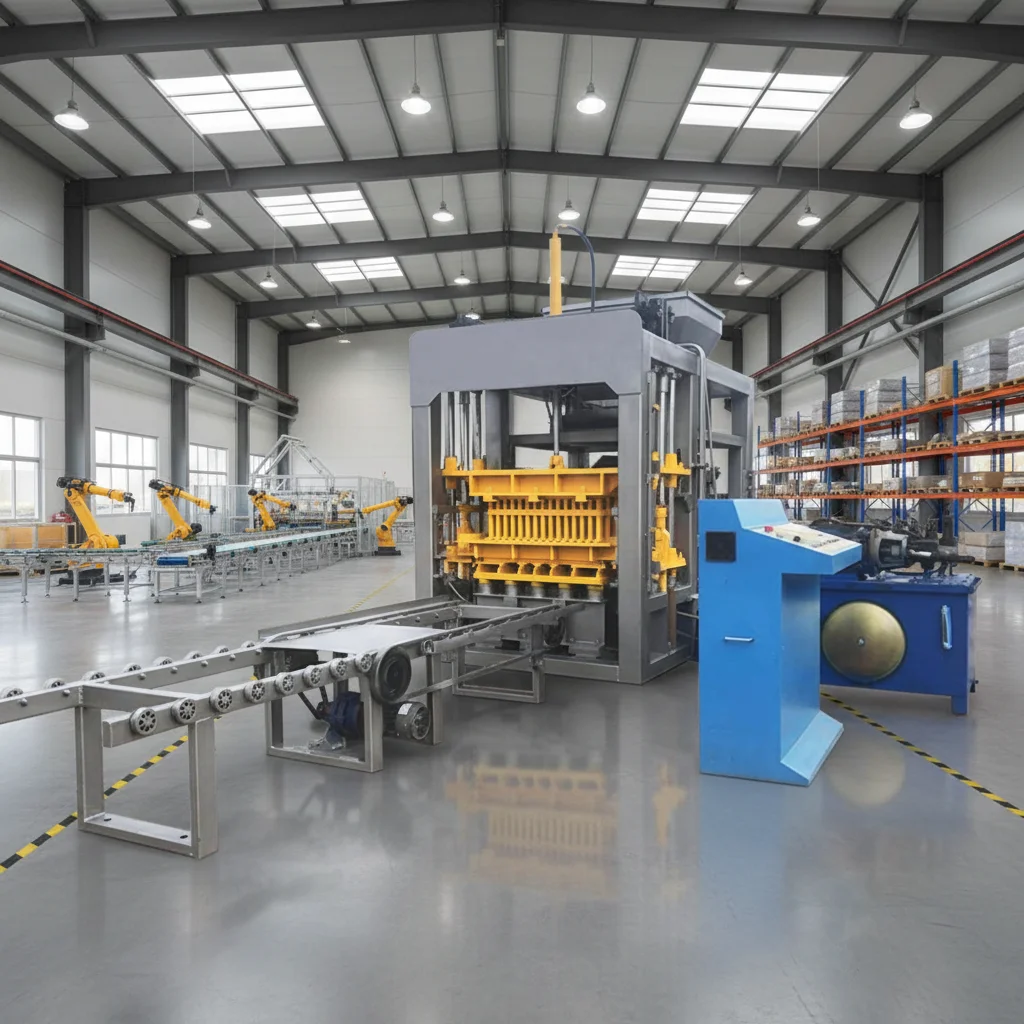
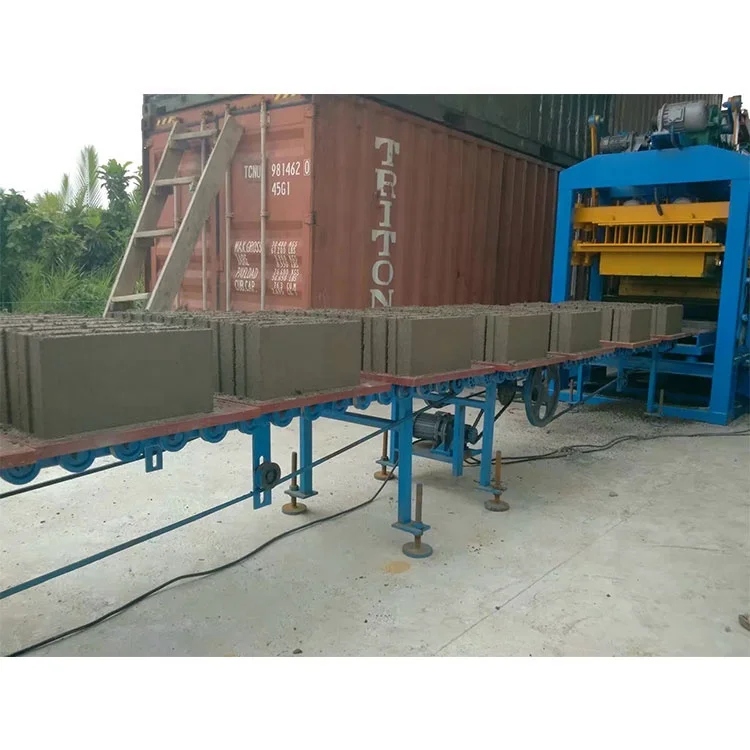 Automatic block machine