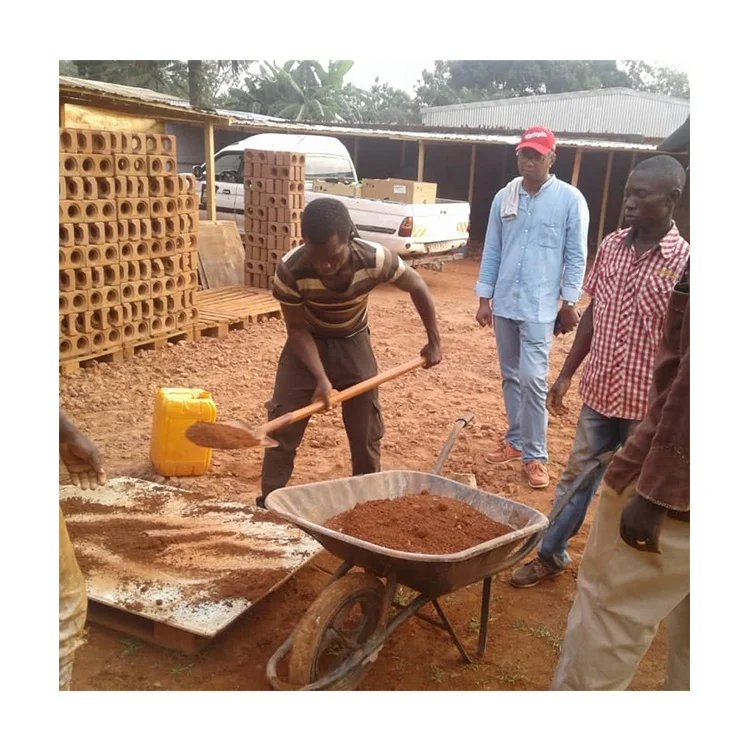
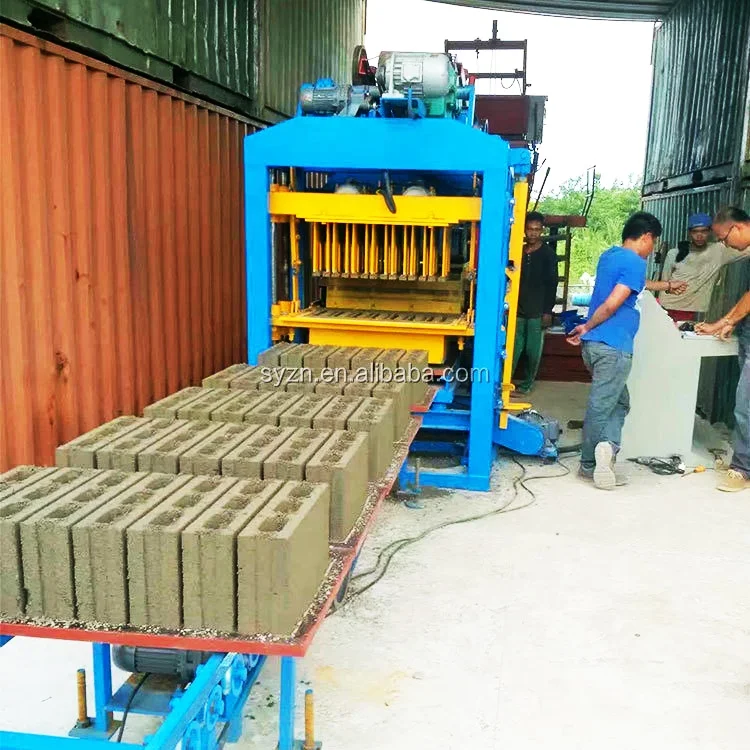
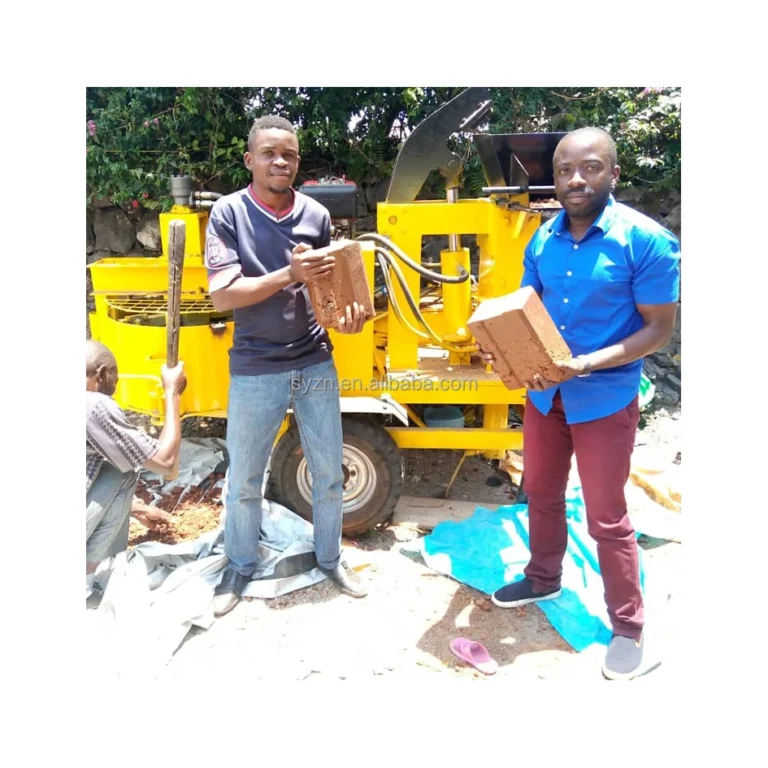
Mid-tier automatic range — QT5-15 bridges small workshop output and high-capacity lines, giving first-time buyers a defined step-up path without over-investing in plant footprint.
Technical Specifications
| Parameter |
Value |
| Product Type |
Fully Automatic Hydraulic Concrete Block Making Machine |
| Model |
QT5-15 |
| Overall Dimensions (L×W×H) |
7400×1950×2800 mm |
| Total Mass |
5000 kg |
| Overall Power |
32 kW |
| Voltage & Frequency |
Configurable (basis to be confirmed with buyer’s local supply) |
| Control System |
PLC with touch screen interface |
| Vibration Form |
Platform Vibration |
| Vibration Frequency |
0–60 Hz |
| Vibration Force |
80 kN |
| Hydraulic System |
Independent integrated hydraulic station |
| Moulding Mode |
Automatic loading, vibration moulding |
| Demolding Method |
Hydraulic |
| Pallet Size |
1100×550 mm |
| Moulding Cycle |
15–20 s (basis not stated in source) |
| Output Capacity — Hollow Block 400×200×200 mm |
5 pcs/mould, 900–1200 pcs/h, 7200–9600 pcs/8hr |
| Output Capacity — Hollow Block 400×150×200 mm |
6 pcs/mould, 1080–1440 pcs/h, 8640–11520 pcs/8hr |
| Output Capacity — Solid Brick 240×115×53 mm |
32 pcs/mould, 5760–7680 pcs/h, 46080–61440 pcs/8hr |
| Output Capacity — Rectangular Paver 200×100×60 mm |
25 pcs/mould, 3600–4500 pcs/h, 28800–36000 pcs/8hr (cycle 20–25 s) |
| Output Capacity — Zigzag Paver 225×112.5×60 mm |
16 pcs/mould, 2304–2880 pcs/h, 18432–23040 pcs/8hr (cycle 20–25 s) |
| Block Compressive Strength |
≥15 MPa |
| Raw Material Compatibility |
Fly ash (up to 70%), slag, gangue, sand, crushed stone, cement, water |
| Factory Area Required |
1000 m² |
| Automation Level |
Fully automatic (pallet feeding, material feeding, vibrating, demoulding) |
| Remote Diagnostics |
Fault diagnosis and remote control capability |
| Warranty |
1 year for the whole machine (excluding spare parts) |
Application Suitability
| Application |
Material or Output |
| Hollow block production for building construction |
Crushed stone, sand, cement, fly ash blends |
| Solid brick manufacturing |
Sand and cement or fly ash mixes |
| Paving brick and interlocking paver production |
High-density aggregate and cement |
| Fly ash and industrial residue utilization |
Up to 70% fly ash content in the mix |
| On-site block production for housing projects |
Local aggregate and cement |
Why "Pieces per Hour" Figures Can Mislead Buyers
Capacity is meaningless unless tied to a specific block format and cycle time.
Every output figure quoted for the QT5-15 fully automatic concrete block making machine for sale assumes a particular mould, block dimension, and material mix. A figure listed for solid bricks cannot be applied to hollow blocks, and a cycle time achieved with well-graded crushed stone will not hold with high-clay aggregate. Buyers who skip this detail often find real daily throughput far below the brochure number [NEED_CITE: industry standards for block machine capacity reporting].

Where the QT5-15 Sits in the Shiyue Range
The Shiyue lineup spans mobile egg-laying machines for on-site work, semi-automatic presses for smaller plants, and high-capacity fully automatic lines for large-scale production. The QT5-15 fully automatic concrete block making machine for sale occupies the mid-tier — delivering PLC-controlled automation and hydraulic demoulding at an investment level and plant footprint that remain accessible for buyers stepping up from manual or semi-automatic setups.
Mapping Output Tiers to Investment and Footprint
Moving up the range means more than higher cycle speed. Larger pallets, bigger hydraulic stations, and heavier frames increase both the capital outlay and the factory floor required. The QT5-15 needs a factory area of 1000 m², positioning it between compact workshop installations and sprawling automatic plants with dedicated curing racks and cubing systems. Buyers planning their first fully automatic concrete block making machine for sale can use this tier as a benchmark before deciding whether to scale further [NEED_CITE: typical block plant layout planning guides].
Reading the Specification Sheet for Production Reality
Vibration force and hydraulic pressure together determine block density and compressive strength. The QT5-15 delivers 80 kN of vibration force across a 0–60 Hz frequency range, paired with an independent hydraulic station for demoulding. This combination is calibrated for ≥15 MPa compressive strength when the mix design matches the machine’s parameters. Pallet size at 1100×550 mm sets the maximum mould footprint and must align with the buyer’s existing curing racks and forklift capacity — a mismatch here forces costly pallet replacement across the entire stock.
The Cost of Skipping the Mix Design Conversation
When vibration frequency, hydraulic pressure, and cycle time are set to a catalogue default rather than the buyer’s actual aggregate, blocks emerge with inconsistent density. Cracking during curing, rejected batches, and customer complaints follow. The extra material waste and lost production time quietly erase any savings from choosing a lower-priced machine [NEED_CITE: common causes of block strength variation in concrete masonry].
Why Buyers Source This Tier from Shiyue
Block machinery is the single focus at Shiyue, so the QT5-15 is specified as one matched system — press, mould, pallet, and handling — rather than assembled from separate suppliers. Configuration is set against the buyer’s actual mix design and target block format, not a catalogue default. Mould design covers the formats the buyer’s market sells, including custom drawings. Automation level is selectable, allowing a buyer to start at this tier and expand later. Installation, commissioning, and operator training are included so the line runs correctly from day one.
Documentation & Verification
- Line layout and capacity calculation stating the block format assumed for each output tier
- Machine specification sheet with voltage, frequency, and PLC display language confirmed before production
- Mould drawing and format list with pallet specification matched to curing area dimensions
- Factory test record demonstrating cycle time and output per format prior to shipment
Installation, Commissioning & Support
- Foundation must support 5000 kg total mass and dynamic vibration loads across the 7400×1950 mm footprint
- Dedicated power circuit rated for 32 kW with voltage and frequency confirmed before dispatch
- PLC touch screen language set to operator preference prior to factory test
- Hydraulic station pressure and vibration frequency adjusted to buyer’s mix during commissioning
- Mould change training covers format swap procedures to minimize downtime between production runs
- Wear parts list and hydraulic seal kit provided for first replacement cycle
What to Prepare Before Requesting a Quote
To size the QT5-15 correctly, share your target block formats with dimensions, the daily output you need per format, and the local raw materials available — especially aggregate type and any clay or silt content. Confirm your site voltage, frequency, and preferred PLC display language. If you already have curing racks or forklifts, provide pallet dimensions so the 1100×550 mm pallet size can be verified or adjusted.
Frequently Asked Questions
Q: Where does the QT5-15 sit in the Shiyue range compared to semi-automatic and high-capacity automatic models?
A: The QT5-15 is the mid-tier fully automatic option. It offers PLC-controlled automation and hydraulic demoulding beyond what semi-automatic models provide, while requiring less floor space and lower investment than the high-capacity lines designed for continuous large-volume production.
Q: How is output capacity calculated for this machine?
A: Each capacity figure is tied to a specific block format and mould. For example, hollow block 400×200×200 mm yields 5 pieces per mould at 900–1200 pieces per hour. Paver formats run on a longer 20–25 second cycle. Always confirm which format the quoted figure assumes.
Q: What plant footprint and investment level should I expect?
A: The QT5-15 requires approximately 1000 m² of factory area including space for the press, pallet circulation, and curing racks. It sits between compact semi-automatic setups and larger high-capacity lines in both floor space and capital requirement.
Q: Can I start semi-automatic and upgrade automation later?
A: The Shiyue range allows buyers to select their automation level. The QT5-15 platform supports future additions such as automatic stacking and cubing, so the line can grow as production volume increases without replacing the press itself.
Q: What voltage and control language options are confirmed before shipment?
A: Voltage, frequency, and PLC display language are confirmed during the quotation stage and locked before production begins. This ensures the machine matches local power supply and that operators can read all control screens upon commissioning.

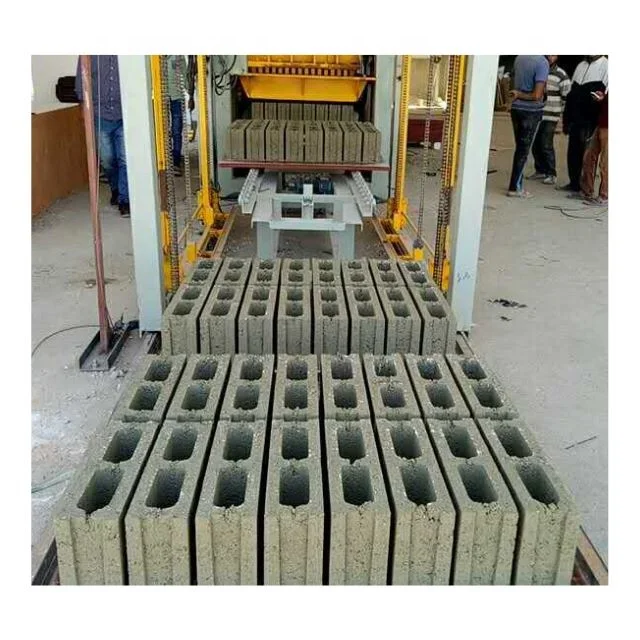
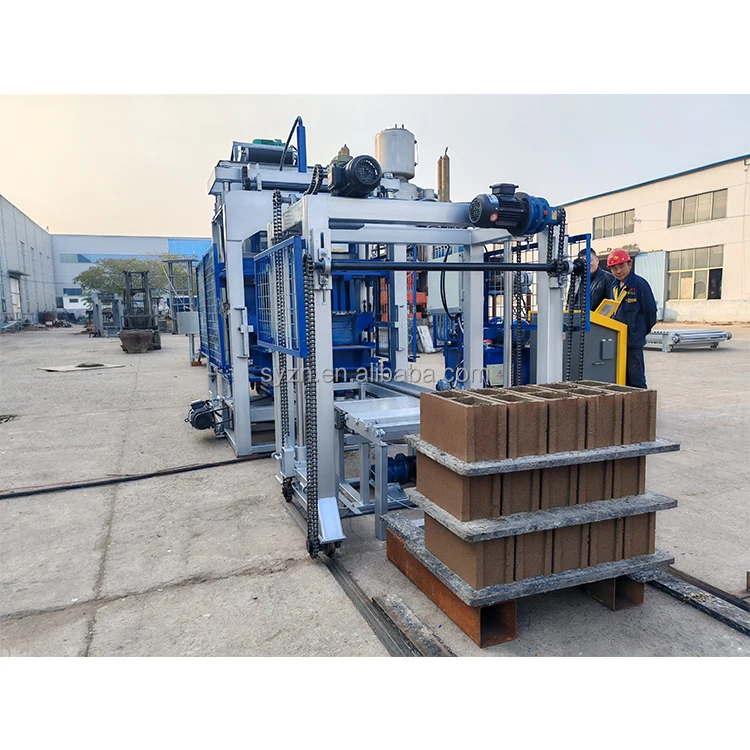 High quality block machine