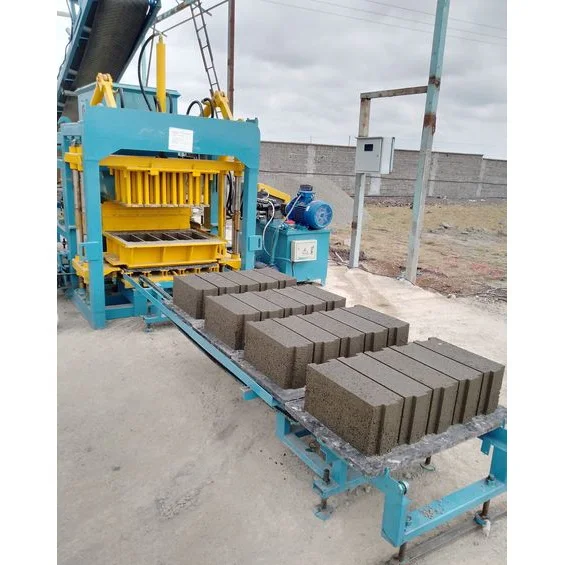
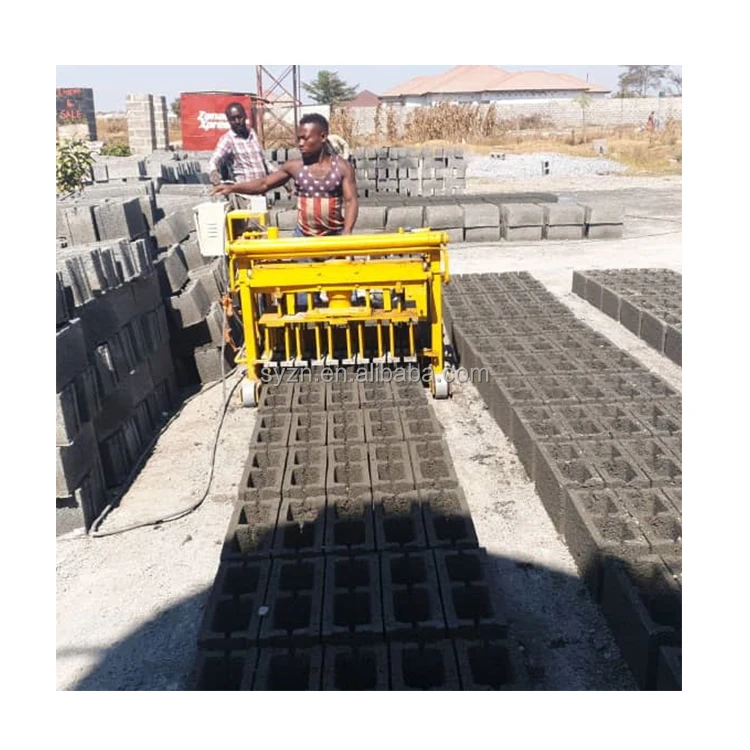
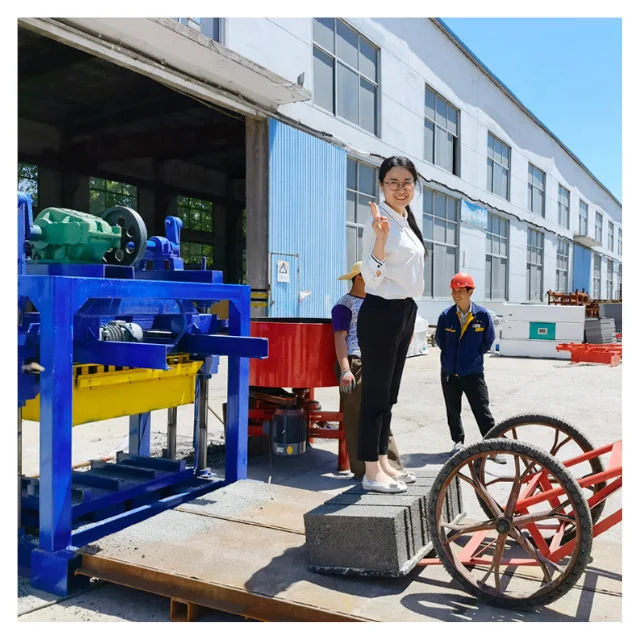
Matched System Supply — the QT5-15 is specified as a complete unit where machine, mould, pallet, and handling are sized together, preventing mismatched output that stalls the curing zone.
Technical Specifications
| Parameter |
Value |
| Model |
QT5-15 |
| Product Type |
Automatic Cement Block Making Machine |
| Overall Dimensions |
7400 × 1950 × 2800 mm |
| Total Mass |
5000 kg |
| Overall Power |
32 kW |
| Vibration Form |
Platform Vibration |
| Vibration Frequency |
0–60 Hz |
| Vibration Force |
80 kN |
| Moulding Mode |
Automatic loading with vibration moulding |
| Demolding Method |
Hydraulic |
| Pallet Size |
1100 × 550 mm |
| Molding Cycle |
15–20 s |
| Control System |
PLC (Programmable Logic Controller) |
| Hydraulic System |
Independent integrated hydraulic station |
| Factory Area Required |
1000 m² |
| Output — Hollow Block 400×200×200 mm |
900–1200 pcs/h (5 pcs/mould, 15–20s cycle) |
| Output — Hollow Block 400×150×200 mm |
1080–1440 pcs/h (6 pcs/mould, 15–20s cycle) |
| Output — Solid Brick 240×115×53 mm |
5760–7680 pcs/h (32 pcs/mould, 15–20s cycle) |
| Output — Rectangular Paver 200×100×60 mm |
3600–4500 pcs/h (25 pcs/mould, 20–25s cycle) |
| Output — Zigzag Paver 225×112.5×60 mm |
2304–2880 pcs/h (16 pcs/mould, 20–25s cycle) |
| Compressive Strength of Blocks |
>15 MPa |
| Warranty |
1 year for the whole machine (excluding spare parts) |
Application Suitability
| Application |
Material or Output |
| Hollow block production for masonry walls |
Fly ash (up to 70%), slag, gangue, sand, crushed stone, cement, water |
| Solid brick manufacturing for load-bearing structures |
Sand, crushed stone, cement blends |
| Rectangular and zigzag paver production for landscaping |
Aggregates, cement, color pigments |
| On-site block production for housing projects |
Local aggregates, cement, industrial residues |
| Eco-friendly block production |
High-volume fly ash, slag, and gangue mixes |
What "7200 Blocks a Day" Actually Means for the QT5-15 Automatic Block Machine Manufacturer
Capacity is only meaningful when the block format, mould cavity count, and cycle time are stated together.
Many quotations list a single headline figure for daily output without explaining which product that number assumes. I have seen buyers commit to an automatic block machine manufacturer expecting steady production, only to discover the rated capacity applies to a small solid brick they never intended to sell. When they switch to the hollow blocks their market demands, the actual output drops because the cycle is longer and fewer units fit the mould. The QT5-15 block machine for sale is rated at 900–1200 pcs/h for 400×200×200 mm hollow blocks and 3600–4500 pcs/h for 200×100×60 mm rectangular pavers. These figures assume specific cavity counts and cycle ranges. [NEED_CITE: block machine capacity calculation standards by format]

Where the QT5-15 Sits in the Full Machine Range
The Shiyue lineup spans mobile egg-laying units for small site work, semi-automatic presses for lower-investment startups, and high-capacity automatic lines for industrial plants. The QT5-15 occupies the mid-tier automatic segment, offering PLC-controlled production and hydraulic demolding for buyers who need consistent output without the footprint or capital of a high-volume system.
Matching the Press to the Supporting Line
A block press does not operate in isolation. Raw material feeding, pallet circulation, and block stacking must keep pace with the molding cycle so the press never waits between strokes. For the QT5-15, the 15–20 second cycle means the pallet feed machine and conveyor must deliver a fresh pallet within that window. If the supporting stations are undersized, the rated capacity becomes theoretical. Planning the complete line around the press ensures the automatic block machine manufacturer delivers a system that runs at its stated rhythm. [NEED_CITE: block production line synchronization principles]
Reading the Specification Sheet for Real Output
The vibration force of 80 kN and platform vibration at 0–60 Hz work together with the hydraulic system to compact the mix and determine block density. A higher vibration force is necessary when the aggregate includes coarse crushed stone, while a lower frequency suits finer fly ash mixes. The 1100 × 550 mm pallet size dictates how many blocks fit per cycle and how the curing racks must be configured. Buyers should compare these parameters against their local raw material and target block format rather than relying on a generic capacity number. The 32 kW overall power requirement also means the site electrical supply must be confirmed before installation begins.
The Hidden Cost of an Undersized Curing Zone
When the pallet size is chosen without considering the curing area, buyers find themselves short on rack space within the first week of production. The 1100 × 550 mm pallets used by the QT5-15 require a curing zone large enough to hold multiple days of output, and the forklift on site must be rated to handle loaded pallets at full reach. If the curing yard is too small, fresh blocks stack against each other before gaining adequate strength, leading to cracking and waste. [NEED_CITE: block curing area planning for pallet-based systems]
Why Buyers Source This Range Here
The machine, mould, pallet, and handling equipment are specified as a matched set rather than assembled from separate suppliers, which eliminates interface gaps that cause pallet jams or uneven stacking. Configuration is set against the buyer’s actual mix design and local aggregate, not a catalogue default, so the vibration frequency and hydraulic pressure suit the material available on site. Mould design covers the formats the buyer’s market actually sells, with custom drawings available for non-standard shapes. Automation level is selectable, allowing a buyer to start with the standard configuration and add stacking or cubing later. Installation support includes operator training so the crew can run the QT5-15 independently from the first shift.
Documentation & Verification
- Line layout showing QT5-15 placement with capacity stated per block format
- Machine specification sheet covering the 32 kW power and 80 kN vibration ratings
- Mould drawing and format list for each cavity count and block dimension
- Pallet specification confirming 1100 × 550 mm size and material grade
- Voltage and PLC control language confirmation before production
- Factory test record on buyer’s target block format before dispatch
Installation, Commissioning & Support
- Foundation must support 5000 kg total mass across the 7400 × 1950 mm footprint
- Dedicated electrical circuit for the 32 kW overall power draw confirmed on site
- Machine ships partially assembled with hydraulic station pre-connected
- PLC touch-screen language set to operator preference before commissioning
- Mould change procedure trained on site for quick format switching
- Wear parts list provided with first replacement intervals for hydraulic and vibration components
What to Include in Your Inquiry
To size the QT5-15 correctly, share the block formats your market sells, the daily output target for each format, and the local raw materials you plan to use. Confirm the available voltage and frequency at your site, the PLC display language your operators need, and the dimensions of your existing curing area so the pallet circulation can be matched.
Frequently Asked Questions
Q: How is the QT5-15 output capacity calculated per block format?
A: Each output figure states the block dimensions, number of cavities per mould, and the assumed cycle time. For example, 900–1200 pcs/h for 400×200×200 mm hollow blocks assumes 5 cavities and a 15–20 second cycle. This lets you calculate realistic daily production for the format you actually sell.
Q: Where does the QT5-15 fit compared to semi-automatic and higher-tier models?
A: It sits in the mid-tier automatic range, offering PLC control and hydraulic demolding for buyers who need consistent output beyond semi-automatic capacity but do not require the footprint or investment of a high-volume line. It suits first-time plants and contractors adding reliable automated production.
Q: Is the PLC display language configurable before shipment?
A: Yes. The touch-screen interface language is confirmed during the order process and set before the machine leaves the factory. This avoids commissioning delays caused by operators unable to read the fault diagnosis menus, a problem I have seen halt production for days on multilingual sites.
Q: Can the QT5-15 be upgraded with automatic stacking later?
A: The automation level is selectable. Buyers can start with the standard pallet feed and manual stacking configuration, then add automatic stacking and cubing equipment when production volume justifies the additional investment. The line layout is planned to accommodate this upgrade path.
Q: How should the curing zone be planned around the pallet size?
A: The 1100 × 550 mm pallets define rack dimensions and forklift requirements. The curing area must hold multiple days of output, and the forklift must handle loaded pallets at full reach. Confirm your existing yard dimensions and equipment before finalizing the line layout.

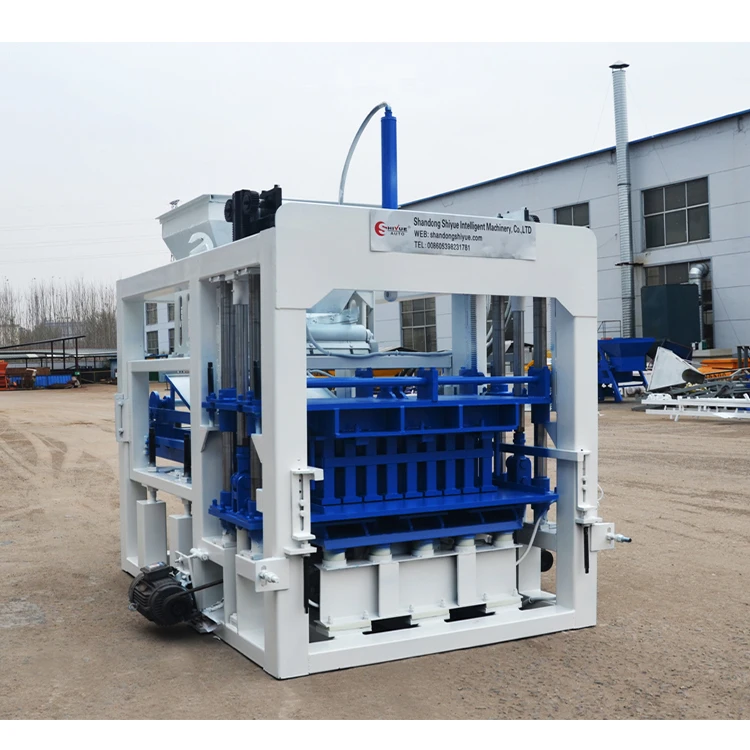
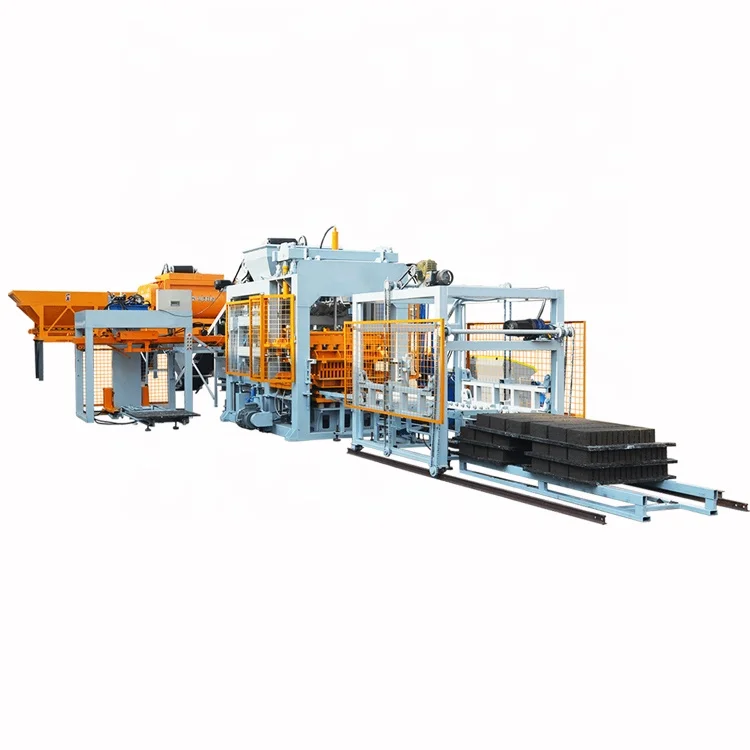 High quality block machine