
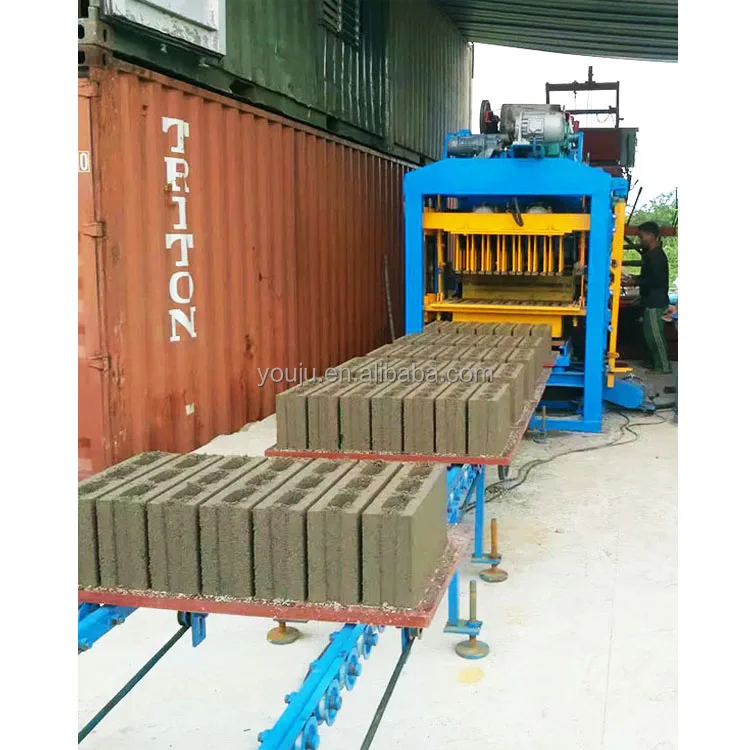
 Automatic block machine
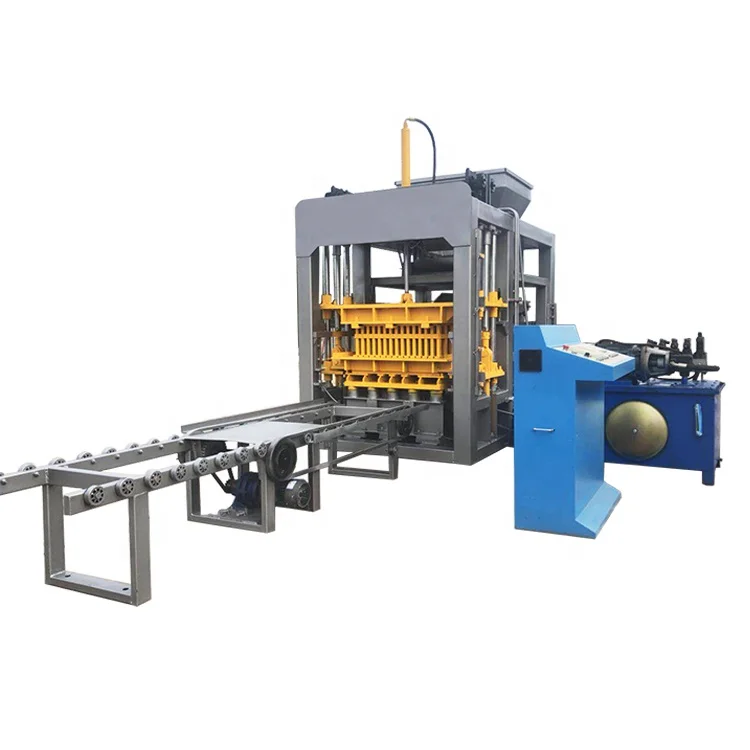 Automatic block machine
Concrete Machinery
QT5-15 Automatic Block Making Machine | Manufacturer
<p><strong>QT5-15 Automatic Block Making Machine, 26.5 kW, 16-21 MPa Hydraulic Pressure, PLC Control</strong> — positioned in the mid-tier of our automatic range for buyers scaling from semi-automatic output. Platform vibration with synchronous mould locking delivers consistent block density, while the forcing charge system handles fly ash, slag and local aggregates. Pallet size 1100 × 550 mm fits standard curing racks.</p> <ul> <li>Output stated per block format, not cycles alone</li> <li>Machine, mould and pallet specified as one matched system</li> <li>Voltage and PLC language confirmed before production</li> </ul>
CE Certified
European Standards
Ships 15-30 Days
Fast Delivery
108+ Countries
Global Export
After-Sales Support
Training Included
24h Response
Free Technical Consultation
Product Details
Matched System Integration — the QT5-15 is specified as a press, mould, pallet and handling package sized to the buyer’s actual block format and local aggregate, not pulled from a catalogue default.
Technical Specifications
| Parameter | Value |
|---|---|
| Model | QT5-15 |
| Product Type | Automatic Hydraulic Concrete Block Making Machine |
| Machine Power | 26.5 kW |
| Hydraulic Pressure | 16–21 MPa |
| Vibration Form | Platform Vibration |
| Vibration Force | 45 kN |
| Molding Cycle | 15–20 seconds |
| Pallet Size | 1100 × 550 mm |
| Control System | PLC Controller |
| Automation Level | Automatic (electric and hydraulic interlocking) |
| Overall Dimensions (L×W×H) | 7400 × 1950 × 2800 mm |
| Machine Weight | 6000 kg |
| Voltage | Configured to buyer’s local voltage and frequency (basis to be confirmed) |
| Output — Hollow Block 400×200×200 mm, 5 pcs/mould | 7,200–9,600 pcs/day (based on 15–20 s cycle) |
| Output — Porous Block 240×115×90 mm, 16 pcs/mould | 23,000–28,800 pcs/day (based on 15–20 s cycle) |
| Output — Standard Block 240×115×53 mm, 32 pcs/mould | 61,440–70,400 pcs/day (based on 15–17 s cycle) |
Application Suitability
| Application | Material or Output |
|---|---|
| Hollow block production for wall construction | Crushed stone, sand, cement, fly ash |
| Paving block and interlocking brick manufacturing | Gravel, slag, colored aggregates |
| Curbstone and kerbstone forming | Coarse aggregate with cement binder |
| Porous and solid block for load-bearing walls | Sand, fly ash, industrial waste |
| Colored paver production | Pigmented concrete mixes with fine aggregate |
What "7,200 Blocks per Day" Actually Means on the QT5-15
Output figures only hold when the block format and cycle time match your production plan.
Many buyers receive a single daily capacity number that assumes the smallest block in the mould catalogue. When the same QT5-15 automatic block machine manufacturer quotes a cycle time, that time shifts depending on mould cavity count, block height, and the hydraulic pressure needed to achieve target density. A hollow block at 400×200×200 mm runs five pieces per mould with a 15–20 second cycle, while a standard solid block at 240×115×53 mm runs thirty-two pieces per mould at a slightly shorter cycle. I have seen production plans collapse because the buyer based their entire revenue model on the standard block figure while their market only buys hollow blocks. [NEED_CITE: capacity calculation methods in concrete block manufacturing]
Where the QT5-15 Sits in the Full Machine Range
The QT5-15 occupies the mid-tier of the automatic block machine lineup. Below it, semi-automatic models require manual pallet handling and rely on the operator to sequence each step. Above it, high-capacity lines add automatic stacking, cubing, and curing rack handling to run with minimal floor labour. This model introduces PLC-controlled interlocking procedures and hydraulic pressing at a pallet size of 1100 × 550 mm, giving buyers a meaningful step in daily output and block consistency without committing to a full-plant automation package. For an entrepreneur setting up a first block plant, the QT5-15 delivers automatic cycle control at an investment level that leaves budget for downstream curing and handling.
How the Range Scales from Semi-Auto to Full-Auto Lines
Moving from a semi-automatic press to the QT5-15 removes the operator from the sequencing loop. The PLC controller locks each action — charge, vibrate, press, release — into a fixed order so that cycle repeatability no longer depends on operator attention. Buyers who later need higher throughput can add automatic pallet feeding and stacking modules to the same line footprint. The critical point is that automation level is selectable at order stage. A buyer can commission the QT5-15 as a stand-alone press with manual pallet transfer today and integrate automatic cubing a year later without replacing the main machine. [NEED_CITE: modular automation upgrade paths in block production lines]
Reading the Specs That Decide Block Quality
Hydraulic pressure at 16–21 MPa and vibration force at 45 kN work together to determine the density and compressive strength of every block that leaves the mould. Higher hydraulic pressure compacts the mix more tightly, but without sufficient vibration the aggregate particles will not rearrange into a dense matrix — the result is a block that looks solid on the outside but fractures under load. The platform vibration form on the QT5-15 transmits energy through the mould table rather than the mould walls, which means the entire mould cavity receives uniform vibration regardless of block format. The mould-locking oil cylinder clamps the mould box to the vibration table before each cycle, creating a single rigid assembly that prevents energy loss at the connection point. The 1100 × 550 mm pallet size is chosen to fit standard curing racks and common forklift tine widths, so blocks move from press to curing area without rehandling. A forcing charge system pushes raw material into deep mould cavities rather than relying on gravity fill, which matters when the mix contains lightweight fly ash or fine slag that tends to bridge in the hopper.
The Cost of Skipping Configuration Checks
When a buyer orders a block machine without confirming the local aggregate grading, the forcing charge system may deliver inconsistent fill — some cavities overfilled, others short — and the resulting blocks vary in weight and strength across a single pallet. Skipping voltage and frequency confirmation means the PLC cabinet arrives with a 380 V/50 Hz transformer while the site runs 440 V/60 Hz, and commissioning stalls until a replacement arrives by air freight. I have watched a production line sit idle for weeks because the control display language was set to a script the local operators could not read, turning a simple parameter adjustment into a call to the manufacturer’s service desk across time zones. [NEED_CITE: commissioning delays caused by unconfirmed electrical specifications]
Why Buyers Source the QT5-15 Through This Range
The machine, mould, pallet and handling equipment are specified as one matched system, so the pallet size, curing rack spacing and forklift capacity are aligned before the machine ships. Configuration is set against the buyer’s actual mix design and target block format — not a catalogue default — which means the hydraulic pressure and vibration force are tuned to the aggregate available on site. Mould design covers the formats the buyer’s market actually sells, with custom drawings available for non-standard profiles. Automation level is selectable, so a buyer can commission the QT5-15 as a stand-alone press and add automatic stacking later. Installation support includes operator training on the PLC interface and mould change procedure so the line reaches stable production from the first shift.
Documentation & Verification
- Line layout showing QT5-15 position with capacity stated per block format
- Machine specification sheet confirming hydraulic pressure and vibration force settings
- Mould drawing and format list for every block profile included in the order
- Pallet specification matched to 1100 × 550 mm size and buyer’s curing rack
- Voltage and PLC display language confirmation signed before production
- Factory test record on buyer’s target block format before dispatch
Installation, Commissioning & Support
- Foundation plan sized to 7400 × 1950 mm footprint and 6000 kg static load
- Dedicated power circuit for 26.5 kW total machine power at confirmed voltage
- Machine arrives partially assembled; press frame and hydraulic unit ship as one skid
- First-run parameter setting covers mould change timing and vibration duration per format
- Operator training on PLC interlocking procedures and fault code reading
- Wear parts list with hydraulic seal and vibration table bearing replacement intervals
What We Need to Quote Your Line
To size the QT5-15 correctly for your project, share the block format and dimensions you plan to produce, the daily output target for that specific format, and the raw material mix available locally including aggregate type and cement source. Confirm your site voltage and frequency, the control display language your operators require, and the pallet handling method you already have in place — manual carts, forklift, or existing rack system. If you are replacing an existing press, note the current mould profiles so we can match or adapt them.
Frequently Asked Questions
Q: How is the QT5-15 daily output calculated, and which block format does each figure assume?
A: Each output figure in the specification table is tied to a specific block dimension and pieces-per-mould count. The hollow block figure assumes 400×200×200 mm at five pieces per mould, while the standard block figure assumes 240×115×53 mm at thirty-two pieces. Daily capacity shifts with your actual format, so confirm the block size your market demands before using any single number in your business plan.
Q: Where does the QT5-15 sit compared to smaller semi-automatic and larger high-capacity models?
A: It occupies the mid-tier of the automatic range. Below it, semi-automatic models require manual pallet handling and operator-sequenced cycles. Above it, high-capacity lines add automatic stacking and cubing. The QT5-15 introduces PLC interlocking and hydraulic pressing while keeping investment at a mid-tier level suitable for a first automatic plant.
Q: Can I start with the QT5-15 and upgrade automation later?
A: Yes. The machine can be commissioned as a stand-alone press with manual pallet transfer. Automatic pallet feeding, stacking, and cubing modules can be added later without replacing the main press. The PLC controller supports integration of these modules when you are ready to expand.
Q: What voltage and PLC display language options are available?
A: Voltage and frequency are configured to match your local supply, and the PLC display language is set before production. Both must be confirmed at order stage to avoid commissioning delays. Common configurations cover 380 V and 440 V systems at 50 or 60 Hz, with display language options confirmed during the quotation process.
Q: Which mould formats come standard and which require custom design?
A: Standard formats include hollow block, solid block, porous block, paving brick, interlocking block, and curbstone profiles matched to the 1100 × 550 mm pallet. Custom moulds are designed to buyer drawings for non-standard profiles. Each order includes a mould drawing and format list confirming exactly which profiles are included.
Get a Quote
Request Price for QT5-15 Automatic Block Making Machine | Manufacturer
Fill in your requirements and our export manager will respond within 24 hours with pricing, specs and a customized solution.
You May Also Like
Related Products
Automatic block machine
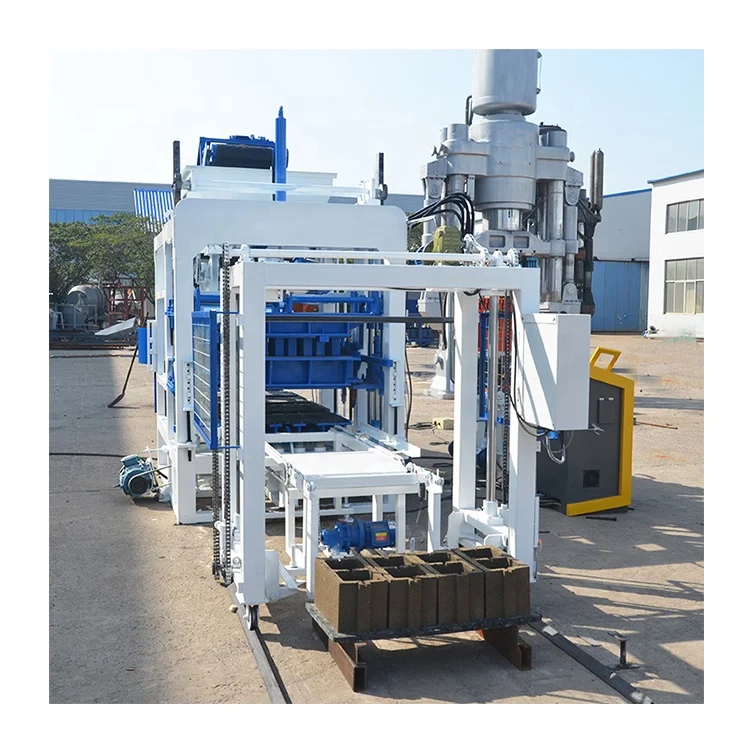 Automatic block machine
Automatic Concrete Block Machine QT4-18 | Full Range
QT4-18 Automatic Block Machine, 16 MPa Rated Pressure, 950×550 mm Pallet — positioned in the...
View Details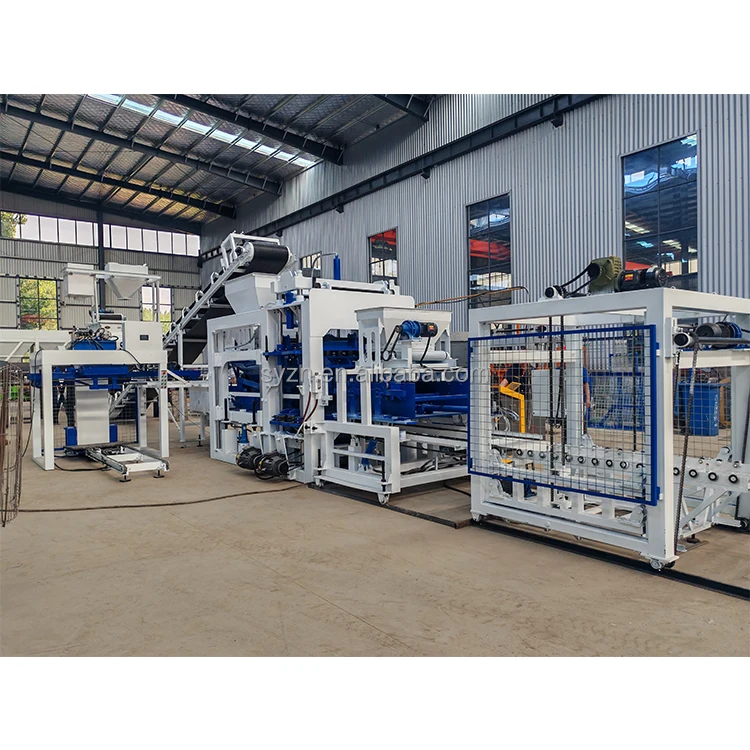 Automatic block machine
Hollow Block Making Machine QT8-15 with Hydraulic – Factory Supply
QT8-15 Automatic Block Machine, 32 MPa Hydraulic Pressure, 2800–4500 RPM Platform Vibration, PLC Touch Screen...
View Details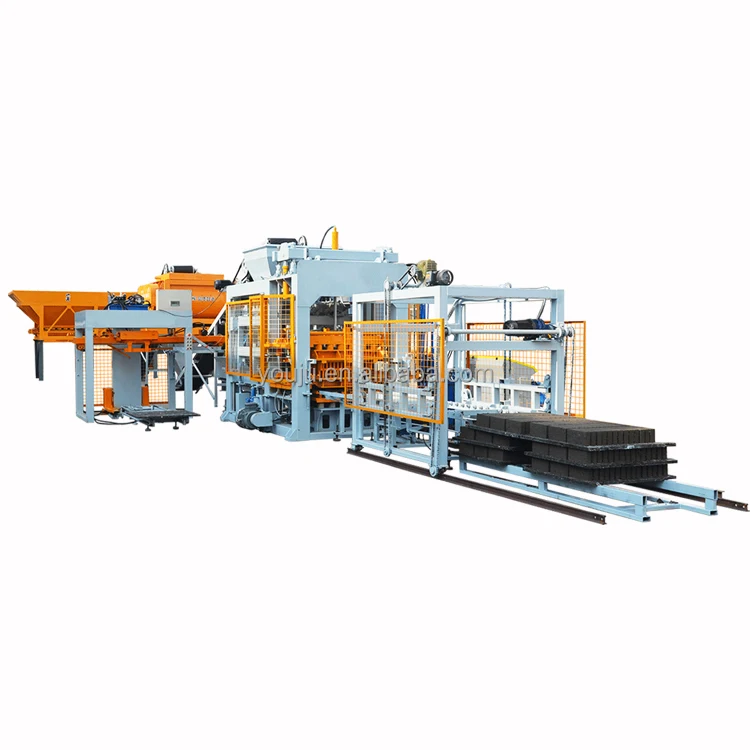 Automatic block machine
QT 8-15 Automatic Concrete Block Making Machine – Full Range Manufacturer
QT 8-15 Fully Automatic Concrete Block Making Machine, PLC Control, 37 kW — specified as...
View Details
Established Manufacturer · Since 2005
Ready to Start Your Concrete Production Line?
Our 320+ engineers will design a customized solution for your local materials, voltage and site conditions. Get a free layout plan and ROI estimation within 24 hours.
108+ Countries Exported
46,000㎡ Factory
320+ Engineers
24h Response Guaranteed