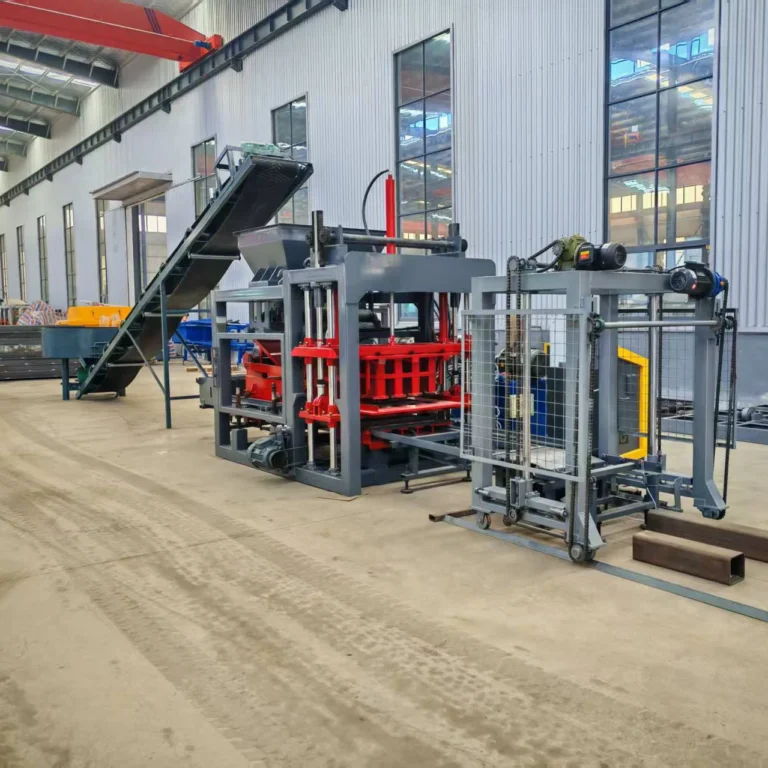
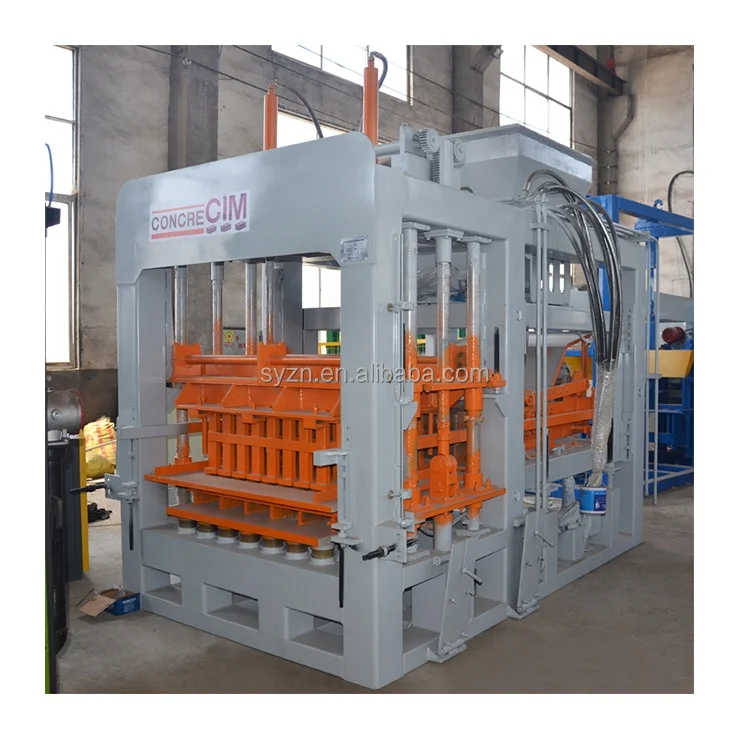
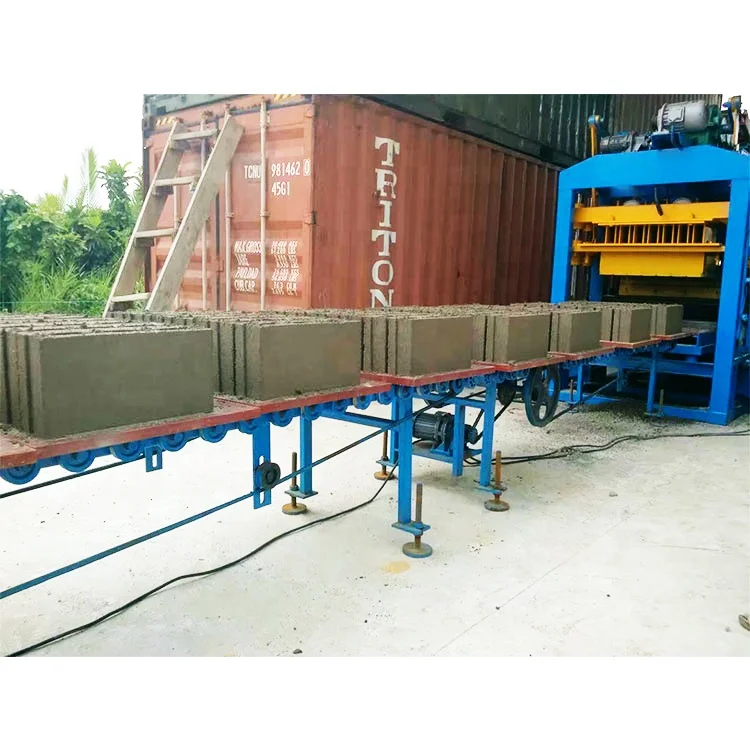
Single Focus Machinery — Every QTJ4-24 unit ships only after the vibration force and pallet dimensions are matched to your actual block format and local aggregate, not a catalogue default.
Technical Specifications
| Parameter |
Value |
| Model |
QTJ4-24 |
| Product Type |
Semi-Automatic Concrete Block Making Machine |
| Overall Dimensions (L×W×H) |
2060 × 1730 × 2580 mm |
| Molding Cycle |
24 s |
| Vibration Frequency |
4200 r/min |
| Vibration Force |
35.5 kN |
| Total Power |
14.25 kW |
| Mixer Model |
JQ350 |
| Pallet Size |
850 × 450 × 20 mm |
| Total Weight |
1800 kg |
| Automation Level |
Semi-automatic |
| Vibration System |
Bed mould vertical vibration + upper mould compression vibration |
| Output Capacity (Hollow Block) |
480 pcs/hr based on 390×190×190 mm, 4 pcs/mould |
| Output Capacity (Hollow Block) |
600 pcs/hr based on 400×150×200 mm, 5 pcs/mould |
| Output Capacity (Solid Brick) |
2100 pcs/hr based on 240×115×53 mm, 18 pcs/mould |
| Daily Output (Hollow Block) |
3800 pcs per 8-hour shift based on 390×190×190 mm |
| Daily Output (Hollow Block) |
4800 pcs per 8-hour shift based on 400×150×200 mm |
| Daily Output (Solid Brick) |
17000 pcs per 8-hour shift based on 240×115×53 mm |
| Applicable Products |
Concrete hollow blocks (8, 6, 5, 4 inch), solid bricks, pavers |
| Raw Materials |
Crushed stones, sand, cement, dust, fly ash |
| Standards |
CE |
Application Suitability
| Application |
Material or Output |
| Small-scale hollow block plant |
Crushed stone and cement mixes producing 390×190×190 mm or 400×150×200 mm blocks |
| On-site construction production |
Sand, fly ash, and cement blends for solid bricks at contractor job sites |
| Paving brick runs for local distributors |
Fine aggregate and cement combinations for interlocking or rectangular pavers |
| Fly ash brick workshops |
Industrial by-product mixes replacing partial cement content in solid brick formats |
What "480 Pieces per Hour" Leaves Out About Semi-Automatic Block Making Machine Output
A capacity number means nothing unless the block format behind it is stated in writing.
I once watched a buyer receive a semi-automatic block machine rated for a certain hourly figure, only to discover that figure assumed a 4-cavity hollow block mould while his market demanded a different size entirely. The machine ran fine, but his actual daily tally fell well short of what the quotation implied. That gap between quoted and real output is where most first-time plant owners lose money in the opening months. A Semi-Automatic Block Making Machine manufacturer should always tie each capacity figure to a specific block dimension, cavity count, and cycle time so you can plan your shift around reality, not optimism [NEED_CITE: capacity calculation standards for concrete block machinery].

Where the QTJ4-24 Sits in the Full Block Machine Range
The Shiyue range spans mobile egg-layers for job-site work, semi-automatic presses like the QTJ4-24 for fixed small plants, and fully automatic lines with stacking and cubing for high-volume producers. The QTJ4-24 occupies the entry-to-mid tier: it demands a concrete floor, a JQ350 mixer upstream, and manual or trolley-assisted pallet handling downstream, but it does not require the footprint, hydraulic complexity, or capital outlay of an automatic system. For a buyer surveying options before committing to a plant layout, this Semi-Automatic Block Making Machine represents the point where daily output becomes commercially meaningful without the infrastructure burden of a full line.
Understanding the Investment Footprint Before You Order
A semi-automatic tier means the operator loads pallets and moves cured racks by hand or with a simple trolley. The press itself handles vibration, compression, and mould release automatically, but everything before and after the press relies on your crew. This keeps the initial investment lower and the maintenance simpler, yet it also means your labour cost per block will not drop as sharply as it would with automatic stacking. Buyers planning a future upgrade should confirm that the pallet size — 850 × 450 × 20 mm here — matches what a future automatic stacker would require, so the curing area you build now will not have to be rebuilt later [NEED_CITE: block plant layout planning for semi-automatic to automatic migration].
Reading the Vibration and Pressure Numbers
The QTJ4-24 uses a dual vibration system: vertical vibration under the bed mould combined with compression vibration from the upper mould. This arrangement compacts the concrete mix from both directions during the 24-second cycle, which improves density uniformity across the block face. The 35.5 kN vibration force at 4200 r/min is calibrated for standard crushed-stone and sand mixes; if your local aggregate contains high clay or silt content, the effective compaction may differ, and a material test before shipment becomes important. The 14.25 kW total power covers the vibration motors, the hydraulic pump for upper mould pressure, and the mixer drive, meaning a single dedicated circuit at the correct voltage and frequency is required on-site before commissioning.
The Hidden Cost of Skipping the Pallet and Voltage Conversation
I have seen machines sit idle at the port because the buyer’s local grid runs at a frequency the motor was not wound for, or because the pallet size specified did not match the curing racks already welded in the yard. On a semi-automatic press, the pallet is the single piece of tooling that touches every block you produce, and its dimensions dictate your rack spacing, forklift tine width, and curing area layout. Getting the 850 × 450 × 20 mm pallet wrong means rebuilding your curing zone or ordering new steel racks — an expense that does not appear in the machine quotation but lands squarely on your floor. Voltage, frequency, and control panel language are equally easy to overlook when the purchase conversation focuses on output [NEED_CITE: export machinery voltage and frequency confirmation practices].
Why Source This Tier From a Single-Focus Block Machinery Supplier
The QTJ4-24 is configured around one product category: concrete blocks and pavers. The machine, the mould, the pallet, and the JQ350 mixer are specified together so cycle times match and the press is not left waiting for mix or pallets. Shiyue Machinery designs moulds for the exact hollow block, solid brick, and paver formats your local market moves, including custom drawings when your buyer demands a non-standard dimension. Every unit undergoes a factory test with the buyer’s target mix or a close equivalent before packing, so vibration force and cycle time are verified against the stated capacity rather than assumed from a brochure. Documentation — from the line layout drawing to the hydraulic schematic — is prepared per order, not pulled from a generic folder.
Documentation & Verification
- Line layout drawing with pallet flow and curing rack spacing based on 850 × 450 mm pallets
- Capacity calculation sheet stating block format and cavity count for each output figure
- Mould drawing and format list covering all hollow block and solid brick sizes ordered
- Factory vibration and compression test record on target mix before dispatch
- Voltage, frequency, and PLC display language confirmation signed before production
- CE declaration and operation manual with spare parts and mould wear list included
Installation, Commissioning & Support
- Concrete floor pad required; machine footprint is 2060 × 1730 mm with 2580 mm clearance height
- Dedicated power circuit matching confirmed kW rating at agreed voltage and frequency
- Machine shipped partially assembled; vibration table and upper mould frame bolt on site
- First-run test with local aggregate mix to verify block density and cycle timing
- Operator training covers mould change procedure, pallet loading rhythm, and daily greasing points
- Spare mould wear parts and hydraulic seal kit listed for first reorder cycle
Before You Request a Quote
To size the QTJ4-24 correctly for your plant, provide the exact block formats you intend to sell, your target daily output per format, and the aggregate materials available locally. Confirm your site voltage and frequency so the motors and control panel are built to match. If you already have curing racks or a forklift in place, share the pallet dimensions they accept so the pallet specification can be aligned before production begins.
Frequently Asked Questions
Q: How is the output capacity verified, and which block format does each figure assume?
A: Every capacity figure on this page states the exact block dimension and cavity count it assumes — for example, 480 pieces per hour based on a 390×190×190 mm hollow block with 4 cavities per mould. Before shipment, a factory test runs the press on your target mix to confirm that cycle time and block density match the calculation.
Q: What voltage and frequency options are available for my market?
A: The QTJ4-24 can be built to match common industrial voltage and frequency combinations used in export markets. You must confirm the exact supply specification at your site before production starts so the motors and control wiring are wound and rated correctly for your grid.
Q: Can I start with semi-automatic operation and add automation later?
A: The semi-automatic configuration keeps pallet handling and stacking manual, which lowers the initial investment. When you are ready to add automatic pallet feeding or stacking, the pallet size of 850 × 450 mm should be confirmed as compatible with the future equipment so your curing area does not need rebuilding.
Q: What mould formats are included, and how long does a change take?
A: The QTJ4-24 accepts moulds for standard hollow blocks in multiple inch sizes, solid bricks, and pavers. Each mould is supplied with a drawing for your approval. Mould change time depends on crew familiarity; after initial training, a trained team can complete a swap within a portion of a shift.
Q: What supporting equipment do I need alongside the press?
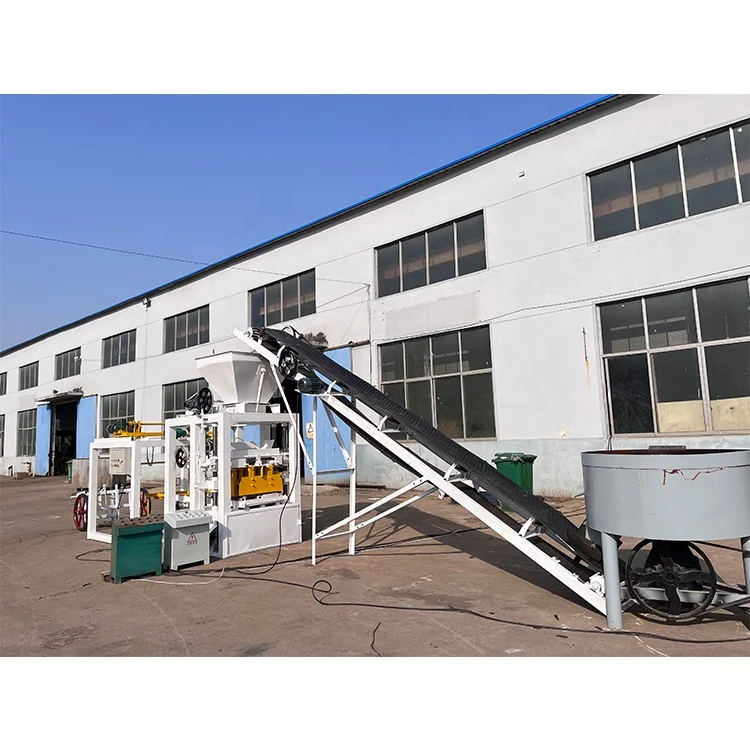
A: A JQ350 pan mixer feeds the press, and pallets measuring 850 × 450 × 20 mm carry each wet block to the curing area. You will also need a trolley or hand cart for pallet transport, curing racks sized to the pallet footprint, and a water supply for curing.

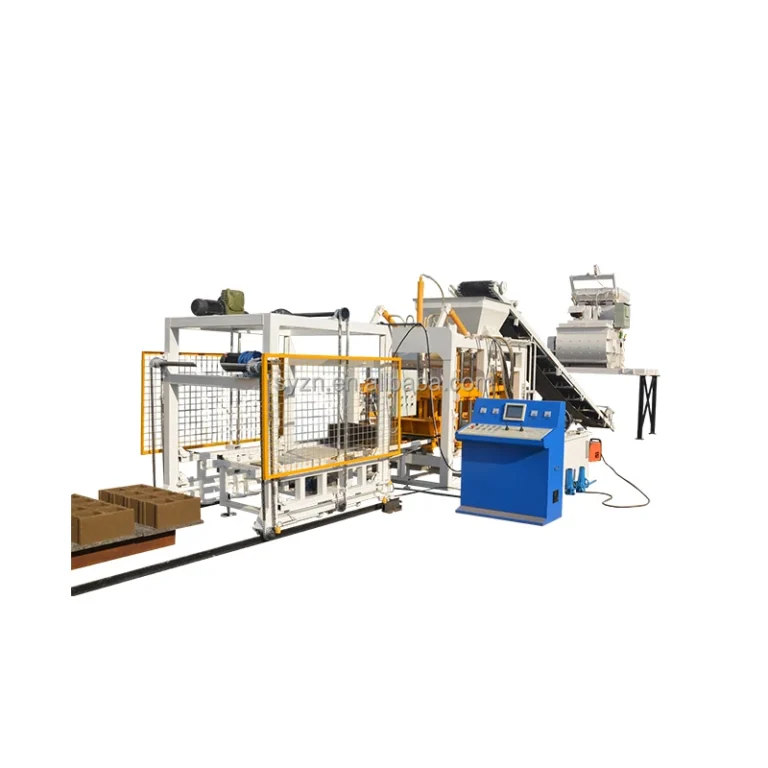 High quality block machine