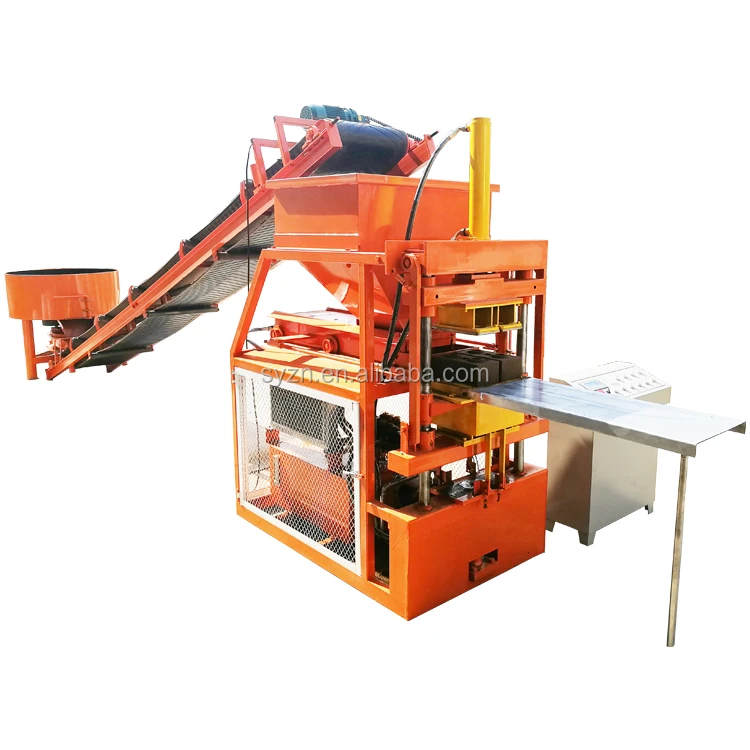
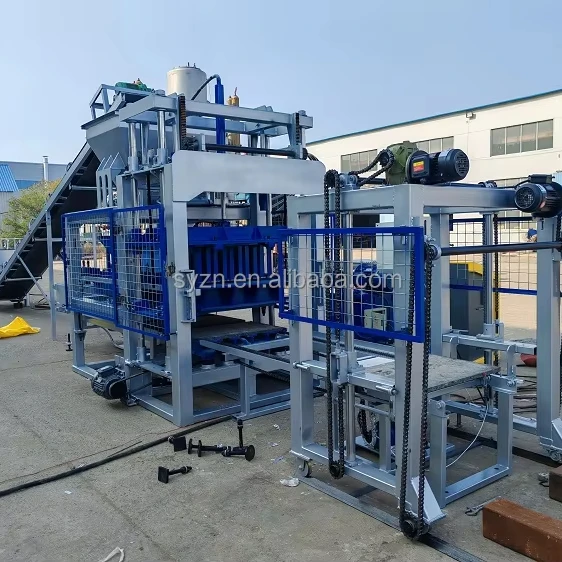
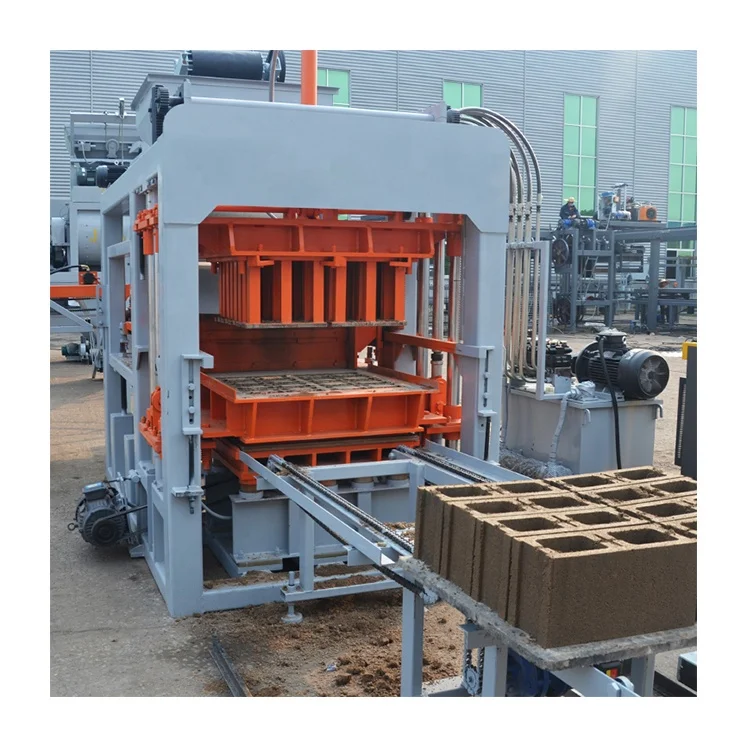
Matched System Sizing — every capacity figure we quote for the QT4-20 states the exact block format and cycle time behind the number, so your daily output projection holds up on the factory floor.
Technical Specifications
| Parameter |
Value |
| Product Type |
Hydraulic Concrete Block Making Machine |
| Model |
QT4-20 |
| Overall Dimensions (L×W×H) |
7100×1600×2610 mm |
| Total Mass |
6 T |
| Rated Pressure |
16–21 MPa |
| Vibration Frequency |
4600 r/min |
| Vibration Force |
45 kN |
| Pallet Size |
1020×570 mm |
| Molding Cycle |
20–30 s |
| Overall Power |
27.5 kW |
| General Water Consumption |
12 T/Day |
| Recommended Factory Area |
500 m² |
| Demolding Method |
Hydraulic |
| Automation Level |
Semi-automatic |
| Applied Products |
Concrete blocks, hollow/solid blocks, pavers, interlocking blocks, curbstone, colored pavers |
| Raw Materials |
Crushed stone, sand, cement, dust, fly ash, gravel, slag |
| Output Capacity |
(basis not stated in source — confirm block format, material, and thickness before projection) |
Application Suitability
| Application |
Material or Output |
| Hollow block production for housing projects |
Crushed stone, sand, cement, fly ash blends |
| Solid concrete brick runs for load-bearing walls |
Cement and gravel mixes at higher hydraulic pressure |
| Interlocking paver manufacturing for landscaping |
Colored face mix layered over a base aggregate core |
| Curbstone and kerb production for road contractors |
Dense aggregate with extended vibration cycles |
| Small to mid-volume block plants for entrepreneurs |
Semi-automatic operation across multiple format changes per shift |
Why Quoted Cycles Per Hour Rarely Match Real Daily Output
Capacity numbers mean nothing unless the block format behind them is named.
Many buyers discover too late that the cycles-per-hour figure on a quotation assumes a thin paver format, not the 200mm hollow block their market actually demands. When the real product enters the press, cycle time stretches and daily volume drops well below the brochure promise. With the QT4-20 block machine manufacturer, we build the capacity calculation around the specific hollow block, solid brick, or paver you intend to sell, stating the assumed format on the layout drawing before the order is placed [NEED_CITE: block format assumptions in capacity calculations].

Where the QT4-20 Sits in a Growing Plant
The QT4-20 occupies the semi-automatic tier of our range, aimed at buyers who need more output than a mobile egg-layer but are not yet ready to invest in a fully automatic stacking and cubing line. This tier keeps the capital outlay manageable while still delivering hydraulic demolding and platform vibration consistent enough for structural block grades. Buyers often start here, add pallets and curing racks in the first year, and later integrate automatic stackers without replacing the press itself.
Matching the Machine to the Rest of Your Line
A press only produces as fast as the slowest station around it. If the mixer cannot deliver a fresh batch within the molding cycle, or the pallet return loop takes longer than the press stroke, the QT4-20 sits idle between cycles. We map every upstream and downstream station against the 20–30 s cycle window so that raw material feeding, mixing, and pallet handling all arrive in time. When a buyer’s existing curing area or forklift capacity does not match the standard 1020×570 mm pallet, we adjust the pallet specification up front rather than leaving a bottleneck on the first production day [NEED_CITE: block line synchronization principles].
Reading the Numbers That Actually Matter on Site
Rated pressure at 16–21 MPa combined with 45 kN of vibration force determines whether a hollow block leaves the press dense enough to meet structural compressive strength targets. A higher vibration frequency at 4600 r/min compacts fine aggregates and fly ash more effectively, while coarser gravel mixes may need longer dwell under pressure. The 6 T total mass of the machine frame absorbs vibration energy that would otherwise escape into the foundation, reducing the chance of inconsistent density across the pallet surface. Water consumption at roughly 12 T/Day signals the curing demand you must plan for, especially in dry climates where evaporation losses add to the total.
What Happens When the Pallet and Curing Area Do Not Agree
If the pallet size chosen for the press does not match the curing racks or the forklift tines already on site, blocks pile up on the floor waiting for a second handling step. That extra lift chips edges, slows the curing cycle, and forces the plant to buy pallets twice. We confirm rack dimensions and forklift capacity before the QT4-20 ships, so the pallets that leave the press roll straight into the curing area without re-stacking [NEED_CITE: pallet handling mismatches in block plants].
Why Buyers Stay With a Single Supplier for Machine, Mould, and Pallet
Sourcing the press from one factory, the moulds from another, and the pallets from a third creates gaps that only appear at commissioning. Mould mounting bolts may not align with the press table, or the pallet thickness may sit too high for the demolding stroke. Because the QT4-20, its moulds, and pallets are specified together, dimensional compatibility is checked on the factory floor before packing. Automation level is selectable, so a buyer can begin with manual pallet return and add automatic feeding later without replacing the core press. Every machine leaves with a factory test record run on the buyer’s target block format, and installation support includes operator training on mould change procedure.
Documentation & Verification
- Line layout drawing stating the block format assumed for every capacity figure on the QT4-20
- Machine specification sheet with confirmed voltage, frequency, and PLC display language
- Mould drawing and format list covering every block type the press will produce
- Pallet specification matched to the buyer’s existing curing racks and forklift
- Factory test record run on the target block format before crate closure
- Hydraulic and electrical schematic for local maintenance teams
Installation, Commissioning & Support
- Foundation pad sized for the 7100×1600 mm footprint and 6 T dynamic load
- Dedicated power circuit confirmed for 27.5 kW total draw before cable pull
- Machine arrives dismantled for 40HQ loading, re-assembled under technician guidance
- First production run sets hydraulic pressure and vibration timing to the buyer’s mix
- Operator training covers mould change, pallet loading, and daily greasing points
- Wear parts list with reorder codes for hydraulic seals and vibration springs
What to Send Before Requesting a Quotation
Tell us the exact block format and daily volume your market requires, along with the raw materials you can source locally. Share the dimensions of your planned curing area and the pallet size your existing forklift handles. Confirm your site voltage, frequency, and preferred control language so the QT4-20 block machine manufacturer can lock in the electrical package before production starts.
Frequently Asked Questions
Q: How is daily output calculated for the QT4-20, and which block format is used?
A: Output is calculated per block format, not as a single blanket number. We state the assumed format, mould cavity count, and cycle time on the capacity sheet. If your primary product is a 200mm hollow block, the quoted figure reflects that specific format, not a thinner paver.
Q: Where does the QT4-20 fit compared to fully automatic and mobile machines?
A: It sits in the semi-automatic tier, offering hydraulic demolding and platform vibration without the capital cost of automatic stacking. Buyers who outgrow mobile egg-layers but are not ready for a full cubing line usually land here, with an upgrade path available later.
Q: What factory area does a QT4-20 line require?
A: The recommended floor space is around 500 m², covering raw material storage, mixing, pressing, and initial curing. Actual footprint depends on pallet circulation layout and how many days of curing stock you plan to hold indoors before moving blocks outside.
Q: Can I add automatic pallet feeding and stacking after starting with the QT4-20?
A: Yes. The press platform is designed to accept automatic pallet feeders and stackers as add-on modules. The hydraulic and electrical interfaces are reserved during initial build, so the upgrade does not require replacing the main press frame or control cabinet.
Q: What electrical and language details must be confirmed before shipment?
A: Site voltage, frequency, phase, and PLC display language are confirmed in writing before the control cabinet is wired. This avoids commissioning delays caused by mismatched breakers, unreadable screens, or incorrect motor rotation on arrival.

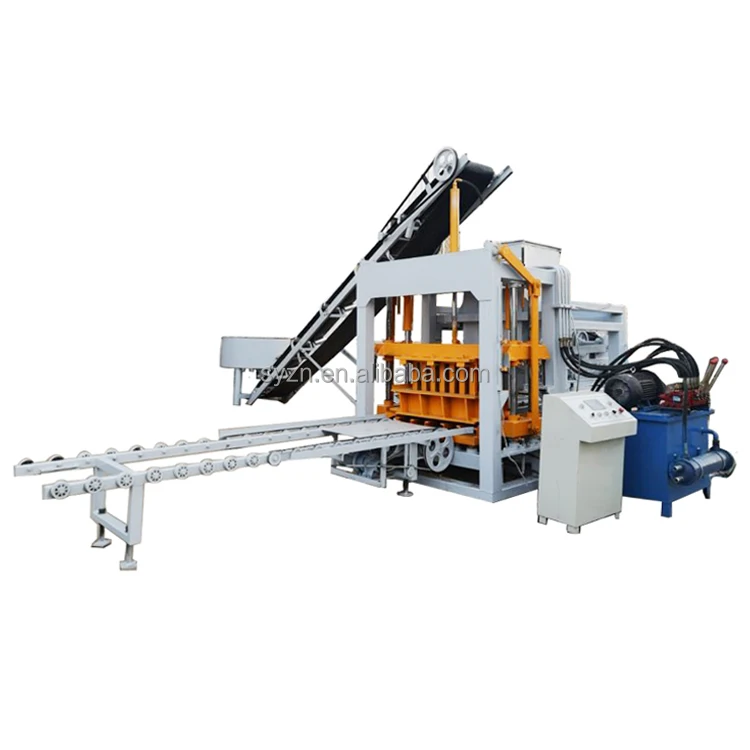
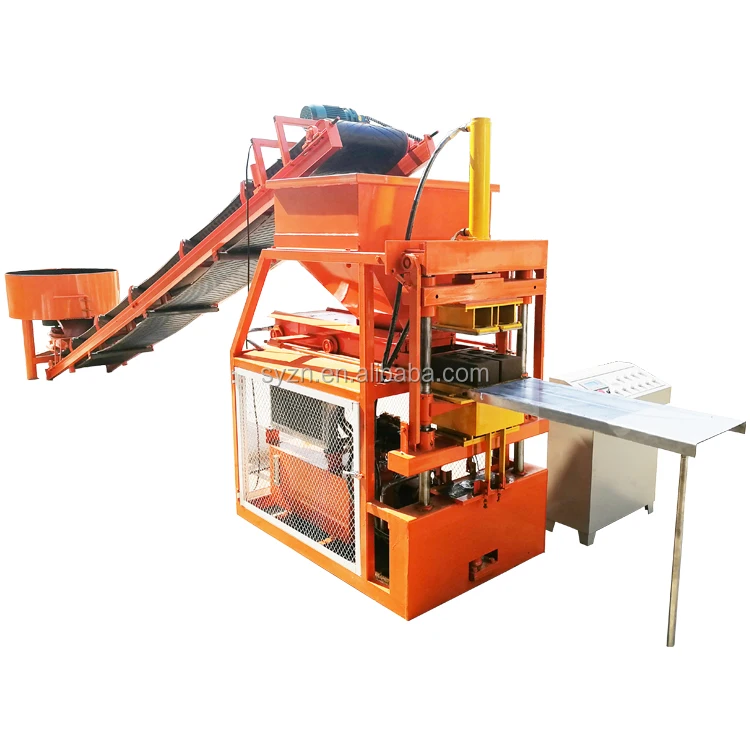 High quality block machine