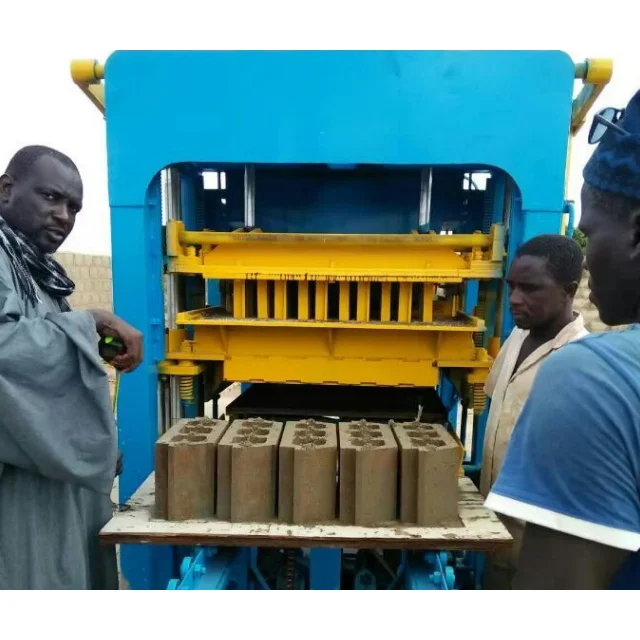
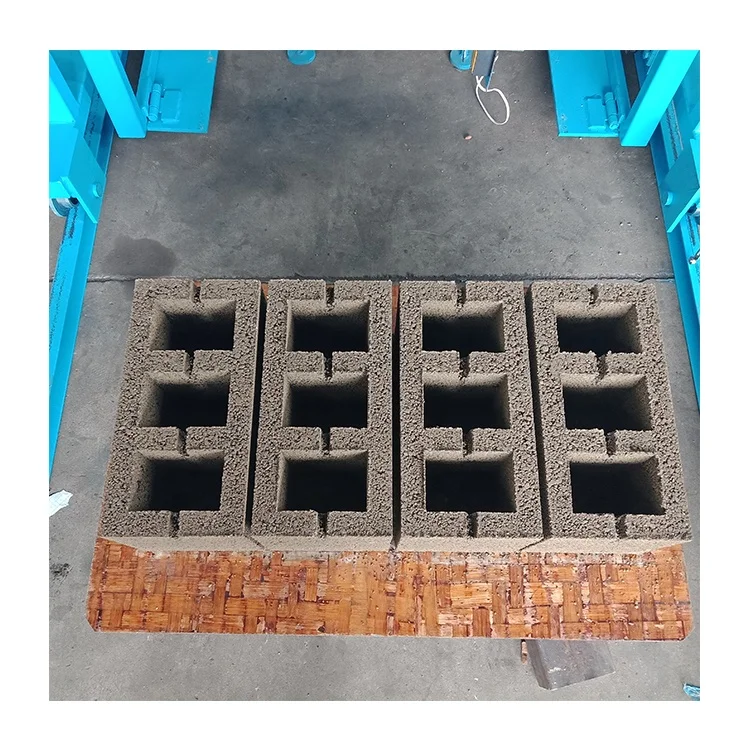
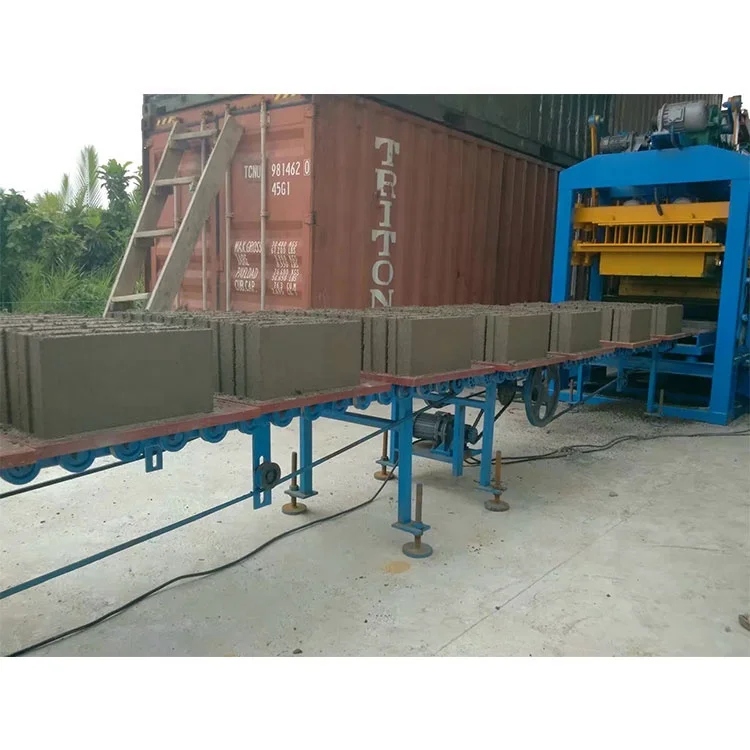
System-Matched Configuration — every component from mixer to stacker is sized to the QT4-18 press cycle, so no station waits on another during continuous hollow block runs.
Technical Specifications
| Parameter |
Value |
| Model |
QT4-18 |
| Product Type |
Automatic Concrete Block Making Machine |
| Overall Dimensions (L×W×H) |
2500×1750×2200 mm |
| Rated Pressure |
16 MPa |
| Vibration Form |
Platform Vibration |
| Pallet Size |
950×550 mm |
| Molding Cycle |
18–25 s |
| Overall Power |
27.5 kW |
| Control System |
PLC with frequency converter |
| Electrical Components |
Schneider |
| Mold Lifting Mechanism |
Double-sided sync gears |
| Material Feeding System |
Distribution belt hopper |
| Mixer Included |
JQ500 concrete mixer |
| Conveyor |
8 m belt conveyor (6 m optional) |
| Assembly State |
Multi-station line (mixer, pallet conveyor, molding machine, block conveyor, hydraulic station, electronic console) |
| Output Capacity |
(basis to be confirmed — depends on block format, material, and thickness) |
| Mould Format Included |
Hollow mold |
Application Suitability
| Application |
Material or Output |
| Hollow block production for wall construction |
Crushed stone, cement, sand, and fly ash blends |
| Solid block manufacturing for load-bearing structures |
Dense aggregate mixes with standard cement ratios |
| Paving block and kerbstone runs |
Fine aggregate and pigment-loaded concrete |
| On-site block production for housing projects |
Locally sourced gravel and river sand |
| First-plant setup by entrepreneurs |
Versatile mix designs across masonry formats |
Why Quoted Cycles per Hour Rarely Match Daily Output
Capacity figures only mean something when tied to a specific block format and local raw material.
An automatic block making machine manufacturer might quote a cycle time of 18 seconds and leave it at that. But 18 seconds on a standard hollow block with free-flowing aggregate is a different reality from 18 seconds attempted with high-clay local sand that clings to the mould walls [NEED_CITE: impact of aggregate clay content on block demolding]. When vibration force and hydraulic pressure are not matched to the buyer’s actual mix, blocks crack on ejection or stay stuck to the mould face. The result is a line that stops every few cycles for manual cleaning, cutting real daily output well below the brochure number. I have watched buyers sign contracts based on a headline cycle figure, only to discover on commissioning that their local aggregate demands a longer vibration phase — and the machine they ordered cannot deliver it.

Where the QT4-18 Sits Across the Machine Range
Buyers surveying options for a first or replacement plant need to understand the tiers. The QT4-18 is a mid-range automatic block making machine that bridges the gap between semi-automatic workshop models and high-capacity fully automatic lines. It offers PLC-controlled single-operator production with a complete supporting line — mixer, belt conveyor, pallet system, and stacker — without the footprint and capital outlay of a large-scale plant. For a buyer moving up from a mobile egg-laying machine, this model introduces fixed-plant consistency and format flexibility while keeping the operator count manageable.
How the Line Stations Connect Around the Press
A block press is only as productive as the slowest station feeding or clearing it. On the QT4-18 line, the JQ500 mixer feeds the distribution belt hopper, which meters material into the mould box at a rate timed to the molding cycle. The pallet conveyor positions fresh pallets under the press, and the block conveyor carries cured green blocks to the stacker [NEED_CITE: station synchronization in concrete block production lines]. If any one of these stations runs slower than the press cycle, the press sits idle — a loss that no amount of press speed can recover. This is why specifying the line as one matched system matters more than comparing press cycle times in isolation.
Vibration, Pressure, and Pallet Size — Reading the Spec Sheet
Three parameters on the QT4-18 deserve close attention because they directly shape block quality and plant layout. The 16 MPa rated hydraulic pressure works together with platform vibration to compact the mix — insufficient pressure on a stiff, low-slump mix produces blocks with weak corners, while excessive pressure on a wet mix squeezes out cement paste. The 950×550 mm pallet size determines how many blocks form per cycle and must match the curing racks and forklifts already on site; a mismatch means buying new handling equipment or accepting a pallet size that wastes curing floor space. The double-sided sync gear mold lifting mechanism keeps the mould box level during changeover, reducing the risk of bent guide pins that would otherwise cause uneven block heights across the pallet surface.
The Hidden Cost of Skipping the Mix Trial
When a machine is configured for a catalogue-default mix rather than the buyer’s actual aggregate, the problems surface after installation. Blocks may appear sound on the surface but fail compressive strength tests because the vibration frequency was not tuned to the local stone’s particle shape [NEED_CITE: relationship between aggregate grading and concrete block compressive strength]. Mould wear accelerates when abrasive local sand was not factored into the liner material choice. Pallet handling bottlenecks emerge when the curing area layout was never discussed before dispatch. These are not warranty issues — the machine was built to specification — but they are failures of specification, and they cost the buyer in lost production and emergency part orders.
Why Source This Line From a Single-System Supplier
Block machinery is the sole focus here, which means the QT4-18 press, its moulds, pallets, and handling equipment are specified as one system rather than assembled from unrelated vendors. Configuration starts from the buyer’s actual mix design and target block format, not a default settings sheet. Mould design covers the formats the buyer’s market actually sells, with custom drawings available when local building codes demand non-standard dimensions. Automation level is selectable — a buyer can begin with the semi-automatic pallet handling configuration and add automatic stacking later without replacing the press. Installation support includes operator training on the PLC interface, and mould and wear parts supply continues well beyond the first production run.
Documentation & Verification
- Line layout drawing showing station spacing and pallet flow path for the QT4-18
- Capacity calculation sheet stating the block format assumed for each output figure
- Mould drawing and format list matched to the buyer’s target market products
- Voltage, frequency, and PLC display language confirmation form before production
- Factory test record with block samples from the buyer’s own raw material
- Packing photographs of the dismantled line before container loading
Installation, Commissioning & Support
- Foundation plan sized to the QT4-18’s 2500×1750 mm footprint and vibration load
- Dedicated circuit specification for the 27.5 kW total power draw at confirmed voltage and frequency
- Multi-station line arrives dismantled; reassembly sequence and bolt torque schedule provided
- First-run commissioning with mix adjustment and PLC parameter tuning for local material
- Operator training on the Schneider PLC interface, including fault code recognition
- Wear parts list covering mould liners, hydraulic seals, and vibration motor bearings
What to Share With Your Inquiry
To size the QT4-18 correctly and avoid configuration mismatches at commissioning, provide the target block format and dimensions you plan to produce, along with a sample or description of your local aggregate. Confirm your site voltage, frequency, and preferred PLC display language so the electrical package is built right the first time. If you already have curing racks or forklifts on site, share their dimensions — the pallet and handling layout should fit what you have, not force new purchases.
Frequently Asked Questions
Q: How is daily output calculated, and which block format does the capacity figure assume?
A: Output is calculated from the molding cycle time applied to the number of blocks per pallet, then adjusted for realistic uptime including pallet return, mould changes, and mixer refill pauses. The exact figure depends on the block format — a 400×200×200 mm hollow block yields a different daily count than a paving block on the same pallet. We state capacity per format, not a single headline number.
Q: Where does the QT4-18 sit compared to semi-automatic and high-capacity automatic models?
A: The QT4-18 is a mid-tier automatic block making machine offering PLC-controlled production with a matched line of supporting equipment. It requires more floor space and capital than a semi-automatic workshop model but less than a high-capacity automatic line. It suits buyers who need consistent daily output with single-operator control and room to add automation later.
Q: What plant footprint and foundation does the QT4-18 line require?
A: The press itself measures 2500×1750×2200 mm, but the full multi-station line — mixer, conveyor, stacker, and curing area — needs a larger footprint. A level concrete slab foundation is required to handle vibration loads. The exact layout depends on your curing rack arrangement and whether the optional 6 m or standard 8 m belt conveyor is used.
Q: Which voltage, frequency, and PLC language options are confirmed before dispatch?
A: Voltage and frequency are configured to match the buyer’s local supply before production begins. The Schneider PLC with frequency converter can be set to display in the operator’s language. These details are locked in during the quotation stage so commissioning is not delayed by electrical mismatches on arrival.
Q: Can I start with a semi-automatic configuration and add automation later?
A: Yes. The QT4-18 platform supports a semi-automatic pallet handling setup from the start, with automatic stacking and cubing added as an upgrade path. The press, PLC, and mould system remain the same — only the peripheral handling stations change. This lets buyers align initial investment with current labour availability and scale up as production volume grows.

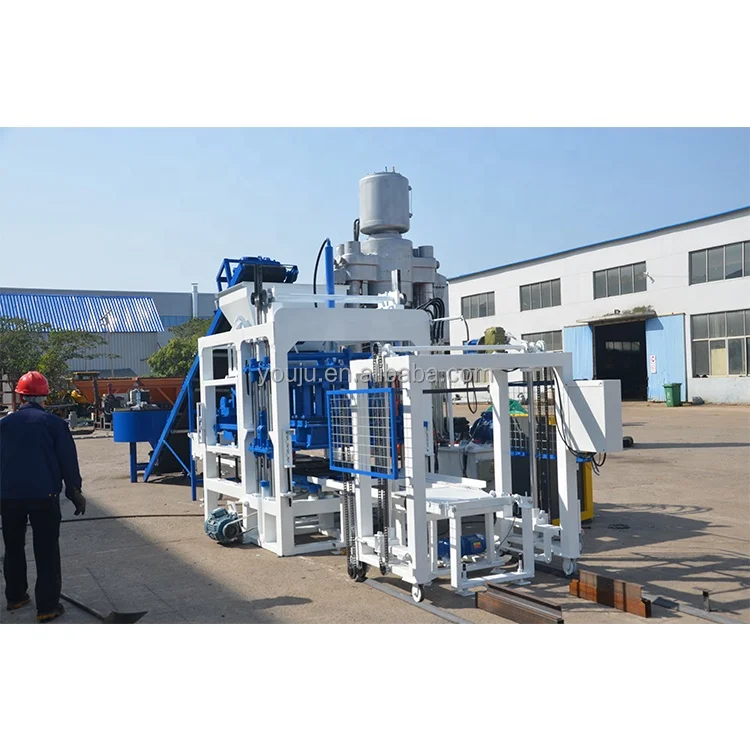
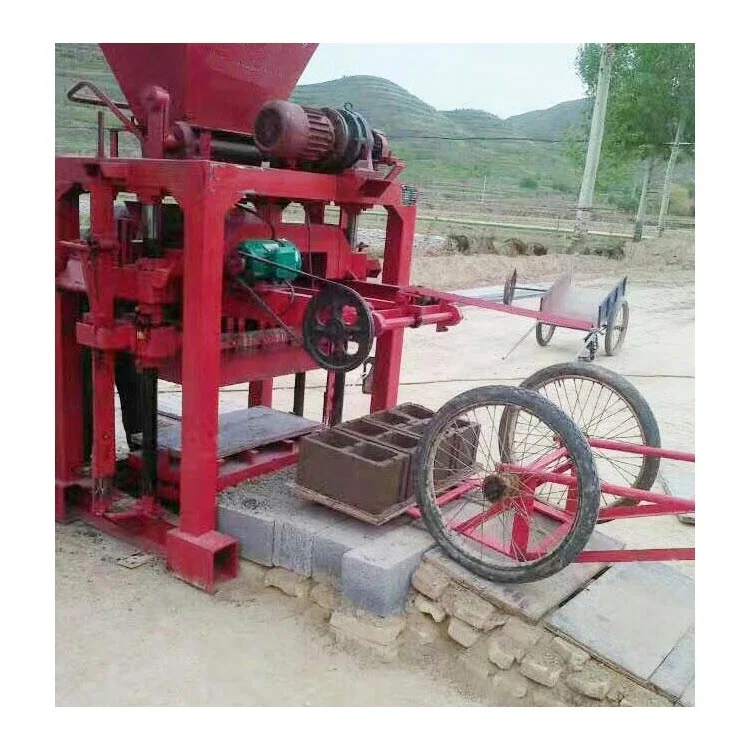 Semi automatic block