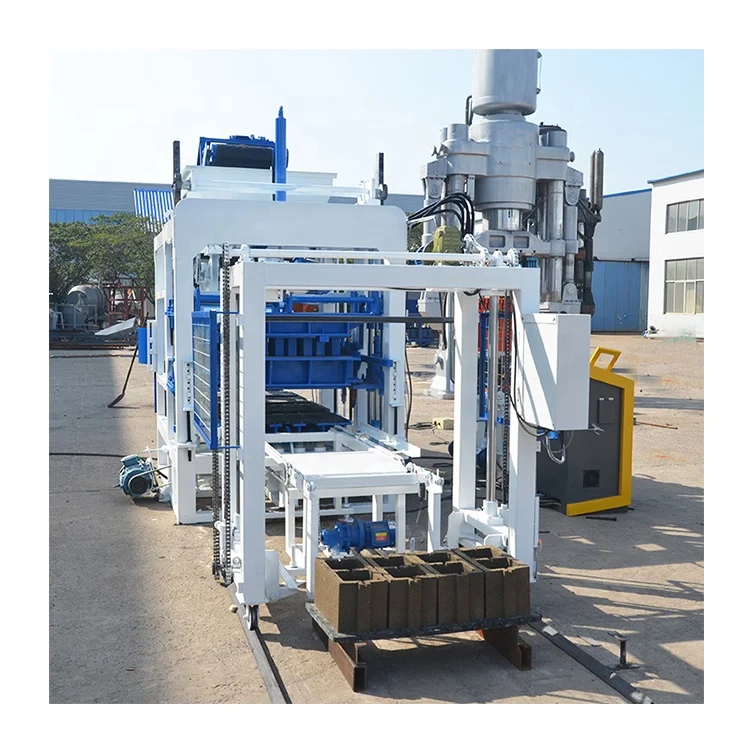
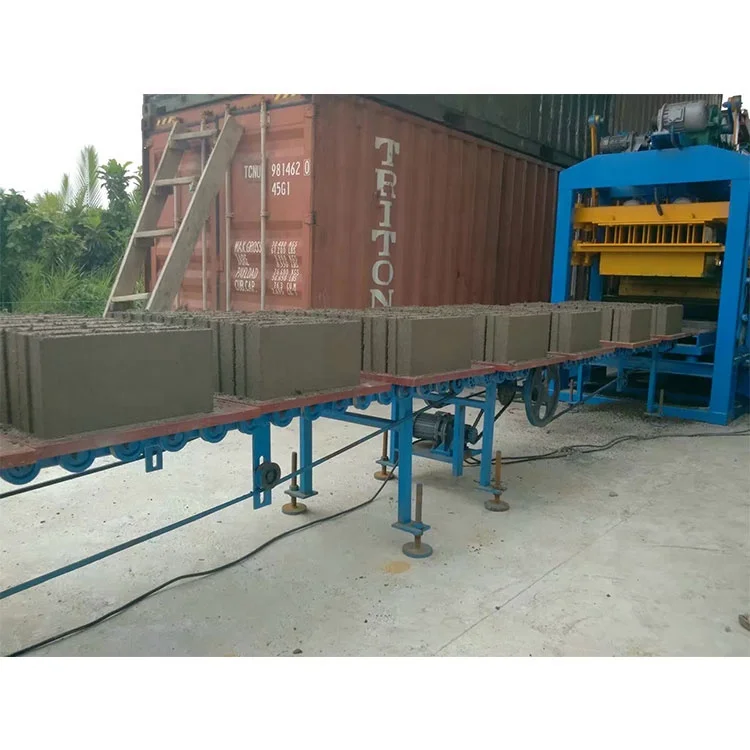
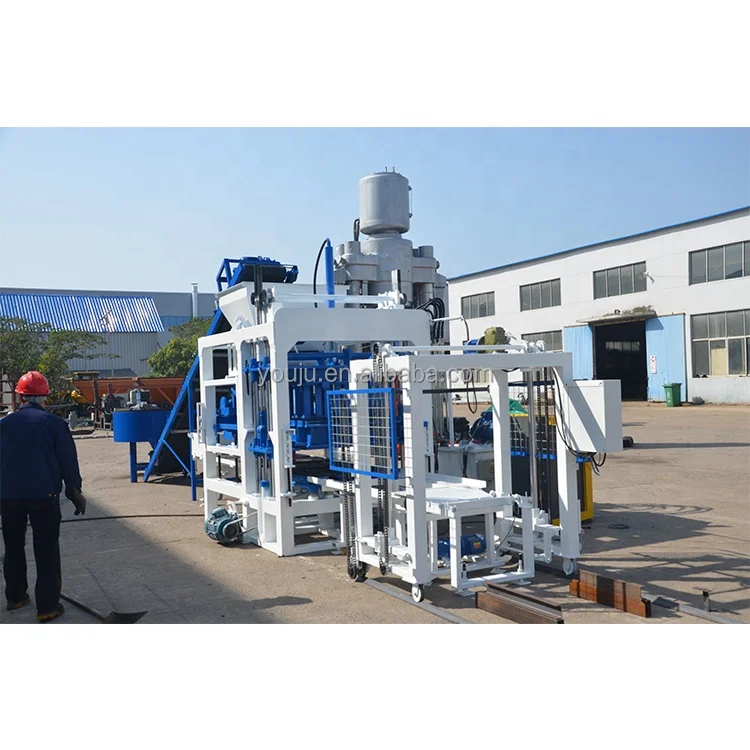
Configured as a single system — The QT4-15A block line is specified with mixer, pallet conveyor, press, and handling stations matched together, avoiding the mismatched station delays that occur when equipment is sourced from separate vendors.
Technical Specifications
| Parameter |
Value |
| Model |
QT4-15A |
| Product Type |
Automatic Concrete Block Making Machine |
| Overall Dimensions |
7100 x 1600 x 2610 mm |
| Rated Hydraulic Pressure |
16 MPa |
| Vibration Form |
Platform Vibration |
| Pallet Size |
1020 x 570 mm |
| Molding Cycle |
15–25s (basis to be confirmed per block format and material) |
| Overall Power |
27.5 kW |
| Control System |
PLC electronic console |
| Material Feeder System |
Hopper, feeding box, feeding platform, conveyor system |
| Composition |
Mixer, pallet conveyor, molding machine, block conveyor, hydraulic station, electronic console |
| Automation Level |
Automatic pallet feeding and product discharge via hydraulic cylinder |
| Mould Change |
Manual bolt release (M24 bolts for bottom mould, four bolts for upper mould) |
| Stacking Method |
Manual or mechanical to curing yard |
Application Suitability
| Application |
Material or Output Context |
| Hollow and solid block production |
Crushed stone, sand, cement, and fly ash aggregates typical for masonry plants |
| Small-to-medium output block plants |
First-tier automatic lines serving regional building material distributors |
| On-site contractor block making |
Construction contractors producing masonry units at the project location |
| Format expansion for existing producers |
Adding interlocking or paving formats alongside standard hollow blocks |
What "Cycles Per Hour" Actually Means on the Shop Floor
Cycle time is only meaningful when tied to the exact block format and local aggregate you run.
When an automatic block making machine manufacturer quotes output in cycles per hour, the number often assumes a thin, standard hollow block running with a well-graded, low-moisture mix. In practice, a buyer running a denser interlocking paver or working with high-clay local sand will see the molding cycle stretch well beyond the headline figure. I have watched plants lose an entire shift chasing a capacity number that was never realistic for their specific product [NEED_CITE: realistic cycle times vary significantly by block density and aggregate grading]. Asking which format the quoted cycle assumes should be the first question in any technical conversation about a concrete block machine for sale.

Positioning the QT4-15A Within the Broader Range
The QT4-15A occupies the entry point of our fully automatic tier, sitting above semi-automatic models that still require manual pallet handling but below the high-capacity lines designed for continuous three-shift operation. For a buyer evaluating their first automatic block making machine, this tier offers hydraulic pallet feeding and PLC-controlled discharge without the larger footprint and higher power draw of industrial-scale equipment. Understanding where this model sits helps a plant owner decide whether to invest here now and expand later, or step directly to a higher tier.
How Station Sequencing Affects Real Throughput
The press cycle is only one link in the chain. Raw material must arrive from the mixer at a rate the hopper can sustain, pallets must feed without jamming, and wet blocks must clear the discharge conveyor before the next cycle begins. If the belt conveyor feeding the QT4-15A stalls even briefly, the press sits idle and the quoted cycle time becomes irrelevant [NEED_CITE: line bottleneck analysis for concrete block production]. Matching the JQ500 pan mixer output and the 6 m or 8 m belt conveyor capacity to the press demand is what converts a machine specification into a working plant.
Reading the Specifications That Matter Most
The 16 MPa rated hydraulic pressure and platform vibration work together to compact the concrete mix; vibration alone cannot achieve target density without sufficient hydraulic clamping force during the press stroke. The 1020 x 570 mm pallet size must align with the curing racks and forklift tines already on site, because a mismatched pallet forces a redesign of the entire curing yard layout. The 15–25 second molding cycle range reflects the span from a standard hollow block to a denser solid unit — buyers should request a cycle figure tied to their primary product. At 27.5 kW total power, the line requires a dedicated circuit with adequate breaker capacity to handle the vibration motor start-up surge without tripping adjacent equipment.
The Cost of Skipping the Configuration Step
Ordering a block line without confirming local aggregate properties, target block formats, and existing site equipment leads to predictable problems. The vibration parameters may need weeks of on-site adjustment to produce blocks that meet compressive strength requirements, during which time output is halved and customer orders pile up. Mould change procedures that take most of a shift eliminate the format flexibility the buyer expected. Pallet dimensions that do not fit the curing area mean blocks are stacked by hand, negating the automation investment [NEED_CITE: common causes of block plant commissioning delays].
Why Buyers Source This Range Through Our Process
Block machinery is our single focus, so the QT4-15A press, moulds, pallets, and handling stations are specified as one matched system rather than assembled from separate suppliers. Configuration starts from the buyer’s actual mix design and local aggregate, not a catalogue default. Mould drawings are produced for the formats the buyer’s market actually sells, including custom designs from buyer-supplied drawings. Automation level is selectable, allowing a plant to begin with hydraulic pallet feeding and add automatic stacking later. Installation includes operator training covering mould change, cycle adjustment, and daily maintenance routines.
Documentation & Verification
- Line layout showing QT4-15A footprint with mixer and conveyor placement confirmed before production
- Machine specification sheet with voltage, frequency, and PLC display language locked to your target market
- Mould drawing and format list covering every block type your customers order
- Pallet specification cross-referenced to your existing curing rack dimensions and forklift capacity
- Factory test record run on your specified aggregate sample before the line is crated for shipment
Installation, Commissioning & Support
- 7100 x 1600 x 2610 mm overall dimensions require a level concrete pad with clearance for pallet conveyor access on both sides
- 27.5 kW total load needs a dedicated three-phase circuit with a breaker rated for vibration motor inrush current
- Hydraulic station arrives pre-filled and tested; commissioning focuses on matching vibration force and pressure to your local mix
- PLC console language set to your operator’s preference before dispatch to eliminate on-site reprogramming delays
- Mould change training covers M24 bolt release sequence so format switches are completed within a single shift break
- Wear parts list identifies hydraulic seals and vibration springs with reorder intervals tied to your production volume
Moving From Inquiry to Configuration
To size the QT4-15A correctly for your operation, share the primary block formats you plan to produce, the local aggregate source and typical moisture content, and your target daily output for each format. Include your site voltage and frequency, the PLC display language your operators need, and the curing area dimensions you have available. This information lets us return a line layout and capacity calculation that reflect your actual conditions rather than a generic quotation.
Frequently Asked Questions
Q: How is the cycle time for the QT4-15A determined for my specific block?
A: The 15–25 second range covers standard hollow blocks at the lower end and denser solid or interlocking units at the upper end. We calculate a realistic cycle by testing your aggregate sample against your target block format and compressive strength requirement, then document the result in the line capacity sheet before you place an order.
Q: When should a buyer choose the QT4-15A over a semi-automatic model?
A: The QT4-15A adds hydraulic pallet feeding and PLC-controlled discharge, removing two manual handling steps from every cycle. Buyers producing at higher daily volumes or planning to add multiple block formats benefit most, because the automation reduces operator fatigue and keeps cycle times consistent across a full shift.
Q: What electrical and control options are confirmed before shipment?
A: Voltage, frequency, and PLC display language are confirmed during the quotation stage and locked into the production order. This ensures the electronic console arrives with the correct wiring and the operator interface is readable in your team’s working language, avoiding commissioning delays on site.
Q: How much floor space does a complete QT4-15A line require?
A: The press itself measures 7100 x 1600 mm, but the full line includes a pan mixer, belt conveyor, and curing area that extend the total footprint significantly. We provide a scaled line layout showing each station placement, conveyor routing, and operator walkways so you can confirm the building envelope before committing.
Q: What is the upgrade path from this tier to full automatic stacking?
A: The QT4-15A supports hydraulic pallet feeding and automatic product discharge as standard. Automatic stacking and cubing can be added as a downstream module once production volume justifies the investment, because the PLC architecture and pallet dimensions are already configured to accept that extension.

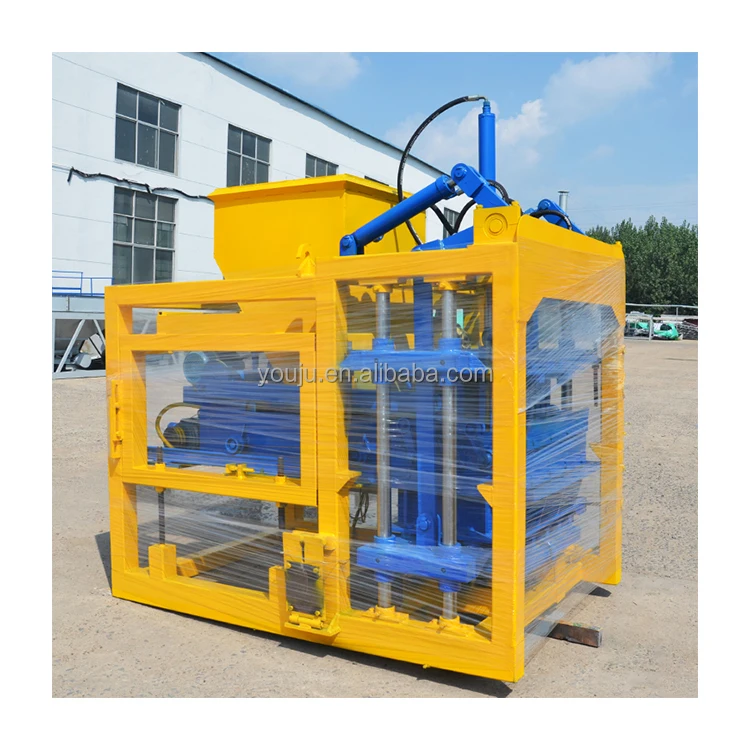
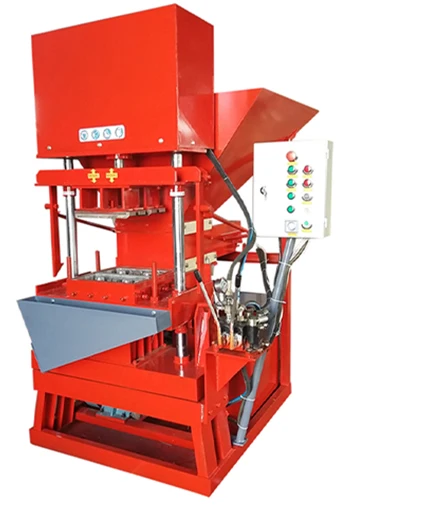 Semi automatic block