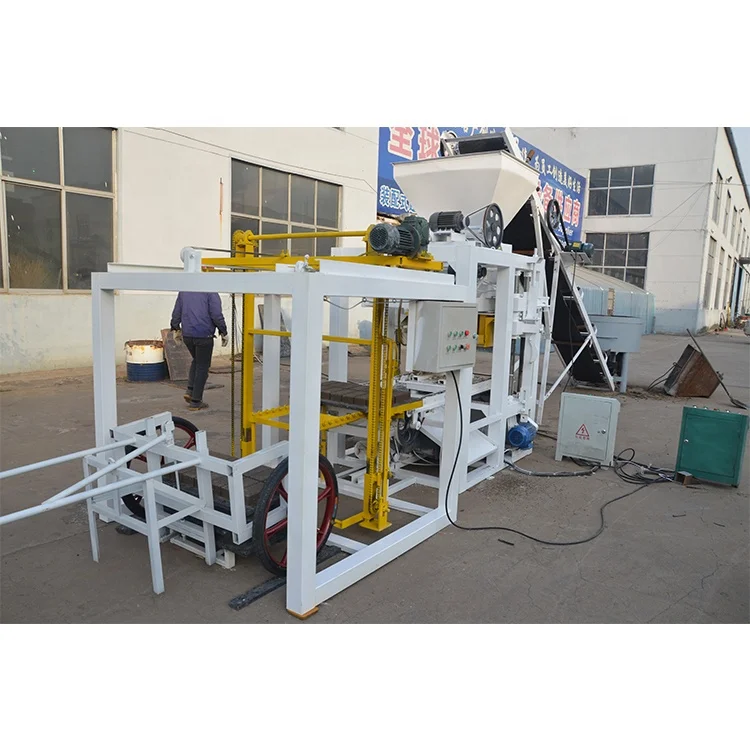
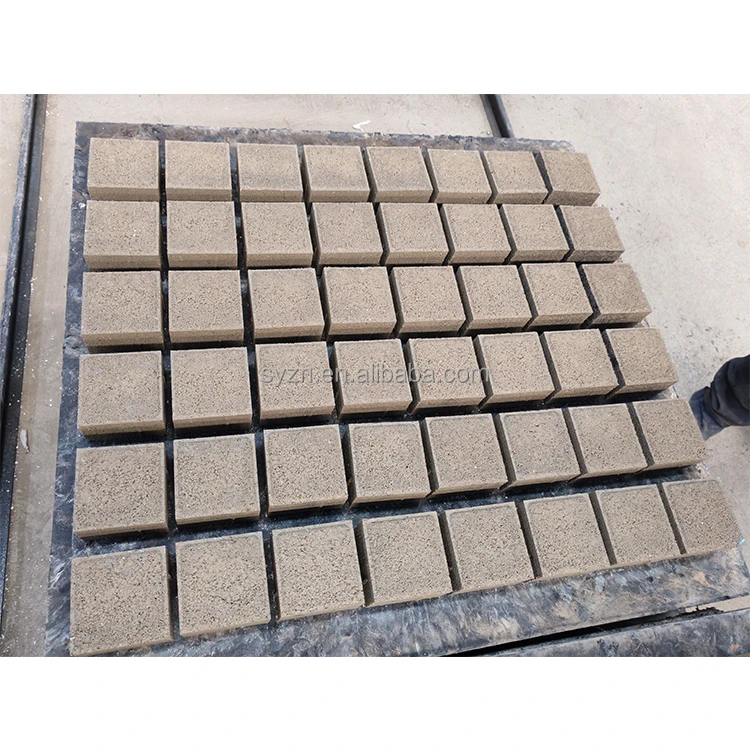
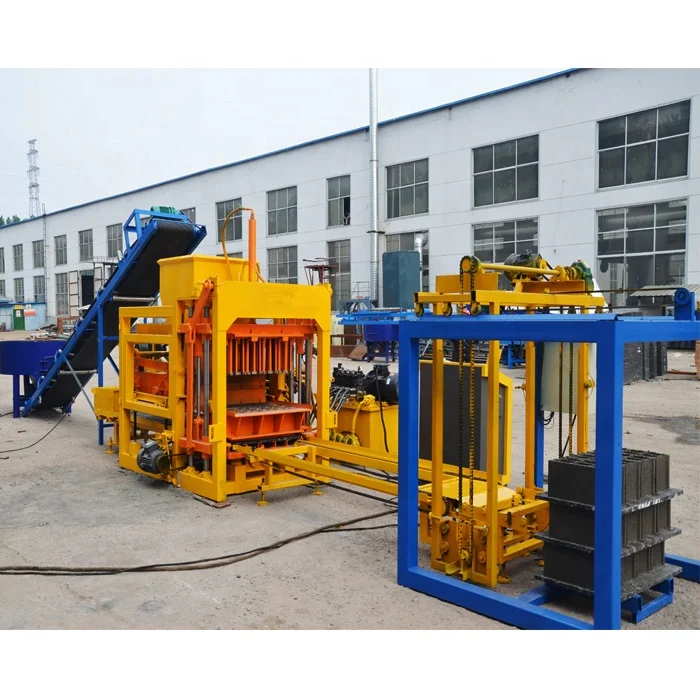
Matched System Specification — the QT4-15 block making machine and its moulds, pallets and handling gear are scoped together against your local aggregate and target block format, not pulled from a catalogue default.
Technical Specifications
| Parameter |
Value |
| Model |
QT4-15 |
| Product Type |
Stationary Hydraulic Block Making Machine |
| Control System |
PLC controlled (machinery, electric, hydraulic and vibrating system integrated) |
| Molding Cycle |
15-30s depending on block format and mix |
| Pallet Size |
900×500mm |
| Vibration Type |
Platform vibration |
| Vibration Frequency |
50-70 Hz |
| Product Height Range |
50-220mm |
| Overall Power |
24.5 kW |
| Demolding Method |
Hydraulic |
| Automation Level |
Automatic |
| Raw Materials |
Fly ash, slag, gangue, sand, crushed stone, cement, water |
| Block Compressive Strength |
More than 15 MPa |
| Output (400×200×200mm hollow block) |
900-1,200 pcs/hour; 7,200-9,600 pcs/8hr |
| Output (400×150×200mm hollow block) |
1,080-1,440 pcs/hour; 8,640-11,520 pcs/8hr |
| Output (400×100×200mm hollow block) |
1,440-1,920 pcs/hour; 11,520-15,360 pcs/8hr |
| Output (200×100×60mm paver) |
2,880-3,840 pcs/hour; 23,040-30,720 pcs/8hr |
| Output (240×115×53mm solid brick) |
5,930-6,720 pcs/hour; 47,400-53,700 pcs/8hr |
Application Suitability
| Application |
Material or Output |
| Hollow block production for residential and commercial walls |
Fly ash, slag, sand, crushed stone blended with cement |
| Paving block manufacturing for driveways and walkways |
Crushed stone and sand mixes with cement binder |
| Solid brick production for load-bearing and partition walls |
Gangue, fly ash and sand combined with cement |
| On-site block production for housing developments |
Local aggregate and industrial residues with cement |
| Format diversification for existing block plants |
Multiple mould formats on a single 900×500mm pallet platform |
What "900 to 1,200 Blocks per Hour" Actually Means on the Shop Floor
Every output figure for this QT4-15 block making machine manufacturer specification is tied to a named block format and mould cavity count — no orphan cycle rates.
Sellers often quote a peak cycle speed and leave the buyer to assume that number applies to whatever block they plan to run. In practice, a mould producing four 400×200×200mm hollow blocks per press yields a very different shift total than a mould producing twenty-eight 240×115×53mm solid bricks. When the format is not stated alongside the capacity, buyers routinely discover on commissioning day that their daily output falls well short of the number on the quotation [NEED_CITE: common capacity misrepresentation in block machinery quotations]. The QT4-15 range lists five separate output bands, each locked to a specific block dimension, so the shift target you plan against is the shift target the machine is set up to deliver.

Where the QT4-15 Sits in the Stationary Range
The QT4-15 occupies the middle tier of the Shiyue stationary block machine lineup. Below it sit semi-automatic and mobile egg-laying models aimed at first-time producers running a single format with manual pallet handling. Above it, higher-capacity automatic lines add larger pallets, faster cycle rates and fully automatic stacking and cubing. For a small to mid-size plant that needs to produce hollow blocks, pavers and solid bricks on the same platform without investing in a high-capacity line, the QT4-15 block making machine manufacturer offering covers that middle ground with PLC-controlled automation and hydraulic demolding built in.
Matching the Machine to Your Local Aggregate and Mix
A stationary press only performs as well as the mix it receives. Volcanic scoria, river sand, crushed limestone and recycled concrete all behave differently under vibration and hydraulic pressure. I once watched a machine configured for fine river sand struggle with coarse crushed basalt — the vibration frequency was too low to consolidate the larger particles, and block edges crumbled at demolding. Before we finalise the QT4-15 configuration, we ask for a sample of the buyer’s actual aggregate and cement type so the vibration frequency band and hydraulic pressure can be matched to that specific mix [NEED_CITE: effect of aggregate grading on vibration consolidation in block presses]. This step avoids the situation where a machine arrives on site and the buyer has to source a completely different raw material to make it work.
Reading the Specs That Matter Beyond the Brochure
The 50-70 Hz platform vibration frequency and hydraulic demolding work together to determine block density and surface finish. Higher frequency improves consolidation of fine sand mixes, while coarser aggregate benefits from sustained vibration at the lower end of that band combined with adequate hydraulic pressure. The 900×500mm pallet size dictates how many blocks are formed per cycle — four hollow blocks or up to twenty-eight solid bricks — and must align with the curing racks and forklifts already on the buyer’s site. The 50-220mm product height range covers standard hollow blocks down to 60mm pavers, but every mould change requires the operator to swap the mould box, adjust the feed shoe travel and recalibrate the demolding stroke. Product height range alone does not guarantee format flexibility if the supporting mould inventory and change procedure are not specified up front. The 24.5 kW overall power rating means the electrical supply must include a dedicated circuit with adequate breaker capacity, and the voltage and frequency must be confirmed before the motor windings and PLC power supply are built [NEED_CITE: industrial voltage and frequency standards across export markets].
The Cost of Skipping Configuration Details Before the Order
When pallet size is chosen without checking the buyer’s existing curing racks, pallets arrive that do not fit the rack slots, forcing the plant to rebuild its entire curing area or order new pallets at short notice. When voltage and frequency are assumed rather than confirmed, the machine may arrive with a 380V/50Hz motor in a country running 440V/60Hz, delaying commissioning by weeks while replacement components are shipped. When the PLC display language is not agreed before production, operators face a control screen in a language they cannot read, leading to incorrect parameter settings and inconsistent block quality [NEED_CITE: commissioning delays caused by unconfirmed electrical specifications]. None of these issues reflect a machine defect — they reflect gaps in the pre-order specification process that are entirely preventable.
Why Buyers Source the QT4-15 from This Range
The machine, mould, pallet and handling equipment are specified as one matched system rather than assembled from unrelated suppliers, so cycle times at each station are balanced. Configuration is set against the buyer’s actual mix design and target block format instead of a generic catalogue default, which keeps block strength consistent from day one. Mould design and supply cover the formats the buyer’s market actually sells, including custom drawings when a standard mould does not match a local block dimension. The automation level is selectable, so a buyer can start with the QT4-15’s integrated PLC cycle and later add automatic stacking or cubing modules without replacing the press. Installation support includes on-site commissioning with operator training so the crew can run format changes and daily maintenance independently.
Documentation & Verification
- Line layout showing pallet flow from press through curing to stacking for the QT4-15 footprint
- Capacity calculation sheet listing output per block format with assumed cycle times
- Mould drawing package with cavity count and dimensional tolerances for each format ordered
- Hydraulic and electrical schematic matching the confirmed voltage and frequency
- Factory test record with cycle time verification on buyer’s specified block format
- CE declaration documentation where applicable to the destination market
Installation, Commissioning & Support
- Foundation pad sized to the QT4-15 footprint with anchor bolt plan provided before pour
- Dedicated electrical circuit rated for the 24.5 kW total load at confirmed voltage and frequency
- Machine shipped in dismantled state with assembly sequence and lifting point diagram
- On-site commissioning includes vibration frequency tuning to the buyer’s actual aggregate mix
- Operator training covers mould change procedure, PLC parameter adjustment and daily maintenance
- Wear parts list with hydraulic seals, vibration springs and mould liner replacement intervals
Before You Send the Inquiry
To size the QT4-15 correctly for your plant, share the block formats your market demands along with target daily volumes per format. Confirm your local aggregate type — river sand, crushed stone, volcanic scoria or industrial residue — and whether you plan to use fly ash or slag in the mix. Provide your site voltage, frequency and preferred PLC display language so the electrical package is built right the first time. If you already have curing racks and forklifts on site, send their dimensions so the 900×500mm pallet specification is validated against your existing infrastructure.
Frequently Asked Questions
Q: How is the QT4-15 output capacity calculated per block format, and what does a realistic shift produce?
A: Each output figure is tied to a specific block size and mould cavity count. For example, 400×200×200mm hollow blocks are produced at four per cycle, yielding 7,200 to 9,600 pieces over an eight-hour shift at 15-30 second cycles. Smaller formats like solid bricks produce more pieces per cycle. Realistic output also depends on mix consistency, pallet handling speed and curing logistics.
Q: Where does the QT4-15 sit compared to semi-automatic and higher-tier automatic models?
A: The QT4-15 is a mid-tier stationary machine with full PLC-controlled automation integrating pallet feeding, material feeding, vibration and hydraulic demolding. Semi-automatic models below it require manual pallet handling and have lower output. Higher-tier models above it offer larger pallets, faster cycles and automatic stacking and cubing for high-volume plants.
Q: What voltage, frequency and PLC language options are available for my market?
A: Voltage and frequency are configured to match your local grid supply, and the PLC display language is set before production begins. These details must be confirmed during the quotation stage so the motor windings, transformer and control interface are built to your exact requirements.
Q: Which raw materials and mix designs can the QT4-15 handle, and can it use local industrial residues?
A: The machine processes fly ash, slag, gangue, sand, crushed stone and cement in various combinations. The vibration frequency and hydraulic pressure are adjusted during configuration to match your specific aggregate grading and residue proportion, ensuring consistent block density and surface quality.
Q: What plant footprint and supporting equipment does the QT4-15 need for a complete line?
A: The press itself requires a level foundation with adequate clearance for pallet feed and exit. Supporting equipment includes a raw material mixer, pallet feeder and a curing area sized for daily output volume. The 900×500mm pallet must match your existing curing rack dimensions and forklift capacity.

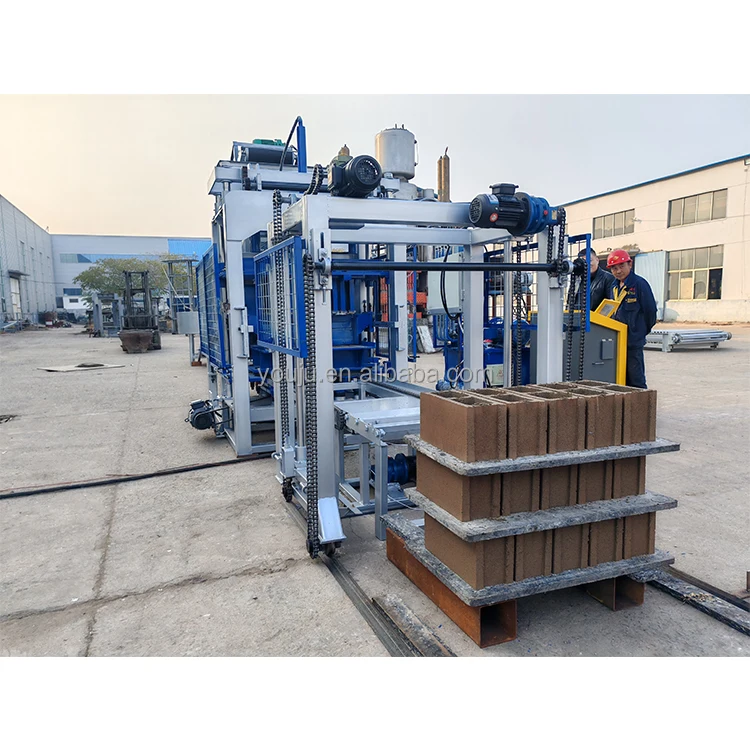
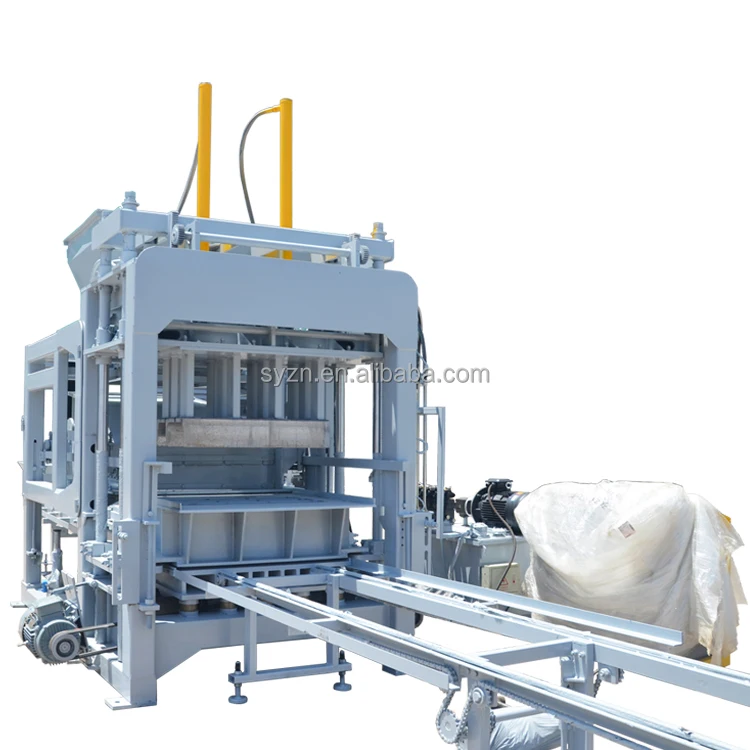 Stationary block machine