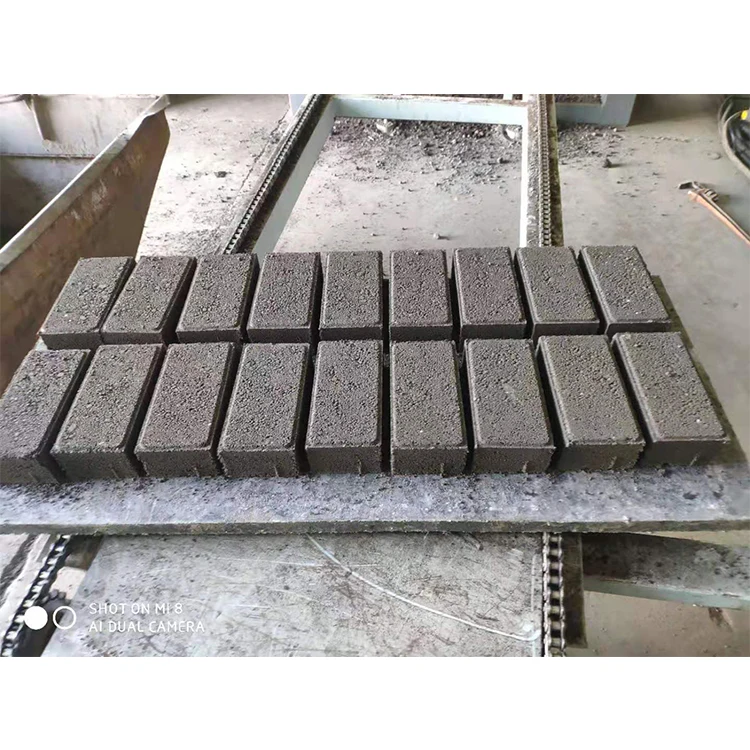
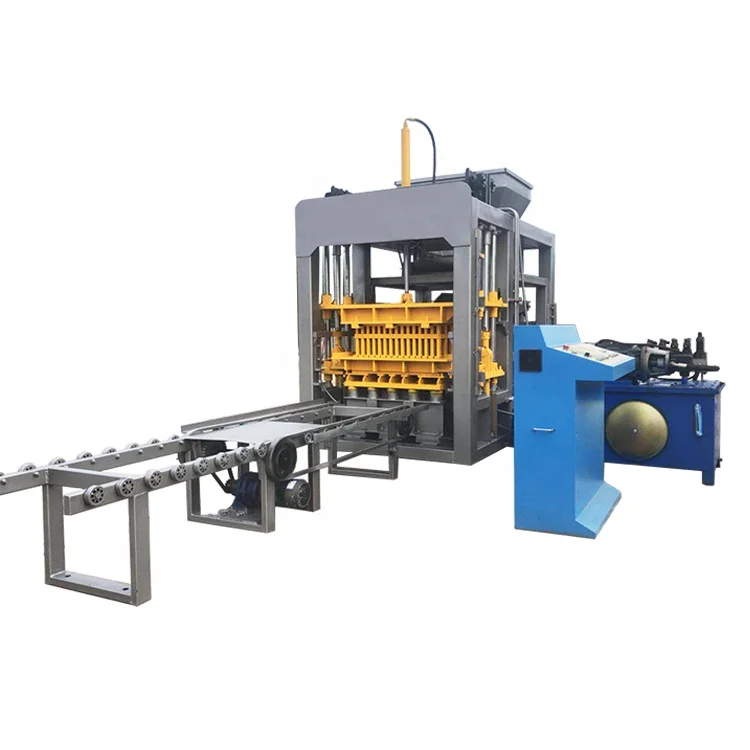
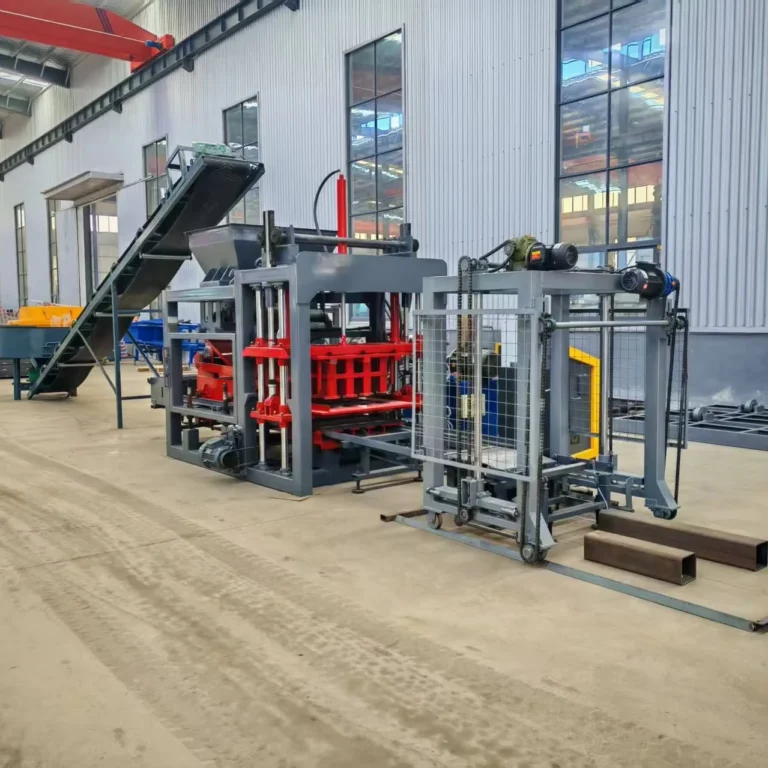
Configuration matched to your site — we specify the QT4-15 as one integrated system covering machine, mould, pallet, and handling, sized against the block formats your market actually moves rather than a catalogue default.
Technical Specifications
| Parameter |
Value |
| Model |
QT4-15 |
| Product Type |
Hydraulic Block and Paver Making Machine |
| Molding Cycle |
15-30s |
| Pallet Size |
900x500mm |
| Vibration Type |
Platform vibration |
| Vibration Frequency |
50-70Hz |
| Product Height Range |
50-220mm |
| Overall Power |
24.5kW |
| Demolding Method |
Hydraulic |
| Control System |
PLC with approach switch monitoring |
| Automation Level |
Automatic (PLC-controlled) |
| Hollow Block 400x200x200mm Capacity |
900-1200 pcs/h (basis: 4 pcs/mould, 15-20s cycle) |
| Hollow Block 400x150x200mm Capacity |
1080-1440 pcs/h (basis: 5 pcs/mould, 15-20s cycle) |
| Hollow Block 400x100x200mm Capacity |
1440-1920 pcs/h (basis: 8 pcs/mould, 15-20s cycle) |
| Paver 200x100x60mm Capacity |
2880-3840 pcs/h (basis: 16 pcs/mould, 15-20s cycle) |
| Solid Brick 240x115x53mm Capacity |
5930-6720 pcs/h (basis: 28 pcs/mould, 15-20s cycle) |
| Voltage & Frequency |
Configurable to site supply (to be confirmed before dispatch) |
| Raw Material Compatibility |
Fly ash, slag, gangue, sand, crushed stone, cement, water, industrial residues |
Application Suitability
| Application |
Material or Output |
| Hollow block production for small-to-medium plants |
Crushed stone, sand, cement, fly ash blends |
| Paver brick manufacturing for landscaping and municipal work |
Fine aggregate and cement mixes, pigmented face layers |
| Solid brick output for load-bearing masonry |
Dense aggregate and cement, high-pressure compaction |
| On-site block production for construction contractors |
Locally sourced sand and gravel with portable cement silos |
| Format expansion for existing building material distributors |
Multiple mould sets on one press to broaden product catalogue |
What "900 Pieces per Hour" Actually Means for the QT4-15 Block Making Machine Manufacturer
Every capacity figure we quote names the exact block format and cycle assumption behind it.
Sellers often advertise a single headline output number and leave buyers to discover, weeks into production, that the figure assumed a small solid brick while the plant’s bread-and-butter product is a 200mm hollow block that cycles slower and yields far fewer pieces per hour. I have watched contractors size their entire curing yard and pallet fleet on a number that never applied to the format they planned to sell. The QT4-15 block making machine manufacturer proposal you receive from us lists output per format, per mould cavity count, so daily planning starts from a figure that matches your actual product mix. [NEED_CITE: capacity calculation methodology for concrete block plants]

Where the QT4-15 Sits in the Full Machine Range
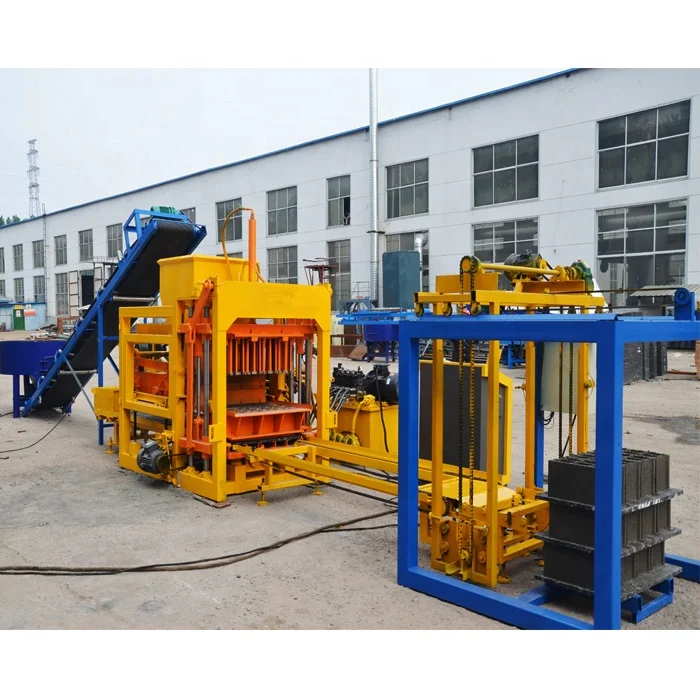
The QT4-15 occupies the mid-capacity tier of our stationary block machine lineup. Below it sit semi-automatic models that rely on manual pallet handling and lower capital outlay, suited to workshops testing the market with modest daily volume. Above it, high-capacity automatic lines run larger pallets, faster cycles, and integrated stacking and cubing systems for plants targeting continuous multi-shift output. The QT4-15 bridges the gap: full PLC-controlled automatic operation covering pallet feeding, material distribution, vibration, and hydraulic demolding, while keeping the plant footprint manageable for a first-time or replacement buyer. For a buyer surveying options, this model answers the question of whether to step up from semi-automatic without committing to a high-capacity line before market demand justifies it.
Output Tiers and Plant Footprint Considerations
Choosing a machine tier is as much about the surrounding space as the press itself. The QT4-15 runs on a 900x500mm pallet, which sets the dimensions for the feeding conveyor, the wet-side transfer zone, and the curing rack spacing that follows. A larger pallet machine demands a proportionally wider curing hall and a heavier forklift to shift loaded racks. Buyers who have already built their curing area around a specific pallet size find the QT4-15 fits without civil works modification. [NEED_CITE: curing yard sizing guidelines for stationary block plants] Where a first-time entrepreneur might begin with the QT4-15 and a basic rack system, the automation level allows adding automatic stacking and cubing later as output volume grows, preserving the initial investment.
Reading the Numbers Behind Block Density and Cycle Speed
Platform vibration at 50-70Hz works together with hydraulic demolding to consolidate the mix into a uniform density across every cavity of the mould. Higher frequency alone does not guarantee strength; the hydraulic pressure must be matched to the stiffness of the local aggregate and the water-cement ratio of the mix design. When vibration force and hydraulic pressure are correctly paired, blocks leave the press with consistent compressive strength from first piece to last. The 15-30s molding cycle range reflects format variation — a tall hollow block requires longer fill and vibration time than a thin paver, and the PLC adjusts each stage accordingly. The 50-220mm product height range on a single pallet size means a plant can switch between hollow blocks, pavers, and solid bricks without changing the pallet fleet or the downstream handling equipment.
The Hidden Cost of Skipping Voltage and Language Confirmation
I once shipped a QT4-15 unit to a site where the local crew powered it on and stared at a full Chinese-language PLC display. The commissioning schedule collapsed on day one because no operator could navigate the menus, and we spent the night remotely flashing an English firmware image over a patchy mobile connection. That delay cost the contractor an entire week of planned production while the curing yard sat empty and pallets gathered dust. Voltage mismatches are equally disruptive — a machine wired for 380V/50Hz arriving at a site running 440V/60Hz will trip breakers or burn motor windings before anyone reaches the first cycle. We now treat voltage, frequency, and PLC display language as non-negotiable confirmation points before the QT4-15 leaves our floor. [NEED_CITE: industrial voltage and frequency standards by export market]
Why Buyers Source the QT4-15 Through Our Range
Block machinery is our single focus, which means the QT4-15 arrives with machine, mould, pallet, and handling specified as one matched system rather than assembled from separate suppliers. We set the configuration against your actual mix design, local aggregate, and target block format instead of defaulting to a catalogue page. Mould design covers the formats your market sells, and custom drawings are accommodated when standard options do not fit. Automation level is selectable, so a buyer can start with the standard automatic package and upgrade to full stacking and cubing as demand grows. Installation support includes on-site commissioning and operator training, and mould and wear parts remain available when the first replacement falls due.
Documentation & Verification
- Line layout and capacity calculation stating the block format assumed for each output tier
- Machine specification sheet confirming hydraulic pressure, vibration force, and pallet details
- Mould drawing and format list showing included and optional block profiles
- Voltage, frequency, and PLC display language confirmation signed off before dispatch
- Factory test record on your specified block format before crating
- Operation and maintenance manual with wear parts and mould replacement schedule
Installation, Commissioning & Support
- Foundation pad sized to the QT4-15 overall dimensions with anchor bolt template provided
- Dedicated power circuit matching confirmed voltage and the 24.5kW overall power draw
- Machine arrives with hydraulic and electrical connections pre-labelled for rapid site assembly
- First-run commissioning covers PLC parameter tuning to your local aggregate and mix design
- Operator training on mould change procedure, pallet feeding sequence, and daily maintenance points
- Wear parts list and mould reorder schedule handed over at commissioning close-out
Planning Your Inquiry
To size the QT4-15 correctly within our range, tell us which block formats your market moves most, the daily output you need per format, and the raw materials available locally. Share your site voltage and frequency, preferred PLC display language, and the curing space you have planned or already built. If you are replacing an existing press, note the pallet size and forklift capacity currently in use so we can confirm compatibility.
Frequently Asked Questions
Q: How is the QT4-15 output capacity calculated, and which block format does each figure assume?
A: Every capacity line in our specification sheet names the block format, mould cavity count, and cycle time behind it. For example, 900-1200 hollow blocks per hour is based on a 400x200x200mm block with four cavities per mould and a 15-20 second cycle. We do not quote a single headline number without this context, because actual daily output depends entirely on which format you run most.
Q: Where does the QT4-15 sit in the full machine range — semi-automatic, automatic, or high-capacity line?
A: It sits in the mid-capacity automatic tier. Below it are semi-automatic models requiring manual pallet handling, suited to lower investment starts. Above it are high-capacity lines with larger pallets and integrated stacking and cubing. The QT4-15 gives full PLC automatic operation while keeping plant footprint moderate for first-time or replacement buyers.
Q: What voltage, frequency, and PLC display language options are confirmed before dispatch?
A: We confirm all three before the machine enters final assembly. Voltage and frequency are set to match your site supply, and the PLC display language is loaded and verified during the factory test. A written confirmation sheet is signed off by both parties so there are no surprises when the control cabinet is powered on at your site.
Q: What plant footprint and installation conditions does the QT4-15 require compared to larger models?
A: The 900x500mm pallet size dictates the press footprint, feeding conveyor length, and curing rack spacing. Compared to high-capacity lines running larger pallets, the QT4-15 needs a smaller curing hall and lighter forklift capacity. Foundation requirements and power circuit specifications are provided in the installation documentation before shipment.
Q: Which moulds are included in the standard configuration, and how are additional formats ordered?
A: Standard configuration includes one mould set matched to your primary block format, confirmed during the proposal stage. Additional formats are quoted separately with drawings for approval before manufacturing. All moulds are designed to the QT4-15 pallet and vibration specifications so changeover stays within the machine’s mechanical envelope.

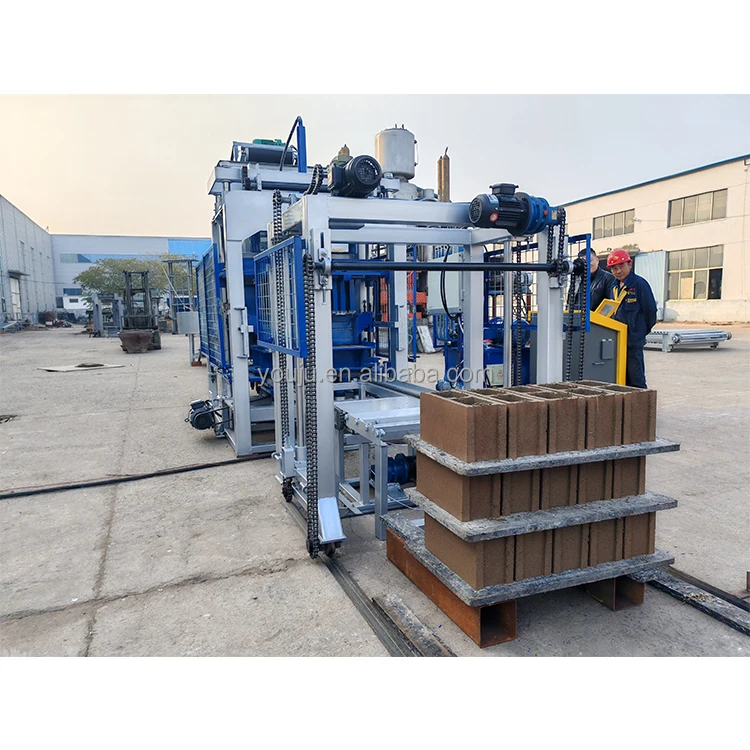
 Stationary block machine