Matched System Sizing — Every QT10-15 configuration we ship pairs the press, pallet and mould cavity count to your target block format, not a catalogue default.
Technical Specifications
| Parameter |
Value |
| Model |
QT10-15 |
| Product Type |
Automatic Concrete Block Making Machine |
| Control System |
PLC control cabinet |
| Hydraulic System |
Independent integrated hydraulic station |
| Vibration Mode |
Vertical station mode resonance, automatic FM-AM |
| Line Components |
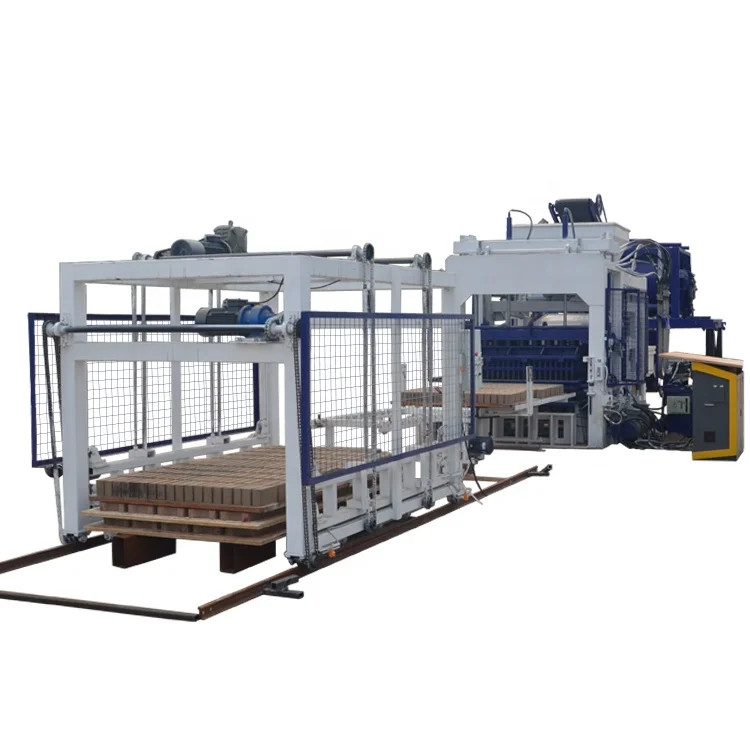
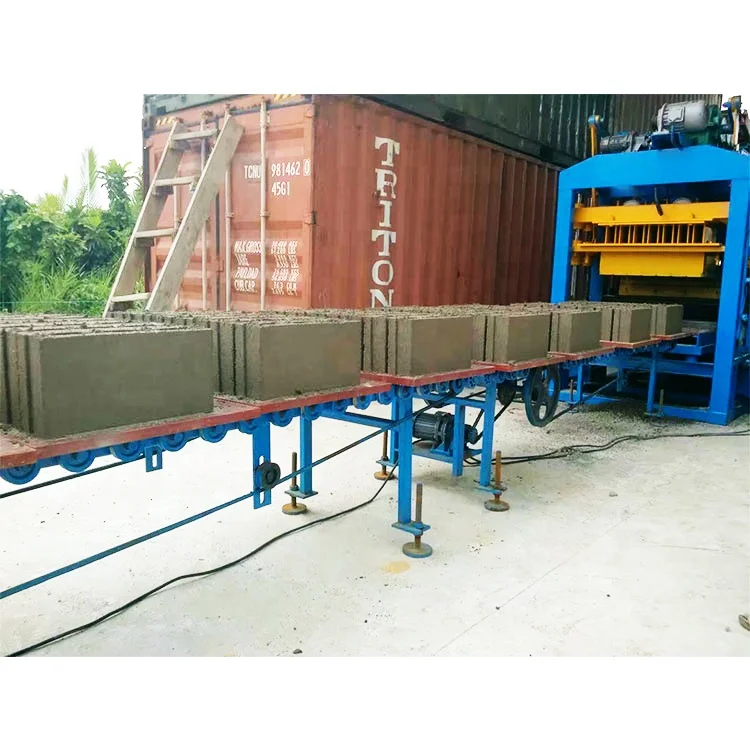
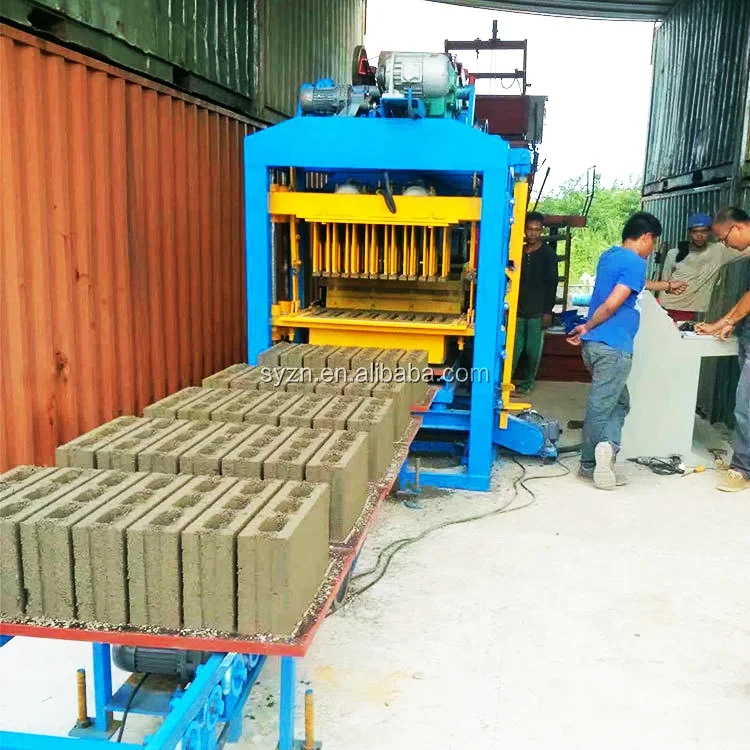
Pallet feed machine, block making machine, storage hopper, conveyor, hydraulic unit, PLC control cabinet |
| Mould Change |
Simple replacement of mould for multi-format production |
| Output (400×200×200mm hollow block) |
1800–2400 pcs/hour (14400–19200 pcs/8hr, molding cycle 15–20s, 10 pcs/mould) |
| Output (400×150×200mm block) |
2160–2880 pcs/hour (17280–23040 pcs/8hr, molding cycle 15–20s, 12 pcs/mould) |
| Output (240×115×53mm standard brick) |
8928–11160 pcs/hour (71424–89280 pcs/8hr, molding cycle 15–20s, 62 pcs/mould) |
| Output (200×100×60mm paving block) |
5184–6480 pcs/hour (41472–51840 pcs/8hr, molding cycle 20–25s, 27 pcs/mould) |
| Output (225×112.5×60mm interlocking brick) |
4032–5040 pcs/hour (32256–40320 pcs/8hr, molding cycle 20–25s, 24 pcs/mould) |
| Automation Level |
Automatic |
| Assembly State |
Multi-component production line |
| Warranty |
1 year for the whole machine (excluding spare parts) |
| Standards |
CE (referenced in company documentation capability) |
Application Suitability
| Application |
Material or Output |
| Hollow block for structural walls |
Crushed stone, sand, cement, fly ash aggregates |
| Paving block for roads and walkways |
High-strength concrete mixes with fine and coarse aggregate |
| Interlocking brick for housing projects |
Local volcanic, river sand or quarry dust blends |
| Standard solid brick for masonry |
Clay alternative mixes, cement and sand |
| Multicellular brick for partition walls |
Lightweight aggregate or pumice blends |
Why the Capacity Figure Alone Decides Nothing
A number without a block format attached is not a capacity.
When a quotation says "2400 pieces per hour," the first question to ask is which block size that assumes. The QT10-15 block machine manufacturer capacity table ties every output figure to a specific mould cavity count and a molding cycle range. A 400×200×200mm hollow block runs at 10 cavities per cycle, while a standard brick fills 62 cavities in the same press stroke. Treating both as equivalent throughput leads to plant layouts that cannot meet their output promise. [NEED_CITE: block format and cavity count effect on real daily throughput]
Placing the QT10-15 on the Shiyue Machine Range
The QT10-15 automatic concrete block making machine occupies the upper tier of our automatic range, above the semi-automatic models designed for smaller plants and the mobile egg-laying units built for on-site production without a fixed curing yard. Buyers evaluating a first high-capacity line or replacing an older press use this model as the point where pallet feed, storage hopper, conveyor and hydraulic unit come together as a matched production line rather than a standalone press.
How the Tiers Differ in Footprint and Investment
Moving from a semi-automatic tier to the QT10-15 means adding pallet handling stations and a curing rack system that require more floor space and a higher capital outlay, but remove manual pallet cycling from the operator. For a block and paver production plant scaling up, the decision rests on whether the daily volume justifies the larger footprint and the supporting equipment that keeps the press from waiting on pallets or raw material feed. Machinery importers assessing portfolio fit place this model where their market demands continuous multi-format output across hollow block, paving block and interlocking brick. [NEED_CITE: plant footprint comparison across automatic, semi-automatic and mobile block machine tiers]
Reading the Specs That Actually Shape Production
The vertical station mode resonance with automatic frequency modulation lets the QT10-15 adjust vibration across different block formats without manual tuning, which matters when a plant switches from lightweight interlocking brick to dense paving block in the same shift. The independent integrated hydraulic station sits isolated from the host vibration and dust, extending seal and valve life under continuous production cycles. Mould change is handled through simple replacement rather than recalibration of the entire press, keeping format flexibility practical instead of theoretical. The PLC control cabinet coordinates pallet feed, storage hopper discharge and conveyor speed so the press cycle is not delayed by upstream stations running at mismatched speeds.

What Happens When the Supporting Line Is Undersized
A common miscalculation is sizing the mixer and pallet feed to the press cycle for one block format, then switching to a denser paver that requires longer vibration and a slower cycle — the upstream stations now run ahead of the press, piling pallets and wet blocks with nowhere to go. The QT10-15 automatic concrete block making machine capacity figures assume every station in the line matches the press cycle for the stated format. When the pallet return conveyor or stacking station cannot keep pace, the real daily output drops regardless of what the press itself can do in isolation. [NEED_CITE: line station mismatch reducing actual block plant output]
Why Buyers Source This Range Here
Block machinery is our single focus, so the QT10-15 press, mould, pallet and handling equipment are specified as one matched system rather than assembled from separate suppliers. Configuration is set against your actual mix design and local aggregate, not a catalogue default — we ran a trial last year where volcanic aggregate from a Middle East site forced us to retune vibration frequency and adjust the mould wear allowance before the machine left the factory. Mould design covers the formats your market actually sells, and custom mould drawings from buyers are accommodated within the same line. Automation level is selectable, meaning a plant can start with semi-automatic pallet handling and add automatic stacking later. Installation support includes on-site commissioning and operator training so the line reaches stable production before our team leaves.
Documentation & Verification
- Line layout and capacity calculation stating the block format assumed for each output tier
- Machine specification sheet with voltage, frequency and PLC display language locked before production
- Mould drawing and format list matching the buyer’s target market products
- Factory test record and packing photographs provided before container loading
- CE declaration documentation where applicable for the destination market
- Wear parts list and hydraulic schematic for local maintenance planning
Installation, Commissioning & Support
- Foundation plan drawn to the QT10-15 multi-component line footprint and station spacing
- Power supply verification against the rated kW and local voltage before the press is wired
- Component-by-component assembly on site from dismantled shipment state to running line
- PLC language and control parameters set to operator preference during first-week commissioning
- Mould cavity alignment and vibration frequency tuned to the buyer’s actual aggregate blend
- Spare hydraulic seals and wear parts list handed over with maintenance interval schedule
Starting the Conversation
To size the QT10-15 to your plant, share the block formats your market sells along with the daily volume you need from each. Tell us about your local raw materials — aggregate type, sand source, cement grade — and the curing area or forklift setup you already have on site. Confirm the voltage, frequency and the language you want on the PLC display so the line is ready for commissioning the day it is powered up.
Frequently Asked Questions
Q: How do I verify the QT10-15 capacity for my specific block format?
A: Share the exact block dimensions and target daily volume. We return a capacity calculation that states the mould cavity count, molding cycle range and the output per eight-hour shift for that format, so the number on paper matches what the line delivers after commissioning.
Q: Where does the QT10-15 sit compared to semi-automatic and mobile tiers?
A: The QT10-15 is the upper automatic tier, requiring a fixed plant with pallet handling and curing space. Semi-automatic models suit smaller plants with lower investment, and mobile egg-laying units produce on site without pallets. We map your output and site conditions to the right tier before quoting.
Q: What electrical and control details must be confirmed before production?
A: Voltage, frequency and PLC display language are confirmed before the QT10-15 enters production. Getting these wrong delays commissioning after the machine arrives, so we lock them during the proposal stage and include them on the specification sheet.
Q: Can you supply custom moulds for local block formats?
A: Mould design covers hollow block, standard brick, paving block and interlocking brick, and we work from buyer drawings for formats outside that range. Each mould is matched to the QT10-15 press stroke and pallet size so cavity fill and block density stay consistent.
Q: What does the warranty cover, and are spare parts available?
A: The QT10-15 carries a one-year warranty for the whole machine excluding spare parts. Hydraulic wear parts, moulds and seals are listed in the documentation package, and replacement supply is arranged so the first changeover does not leave the line standing.

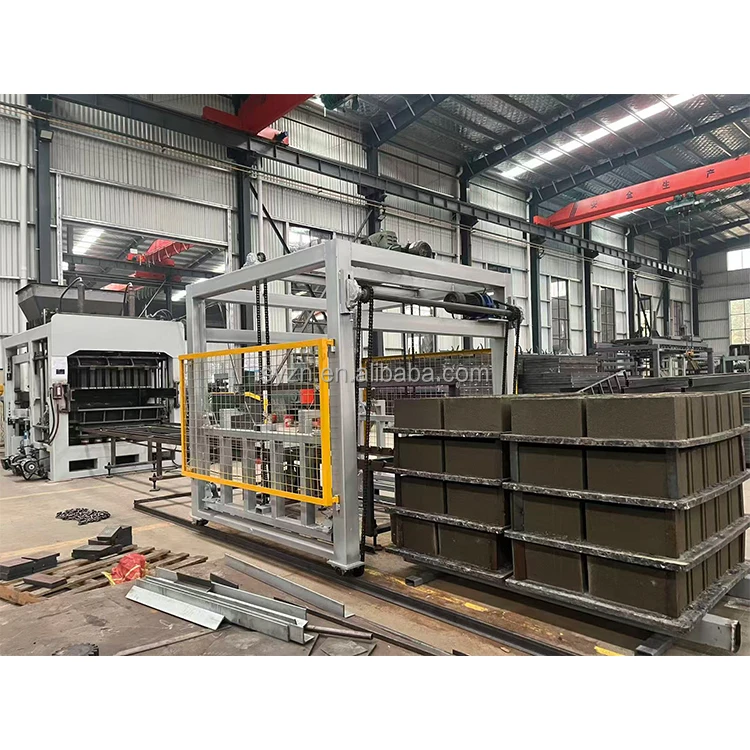
 High quality block machine