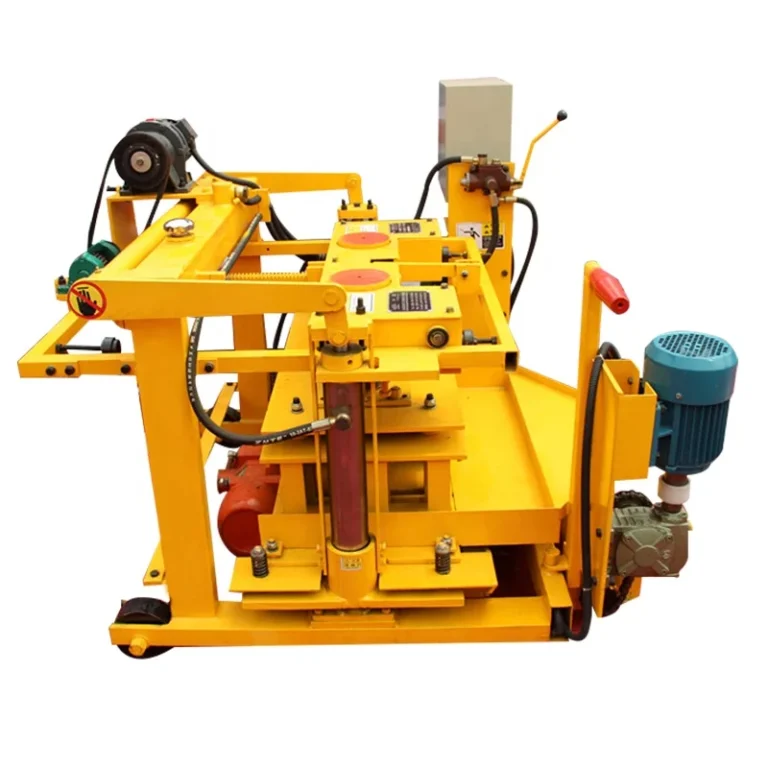
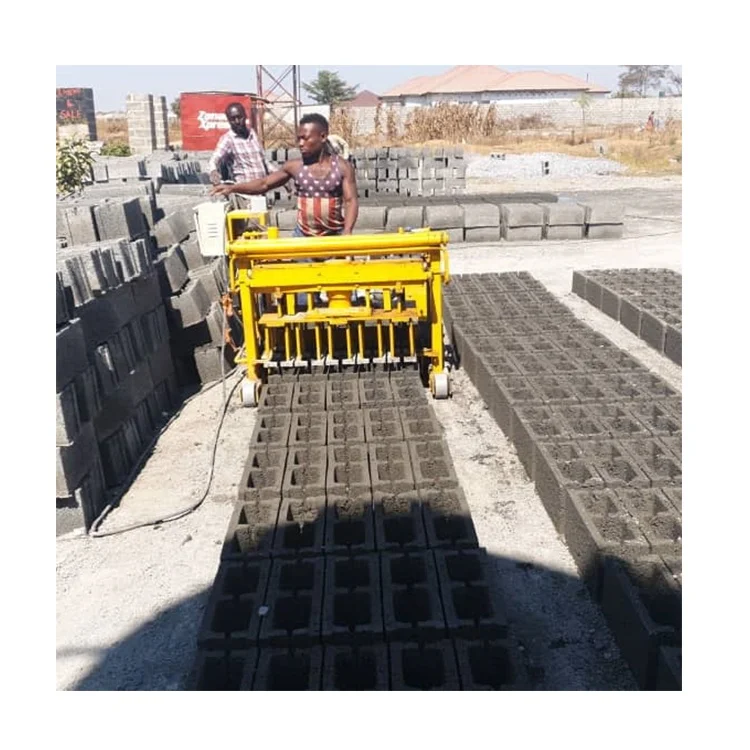
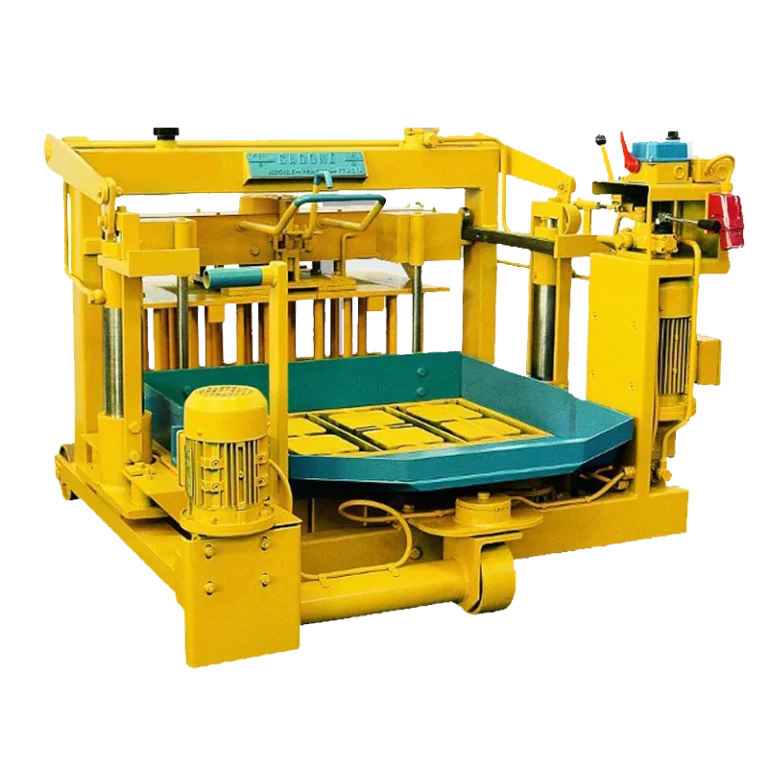
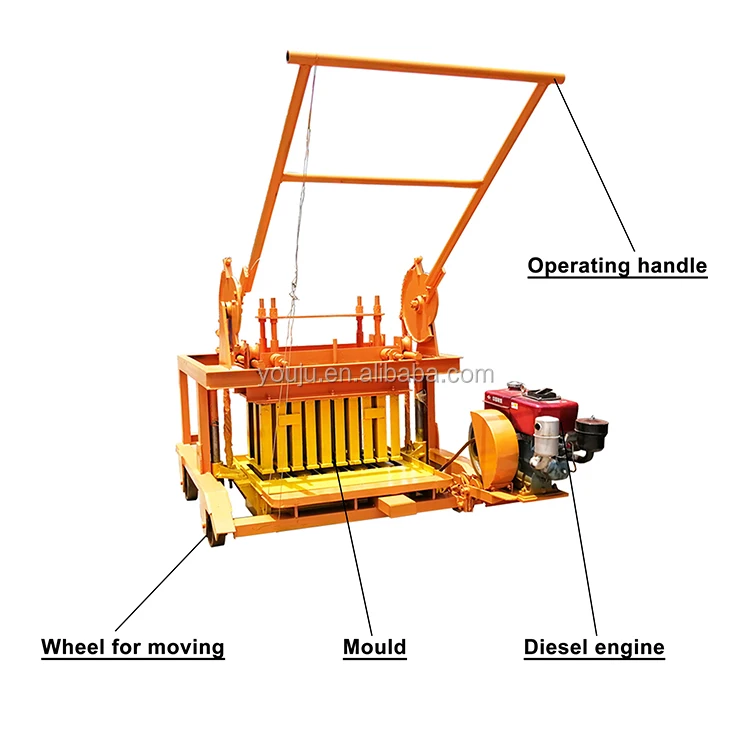
Entry-tier mobile range — a single-focus block machinery builder specifying the QMY4-30 egg-laying press, moulds, and pallets as one matched system so site conditions and local aggregate are factored in before dispatch.
Technical Specifications
| Parameter |
Value |
| Model |
QMY4-30 |
| Product Type |
Mobile Egg-Laying Concrete Block Making Machine |
| Total Installed Power |
5.95 kW |
| Vibration Force |
28.6 kN |
| Excitation Frequency |
4500 r/min |
| Vibration Method |
Mold vibration |
| Molding Cycle |
30 s |
| Output Capacity |
3000 pcs/day (basis to be confirmed per block format and mould) |
| Overall Dimensions (L×W×H) |
1300 × 1500 × 1000 mm |
| Net Weight |
950 – 1000 kg |
| Raw Material Compatibility |
Concrete, sand, cement, fly ash, lime, gypsum, stone dust, construction waste, slag, mine tailings, river sand, coal gangue, porcelain granule, carpolite, sandrock |
| Control System |
Manual handle-based transmission with vibratory and oil pump motors |
| Automation Level |
Manual / semi-manual |
| Assembly State |
Mobile, egg-laying (no fixed plant required) |
| Standards |
CE declaration where applicable |
Application Suitability
| Application |
Material or Output |
| On-site hollow block production for housing projects |
River sand, cement, crushed stone dust |
| Solid block manufacturing at remote or terrain-challenged construction sites |
Fly ash, lime, construction waste, slag |
| First-operation entrepreneur block making |
Mine tailings, coal gangue, carpolite |
| Paving and interlocking brick laying at suburban and coastal locations |
Porcelain granule, sandrock, gypsum blends |
What "3000 Blocks per Day" Actually Means on Site
The daily figure only holds true once the block format, mould, and local aggregate are locked in — everything else is catalogue guesswork.
When I first started doing on-site support across remote project locations, a contractor once showed me a mobile block machine for sale that was rated at a certain daily output. After two weeks of production, the actual count was nowhere near the brochure number. The reason was simple: the capacity had been calculated for a standard hollow block on clean, graded sand, while the site was using high-clay river sand that required a longer vibration cycle to achieve minimum compressive strength [NEED_CITE: aggregate clay content effect on vibration cycle time in concrete block production]. Once the mould was swapped and the cycle adjusted, output settled at a realistic level — but the project schedule had already slipped.
Where the QMY4-30 Fits in the Mobile Block Machine for Sale Range
This model anchors the entry tier of our mobile range, designed for buyers who need blocks produced directly at the project location rather than transported from a centralized factory. The egg-laying principle means the press lays blocks on a prepared ground surface and moves forward, eliminating the need for pallets and a dedicated curing rack system. For a first-time block operation or a contractor working a single housing development, this keeps fixed infrastructure to near zero while still delivering consistent hollow and solid formats.
Footprint and Terrain Reach for Tight or Remote Sites
At 1300 × 1500 × 1000 mm and under one tonne, the QMY4-30 is small enough to be moved between sites on a flatbed truck and operated in mountainous, hilly, desert, or coastal terrain where a stationary plant is impractical. The compact dimensions mean a single operator can position the machine along a wall line or foundation trench, producing blocks where they will be used. Because no conveyor or pallet return loop is required, the working area around the press stays clear even in confined site conditions [NEED_CITE: site logistics planning for mobile egg-laying block machines].
How Vibration Force and Cycle Time Shape Block Density
The 28.6 kN vibration force delivered at 4500 r/min through the mould is what compacts the concrete mix into a dense, structurally sound block within each 30-second cycle. In egg-laying machines, the vibration must be strong enough to consolidate the mix instantly because there is no secondary pressing stage — the block must hold its shape as soon as the mould lifts. If the local aggregate is porous or high in fines, the operator may need to extend the cycle slightly to maintain wall thickness integrity. The manual handle transmission keeps this adjustment mechanical and transparent, so maintenance on a remote site does not depend on electronic diagnostics.

The Real Cost of Skipping the Aggregate Check
A buyer who orders a mobile block machine for sale without first confirming the local sand gradation and clay content often discovers the problem only after the machine arrives. Blocks may crack during the first curing cycle, or the mould may stick because the mix is too cohesive. Reworking the mix on site costs time, additional cement, and sometimes an entirely new aggregate source — expenses that no quotation line item prepared them for [NEED_CITE: raw material variability impact on concrete block compressive strength].
Why Procurement Starts with the Mix, Not the Machine
Every QMY4-30 we configure is matched against the buyer’s actual aggregate sample and target block format before a quotation is issued, so the 3000 pcs/day figure carries a named mould and material basis. Machine, mould, and handling accessories are specified as one system from a single builder whose only product line is block machinery, preventing the mismatches that occur when a press, pallets, and mixers come from separate suppliers. Automation is selectable — a buyer can begin with the manual egg-laying tier and move to semi-automatic or full-line configurations later using the same mould format library. Installation support includes on-site commissioning and operator training so that cycle adjustments for local material are made during the first production run, not weeks after. Documentation arrives with the machine: capacity calculation per stated format, mould drawings, hydraulic and electrical schematics, and a wear parts list specific to the QMY4-30.
Documentation & Verification
- Capacity calculation sheet stating the exact block format and mould behind the daily output figure
- Mould drawing set with format list confirming every block size included at dispatch
- Voltage and frequency confirmation document matched to the buyer’s local grid standard
- Factory test record run on the buyer’s specified mix design before shipment
- Operation and maintenance manual with QMY4-30-specific wear parts schedule
Installation, Commissioning & Support
- Site floor must be level compacted ground or concrete slab to support 1000 kg machine weight and vibration load
- 5.95 kW total power requires a dedicated single-phase or three-phase circuit matching confirmed voltage and frequency
- Machine ships fully assembled; on-site setup limited to motor connection, handle adjustment, and test cycle
- First-day commissioning includes mould fitting, cycle timing check, and block density verification with local aggregate
- Operator training covers handle transmission technique, mould change procedure, and daily vibratory motor inspection
- Wear parts list supplied with recommended reorder intervals for vibration springs, mould liners, and oil pump seals
What We Need to Size the Right Configuration
To move from a general inquiry to a confirmed proposal, share the target block format and dimensions, the local aggregate source with a sieve analysis or sample photo, and the daily output you need to sustain on your project timeline. Let us know the available voltage and frequency at your site so the motor and control labels are configured before the QMY4-30 leaves the factory.
Frequently Asked Questions
Q: What block format is the daily output figure based on, and how does it change with different moulds?
A: The stated output is calculated for a specific hollow block format and mould set. Switching to a thinner paving block or a larger solid block changes the molding cycle and the number of pieces per cycle, so the daily total shifts accordingly. We provide a format-by-format capacity table with each quotation.
Q: What voltage and frequency options can be configured before shipment?
A: Motor windings and control labels are matched to your local grid standard — whether that is 220 V/50 Hz, 380 V/50 Hz, 440 V/60 Hz, or another combination. We confirm the exact specification before production so there are no commissioning delays when the machine arrives.
Q: Can I order additional or custom mould formats after the initial purchase?
A: Yes. The QMY4-30 accepts the same mould interface across our range, so you can add hollow, solid, paving, or interlocking formats later. Custom moulds built to your drawings are available with the same lead time framework as standard formats.
Q: Does the QMY4-30 require a concrete floor, or can it operate on compacted ground?
A: The egg-laying design allows operation on any level, compacted surface — a poured concrete slab is not mandatory. The ground must be firm enough to bear the machine weight and vibration without settling unevenly, which could affect block wall thickness consistency.
Q: How does this mobile tier compare to semi-automatic and automatic lines in output and labour?
A: The QMY4-30 is the entry point: one or two operators, no pallet system, and lower capital outlay. Semi-automatic and automatic tiers add pallet handling, stacking, and curing racks for higher volume with fewer manual steps. The mould formats remain compatible, so you can scale production without redesigning your product range.

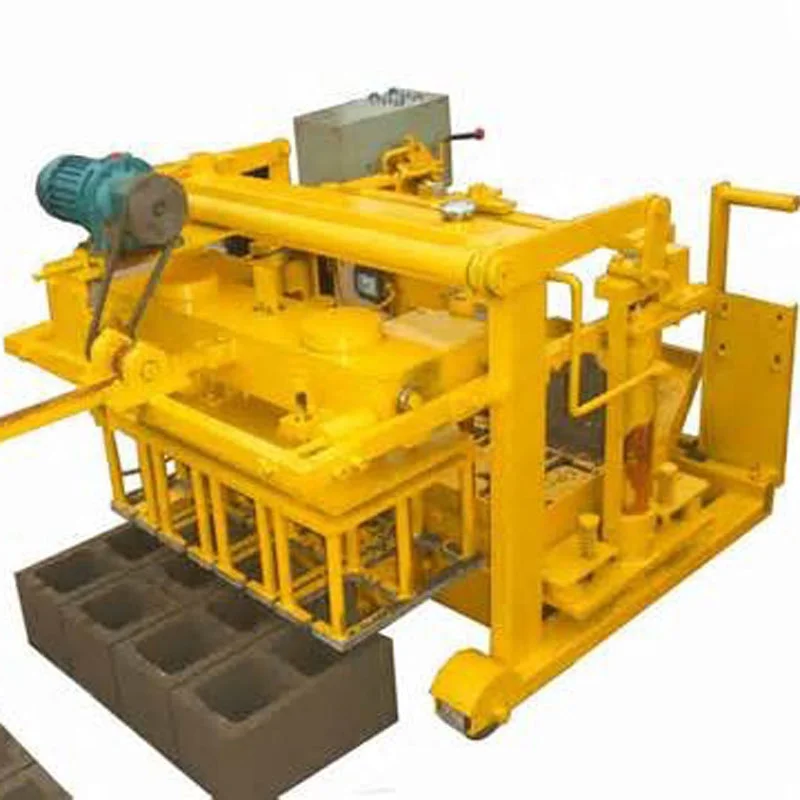
 Mobile block machine