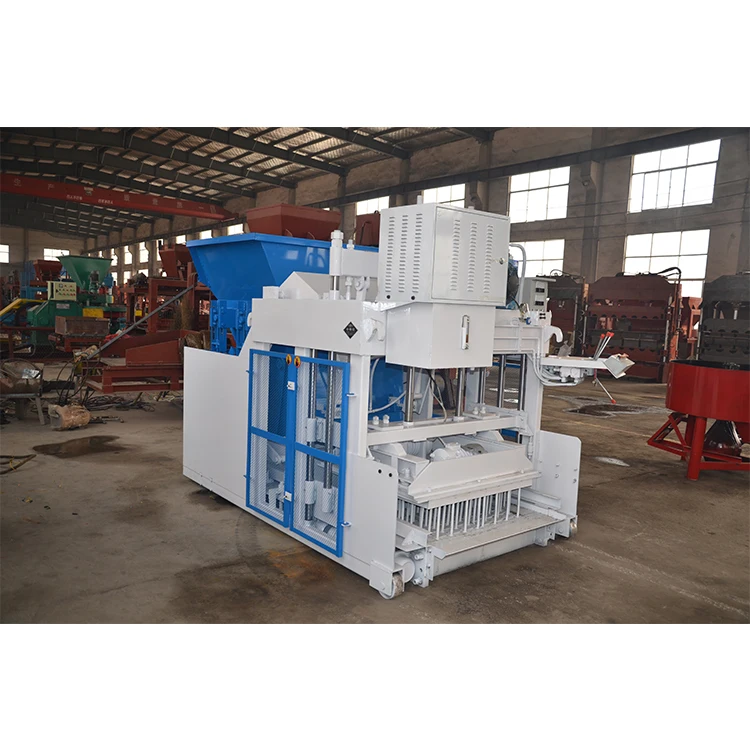
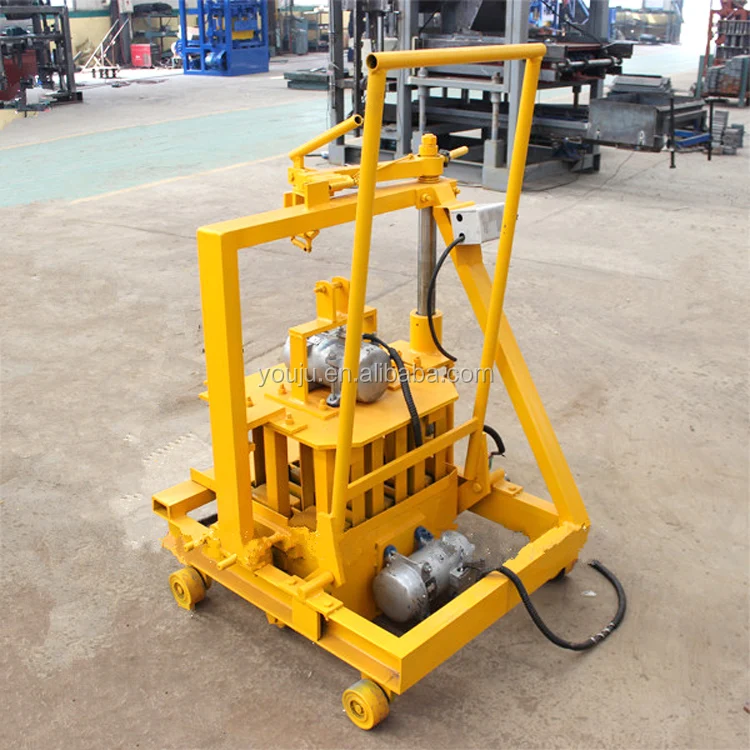
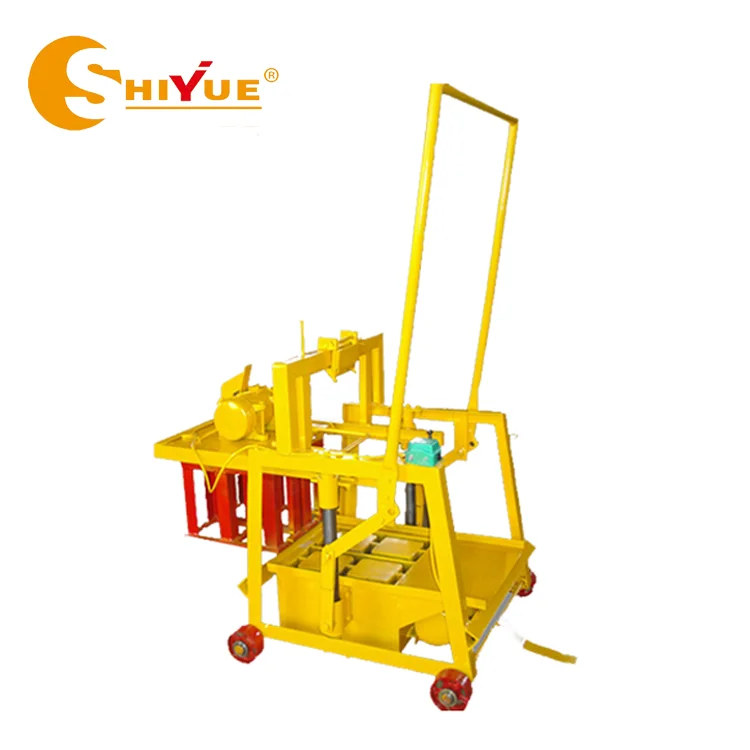
Configuration set against your actual mix and site conditions — every QMY4-30 mobile block machine proposal starts with your local aggregate and target block format, not a catalogue default.
Technical Specifications
| Parameter |
Value |
| Model |
QMY4-30 |
| Product Type |
Mobile Concrete Block Making Machine |
| Rated Power |
5 kW |
| Molding Cycle Time |
30 seconds |
| Overall Dimensions (L×W×H) |
1200×1200×1100 mm |
| Net Weight |
950 kg |
| Raw Materials |
cement, sand, crushed stones, slag |
| Automation Level |
Manual / mobile egg-laying type |
| Mould Format |
Changeable moulds for hollow block and solid brick |
| Output Capacity (400×200×200 mm hollow block) |
4 pcs/mould, 480 pcs/hour, 3840 pcs/8 hours |
| Output Capacity (400×150×200 mm hollow block) |
5 pcs/mould, 600 pcs/hour, 4800 pcs/8 hours |
| Output Capacity (400×100×200 mm hollow block) |
7 pcs/mould, 840 pcs/hour, 6720 pcs/8 hours |
| Pallet Size |
Not applicable (mobile egg-laying machine, no pallet required) |
| Voltage & Frequency |
(basis not stated in source — confirm with supplier) |
| Control System |
(basis not stated in source — confirm with supplier) |
| Hydraulic Pressure |
(basis not stated in source — confirm with supplier) |
| Vibration Force |
(basis not stated in source — confirm with supplier) |
| Warranty |
One year |
Application Suitability
| Application |
Material or Output |
| On-site hollow block production at project locations |
Crushed stone, sand, and cement mix laid directly on the ground |
| Small-scale solid brick manufacturing |
Sand and cement for solid format bricks with changeable moulds |
| Startup block production operations |
Low-volume hollow block runs with minimal infrastructure |
| Construction contractor overflow or remote site work |
Mobile egg-laying production eliminating the need for a fixed plant and pallets |
Why "Pieces per Hour" Means Nothing Without the Block Format Attached
A capacity number without a stated mould size and cycle time is not a capacity number — it is a guess.
When evaluating a mobile block machine full range, the first question I always ask a buyer is which exact block format they intend to sell. A headline figure like "hundreds per hour" collapses the moment you switch from a 400×100×200 mm hollow block to a larger 400×200×200 mm format. The QMY4-30 cycles every 30 seconds, but the pieces per cycle drop from seven to four when you move to the larger format. That difference reshapes your daily planning and the concrete volume you must prepare each morning. [NEED_CITE: block format assumptions in machine capacity quotations]
Placing the QMY4-30 Within the Mobile Block Machine Full Range
The QMY4-30 occupies the entry tier of the mobile block machine full range. It produces blocks directly on the ground without pallets, which removes an entire cost layer — pallet purchase, pallet storage, and pallet handling equipment — from the initial investment. For an entrepreneur comparing a first block plant setup against semi-automatic or automatic lines, this machine shows what is achievable at the lowest capital threshold before committing to a fixed factory layout.
What an Egg-Laying Machine Removes From Your Setup
Because the QMY4-30 moves forward on its own wheels and lays each block row directly onto a prepared flat surface, the production floor is essentially any level concrete yard. There is no curing rack system, no pallet return conveyor, and no fixed press station to build a building around. The trade-off is that output consistency depends heavily on ground preparation and the operator maintaining a steady walking pace and mix feed rhythm throughout the shift. [NEED_CITE: ground preparation standards for egg-laying block machines]
Reading the Numbers That Actually Matter on Site
The 30-second cycle time governs how fast you move down the yard, but the 5 kW power draw is what determines whether a portable generator can run this machine at a remote construction site without additional infrastructure. At 950 kg net weight, the unit can be relocated by a standard site forklift or loaded onto a flatbed between project locations. The changeable mould system covers the three most common hollow block widths and solid brick within one machine footprint, so format switching does not require a second machine purchase. Vibration force and hydraulic pressure figures should be confirmed against your specific mix design before finalizing the order, because local aggregate density directly affects the compaction energy required for adequate block strength.

What Happens When You Skip the Mix Design Conversation
I once shipped a mobile egg-laying machine to a region where the buyer’s local aggregate was volcanic slag instead of standard river sand. The vibration and pressure settings were calibrated for a conventional mix, and roughly half the blocks crumbled before curing. Two weeks of on-site ratio adjustment followed before production stabilized. When the vibration force is not matched to the density and particle shape of your actual raw material, no amount of cycle speed compensates for weak compaction. Always provide your aggregate source and cement grade before the machine leaves the factory so the vibration and pressure parameters are set to your reality, not a laboratory baseline. [NEED_CITE: aggregate variability impact on block compaction quality]
Why Buyers Choose This Configuration Source
The machine, mould, and handling requirements are specified as one matched system rather than assembled from separate suppliers with compatibility gaps. Capacity calculations are stated per block format with the mould size and cycle time explicitly named, so daily output projections hold up when you sit down with a project contractor. Mould design is available for the specific block dimensions your local market sells, including custom drawings when standard formats do not match regional building codes. Automation level is selectable, meaning you can begin with this manual mobile unit and move to a semi-automatic stationary line later without scrapping your initial investment in mould knowledge and mix formulation.
Documentation & Verification
- Factory test record showing cycle time and block dimensions on your requested hollow block format before dispatch
- Machine specification sheet confirming voltage, frequency, and power rating matched to your site electrical supply
- Mould drawing and format list detailing included and optional block sizes with dimensional tolerances
- Operation and maintenance manual covering daily greasing points, vibration motor checks, and wear part replacement intervals
- Packing photographs documenting machine condition and crate securing prior to container loading
Installation, Commissioning & Support
- A level concrete yard of adequate length is required for egg-laying production, with no fixed foundation or anchor bolts needed for the 1200×1200×1100 mm unit
- A 5 kW power supply with the confirmed voltage and frequency must be available on site, whether from grid connection or a rated portable generator
- The 950 kg machine arrives assembled and requires only mould mounting, electrical connection, and a test run with your local mix
- On-site commissioning includes setting the 30-second cycle rhythm and adjusting mix moisture to achieve clean block release from the mould
- Operator training covers steady walking pace, feed consistency, and mould changeover procedure for switching between hollow block and solid brick formats
- Wear parts list identifies vibration motor brushes and mould liner surfaces with recommended inspection intervals
What to Prepare Before Requesting a Quotation
Share the exact block dimensions your market demands, including wall thickness and any interlocking profile requirements. Confirm your local aggregate type, maximum particle size, and the cement grade available in your region. Specify your site voltage, frequency, and whether you will run the machine from grid power or a generator, as this affects the motor specification at the factory. [NEED_CITE: electrical supply confirmation requirements for export machinery]
Frequently Asked Questions
Q: How is the capacity figure calculated, and which block format does it assume?
A: Each output figure is tied to a specific mould size and the 30-second cycle time. For the 400×200×200 mm hollow block, the machine produces 4 pieces per cycle, yielding 480 per hour and 3,840 over an eight-hour shift. Switching to the 400×100×200 mm format increases that to 7 pieces per cycle. Always match the capacity line to your actual selling format.
Q: What voltage, frequency, and plug standard does the QMY4-30 ship with for my country?
A: These are confirmed during the order process based on your site electrical supply. The motor and control wiring are set at the factory to match your specified voltage and frequency, so the machine connects directly upon arrival without an additional transformer purchase or rewiring delay.
Q: Which block formats can I produce, and how long does a mould change take?
A: The QMY4-30 accepts changeable moulds for standard hollow block sizes — 400×200×200, 400×150×200, and 400×100×200 mm — as well as solid brick. Mould changeover involves unbolting and repositioning the mould box, which an operator completes within a standard work shift without specialized tools.
Q: What raw material mix and aggregate size does this mobile machine require?
A: The machine processes cement, sand, crushed stone, and slag. The critical factor is matching vibration force to your specific aggregate density and particle shape. Provide your local material source details before production so the compaction parameters are adjusted to your mix rather than a generic baseline.
Q: Where does the QMY4-30 sit compared to semi-automatic and automatic models in the range?
A: It is the entry tier of the mobile block machine full range, producing on the ground without pallets or a fixed plant. Semi-automatic models add stationary pressing with pallet systems, and automatic lines include full stacking and cubing. The QMY4-30 suits buyers prioritizing low initial investment and site mobility over high-volume output.

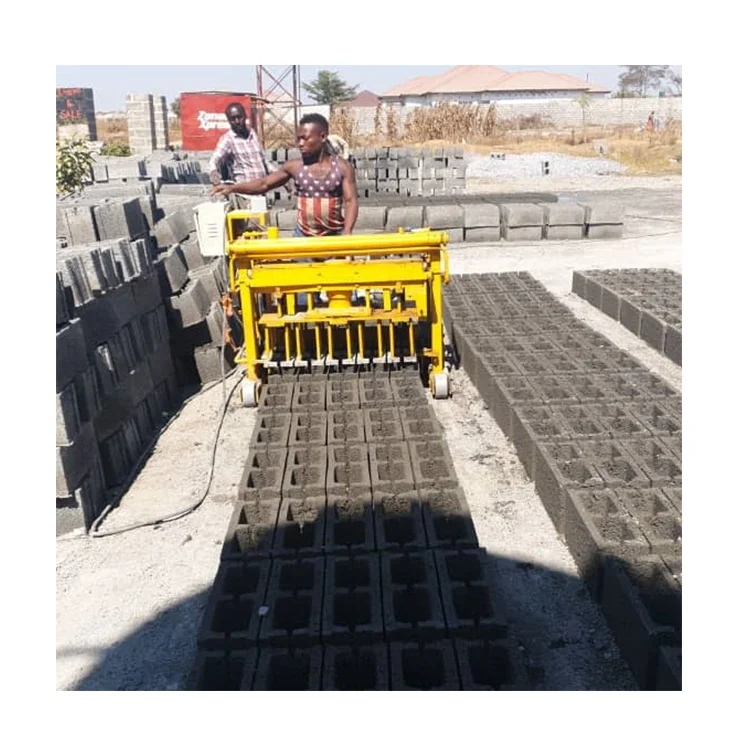
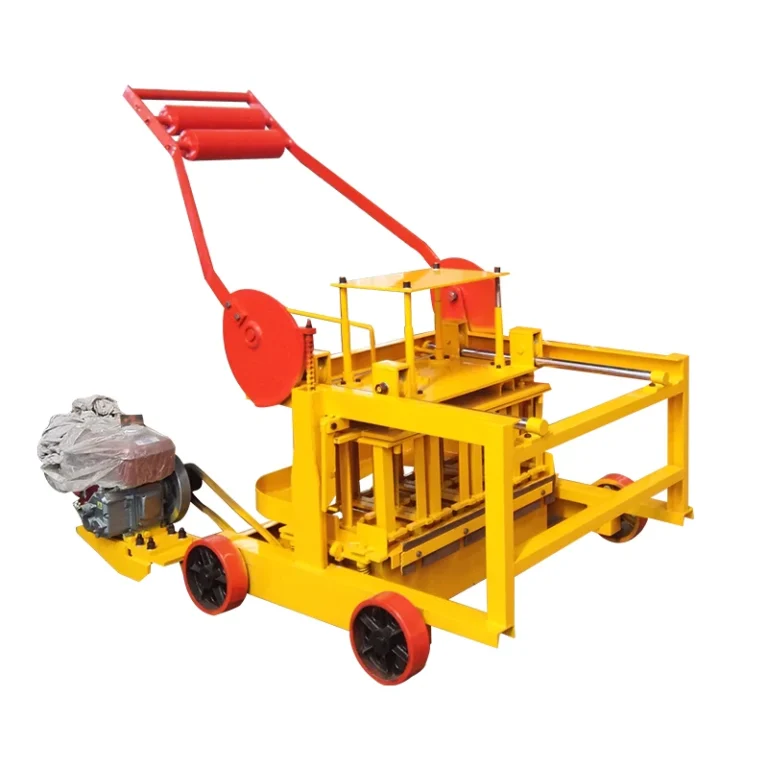 Mobile block machine