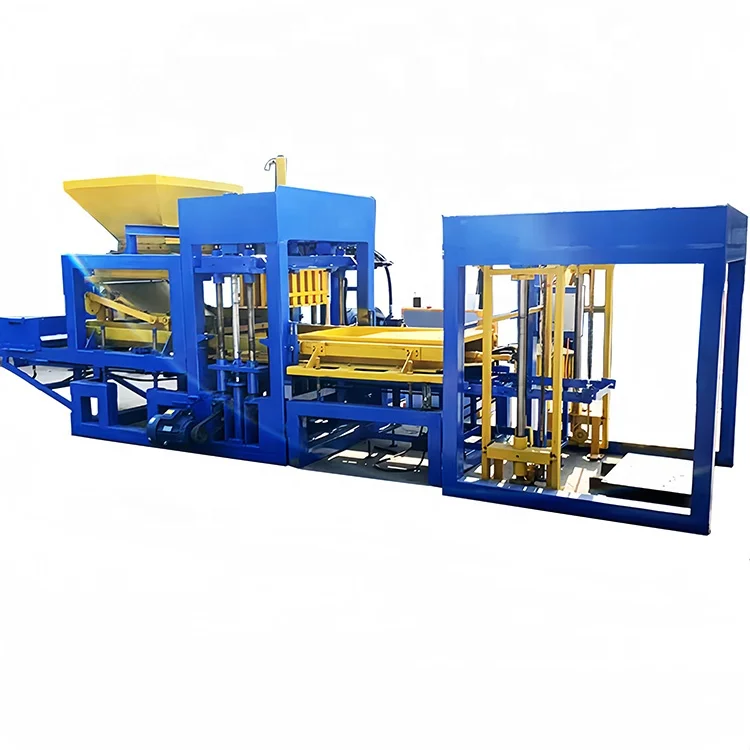
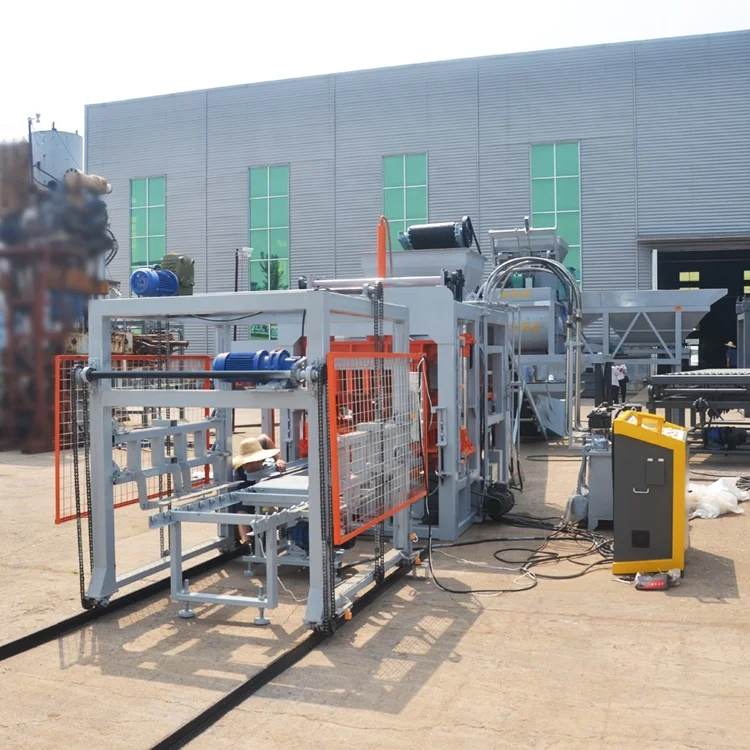
Single-Focus Block Machine Range — Every output tier from mobile egg-laying units to high-capacity automatic lines is built around one product category, so the QT8-15 sits in a clear progression rather than a scattered catalogue.
Technical Specifications
| Parameter |
Value |
| Model |
QT8-15 |
| Product Type |
Hydraulic Concrete Block Making Machine |
| Overall Dimensions (L×W×H) |
8300×1860×3000 mm |
| Rated Hydraulic Pressure |
21 MPa |
| Main Vibration Form |
Platform Vibration |
| Vibration Frequency |
2800–4500 r/min |
| Vibration Force |
45 kN |
| Pallet Size |
950×900 mm |
| Molding Cycle |
15–20 s (basis not stated in source — confirm block format, material, thickness) |
| Overall Power |
55.5 kW |
| Total Mass |
8 T |
| Demolding Method |
Hydraulic |
| Recommended Factory Area |
300 m² |
| Warranty |
1 year |
Application Suitability
| Application |
Material or Output |
| Hollow block production |
Crushed stone, sand, cement, fly ash |
| Solid block manufacturing |
Gravel, sand, cement, slag |
| Paving block and colored paver runs |
Fine aggregate, cement, pigment |
| Interlocking brick production |
Crushed stone, sand, cement |
| Kerbstone and curb units |
Coarse aggregate, cement, sand |
What "15–20 Seconds per Cycle" Actually Means for Your Output
A molding cycle quoted without the block format it assumes is a number you cannot plan a business around.
The QT8-15 is rated at a 15–20 second cycle, yet that figure shifts depending on whether you are pressing a 400×200×200 mm hollow block or a thinner interlocking paver. I once watched a Middle East buyer take delivery of a concrete block making machine manufacturer order and run volcanic ash aggregate at the default frequency — his daily output dropped to nearly half of what the brochure suggested, because the vibration profile had never been matched to his material [NEED_CITE: block density and aggregate hardness relationship]. Before you compare any QT8-15 block machine for sale against another quote, confirm which format and mix design the cycle time assumes.

Placing the QT8-15 in the Full Machine Range
The Shiyue range runs from small mobile egg-laying units through semi-automatic workshop machines and into high-capacity fully automatic lines. The QT8-15 occupies the mid-to-high tier — a fully hydraulic press with platform vibration designed for buyers who have outgrown workshop-scale output but are not yet ready to invest in a top-tier automatic plant. This positioning matters because it defines what supporting equipment you need alongside the press itself.
Who This Output Tier Fits
Buyers scaling an existing block plant to meet rising demand, construction contractors producing hollow and solid blocks for their own housing projects, and entrepreneurs launching a first commercial operation with room to add automation later all land in this tier. The QT8-15 block machine for sale offers a path: start with semi-automatic pallet handling, then upgrade stacking and cubing as volume justifies the investment. The machine range is structured so each tier shares common pallet dimensions and mould mounting patterns, keeping future expansion practical.
Reading the Pressure-Vibration Pairing
The 21 MPa rated hydraulic pressure and 45 kN vibration force work together — pressure compacts the mix while vibration settles fine particles into voids. If your local aggregate is harder or more angular than standard river sand, the 2800–4500 r/min adjustable frequency range lets you shift the vibration profile to maintain block density [NEED_CITE: vibration frequency matching for different aggregate types]. The 950×900 mm pallet size is large enough for multi-cavity moulds yet still compatible with standard forklifts, though you should verify your curing rack spacing before confirming the order. At 8 T total mass across an 8300×1860×3000 mm footprint, the machine requires a reinforced concrete foundation within the recommended 300 m² factory area — that area must also cover raw material storage, curing space, and finished block staging.
The Cost of Skipping Configuration Details
When voltage and frequency are left unconfirmed until the machine arrives, commissioning stalls while transformers or motor rewinds are arranged. I have seen a QT8-15 class press sit idle for three weeks because the PLC display language was never specified and the operator could not read the fault codes [NEED_CITE: commissioning delays from unconfirmed electrical specifications]. Mould change time is another hidden variable — if your market requires three or four block formats and each changeover consumes most of a shift, the format flexibility you paid for disappears. These issues are not machine defects; they are gaps in the specification conversation that happen before production begins.
Why Buyers Source This Tier Through Shiyue
Block machinery is the single product focus here, which means the QT8-15 concrete block making machine manufacturer proposal arrives with machine, mould, pallet, and handling equipment specified as one matched system rather than assembled from separate suppliers. Configuration is set against your actual mix design and target block format, not a catalogue default. Mould design covers the formats your market sells, including custom drawings when standard options do not fit. Automation level is selectable — you can begin with manual pallet handling and add automatic stacking later without replacing the press. Installation support includes operator training so your crew understands the pressure-vibration relationship from day one.
Documentation & Verification
- Line layout and capacity calculation stating which block format the QT8-15 output assumes
- Machine specification sheet covering hydraulic pressure, vibration force, and pallet dimensions
- Mould drawing and format list for every block type in your product plan
- Pallet specification matched to your curing area and forklift capacity
- Voltage, frequency, and PLC display language confirmation document before production
- Factory test record on your selected block format and mix design
Installation, Commissioning & Support
- Reinforced concrete foundation designed for 8 T operating mass and vibration load
- 55.5 kW total power requires dedicated three-phase circuit with confirmed voltage and frequency
- Machine ships dismantled; reassembly on-site aligns the 8300 mm frame to platform level
- First-run commissioning tests molding cycle on your actual aggregate and mix proportions
- Operator training covers hydraulic pressure adjustment and vibration frequency tuning
- Wear parts list identifies mould liners and hydraulic seals for your first reorder
What We Need to Size Your Line Correctly
Send your target block formats with dimensions, the daily output you need per format, and the raw materials available locally — including aggregate type and gradation. Confirm your site voltage, frequency, and preferred PLC display language so the electrical package is locked before production starts. If you have an existing curing area or forklift fleet, share those dimensions so the 950×900 mm pallet specification is verified against your handling setup.
Frequently Asked Questions
Q: How is the QT8-15 daily output calculated, and which block format does the cycle time assume?
A: The 15–20 second molding cycle is a starting reference that shifts with block format, wall thickness, and mix design. Daily output is calculated by multiplying confirmed cycle time by working hours and pallet cavity count for your specific block. We provide a written capacity calculation stating the exact format assumed, so your business plan rests on a verified number rather than a generic estimate.
Q: What voltage and frequency configurations are available, and is the PLC display language confirmed before shipment?
A: The electrical package is configured to your site supply — voltage, frequency, and plug standard are confirmed during the quotation stage. PLC display language is specified at the same point so operators can read menus and fault codes immediately on commissioning. Both items appear on a signed confirmation document before production begins [NEED_CITE: electrical configuration standards for export machinery].
Q: Where does the QT8-15 sit in the range — can I start with this tier and upgrade automation later?
A: The QT8-15 occupies the mid-to-high output tier, above workshop-scale machines and below fully automatic high-capacity lines. You can begin with semi-automatic pallet handling and add automatic stacking or cubing modules as volume grows. The pallet size and mould mounting interface remain consistent across the range, so upgrades integrate without replacing the core press.
Q: What plant footprint does the QT8-15 require, and how does the 300 m² factory area break down?
A: The 300 m² recommendation covers the press footprint of 8300×1860 mm plus raw material feeding, pallet return, curing rack space, and finished block staging. The exact breakdown depends on your block format and curing time. We provide a line layout drawing showing each station so you can verify the footprint against your available building or plot before committing.
Q: Which mould formats are included as standard, and how long does a mould change take on this model?
A: Standard moulds cover hollow blocks, solid blocks, pavers, interlocking bricks, and curbstones in common sizes for your target market. Custom moulds are available to buyer drawings. Mould change time depends on the quick-release system fitted and operator familiarity — we confirm the expected changeover duration for your selected format set during the proposal stage so you can plan shift schedules accurately.

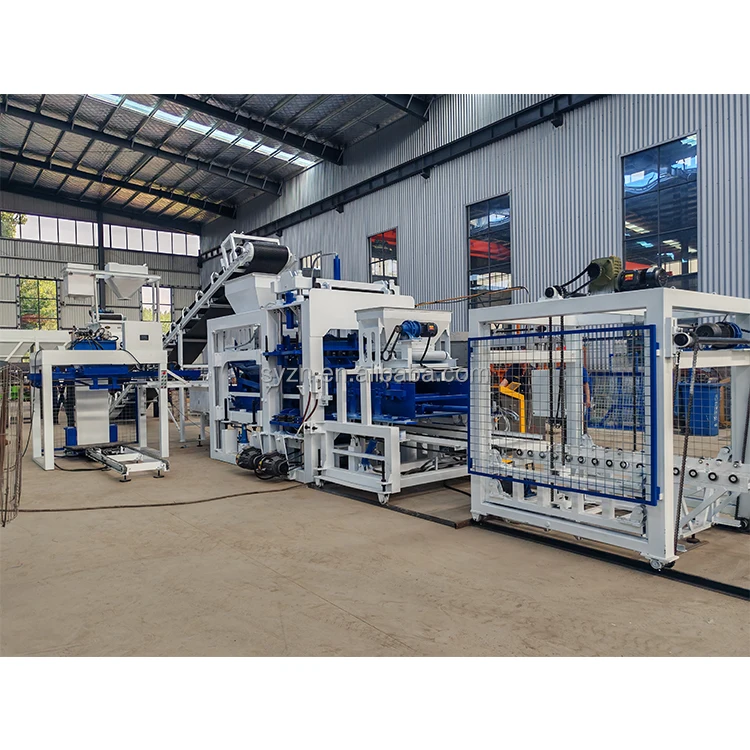
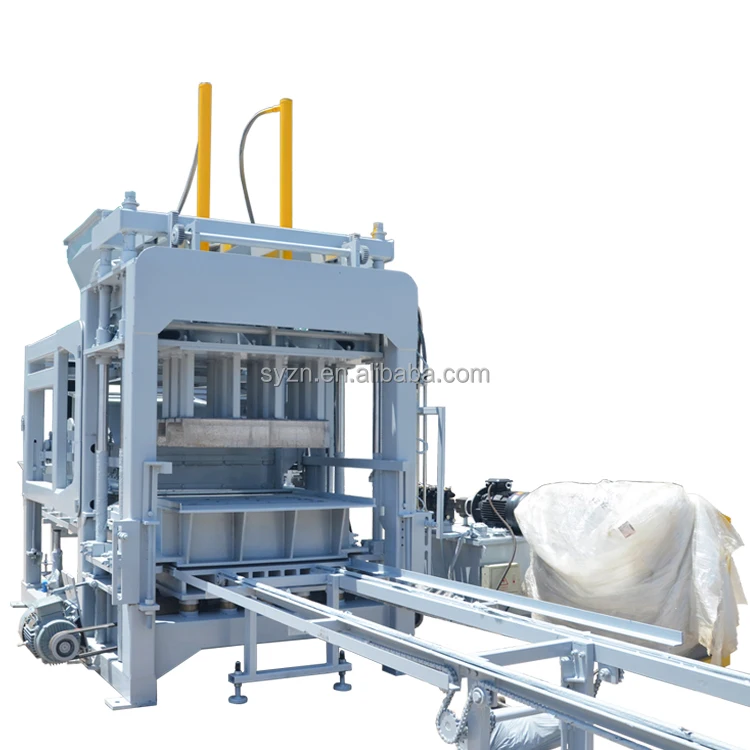 High quality block machine