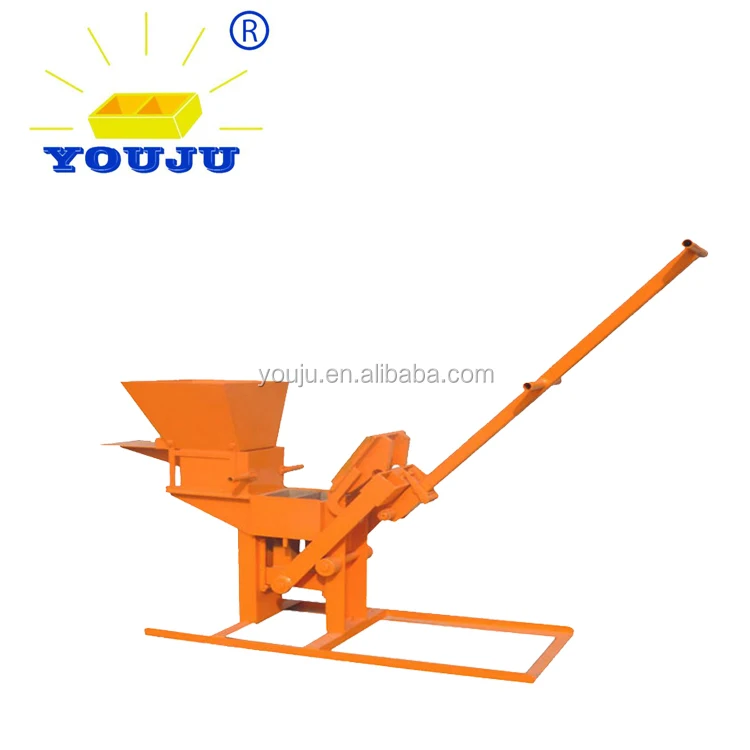
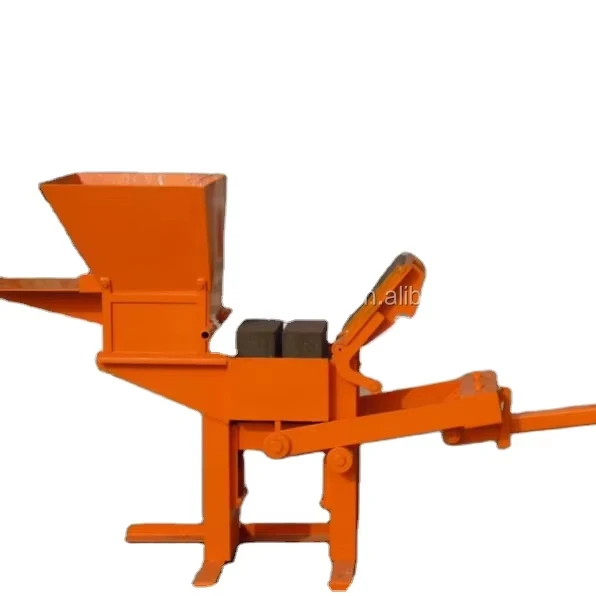
Zero-power manual tier — the LY2-40 anchors the entry point of our block machine range, built for sites where grid electricity is absent and production must still happen.
Technical Specifications
| Parameter |
Value |
| Model |
LY2-40 |
| Product Type |
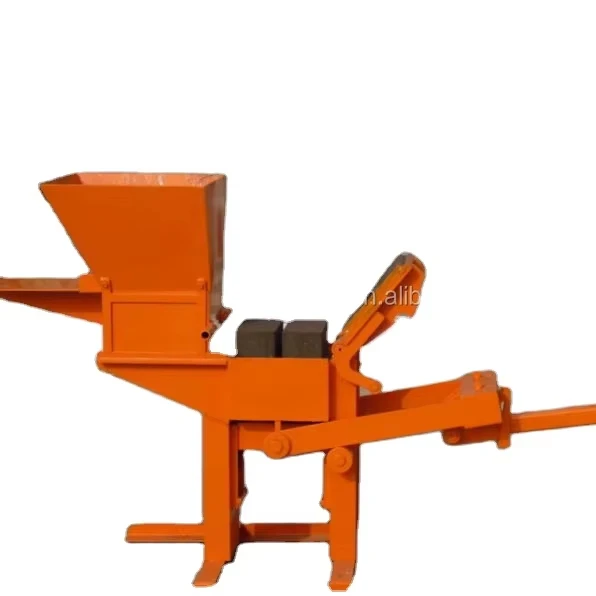
Manual Clay Interlocking Brick Making Machine |
| Total Power |
None — completely manual operation |
| Overall Dimensions (L×W×H) |
1600 × 700 × 1200 mm |
| Net Weight |
200–240 kg |
| Molding Cycle |
30–40 s per stroke |
| Output Capacity |
400–1,000 pcs/day (basis not stated in source — confirm block format, material and wall thickness) |
| Mould Format |
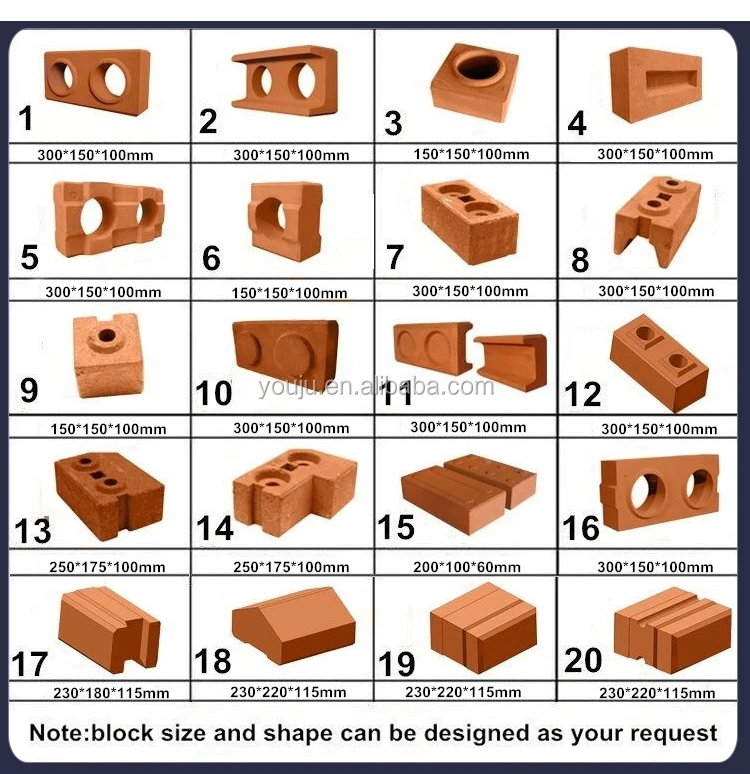
Interlocking brick, moulds changeable for various profiles |
| Lifting System |
Manual |
| Mobility |
Steel wheels for on-site repositioning |
| Optional Mixer |
JFA-1 or JQ350 |
| Warranty |
1 Year |
Application Suitability
| Application |
Material or Output |
| Off-grid rural housing projects |
Local laterite or red soil blended with cement |
| On-site contractor brick production |
Excavated site soil with Portland cement stabilisation |
| Small-scale interlocking block entrepreneurship |
Sandy loam, black cotton soil or crusher dust mixes |
| Community development block programmes |
Clay-rich soil with manual or line-mixer blending |
What "400 to 1000 Pieces a Day" Actually Means for Your Site
Daily output depends entirely on which interlocking profile you press and how your crew feeds the chamber.
When I commissioned a manual clay interlocking brick machine in a village outside Kano, the buyer expected the upper end of the range from day one. The quoted capacity assumed a thin-walled interlocking format, a well-graded soil-cement mix and a crew rotating in short shifts. In reality, the local soil was heavy clay, the crew was still learning the rhythm and the thicker stabilised wall profile added seconds to every stroke. Production settled at a lower band until the mix was adjusted and the team found its pace. A manual clay interlocking brick machine manufacturer should always pair the output figure with the exact block format and mix it was measured on — anything less leaves you guessing on site [NEED_CITE: capacity calculation standards for manual block presses].

Where the LY2-40 Sits in the Machine Range
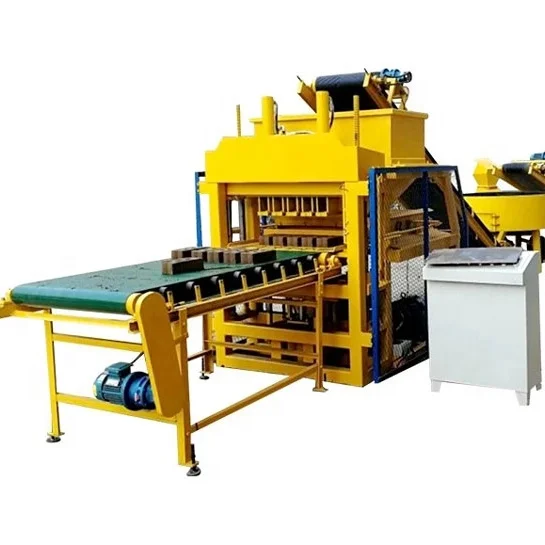
The LY2-40 occupies the zero-power, manual tier — the starting point before semi-automatic and fully automatic lines appear. Buyers who lack grid access or are testing a new market begin here, producing interlocking clay bricks with nothing more than a crew, a mixer and a curing area. As demand grows, the same buyer can move up to a powered semi-automatic press without changing block format, keeping the mould investment and market relationships intact.
Choosing Between Manual and Semi-Automatic Tiers
The decision is rarely about output alone. On several projects across West Africa, I saw contractors choose the manual tier because the building site had no transformer, yet the same contractor ran a semi-automatic line at their yard in the city. The LY2-40 manual clay interlocking brick machine travels on its steel wheels, needs no foundation slab and can be producing within an hour of arrival. The trade-off is that every stroke is human effort, and a crew fatigues. For steady daily volume above a few hundred pieces, the powered tiers absorb the repetitive work and hold cycle consistency shift after shift [NEED_CITE: manual versus semi-automatic block machine labour comparison].
Mould Change, Cycle Time and the Real Format Flexibility
The LY2-40 runs a 30–40 second moulding cycle per stroke. That cycle is a mechanical event — lever down, compression held, lever up — so it stays consistent regardless of operator strength once the team is trained. Moulds are changeable, meaning the same frame can press a standard interlocking profile and then switch to a channel or half-block format. Mould change on a manual press is a bolt-and-pin operation, typically taking minutes rather than the hours that larger hydraulic machines need for cartridge swaps. The key point is that each format carries its own cycle count per day, so the 400–1,000 piece band shifts depending on which profile is loaded and how thick the walls are.
The Cost of Skipping Mix Verification Before You Order
I once spent two extra weeks in Nigeria because the sample bricks looked fine at the factory but fell apart under local sun. The buyer’s soil had a much higher sand fraction than our test mix, and the interlocking bricks lacked enough clay binder to hold together after curing. On a manual press there is no hydraulic pressure to compensate — the soil-cement mix is the structural element. If you order without sending a soil sample, you risk receiving a machine that produces beautiful bricks in the factory but crumbles on your site. Always have your local soil tested for clay-sand-silt fractions and cement percentage before the machine ships [NEED_CITE: soil stabilisation testing methods for interlocking brick production].
Why Sourcing From a Focused Manufacturer Matters
Block machinery is the only product line here, which means the LY2-40 manual clay interlocking brick machine, its moulds, pallets and optional JFA-1 or JQ350 mixer are specified as a matched set rather than sourced from separate vendors. Mould drawings cover the interlocking profiles your market actually sells, including custom profiles drawn to your dimensions. The automation level is selectable — start manual, move to semi-automatic later without scrapping the mould inventory. Installation support includes on-site operator training, and the one-year warranty covers the pressing frame and lever mechanism.
Documentation & Verification
- Line layout with capacity calculation tied to your chosen interlocking profile
- Machine specification sheet confirming 1600 × 700 × 1200 mm footprint and manual cycle data
- Mould drawing and format list for every interlocking profile in your order
- Mixer voltage confirmation sheet when JFA-1 or JQ350 is included
- Factory test record on your soil-cement blend before dispatch
- Operation and maintenance manual with mould-change procedure photographs
Installation, Commissioning & Support
- Level compacted ground with no concrete foundation required for the 200–240 kg frame
- No electrical supply needed at press location; JQ350 mixer requires confirmed site voltage and frequency
- Machine arrives assembled on steel wheels, ready for immediate positioning on production floor
- First-day commissioning includes stroke technique, mould release timing and soil moisture guidance
- Operator training covers crew rotation to maintain consistent 30–40 second cycle rhythm
- Wear parts list identifies lever pins and mould liner plates with reorder part numbers
What to Include in Your First Inquiry
To size the LY2-40 correctly, share your target interlocking brick profile with dimensions, the soil type available on your site and whether you plan to blend by hand or with a line mixer. If your project has a fixed start date, mention it so lead time can be confirmed against current stock. Let us know the local voltage and frequency if you are including the optional JFA-1 or JQ350 mixer, since motor winding must match before the unit leaves the factory.
Frequently Asked Questions
Q: How do I verify the real daily output for my specific interlocking format?
A: The 400–1,000 pcs/day band depends on block wall thickness, soil-cement mix and crew rotation. Request a capacity calculation that names the exact interlocking profile, assumed mix ratio and number of working hours. We provide this before order confirmation so the figure matches your actual production conditions rather than a generic catalogue claim.
Q: Which interlocking mould profiles can the LY2-40 accept?
A: The frame accepts changeable moulds for standard interlocking, channel and half-block formats, as well as custom profiles drawn to your market dimensions. Mould change is a bolt-and-pin procedure completed in minutes. We supply a full format list with drawings before production so you can confirm every profile your customers require.
Q: Does the optional JFA-1 or JQ350 mixer match my local voltage?
A: Mixer motor winding must match your site voltage and frequency before shipment. Provide your local electrical standard — for example 220 V 50 Hz single-phase or 380 V three-phase — during the inquiry stage. We confirm voltage in writing and include a motor nameplate photograph in the factory test record before the machine is packed.
Q: What curing area does the LY2-40 need compared to powered machines?
A: The manual tier produces fewer bricks per shift, so the curing area can be smaller. Plan a level, shaded space of roughly the same footprint as your daily output spread flat, plus room for the next day’s production. No racking system is required initially, though a simple timber shelf setup reduces handling as volume grows.
Q: How do I plan an upgrade from the LY2-40 to a semi-automatic line later?
A: The mould profiles you use on the LY2-40 carry over to semi-automatic tiers in the same range, protecting your initial mould investment. When daily demand consistently exceeds what a manual crew can sustain, we configure a powered press with matching pallet size and automation level while keeping your existing interlocking formats intact.

 Clay interlocking brick