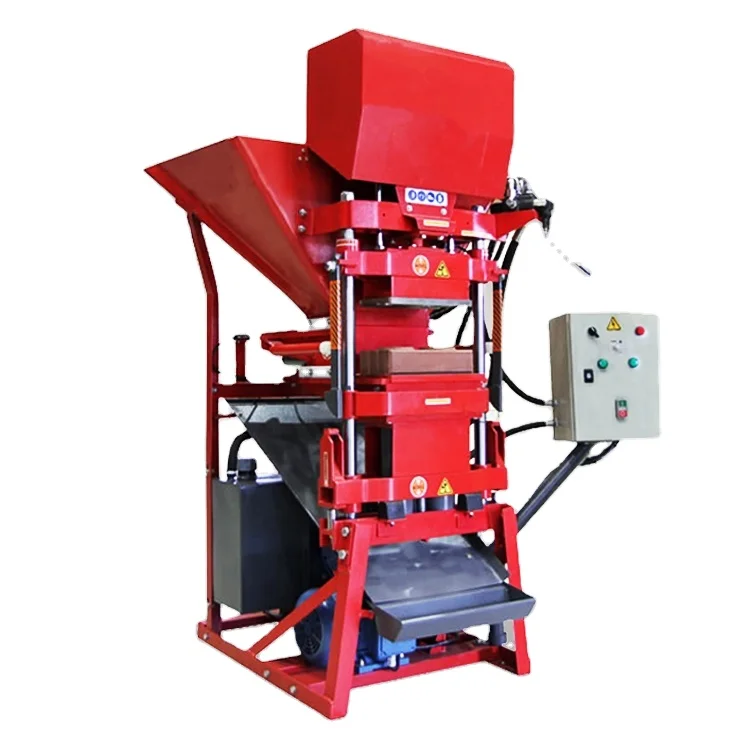
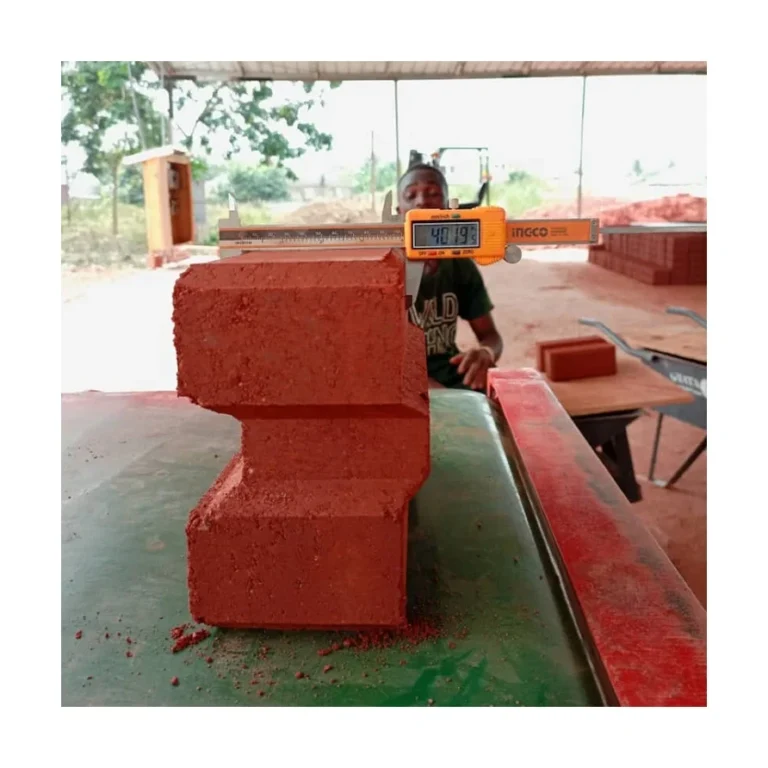
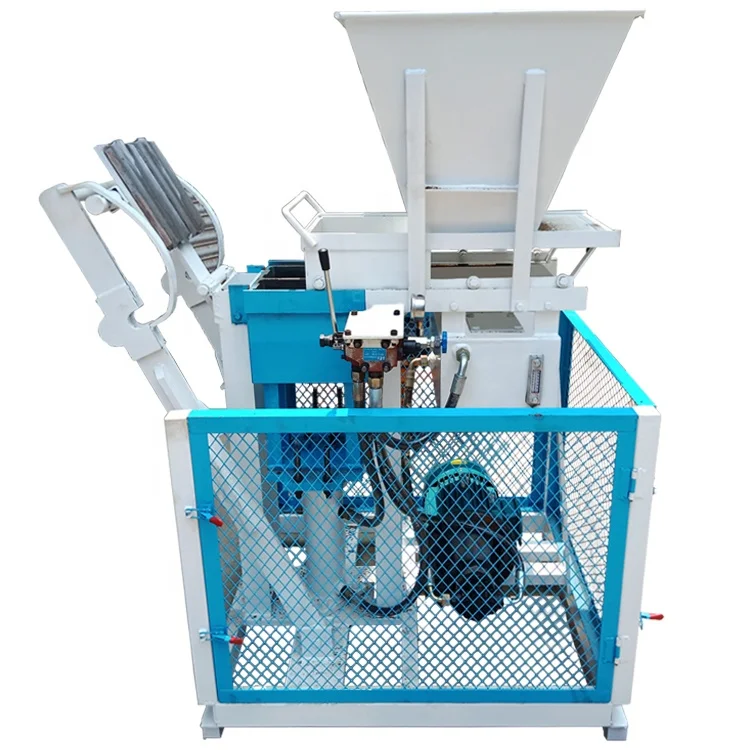
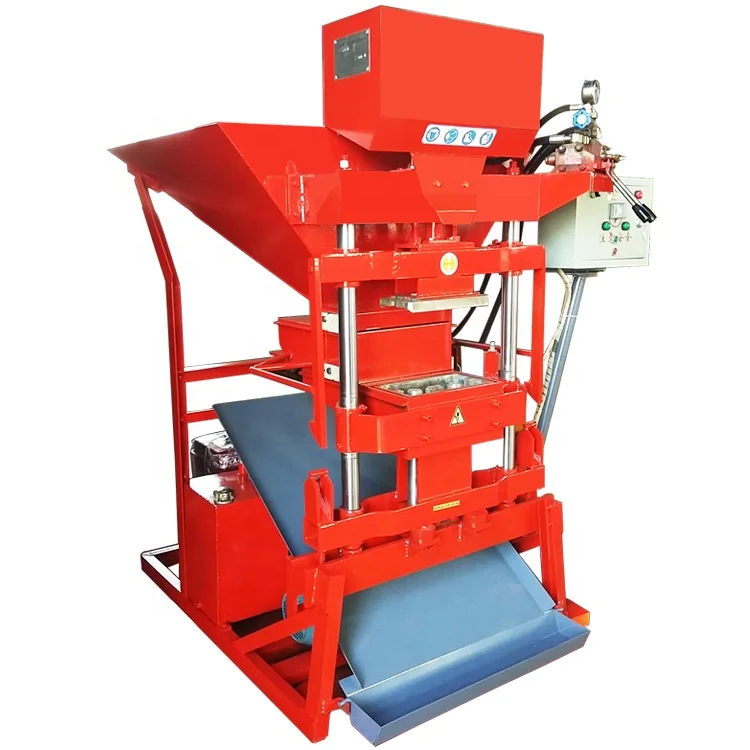
Entry Tier Positioning — a manual clay interlocking brick machine designed for off-grid sites where power availability determines whether production starts at all.
Technical Specifications
| Parameter |
Value |
| Model |
LY2-40 |
| Product Type |
Manual Clay Interlocking Brick Making Machine |
| Operation Mode |
Completely manual hand-pressed operation |
| Rated Power |
No power required |
| Voltage & Frequency |
Not applicable |
| Overall Dimensions (L×W×H) |
1600 × 700 × 1200 mm |
| Net Weight |
200–240 kg |
| Molding Cycle Time |
30–40 s per cycle |
| Output Capacity |
400–1000 pcs/day (basis not stated in source — confirm block format / material / thickness) |
| Mould Format |
Interlocking clay brick, moulds changeable |
| Mobility |
Steel wheels for on-site relocation |
| Assembly State |
Mobile unit, no fixed foundation required |
| Pallet Requirement |
Not applicable (mobile egg-laying type) |
| Recommended Mixer |
JFA-1 or JQ350 Mixer |
| Warranty |
1 year |
Application Suitability
| Application |
Material or Output |
| Rural housing projects |
Local clay soil mixed with cement, laid directly on ground |
| Off-grid development sites |
Clay interlocking bricks produced without electrical supply |
| Contractor on-site production |
Small daily volumes using excavated soil from the building site |
| First-time brick enterprises |
Low-volume interlocking brick runs with minimal capital outlay |
Why the Output Figure Should Never Stand Alone
Quoted capacity figures often assume a block format that does not match what you actually sell. We state output per format so your daily target is realistic before you order.
A manual clay interlocking brick machine manufacturer quoting "up to 1,000 pieces per day" without specifying which interlocking profile, soil-cement ratio, and operator rhythm that figure assumes leaves the buyer guessing. On a Nigerian laterite site, the same machine produced fewer than half that number until the mix moisture was corrected and the pressing rhythm adjusted. The number on the plate means nothing without the conditions attached to it [NEED_CITE:].

Where the LY2-40 Sits in the Complete Range
The LY2-40 occupies the entry tier of a block machine range that extends from this fully manual unit through semi-automatic models and up to high-capacity automatic lines. For a buyer surveying options, understanding this placement matters because it defines what the machine asks of you — no electricity, no fixed plant, no pallet infrastructure — and what it returns in volume.
How Manual Operation Shapes the Worksite
Without motors, PLCs, or hydraulic pumps, the LY2-40 removes the entire electrical dependency from brick production. The operator feeds the soil-cement mix, pulls the hand-press lever, and lifts the mould by hand. This means the machine works anywhere you can roll it on its steel wheels — a remote village build, a road-side contractor yard, or a development plot before the grid connection arrives. The trade-off is throughput, which is governed entirely by crew stamina and mix consistency [NEED_CITE:].
Reading the Specifications Against Your Site Conditions
The 1600 × 700 × 1200 mm footprint keeps the machine portable, but the 200–240 kg net weight still requires two people or a small loader to reposition over rough ground. The 30–40 second molding cycle sets the production rhythm — with a disciplined two-person crew, that translates into a steady cadence, though output varies with the interlocking profile chosen. Larger or deeper mould cavities demand more fill time and greater pressing force, slowing each cycle. The absence of a pallet system means bricks are laid directly on cured ground, which eliminates pallet costs but demands a level, prepared surface at every new production spot.
What Happens When the Mix Is Wrong
The most common failure on manual clay machines is not mechanical — it is material. High-clay soils with uncontrolled moisture stick to mould walls, tear the brick face on release, and force the operator to scrape the cavity clean after every cycle. This alone can cut effective output to a fraction of the quoted figure. A soil sample tested before shipment lets the mould surface finish and mix guidance be matched to what will actually arrive at the machine [NEED_CITE:].
Why Buyers Choose This Point in the Range
A single focus on block machinery means the LY2-40 is not sourced from a trading catalogue — the machine, its moulds, and the recommended mixer are specified as a matched set. Configuration is adjusted against the buyer’s actual soil type and target interlocking profile rather than shipped at a default setting. Mould design covers the interlocking formats the buyer’s local market builds with, and custom profiles can be produced to buyer drawings. Documentation includes a capacity calculation that names the exact brick format assumed, so there is no post-delivery surprise. Installation support and operator training address the mix-to-mould relationship that determines whether the machine performs as intended.
Documentation & Verification
- Line layout showing LY2-40 placement with mixer and curing area dimensions
- Capacity calculation stating the interlocking brick format behind the daily output figure
- Mould drawing and profile list confirming included and optional interlocking formats
- Machine specification sheet with dimensional drawing and net weight for freight planning
- Operation and maintenance manual covering mould change and hand-press servicing
Installation, Commissioning & Support
- No foundation required; level compacted ground is sufficient for the 1600 × 700 mm footprint
- No electrical connection needed — production can begin the day the crate is opened
- Steel wheels allow repositioning across the site without a forklift or crane
- First-run soil-cement mix adjustment guided by pre-shipment sample testing results
- Mould change procedure documented step-by-step in the operation manual
- Wear parts list identifies mould liner and press lever pivot points for remote-site spares stocking
What to Include in Your Inquiry
To match the LY2-40 to your project, share the interlocking brick profile your market uses, the soil type available on site, and the daily volume your build schedule demands. If you are comparing this manual tier against semi-automatic options, mention your power availability and crew size so the right point in the range can be recommended.
Frequently Asked Questions
Q: What block format is the 400–1,000 pcs/day capacity based on?
A: That range is listed without a confirmed format assumption. Output depends on which interlocking profile is fitted, the soil-cement mix, and crew rhythm. We provide a capacity calculation tied to your specific brick dimensions so the daily figure you plan around is the one you will actually achieve on site.
Q: Which mould formats are available, and can custom profiles be made?
A: The LY2-40 accepts changeable moulds for various interlocking clay brick profiles. Standard formats cover common interlocking geometries used in housing construction. Custom mould designs can be produced to buyer drawings when the local market requires a profile outside the standard catalogue.
Q: What soil-cement mix ratio works best for clay interlocking bricks?
A: The ratio depends on your local soil’s clay content and plasticity. High-clay laterite behaves differently from sandy loam. We ask buyers to send a soil sample before shipment so the mix guidance and mould surface finish can be set to your actual material, reducing sticking and breakage from day one.
Q: Where does the LY2-40 sit compared to semi-automatic and automatic machines?
A: It is the entry tier of a range that extends through semi-automatic and fully automatic block lines. If power becomes available or volume targets grow, the upgrade path moves to machines with hydraulic pressing, PLC control, and pallet-based handling — each step adding throughput and reducing manual labour.
Q: What spare parts should be ordered for a remote site?
A: Mould liners experience the most wear from abrasive clay mixes. We recommend ordering spare mould assemblies and press lever pivot components with the initial shipment so production is not interrupted waiting for replacements to reach a site far from supply channels.

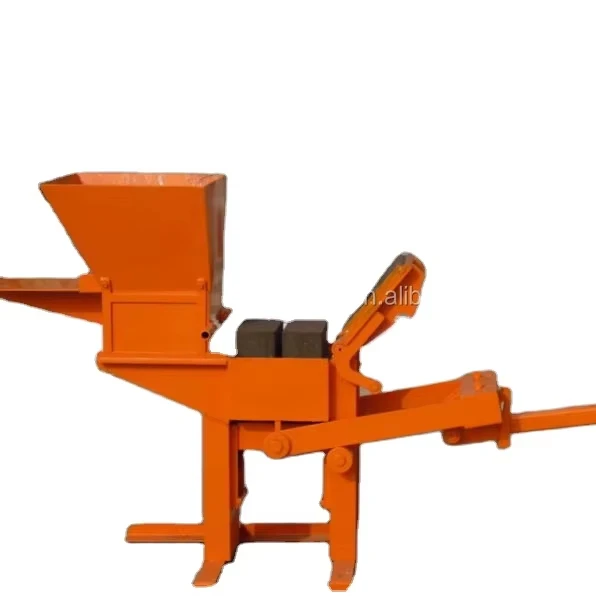
 Clay interlocking brick