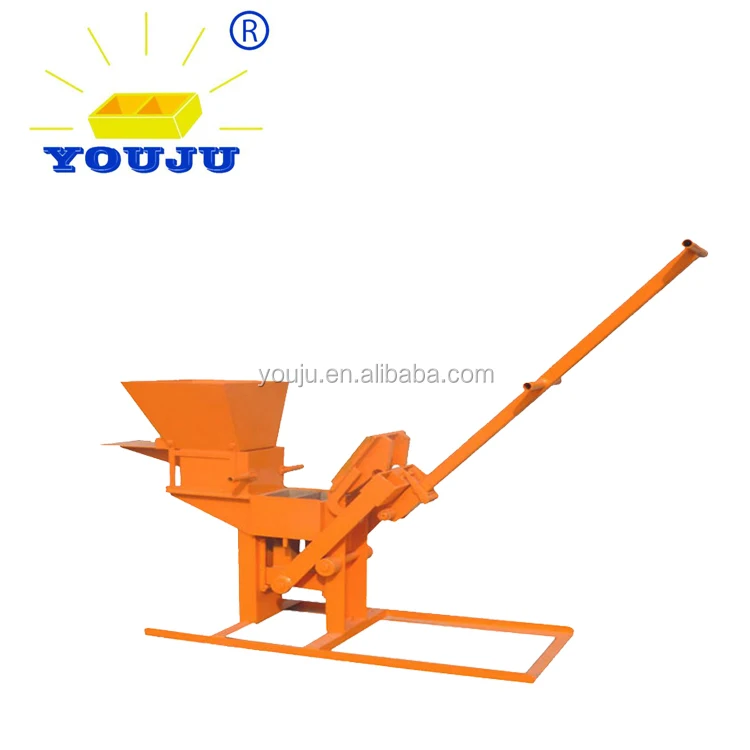
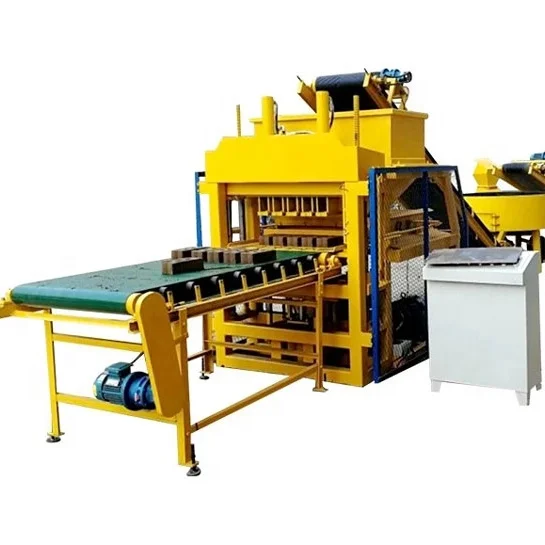
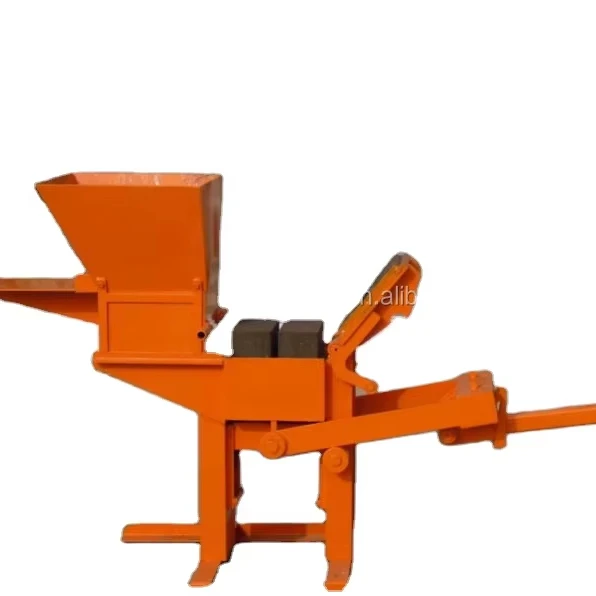
Matched System Configuration — every component from the LY2-10 press through mould, pallet and auxiliary handling is specified as one coordinated unit rather than sourced from disconnected vendors, ensuring the clay interlocking brick output matches the rated cycle from day one.
Technical Specifications
| Parameter |
Value |
| Model |
LY2-10 |
| Product Type |
Compressed Earth Block Machine |
| Rated Power |
7.5 kW |
| Hydraulic Pressure |
16 MPa |
| Molding Cycle |
10 s |
| Output Capacity |
3,000 pcs/8 hours (basis not stated in source) |
| Secondary Output Claim |
6,000 pcs/8 hours for 300×150×100 mm or 250×125×75 mm interlocking blocks, 2 pcs/mould, 750 pcs/hour (source value — verify against manufacturer catalog) |
| Automation Level |
Semi-automatic (automatic material feeding, mould pressing and lifting) |
| Machine Weight |
1,200 kg |
| Overall Dimensions |
1,300 × 1,200 × 1,900 mm |
| Raw Materials |
Clay, soil, earth, mud, concrete, cement, fly ash |
| Labour Requirement |
1–3 people |
| Block Formats |
Interlocking bricks (300×150×100 mm, 250×125×75 mm) |
| Standards |
CE |
Application Suitability
| Application |
Material or Output |
| Small-scale interlocking brick plant |
Clay, soil and cement stabilised mixes |
| On-site construction block production |
Locally sourced earth and cementitious binders |
| Compressed earth block manufacturing |
Clay and soil with cement or lime stabilisation |
| Product range expansion for existing block makers |
Interlocking profiles added to standard solid or hollow block lines |
What "3,000 Pieces per Shift" Actually Means for Your Clay Interlocking Brick Output
Output capacity only matters when tied to the specific block format and mould cavity count you plan to run.
When a compressed earth block machine manufacturer quotes a single daily figure, that number typically assumes the largest cavity count available on the machine. For a buyer producing 300×150×100 mm interlocking bricks at two pieces per mould, the realistic shift output diverges from the headline number. We have seen buyers budget their project timelines around the higher figure, only to find their actual throughput falls short once the correct mould is installed [NEED_CITE: block output capacity stated per format versus aggregate claim]. The LY2-10 secondary specification of 6,000 pcs per 8 hours explicitly references two interlocking block sizes, which gives a more grounded planning baseline — though the source value should be verified against the manufacturer catalog before committing a production schedule.

Where the LY2-10 Sits in the Block Machine Range
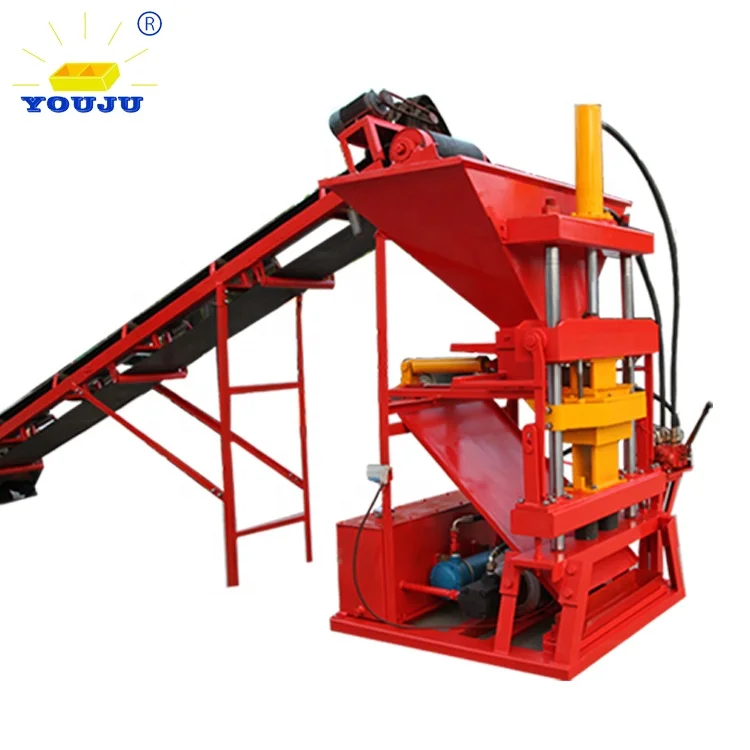
The LY2-10 occupies the semi-automatic tier, positioned between mobile egg-laying machines that produce blocks directly on the ground and fully automatic lines with integrated pallet handling, stacking and cubing. For a buyer surveying options for a first interlocking brick plant or replacing an ageing manual press, this tier offers automatic material feeding, hydraulic pressing and mould lifting while keeping capital commitment and plant footprint compact. The 1,300 × 1,200 mm footprint allows installation in workshops where floor space is at a premium.
Semi-Automatic Operation and the Upgrade Path Forward
The automatic feeding, pressing and lifting cycle removes the heaviest manual interventions from the operator’s shift, reducing the labour requirement to between one and three people depending on material handling and curing arrangements upstream and downstream of the press. This compressed earth block machine manufacturer provides a selectable automation level, meaning a buyer can commission the LY2-10 in its current semi-automatic configuration and add pallet feeding, automatic stacking or cubing modules later as production volume justifies the investment [NEED_CITE: semi-automatic block machine upgrade path options].
Reading the Specifications That Matter for Interlocking Brick Density
The 16 MPa hydraulic pressure rating determines the compaction force applied to the clay or soil mix during each 10-second molding cycle. For interlocking bricks that must achieve structural load-bearing strength without firing, hydraulic pressure and mix design must be evaluated together — a high-pressure press running a poorly graded local clay will still produce weak blocks. The 7.5 kW rated power drives the hydraulic pump and vibration assembly simultaneously, and the semi-automatic cycle sequences material feed, compression and mould release without manual valve operation. The two stated interlocking formats — 300×150×100 mm and 250×125×75 mm — share the same press platform, allowing a single machine to serve multiple product lines within one plant.
The Cost of Overlooking Pallet and Voltage Specifications Before Shipment
Buyers who confirm machine specifications without specifying pallet size, voltage, frequency and PLC display language often face delays after the equipment arrives on site. A pallet dimension that does not match the curing racks or forklift tines already in the workshop forces improvised handling solutions. Voltage mismatches between the machine’s factory wiring and the destination grid require transformer procurement or rewiring before commissioning can begin [NEED_CITE: industrial equipment voltage and frequency compatibility for export markets]. The LY2-10 specification sheet does not state voltage, frequency, pallet size or control language as default values, making pre-production confirmation essential rather than optional.
Why Source the LY2-10 from This Manufacturer
Block machinery is the single focus of this production facility, so the LY2-10 press, its interlocking moulds, pallet specification and supporting handling equipment are configured as one matched system rather than assembled from unrelated suppliers. Machine configuration is set against the buyer’s actual clay or soil mix design, local aggregate availability and target block format instead of a catalogue default. Mould design covers the interlocking profiles the buyer’s market demands, including custom drawings where standard formats do not match local building codes. The automation level is selectable, permitting a semi-automatic start with a defined upgrade route. Installation support includes on-site commissioning and operator training so the first production shift runs with supervision.
Documentation & Verification
- Line layout drawing showing the LY2-10 position relative to material feed and curing area
- Capacity calculation sheet stating block format assumed for each output figure
- Mould drawing and format list for every interlocking profile included in the order
- Hydraulic and electrical schematic matching the as-built LY2-10 unit
- Voltage, frequency and control language confirmation record signed before production
- Factory test record demonstrating cycle time and block ejection on your specified format
Installation, Commissioning & Support
- Floor plan review for the 1,300 × 1,200 × 1,900 mm footprint including material feed clearance
- Dedicated electrical circuit sized for the 7.5 kW rated power and hydraulic pump start-up surge
- Machine dismantling and container loading plan prepared before shipment from factory
- On-site assembly and hydraulic pressure verification at the 16 MPa operating rating
- Mould change procedure training for operators covering all interlocking formats supplied
- Wear parts and mould spring inventory list matched to local sourcing availability at destination
What We Need to Size Your Line Correctly
Provide the target interlocking brick format and dimensional tolerance required by your local building standard, along with the clay or soil type available at your production site and any cementitious stabiliser you plan to use. Confirm the daily output volume you need to meet project or market demand so the capacity calculation reflects your actual format. Share the destination voltage, frequency and preferred control language to avoid commissioning hold-ups after the LY2-10 arrives at your facility.
Frequently Asked Questions
Q: How is the 3,000 versus 6,000 pieces per 8 hours capacity figure derived for the LY2-10?
A: The 3,000-piece figure appears in source material without a stated block format assumption. The 6,000-piece figure explicitly references 300×150×100 mm or 250×125×75 mm interlocking blocks at two pieces per mould and 750 pieces per hour. We recommend verifying both values against the manufacturer catalog before building a production schedule, as actual throughput depends on the specific mould installed, material feed consistency and operator cycle management during the shift.
Q: Which automation tier does the LY2-10 occupy and what upgrades are available?
A: The LY2-10 is a semi-automatic compressed earth block machine with automatic material feeding, mould pressing and mould lifting. Manual tasks remain in pallet handling and output stacking unless auxiliary equipment is added. The upgrade path includes automatic pallet feeding, stacking and cubing modules that can be integrated later as production volume grows, allowing the buyer to scale automation investment alongside market demand.
Q: What voltage, frequency and control language options should I confirm before ordering?
A: These parameters are not stated as default values in the base specification, so they must be confirmed during the quotation stage. Provide your facility voltage, phase configuration and grid frequency, along with the preferred language for any control display or operator interface. Confirming these details before production avoids rewiring work or transformer procurement after the machine arrives at your site.
Q: What plant footprint and utility connections does the LY2-10 require?
A: The machine measures 1,300 × 1,200 × 1,900 mm and weighs 1,200 kg. A level concrete floor capable of supporting the static and dynamic loads during the hydraulic pressing cycle is required. A dedicated electrical circuit rated for the 7.5 kW motor and hydraulic pump inrush current must be available. Adequate clearance around the machine is needed for material feed on one side and block ejection and pallet handling on the other.
Q: Which interlocking mould formats ship standard and can custom profiles be produced?
A: The source specification lists 300×150×100 mm and 250×125×75 mm interlocking block formats as the referenced sizes. Custom mould profiles can be designed and manufactured to buyer drawings where local building codes or market demand require interlocking geometries outside these two standard formats. Mould change procedure and tool requirements are documented so that format switching fits within the planned shift schedule.

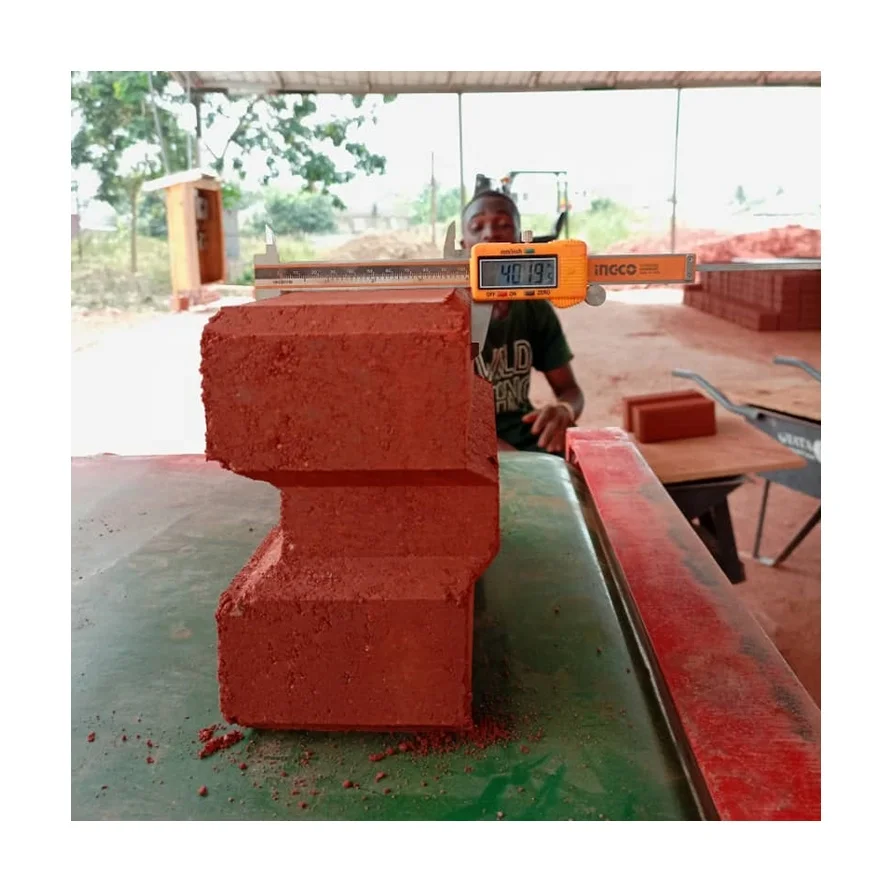
 Clay interlocking brick