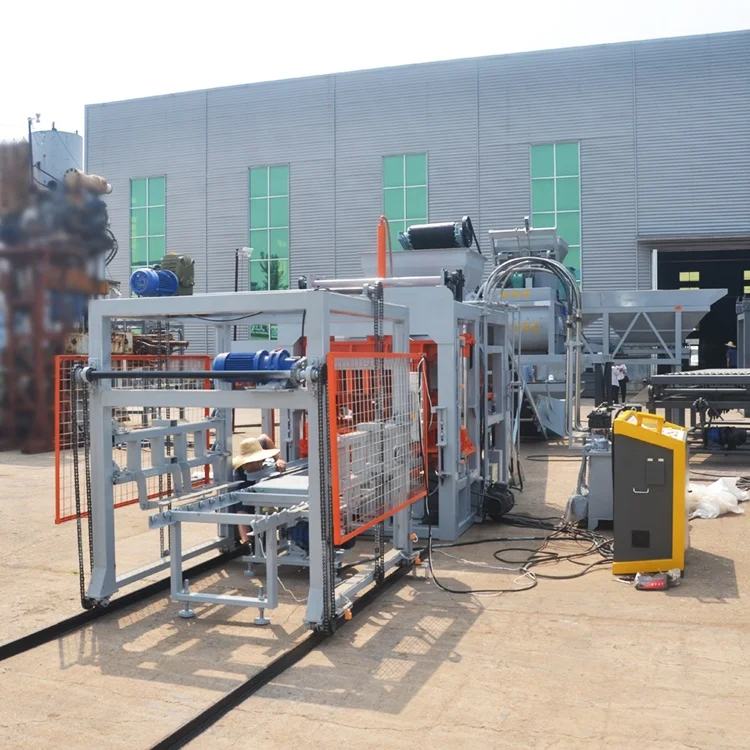
Range-matched selection — the LY2-10 sits within a full span from manual egg-layers to high-output automatic lines, so buyers can match automation tier and footprint before committing to a configuration.
Technical Specifications
| Parameter |
Value |
| Model |
LY2-10 |
| Product Type |
Hydraulic Interlocking Clay Brick Making Machine |
| Overall Dimensions (L×W×H) |
1300×1800×2400 mm |
| Net Weight |
1200 kg |
| Power Source Option |
Electric motor or Diesel engine |
| Rated Power |
7.5 kW / 12 HP |
| Voltage & Frequency |
380 V, 3-phase, 50 Hz (customizable to local voltage) |
| Hydraulic Pressure |
16 MPa |
| Cycle Time |
10 s |
| Output Capacity |
720 pcs/h based on 300×150×100 mm or 250×125×60 mm interlocking brick, 2 pcs per mould |
| Pcs per Mould |
2 |
| Pallet Size |
N/A — pallet-less operation |
| Automation Level |
Semi-automatic or Automatic (configurable per buyer request) |
| Motor Brand Option |
Chinese Siemens Brand |
| Warranty |
1 year (excluding wearing parts) |
Application Suitability
| Application |
Material or Output |
| Interlocking brick production |
Clay-cement mix (cement 6–8 %, clay 80–90 %, water 3 %) |
| Full clay interlocking brick |
Clay 97 %, water 3 % |
| Paver production |
Clay-cement or concrete mix, format to be confirmed with mould selection |
| On-site or small plant block making |
Pallet-less operation suitable for contractors without fixed factory infrastructure |
| First brick plant setup |
Semi-automatic configuration lowers initial capital for entrepreneurs |
What "720 Pieces per Hour" Leaves Out for a Hydraulic Interlocking Brick Machine Manufacturer
Output figures only hold when the block format and cycle time are stated together.
I have watched buyers sign contracts based on a single hourly number, then discover on commissioning day that the figure assumed a small paver while they needed a 300×150×100 mm interlocking brick. The press still cycles, but fewer pieces drop per stroke and the daily total falls well short of the business plan. When a hydraulic interlocking brick machine manufacturer quotes capacity, the format and the cycle time must sit on the same line, or the number is meaningless [NEED_CITE: capacity calculation standards for block making equipment].

Placing the LY2-10 on the Automation Spectrum
The LY2-10 bridges the gap between entry-level mobile presses and fully automatic pallet-return lines. Buyers who need interlocking bricks but are not ready to invest in conveyor-based stacking can specify the semi-automatic variant, where an operator feeds the mix and clears finished bricks, then switch to the automatic variant later by adding a PLC panel and pallet feeder. This step-wise approach keeps the initial footprint close to the machine’s own 1300×1800 mm outline while leaving room to expand without replacing the press itself.
Why the Range View Matters Before the Spec Sheet
Every tier above and below the LY2-10 shares the same hydraulic core logic but differs in how material arrives and product leaves the press. Higher-output automatic lines add a batching station, a pallet circulation loop and a cubing stacker; lower-output mobile units drop bricks directly on the ground. Choosing the right tier first prevents over-engineering the site or under-sizing the daily volume. A hydraulic interlocking brick machine manufacturer that only shows one model rarely exposes these boundaries, leaving the buyer to discover the mismatch after the container arrives [NEED_CITE: block plant layout planning for different automation tiers].
Reading the Numbers That Actually Shape Daily Output
Hydraulic pressure at 16 MPa determines how tightly the clay-cement mix is compacted before the mould lifts. Too low a pressure and the interlocking nibs break during handling; too high and the clay fines migrate, leaving weak edges. The 10-second cycle time is achievable only when the mix moisture stays near 3 % and the operator clears the previous set before the next press stroke begins. Voltage at 380 V, 3-phase, 50 Hz must be confirmed against the site transformer, because running a 7.5 kW motor on 415 V without adjusting the contactor shortens winding life. The pallet-less design eliminates a recurring consumable cost, but it also means the curing area must be level and within a few metres of the press, or freshly pressed bricks crack during manual transfer.
The Cost of Skipping the Range Conversation
Buyers who jump straight to the cheapest tier often find the manual pallet handling cannot keep pace with the press, so the stated cycle time is never reached. Others over-spec a fully automatic line for a market that only absorbs two brick formats, leaving expensive mould-change hardware idle. A third common gap is voltage: the machine arrives wired for 380 V while the site runs 440 V, delaying commissioning until a new transformer is sourced locally [NEED_CITE: voltage mismatch delays in exported machinery installations].
Why Source This Tier Through a Range-Focused Supplier
The LY2-10 is specified as one matched set — press, mould, power unit and optional PLC — rather than assembled from separate catalogue pages. Capacity calculations state the exact brick format behind every output figure, so daily planning starts from a known baseline. Mould design follows the buyer’s target interlocking profile, including custom drawings when local building codes require non-standard nib geometry. Automation level remains selectable at order stage, meaning the same press can ship semi-automatic today and accept an automatic upgrade kit later. Factory testing runs the actual clay-cement mix the buyer will use, recording cycle time and brick density before the machine is crated.
Documentation & Verification
- Line layout drawing showing LY2-10 footprint within semi-automatic or automatic arrangement
- Capacity sheet stating 720 pcs/h against 300×150×100 mm or 250×125×60 mm format
- Hydraulic circuit diagram with 16 MPa relief valve setting marked
- Voltage and frequency confirmation sheet signed before production starts
- Factory test record logging cycle time and brick density on buyer’s mix
- Packing photographs showing dismantling points for container loading
Installation, Commissioning & Support
- Level concrete pad of at least 2×3 m to accommodate the 1300×1800 mm base and manual brick-clearance space
- Dedicated 3-phase circuit matching confirmed voltage, with 32 A breaker for the 7.5 kW motor variant
- Machine ships fully assembled; diesel variant requires only fuel line and exhaust routing on site
- First-day commissioning includes hydraulic pressure adjustment to 16 MPa and cycle timing to 10 s
- Operator training covers mix moisture control, mould release technique and daily grease points
- Wear parts list identifies mould liner and hydraulic seal kit for first reorder
Before You Request a Quote
Tell us the exact interlocking brick dimensions your market sells, the daily volume you must hit in an eight-hour shift, and whether your site has stable 3-phase power or needs the diesel option. Share a sample of your local clay so we can confirm the cement percentage and adjust hydraulic pressure before the test run. If you already own a curing yard or forklift, mention its dimensions so we can align the manual handling layout around the LY2-10 footprint.
Frequently Asked Questions
Q: How is the 720 pcs/h capacity calculated, and which block format does it assume?
A: The figure assumes a 10-second cycle pressing two 300×150×100 mm or 250×125×60 mm interlocking bricks per mould. Different formats change the piece count per stroke and may require a longer fill time, so daily output must be recalculated for each target brick size.
Q: Where does the LY2-10 sit in the range compared to higher-output automatic lines?
A: It occupies the mid-tier pallet-less position, suited for contractors and first-plant entrepreneurs. Higher tiers add pallet circulation, automatic stacking and cubing to reach larger daily volumes, but require more floor space and capital.
Q: Can I start with semi-automatic and upgrade to full automatic later?
A: Yes. The press frame and hydraulic core are identical across both variants. Adding a PLC panel, automatic feed hopper and pallet feeder at a later stage converts the line without replacing the main cylinder or mould clamps.
Q: What voltage and frequency configurations are available for my market?
A: The standard build is 380 V, 3-phase, 50 Hz, but the motor winding and control transformer can be set to match local grids. Voltage and frequency must be confirmed before production so the correct contactor and overload relay are installed.

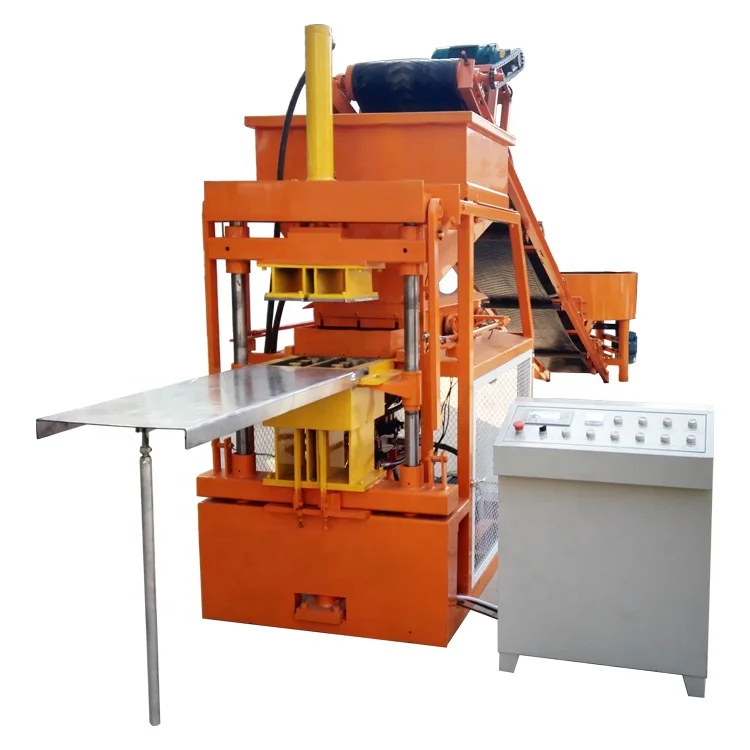
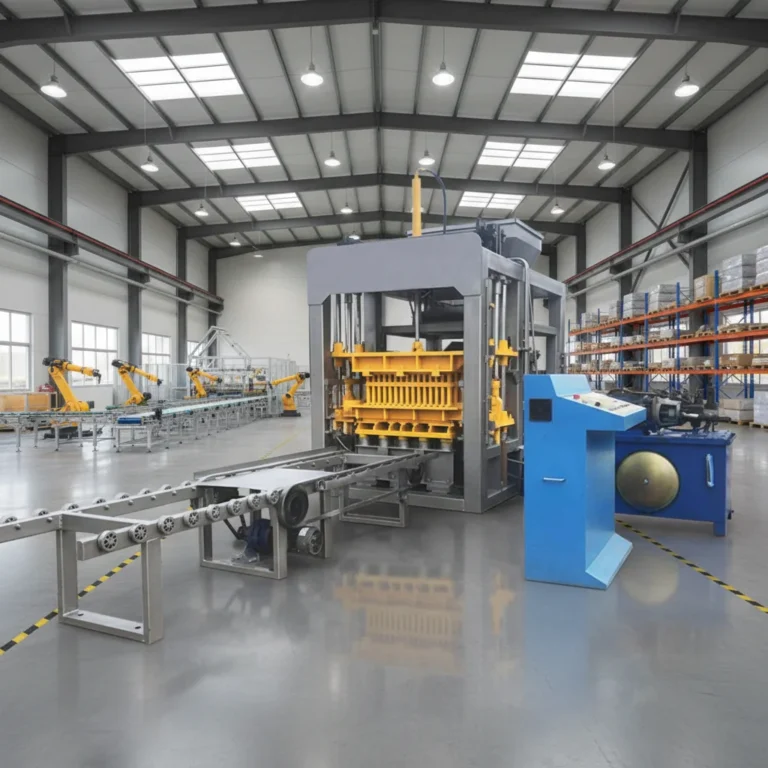 Automatic block machine
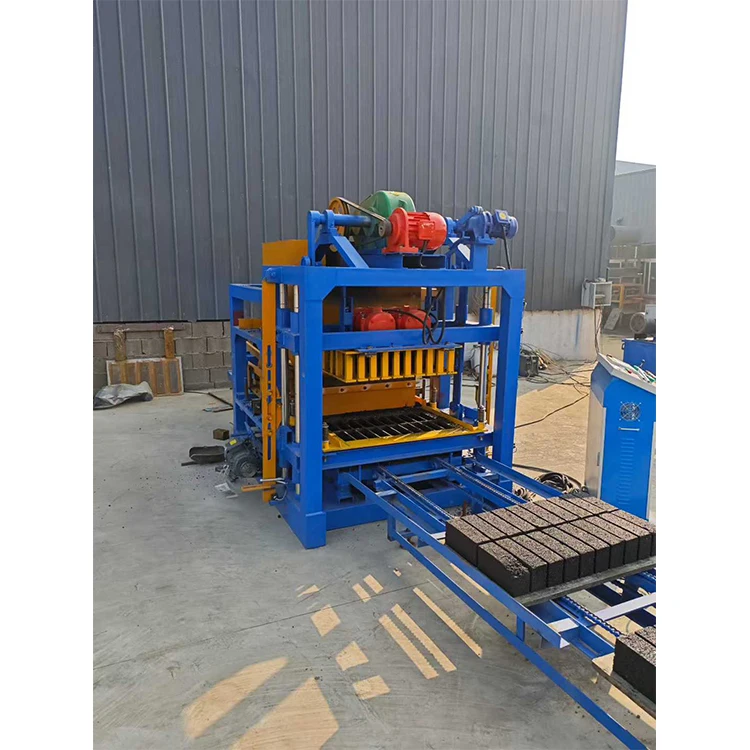
![QTJ4-25 Automatic Block Making Machine – Manufacturer 字符数:53(含空格) 结构匹配:0 → [品类词] for [应用或物料] – [站点修饰词],其中机型号前置保留(规则2) 站点修饰词:Manufacturer(全品类目录类角色,shiyueblockmachine.com)](https://shiyueblockmachine.com/wp-content/uploads/2026/04/H82ccaca512804203b7142f1a1233c7bf1.webp)