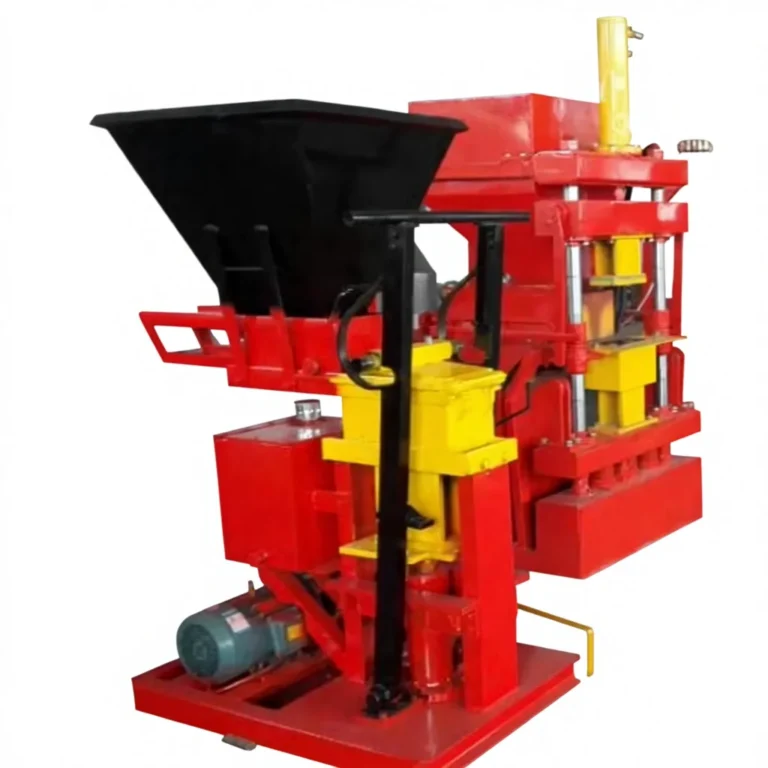
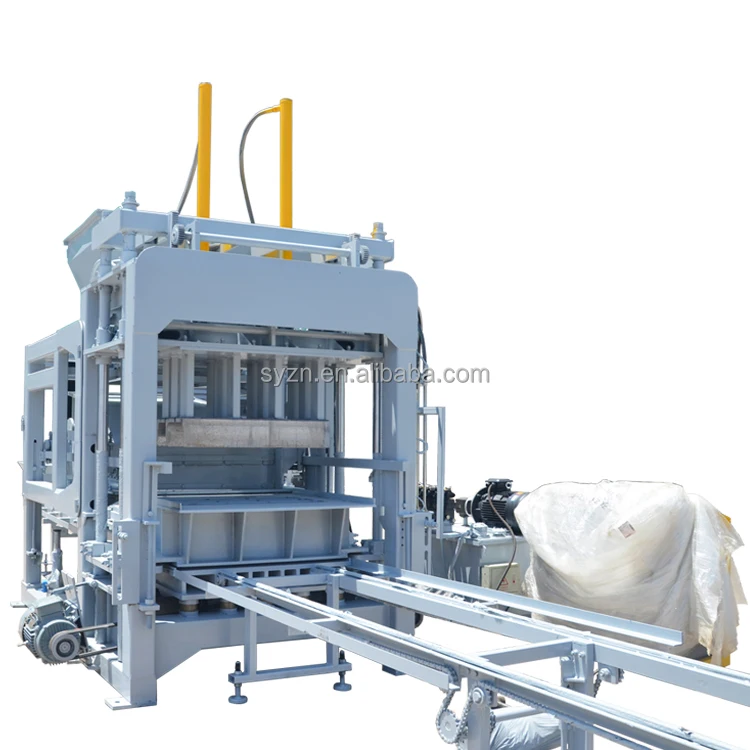
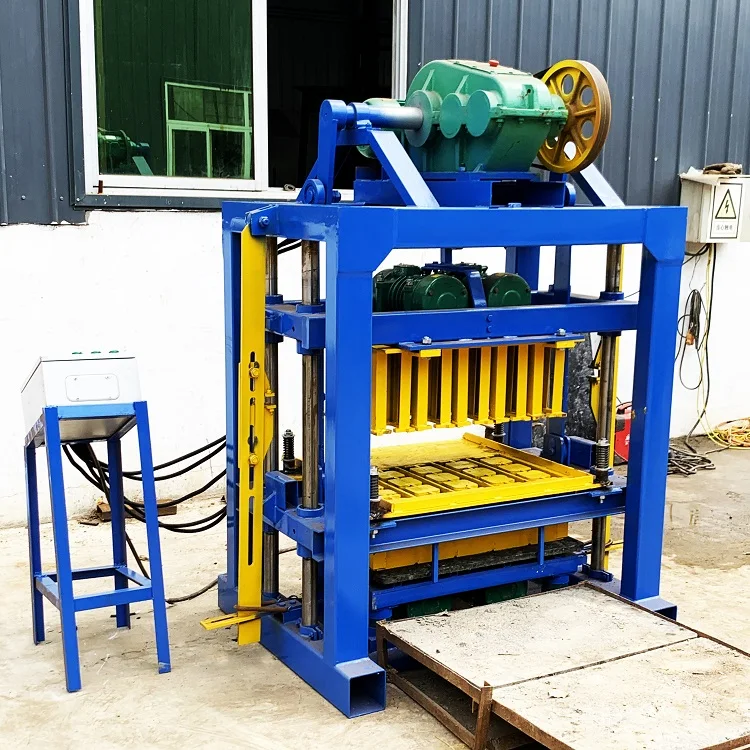
Machine, mould and pallet specified as one system — the QTJ4-40 entry is sized with its 850×450 mm pallet, matching mould set and platform vibration so first-time buyers know exactly what format and curing space they are committing to before the machine ships.
Technical Specifications
| Parameter |
Value |
| Model |
QTJ4-40 |
| Product Type |
Manual Concrete Block Making Machine |
| Main Vibration Form |
Platform Vibration |
| Vibration Frequency |
2800 r/min |
| Pallet Size |
850×450 mm |
| Machine Weight |
1 T |
| Overall Dimensions (L×W×H) |
1350×1460×1800 mm |
| Factory Area |
200 m² |
| Worker Requirement |
1-3 people |
| Power Source Option |
Diesel and Electric Motor (motor rating and voltage basis to be confirmed) |
| Control System |
Manual operation with top die push-pull and automatic scraper |
| Capacity (400×200×200 mm hollow block) |
360 pcs/h, 2880 pcs/day, 4 pcs/mould |
| Capacity (400×150×200 mm hollow block) |
500 pcs/h, 4000 pcs/day, 5 pcs/mould |
| Capacity (225×112.5×60 mm interlocking/paver) |
900 pcs/h, 7200 pcs/day, 9 pcs/mould |
| Raw Material Compatibility |
Concrete, cement, fly ash, crushed stone, sand, dust, gravel, slag |
| Applied Products |
Hollow blocks, solid blocks, pavers, interlocking blocks, curbstone, colored pavers |
| Stacking Method |
Manual |
| Automation Level |
Manual / Semi-manual |
Application Suitability
| Application |
Material or Output |
| Small-scale hollow block production |
Cement, sand and crushed stone mix for 400×200×200 mm and 400×150×200 mm formats |
| On-site contractor block making |
Local aggregate and fly ash blended for housing project hollow and solid blocks |
| Paver and interlocking brick runs |
Fine aggregate and cement for 225×112.5×60 mm interlocking and colored paver formats |
| Start-up block plant entry tier |
Multi-format output with manual pallet handling across hollow, solid and curbstone moulds |
What "2800 Pieces per Day" Actually Means on a Manual Concrete Block Making Machine
A single headline number hides the format it was measured on, so the real question is which block you plan to sell.
I have seen buyers commit to a manual concrete block making machine because the brochure said 2800 pieces per shift, only to discover that figure assumed a small paver mould. When they switched to the 400×200×200 mm hollow block their market actually demanded, daily volume dropped to roughly a third. That gap is not a machine fault — it is a quotation that left out the format assumption. [NEED_CITE: block format and cycle time relationship in manual block production]

Where the QTJ4-40 Sits on the Full Range
The QTJ4-40 is the entry tier of the Shiyue stationary block machine range. It is a reformed manual machine with platform vibration at 2800 r/min and a top die push-pull mechanism, designed for buyers who need reliable output without the capital outlay of a semi-automatic or fully automatic line. If your daily volume requirement stays within the reach of manual pallet handling and a small crew, this tier keeps investment low while leaving room to step up later.
How the Range Scales Beyond This Tier
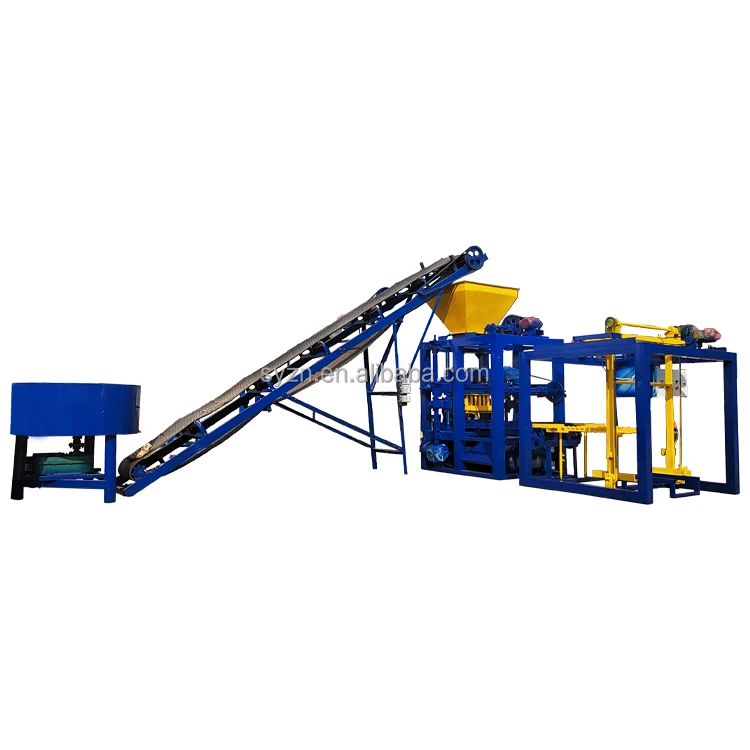
Moving up the range, semi-automatic models add conveyor-fed pallet systems and reduced manual labour, suited to plants targeting higher daily throughput. Fully automatic tiers bring in batchers, stackers and cubing systems that remove most manual handling from the pressing station through to the curing yard. The QTJ4-40 occupies the starting position so entrepreneurs and contractors can validate their market before scaling the plant footprint and capital commitment. [NEED_CITE: investment and footprint comparison across block machine tiers]
Vibration, Pallet and Mould as a Matched Set
The platform vibration at 2800 r/min compacts the concrete mix within the mould cavity, and the resulting block density depends directly on how well that vibration force suits your specific aggregate and cement ratio. The 850×450 mm pallet size determines the mould cavity area and therefore how many blocks form per cycle — 4 pieces for a 400×200×200 mm hollow block, up to 9 pieces for a 225×112.5×60 mm paver. Confirming pallet material and dimensions against your existing curing yard and forklift prevents handling mismatches once the machine arrives.
The Cost of Skipping Voltage and Power Checks
A manual block machine sitting in a container is straightforward to ship, but arriving at a site where the local supply does not match the motor specification means weeks of downtime while transformers or replacement motors are sourced. I once dealt with an export order where the frequency mismatch was caught only after the machine was on the floor — the motor ran, but at the wrong speed, and vibration force dropped enough to weaken every block in the first run. Locking down voltage, frequency and motor type before production begins is not paperwork — it is the difference between commissioning in days or weeks. [NEED_CITE: voltage and frequency standards by export market]
Why Buyers Source This Tier Through Shiyue
Block machinery is the single focus here, so the QTJ4-40 is not an isolated press but part of a range where mould, pallet and handling are specified as a matched set. Machine configuration is discussed against your actual mix design and local aggregate, not pulled from a catalogue default. Mould design covers the formats your market sells, with custom drawings available when standard options do not fit. The automation level is selectable across the range, meaning a buyer can start at this manual tier and move to semi-automatic or automatic lines without switching suppliers. Documentation from factory test records to wear parts lists ships with the machine.
Documentation & Verification
- Factory test record run on your specified block format before dispatch
- Machine specification sheet confirming motor type and pallet dimensions
- Mould drawing and format list for each cavity included in the order
- Pallet material specification matched to your curing yard conditions
- Operation and maintenance manual with wear parts schedule
Installation, Commissioning & Support
- 200 m² factory area with level concrete slab for stable platform vibration
- Confirm motor type, voltage and frequency before electrical connection on site
- Machine ships with manual pallet handling — plan curing rack space around 850×450 mm pallets
- Top die push-pull mechanism calibrated during commissioning for consistent block height
- Operator training covers mould change sequence and scraper adjustment
- Wear parts list provided for vibration motor and scraper components
What to Share With Your Inquiry
Before sizing a manual concrete block making machine, it helps to know which block format your market actually buys, the daily volume you need to hit, and what aggregate and cement are available locally. Share your site power supply voltage and frequency so the motor and control specification can be confirmed before production. If you already have a curing yard and forklift, send the pallet dimensions you are using so the pallet spec can be matched from the start.
Frequently Asked Questions
Q: How is real daily output calculated for each block format on the QTJ4-40?
A: Daily output depends on the mould cavity count and cycle time for each format. The 400×200×200 mm hollow block produces 4 pieces per mould, yielding around 2880 pieces over an 8-hour shift. The 225×112.5×60 mm paver mould holds 9 pieces per cycle, reaching approximately 7200 pieces in the same period. Always confirm which format the quoted figure assumes.
Q: Where does the QTJ4-40 sit on the Shiyue range compared to semi-automatic and automatic tiers?
A: It is the entry tier, designed for low-capital start-ups and on-site contractor production with manual pallet handling. Semi-automatic tiers add conveyor pallet feeding, while fully automatic lines include stacking and cubing. The range is structured so buyers can begin here and scale up within the same supplier ecosystem.
Q: What voltage, frequency and motor options are available for different export markets?
A: The QTJ4-40 can be configured with either a diesel engine or an electric motor, with voltage and frequency matched to your local supply. These specifications must be confirmed and locked before production begins to avoid commissioning delays on site.
Q: How long does a mould change take and what formats can this machine produce?
A: The machine supports hollow blocks, solid blocks, pavers, interlocking bricks and curbstone through mould swaps on the same 850×450 mm pallet platform. Mould change time depends on operator familiarity and tool readiness, so planning a dedicated change procedure keeps format switching within a practical window.
Q: What is the recommended factory area and site preparation for the QTJ4-40?
A: The machine requires approximately 200 m² including raw material storage and pallet handling space. A level concrete slab is needed for stable platform vibration. The curing yard must accommodate the 850×450 mm pallet footprint and allow forklift or hand-cart access for manual stacking and retrieval.

 Stationary block machine