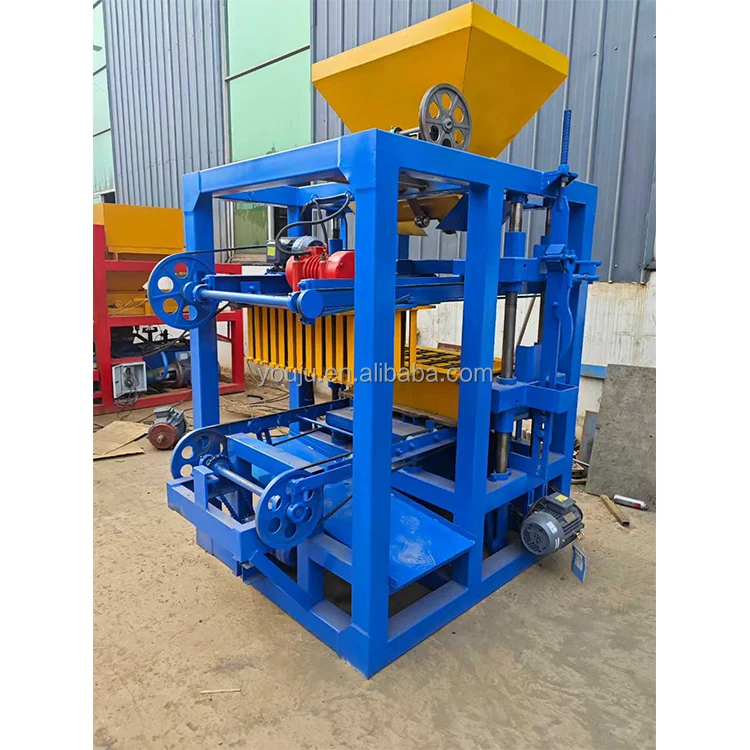
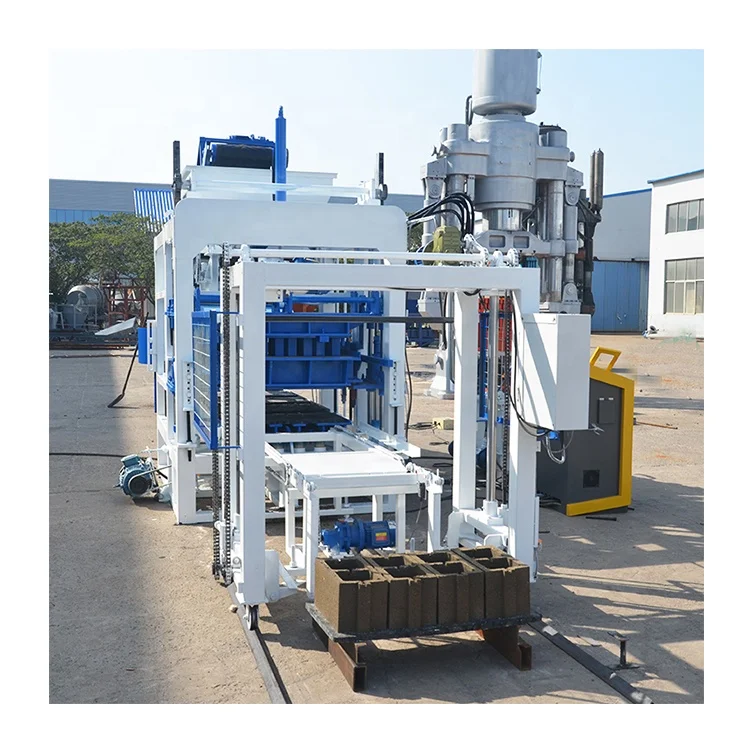
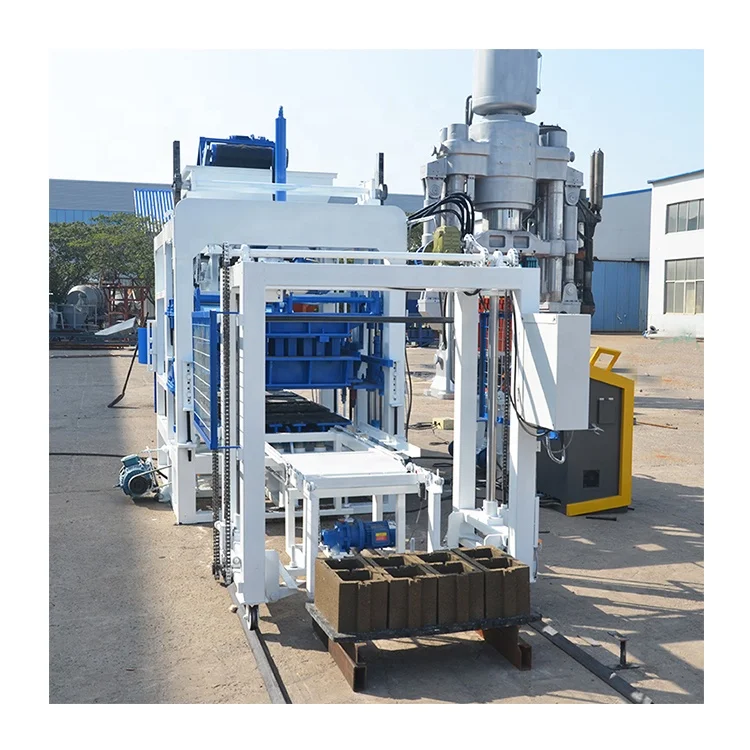
Matched Line Design — The QT8-15 automatic concrete block making machine is positioned as a mid-tier stationary option within the full range, sized for buyers stepping up from semi-automatic units without overbuilding capacity.
Technical Specifications
| Parameter |
Value |
| Model |
QT8-15 |
| Product Type |
Automatic Concrete Block Making Machine |
| Overall Dimensions (L×W×H) |
8300 × 1860 × 3000 mm |
| Total Mass |
9 T |
| Rated Pressure |
21 MPa |
| Main Vibration Form |
Platform Vibration |
| Vibration Frequency |
2800–4500 r/min |
| Vibration Force |
60 kN |
| Pallet Size |
950 × 900 mm |
| Molding Cycle |
15–25 s (basis to be confirmed per block format and mix) |
| Overall Power |
55.5 kW |
| Demolding Method |
Hydraulic |
| General Water Consumption |
12 T/Day |
| Suggested Factory Area |
600 m² |
| Control System |
PLC with human-machine interface |
| Automation Level |
Completely automatic |
Application Suitability
| Application |
Material or Output |
| Hollow block production for building walls |
Crushed stone, sand, cement, fly ash |
| Solid block manufacturing for load-bearing structures |
Gravel, sand, cement, slag blends |
| Paving block and colored paver runs |
Fine aggregate, cement, pigment additives |
| Interlocking brick and kerbstone forming |
Coarse aggregate, sand, cement mixtures |
| Porous brick for permeable surfaces |
Lightweight aggregate, cement, graded dust |
Where the QT8-15 Sits Across the Full Machine Range
Buyers comparing tiers need a clear map before looking at output numbers.
Catalogs often list an automatic concrete block making machine manufacturer’s equipment by a single cycle-time figure, leaving out which block format, mix design, and pallet configuration produced that number. A first-time plant buyer might assume the QT8-15 matches the throughput of a larger continuous line, or a contractor upgrading from a mobile egg-layer might not realize how much auxiliary equipment separates a semi-automatic setup from a fully automatic one. I have seen buyers commit to a mid-tier press and then discover the pallet return system, stacking station, and curing racks were never in the quotation. [NEED_CITE: common scope gaps in block plant quotations] Understanding where this model fits prevents those surprises and sets a realistic budget from day one.

Positioning Within the Stationary Lineup
The QT8-15 occupies the middle of our stationary automatic concrete block making machine range. Below it, semi-automatic models require manual pallet handling and hand-stacking, which keeps investment low but limits daily volume. Above it, high-capacity automatic lines add continuous pallet circulation, automatic cubing, and integrated curing rack handling for round-the-clock output. This model bridges the gap: it runs a fully automatic press cycle with PLC-controlled dialogue operation, yet its footprint and power draw stay manageable for a plant that is still scaling.
What This Tier Means for Your Floor Plan
At the QT8-15 tier, buyers should plan for roughly 600 m² of covered production and curing space, a dedicated three-phase power supply rated for 55.5 kW continuous draw, and a water feed capable of sustaining 12 tonnes per day during peak mixing. The 8300 mm machine length leaves room on either end for a mixer discharge point and a pallet magazine, but the layout must account for forklift travel between the press exit and the curing yard. [NEED_CITE: typical plant layout considerations for mid-tier stationary block presses] Skipping this spatial planning stage often forces buyers to rearrange the line after commissioning, wasting the first production week on repositioning.
Reading the Specs That Actually Shape Output
The 21 MPa rated hydraulic pressure and 60 kN vibration force work together to compact the concrete mix into the mould cavity. Higher vibration frequency — here adjustable between 2800 and 4500 r/min — improves surface finish on pavers and interlocking bricks, while the hydraulic pressure determines how densely the aggregate particles lock together, directly influencing block compressive strength. The 950 × 900 mm pallet size defines the maximum mould footprint; any block format must fit within that envelope, and the pallet material must withstand repeated vibration cycles without warping. The 15–25 second molding cycle is a range, not a fixed number: a thin-walled hollow block with a fast-draining aggregate mix will hit the lower end, while a thick interlocking paver with a stiff, low-slump mix pushes toward the upper end. Confirming the cycle time against your specific format and local raw materials is essential before projecting daily output.
The Hidden Cost of Skipping Configuration Checks
When a buyer orders a QT8-15 based only on brochure specs, the machine may arrive with a PLC display in a language the operators cannot read, a voltage rating that does not match the local grid, or moulds for a block format the local market does not buy. I once worked with a Middle East contractor who specified a high-output press without confirming the local volcanic ash aggregate they relied on; the vibration parameters calibrated for standard river sand left blocks crumbling at demolding. The machine was not defective — it was simply configured for a different material universe. [NEED_CITE: impact of aggregate variation on block compressive strength] These mismatches do not show up until the first production run, by which point the machine is bolted to the floor and the shipping container is long gone.
Why Source This Tier From a Single-Focus Manufacturer
Our range covers every stationary tier from small workshop semi-automatic units to high-capacity continuous lines, so the QT8-15 is specified in context rather than sold in isolation. Machine, mould, pallet, and handling equipment are matched as one system, not assembled from unrelated suppliers. Configuration is set against your actual mix design and target block format, not a default catalog setting. Mould design covers the formats your market actually sells, with custom drawings available when standard options fall short. Automation is selectable: a buyer can start the QT8-15 with manual pallet feeding and add automatic stacking later as volume grows, protecting the initial investment while leaving an upgrade path open.
Documentation & Verification
- Line layout drawing showing QT8-15 placement within your 600 m² floor plan
- Capacity calculation stating the specific block format and mix assumed
- Voltage and PLC display language confirmation sheet signed before production
- Pallet specification matched to your curing area dimensions and forklift capacity
- Factory test record documenting cycle times on your chosen mould format
- Hydraulic and electrical schematic for your maintenance team
Installation, Commissioning & Support
- Foundation plan matching the 9 T machine mass and platform vibration load points
- Dedicated power circuit sized for 55.5 kW continuous draw at your local voltage and frequency
- Dismantled shipment with reassembly sequence documented in the operation manual
- On-site commissioning with cycle-time calibration against your raw material and mix ratio
- Operator training covering PLC interface navigation and mould change procedure
- Wear parts and mould inventory list supplied before the first replacement cycle is due
What We Need to Move Forward
To size the QT8-15 correctly within the full range, we need your target block formats with dimensions, the daily output you expect per format, and the raw materials available locally including aggregate type and gradation. Share your site’s three-phase voltage and frequency, preferred PLC display language, and existing forklift and curing rack specifications so the pallet size and automation scope can be confirmed before quotation.
Frequently Asked Questions
Q: Where does the QT8-15 fit compared to semi-automatic and higher-tier automatic models?
A: It sits in the mid-to-high automatic tier, offering PLC-controlled press cycles and hydraulic demolding above what semi-automatic units provide, without the continuous pallet circulation and automatic cubing of a full high-capacity line. Buyers moving up from manual pallet handling find it a practical next step before committing to a larger plant footprint.
Q: What plant footprint and utilities should I plan for at this tier?
A: Plan roughly 600 m² for production and curing combined, a three-phase supply supporting 55.5 kW, and water access around 12 tonnes per day. The machine length of 8300 mm requires clearance at both ends for material feeding and pallet handling, plus forklift access to the curing yard.
Q: How do I verify real daily output instead of relying on a single cycle-time figure?
A: Request a capacity calculation that states the exact block format, mix design, and pallet configuration used. The 15–25 second molding cycle varies with block thickness and aggregate type, so a quote based on a thin hollow block will overstate output for a thick interlocking paver.
Q: Can I start semi-automatic and add automation later?
A: Yes. The QT8-15 platform supports starting with manual pallet feeding and adding automatic stacking or cubing stations later as volume grows. The PLC control system accommodates additional I/O modules without replacing the main controller.
Q: Does the quotation include the moulds my market actually sells?
A: Mould selection is confirmed during the proposal stage based on your target formats. Standard and custom mould designs are available, and the quotation specifies which moulds are included along with estimated changeover procedure and required tools.

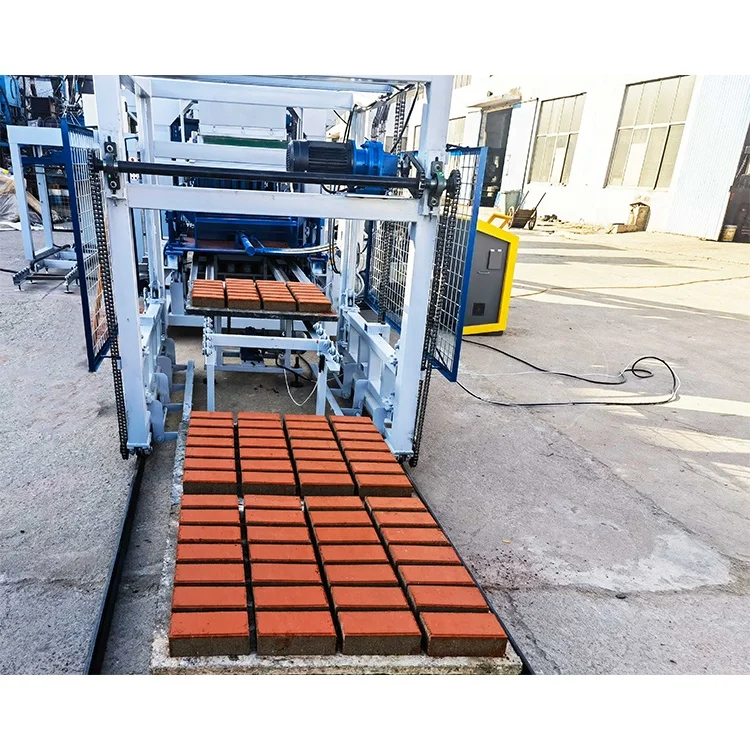
 Stationary block machine