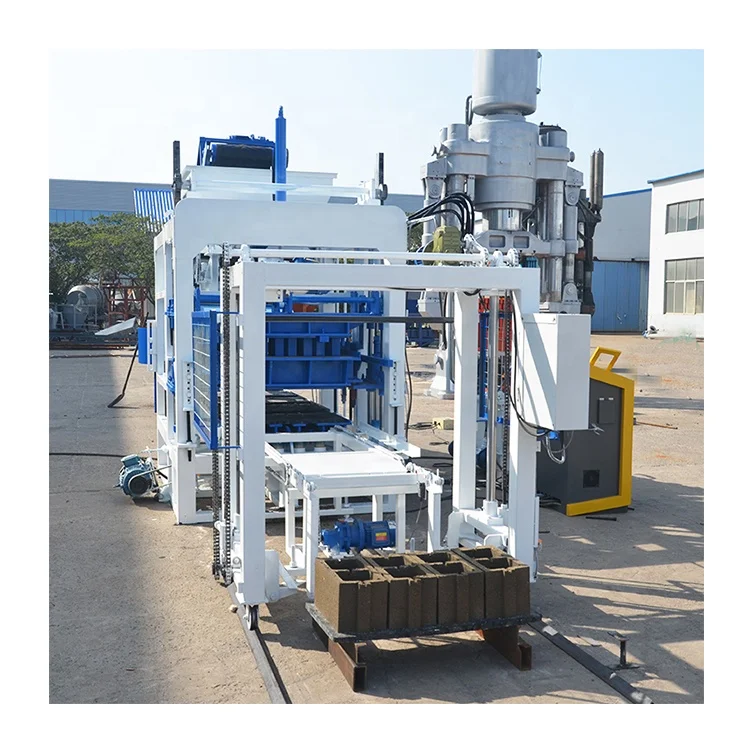
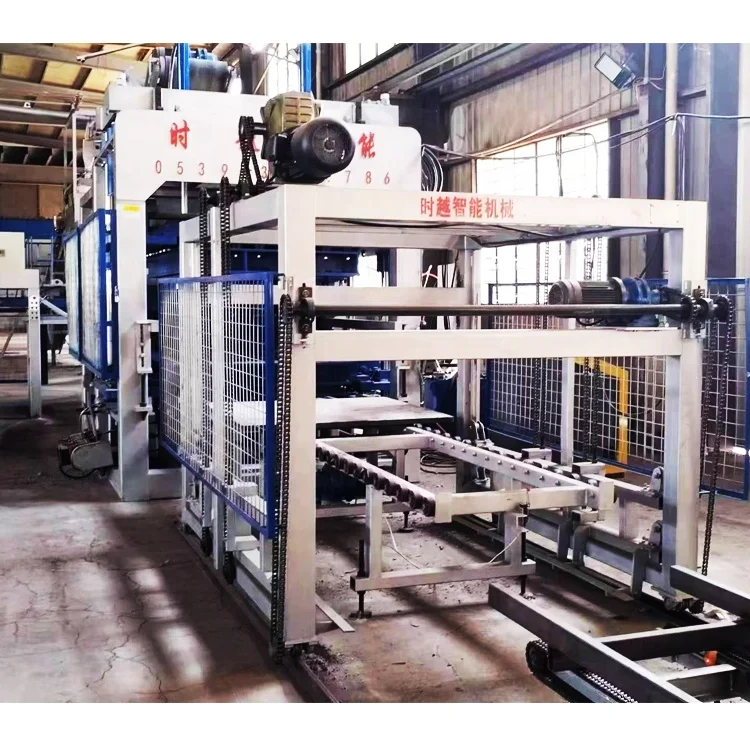
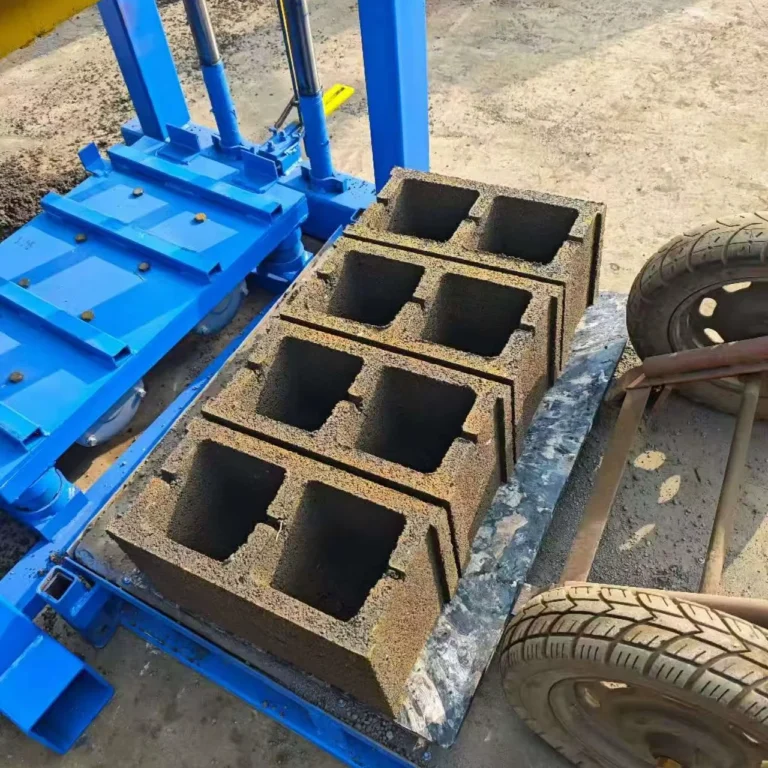
Matched System Design — every QT4-15 automatic block making machine is configured against your local aggregate and target block format before production begins, so the press, mould, pallet, and handling equipment arrive as one verified line.
Technical Specifications
| Parameter |
Value |
| Model |
QT4-15 |
| Product Type |
Automatic Hydraulic Block Making Machine |
| Control System |
PLC controlled |
| Molding Cycle |
15-30s |
| Pallet Size |
900×500mm |
| Vibration Type |
Platform vibration |
| Vibration Frequency |
50-70Hz |
| Product Height Range |
50-220mm |
| Overall Power |
24.5kW |
| Demolding Method |
Hydraulic |
| Output Capacity (Hollow Block 400×200×200mm) |
900-1200 pcs/h (based on 4 pcs/mould, 15-20s cycle) |
| Output Capacity (Hollow Block 400×150×200mm) |
1080-1440 pcs/h (based on 5 pcs/mould, 15-20s cycle) |
| Output Capacity (Hollow Block 400×100×200mm) |
1440-1920 pcs/h (based on 8 pcs/mould, 15-20s cycle) |
| Output Capacity (Paver 200×100×60mm) |
2880-3840 pcs/h (based on 16 pcs/mould, 15-20s cycle) |
| Output Capacity (Solid Brick 240×115×53mm) |
5930-6720 pcs/h (basis to be confirmed) |
| Block Compressive Strength |
>15 MPa |
| Automation Level |
Automatic (PLC-controlled pallet feeding, material feeding, vibrating, demoulding) |
| Mould Formats Supported |
Hollow block, paver brick, solid brick (interchangeable moulds) |
| Raw Material Compatibility |
Fly ash, slag, gangue, sand, crushed stone, cement, water |
Application Suitability
| Application |
Material or Output |
| Mid-to-small scale block production plants |
Hollow blocks, solid bricks, and paving blocks from fly ash, slag, or crushed stone |
| Construction contractors producing blocks on-site |
Standard hollow blocks from locally sourced sand and cement |
| Building material manufacturers expanding product range |
Paver bricks and kerbstones added to existing hollow block lines |
| Entrepreneurs setting up a first block plant |
Multi-format production starting with a single automatic machine platform |
What "900 to 1200 Pieces per Hour" Actually Means for Your Plant
The number on the quotation is only useful if it names the exact block format, mould cavity count, and cycle time behind it.
When I was running factory tests on stationary block machines, I watched capacity figures get quoted as a single headline number. Buyers would sign off, then discover that the 1200-piece rating assumed a 400×100×200mm hollow block with eight cavities, while their market actually needed the larger 400×200×200mm format at four cavities per cycle. Daily output dropped to roughly half of what was expected, and the curing line fell out of rhythm with the press. The QT4-15 automatic block making machine manufacturer specification here ties every capacity figure to its mould and cycle so that kind of mismatch does not happen. [NEED_CITE: block format assumptions in capacity quotations]

Where the QT4-15 Sits in the Full Machine Range
The QT4-15 occupies the mid-tier of our stationary block machine lineup. Below it, semi-automatic workshop machines require manual pallet handling and produce lower daily volumes with smaller capital outlay. Above it, high-capacity fully automatic lines add robotic stacking, cubing, and curing rack handling for large-scale plants running multiple shifts. The QT4-15 automatic block making machine manufacturer entry point gives you PLC-controlled automation across pallet feeding, material dosing, vibration, and hydraulic demoulding without the infrastructure demands of a top-tier line.
Investment Tier and Plant Footprint Considerations
A buyer evaluating the QT4-15 against smaller or larger models should weigh three factors: daily output target, available curing area, and labour configuration. This machine’s 900×500mm pallet size dictates the curing rack spacing and forklift capacity needed downstream. The 24.5kW overall power draw requires a dedicated circuit but does not demand a high-voltage transformer in most industrial zones. For a first-time block plant entrepreneur, the QT4-15 offers a path to start with automatic pressing and add stacking automation later, rather than committing to a full line from day one. [NEED_CITE: block plant footprint planning by automation tier]
How Vibration Frequency and Hydraulic Pressure Shape Block Density
The platform vibration system on this machine operates at 50-70Hz, and that frequency range must work together with hydraulic pressure to compact the mix properly. Higher frequency alone does not guarantee a stronger block — if hydraulic pressure is too low, the aggregate particles rearrange but never fully lock, leaving voids that reduce compressive strength below the >15 MPa target. Conversely, excessive pressure with insufficient vibration traps air pockets. The 15-30s molding cycle range allows the PLC to extend vibration time when local sand carries higher clay content, which absorbs water and stiffens the mix. The 50-220mm product height range covers most structural and paving formats, but thinner pavers at the lower end of that range need shorter cycles to avoid over-compaction and edge chipping. Mould interchangeability across hollow block, paver brick, and solid brick formats means the same hydraulic and vibration settings must be re-verified each time the mould is swapped.
The Cost of Skipping Pallet and Downstream Matching
I have seen block producers receive a press that runs perfectly in isolation, only to discover the pallet size does not fit their existing curing racks or forklift tines. Blocks then have to be transferred by hand from pallet to rack, turning what should be a continuous flow into a bottleneck. When pallet material is chosen without considering the humidity and temperature of the curing area, warping follows within weeks, causing uneven block surfaces and increased rejection. Voltage and frequency left unconfirmed until the machine arrives can delay commissioning by days or weeks while a transformer or replacement motor is sourced. These are not machine defects — they are specification gaps that happen when the press is treated as a standalone purchase rather than one station in a connected line. [NEED_CITE: downstream equipment mismatch in block production]
Why Sourcing This Machine Through Our Range Matters
Block machinery is our single focus, which means the QT4-15 press is never specified in isolation. The mould, pallet, and handling equipment are selected as a matched set so cycle times align across every station. Configuration is set against your actual mix design and local aggregate, not a catalogue default — if your river sand carries high silt content, vibration duration and water ratio are adjusted before the machine is built. Mould design covers the formats your market actually buys, and custom mould drawings are available when standard sizes do not match local building codes. Automation level is selectable: you can start with the QT4-15’s automatic pressing cycle and add pallet stacking or cubing modules as your volume grows. Installation and commissioning include operator training on your specific mould set, so the crew knows how to change formats and read PLC diagnostics from the first production run.
Documentation & Verification
- Line layout and capacity calculation naming the exact block format for each output figure
- Machine specification sheet confirming hydraulic pressure rating, vibration force, and pallet material
- Mould drawing and format list showing cavity count and dimensions per block type
- Voltage, frequency, and PLC display language confirmation recorded before production
- Factory test record run on your specified mix design and target block format
- Packing photographs and customs documentation support for export shipment
Installation, Commissioning & Support
- Foundation pad sized to the QT4-15 platform footprint with anchor bolt template provided
- Dedicated circuit rated for 24.5kW overall power with voltage and frequency verified before dispatch
- Machine dismantled for container loading and reassembled on-site with alignment checks
- PLC parameters set to your mould cycle times during first-run commissioning
- Operator training covers mould change procedure, vibration adjustment, and fault code reading
- Wear parts list and hydraulic seal kit supplied for the first replacement interval
What to Share Before Requesting a Quote
To size the QT4-15 correctly within the full range, we need your target block formats with dimensions, your expected daily output per format, and the type of aggregate available locally — river sand, crushed stone, or fly ash. Please also confirm your site voltage and frequency, the PLC display language your operators will use, and the dimensions of any existing curing racks or forklifts. If you are comparing this tier against a higher-capacity model, let us know your curing area size and labour configuration so we can map which automation level fits your plant.
Frequently Asked Questions
Q: How do I verify the real daily output of the QT4-15 for my specific block format?
A: Request the line layout and capacity calculation document that names your exact block dimensions, mould cavity count, and cycle time. The figures in the specification table above are each tied to a specific format — for example, 900-1200 pieces per hour applies only to the 400×200×200mm hollow block with four cavities. Your actual daily output depends on shift length, mould change frequency, and raw material consistency.
Q: Where does the QT4-15 sit compared to semi-automatic and high-capacity models?
A: It occupies the mid-tier of the stationary range. Semi-automatic machines below it require manual pallet handling and suit lower investment budgets. High-capacity automatic lines above it add robotic stacking and curing rack systems for multi-shift plants. The QT4-15 gives you PLC-controlled pressing automation as a starting point, with the option to add downstream automation later.
Q: What automation level does the QT4-15 offer, and can I upgrade later?
A: The standard configuration covers automatic pallet feeding, material dosing, vibration, and hydraulic demoulding under PLC control. Pallet stacking and cubing are not included at this tier but can be added as your production volume grows. The machine platform is designed to accept these downstream modules without replacing the press itself.
Q: How is the pallet size selected, and will it work with my existing equipment?
A: The 900×500mm pallet size is matched to the mould formats this machine supports. Before production, we confirm that this pallet dimension fits your curing rack spacing and forklift tine width. If your existing equipment uses a different pallet size, the machine can be configured to accommodate it, but this must be decided before the frame is fabricated.
Q: What plant footprint does the QT4-15 require, and what supporting equipment completes the line?
A: The press itself needs a level foundation with space for pallet feed on one side and wet block exit on the other. A complete line adds a raw material batching and mixing station, pallet return conveyor, and curing rack area sized to hold one full day’s output. We provide a line layout drawing showing all station positions and clearances before the order is confirmed.

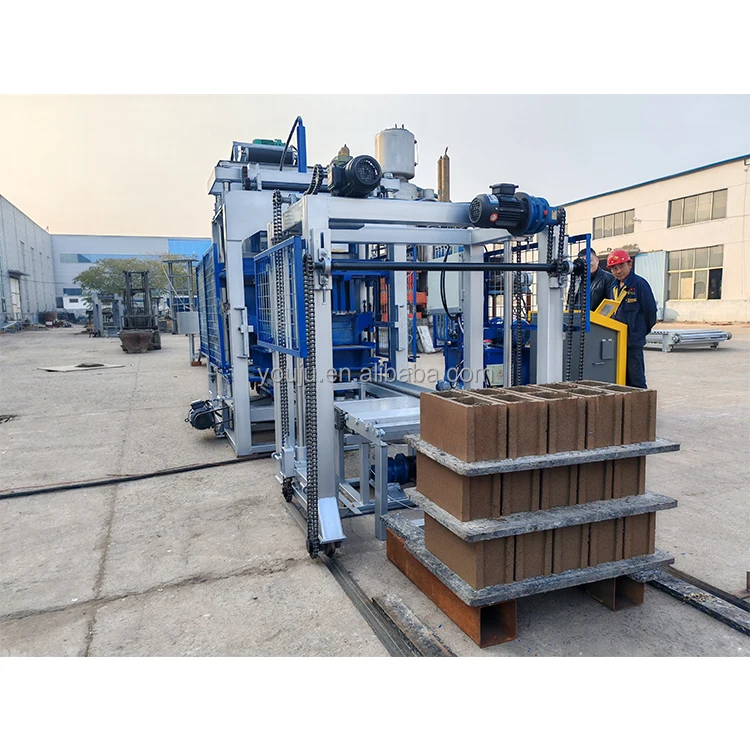
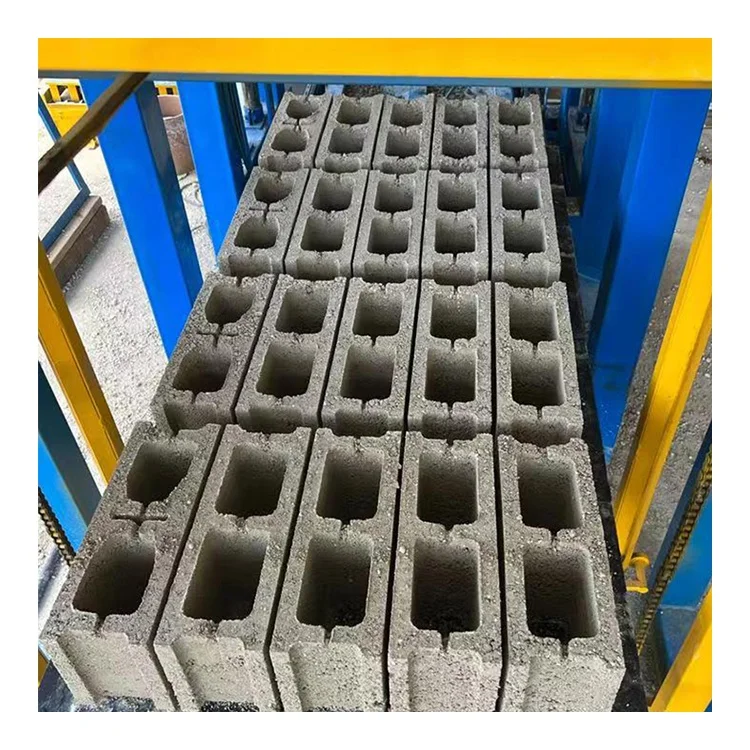 Stationary block machine