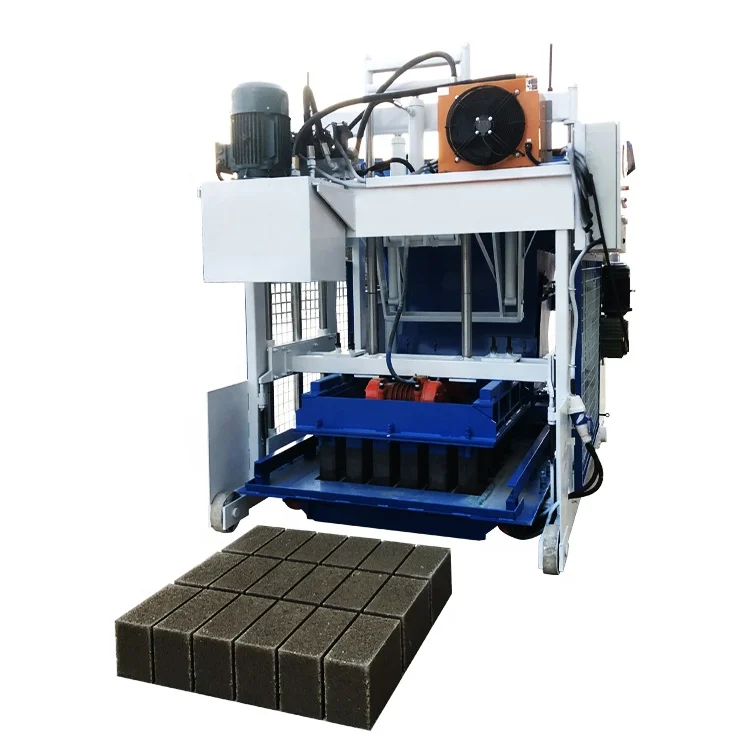
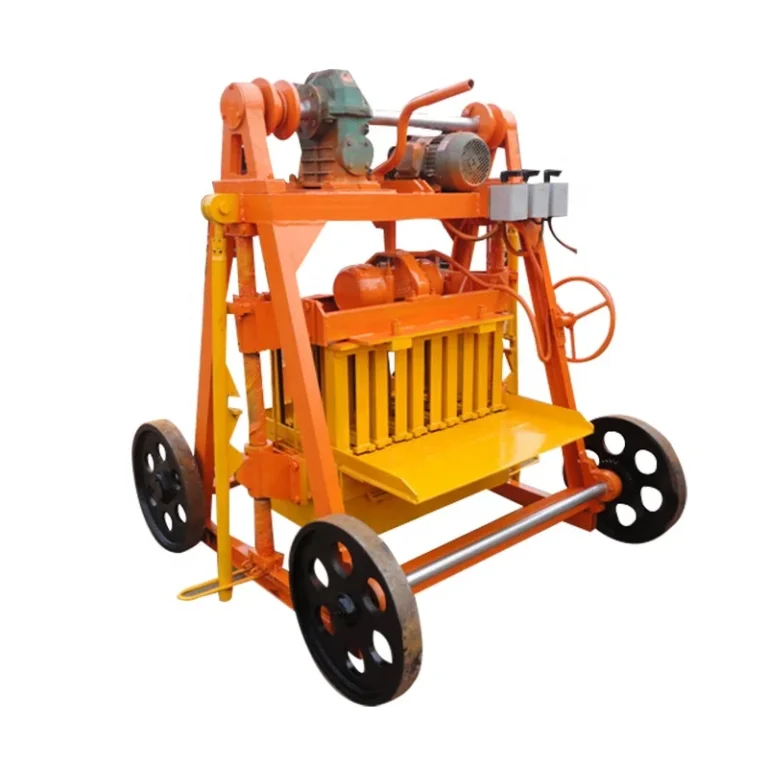
Matched Mould and Power Configuration — every QMR4-45 mobile block making machine is specified against the buyer’s actual block format and site power availability before a quotation is issued.
Technical Specifications
| Parameter |
Value |
| Model |
QMR4-45 |
| Product Type |
Mobile Block Making Machine |
| Power Source |
Diesel (Electric option available) |
| Rated Power |
8 hp (source value — verify if diesel engine output or electric motor equivalent) |
| Molding Cycle |
45 s (basis not stated in source — confirm block format / material / thickness) |
| Molding Form |
Vibration and Pressure |
| Vibration Force |
60 kN |
| Total Weight |
800 kg |
| Overall Dimensions (L×W×H) |
2420 × 1320 × 1650 mm |
| Pallet Requirement |
No pallet needed (egg-laying type) |
| Mould Format |
Paver brick, hollow block, concrete block, solid brick, fly ash brick (specific dimensions not stated in source) |
| Automation Level |
Manual / mobile egg-laying operation |
| Basic Equipment Supplied |
JZC350 Diesel Concrete Mixer or JQ350 Diesel Concrete Mixer (with Electric Generating Unit); Trolley |
| Assembly State |
Fully assembled, mobile on-site use |
Application Suitability
| Application |
Material or Output |
| On-site block production in remote areas |
Crushed stone, sand, and cement with diesel-powered mixing |
| Small-scale contractor block yards |
Hollow blocks and solid bricks from locally available aggregate |
| Housing project mobile production |
Fly ash and cement blends for load-bearing and partition blocks |
| Paver and kerb production at job sites |
Fine aggregate mixes for interlocking paver bricks |
| Entrepreneur-led first block plant |
Concrete block formats using manual egg-laying workflow |
What a 45-Second Cycle Actually Means for Daily Output
A cycle time is only meaningful when tied to a specific block format and wall thickness.
Many buyers receive a mobile block making machine for sale quoted at a fixed cycles-per-hour figure, then discover that real daily output depends entirely on which block format is being pressed. A 45-second cycle producing a thin solid paver brick yields a very different daily count than the same cycle pressing a large hollow block that requires longer vibration and curing time before the next move. [NEED_CITE: capacity calculation standards for concrete block machinery]. Without this clarity, project schedules slip before the first week is over.
Diesel Versus Electric Power on the Job Site
The QMR4-45 is available with a diesel engine or an electric motor, and the choice depends on grid reliability at the production location. On remote housing projects or rural infrastructure sites, the diesel variant runs independently of local power infrastructure, keeping the concrete mixer and vibration system operational regardless of outages. Where three-phase electricity is stable, the electric option reduces noise and fuel logistics. The mobile block making machine for sale in diesel configuration ships with a JZC350 or JQ350 mixer and an electric generating unit, so the entire line is self-contained.
Egg-Laying Design and the Pallet Question
Eliminating pallets from the production workflow removes a recurring cost that often surprises first-time block plant buyers. The QMR4-45 lays blocks directly onto the ground surface, which means no pallet inventory, no pallet return logistics, and no pallet-related bottleneck between the press and the curing area. This design suits contractors who need to move the mobile block making machine for sale across a site as construction progresses, producing hollow blocks and pavers exactly where they will be used.
Vibration Force and Molding Density
The 60 kN vibration force works alongside hydraulic pressure to compact the concrete mix into the mould cavity. For hollow blocks made from coarse local aggregate, sufficient vibration energy is needed to achieve consistent wall density and prevent cracking during demoulding. The 45-second molding cycle applies this vibration and pressure combination across the formats listed — paver brick, hollow block, concrete block, solid brick, and fly ash brick. Buyers should confirm which specific block dimensions are achievable on this platform before committing, as mould size directly affects both cycle time and structural performance. [NEED_CITE: vibration force requirements for different concrete aggregate grades]

Why the Wrong Mixer Match Costs More Than the Machine Itself
When a diesel concrete mixer is undersized for the block format being produced, the press spends most of its shift waiting for the next batch. The QMR4-45 ships with a JZC350 or JQ350 diesel mixer specifically because the batch volume must match the mould cavity fill rate. A mismatched mixer forces operators to run smaller batches more frequently, which introduces inconsistency in water-cement ratio between batches and produces blocks with uneven strength across the same production run. [NEED_CITE: concrete batch consistency and block compressive strength correlation]
Why Source This Mobile Block Making Machine Here
The QMR4-45 is specified as a matched system — machine, mould, mixer, and trolley are configured together rather than assembled from separate suppliers. Configuration is set against the buyer’s actual block format, local aggregate, and site power conditions, not pulled from a catalogue default. Mould design covers the formats the buyer’s market actually sells, with custom drawings available for non-standard sizes. The automation level is selectable so a buyer can start with manual egg-laying operation and move to semi-automatic or automatic lines as demand grows. Installation and commissioning support includes operator training on the specific mix and mould combination being used.
Documentation & Verification
- Machine specification sheet confirming diesel or electric configuration and rated power
- Mould drawing and format list showing achievable block dimensions for the QMR4-45
- Line layout and capacity calculation stating the block format assumed for the 45-second cycle
- Factory test record on the buyer’s target block format before dispatch
- Operation and maintenance manual covering mixer, press, and trolley servicing intervals
- Packing photographs and customs documentation support for export shipment
Installation, Commissioning & Support
- Level compacted ground surface required; the 2420 × 1320 × 1650 mm footprint needs clear access for the trolley
- Diesel variant requires no external power connection; electric variant needs confirmed voltage and frequency before shipment
- Machine ships fully assembled; on-site setup limited to mixer positioning and mould installation
- First-run commissioning includes mould vibration parameter adjustment to match local aggregate density
- Operator training covers mould change procedure, mixer batch timing, and egg-laying movement sequence
- Wear parts list and mould replacement schedule provided at delivery
Planning Your Inquiry Around the Right Details
Before requesting a quotation, identify the exact block formats your market requires and the daily volume needed per format. Confirm whether your site has reliable three-phase electricity or whether diesel operation is necessary, and specify the local voltage and frequency if choosing electric. Share your local aggregate type and any available sand or fly ash samples so the mix design can be validated against the 60 kN vibration force. [NEED_CITE: raw material sample testing procedures for block machinery buyers]
Frequently Asked Questions
Q: What block formats can the QMR4-45 produce, and what is realistic daily output per format?
A: The QMR4-45 supports paver brick, hollow block, concrete block, solid brick, and fly ash brick formats. Realistic daily output depends on the specific block dimensions and wall thickness being pressed during the 45-second molding cycle. Request a capacity calculation that states the assumed block format so the daily figure reflects your actual product mix.
Q: Diesel or electric — how to choose the right power source for my site conditions?
A: Choose diesel if your production site lacks reliable three-phase electricity or if you need to move the machine across remote job locations. Choose electric where grid power is stable, as it reduces fuel logistics and noise. Confirm local voltage and frequency before shipment to avoid commissioning delays.
Q: Where does this mobile machine sit in the range compared to semi-automatic and automatic models?
A: The QMR4-45 is an entry-level egg-laying unit with manual operation, suited for contractors and entrepreneurs starting block production without a fixed plant. Semi-automatic and automatic models add pallet handling, stacking, and higher throughput for buyers who have established market demand and fixed production space.
Q: What supporting equipment is included, and what do I need to source locally?
A: The QMR4-45 ships with a JZC350 or JQ350 diesel concrete mixer and a trolley for moving blocks to the curing area. Buyers source raw materials, water supply, and ground preparation locally. If choosing the electric variant, confirm power infrastructure and any required transformer specifications with your electrician.
Q: Can I upgrade from this mobile unit to a fixed semi-automatic line later?
A: Yes. Starting with the QMR4-45 allows buyers to establish market demand and refine their block format mix before investing in a fixed semi-automatic line with pallet handling and stacking. Mould knowledge gained on the mobile unit transfers directly to the larger system configuration.

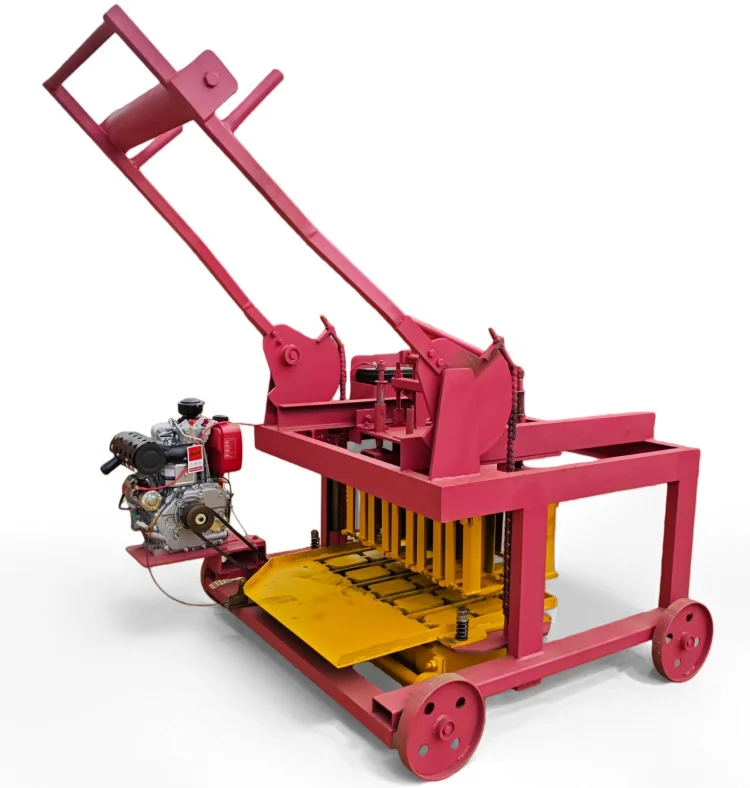
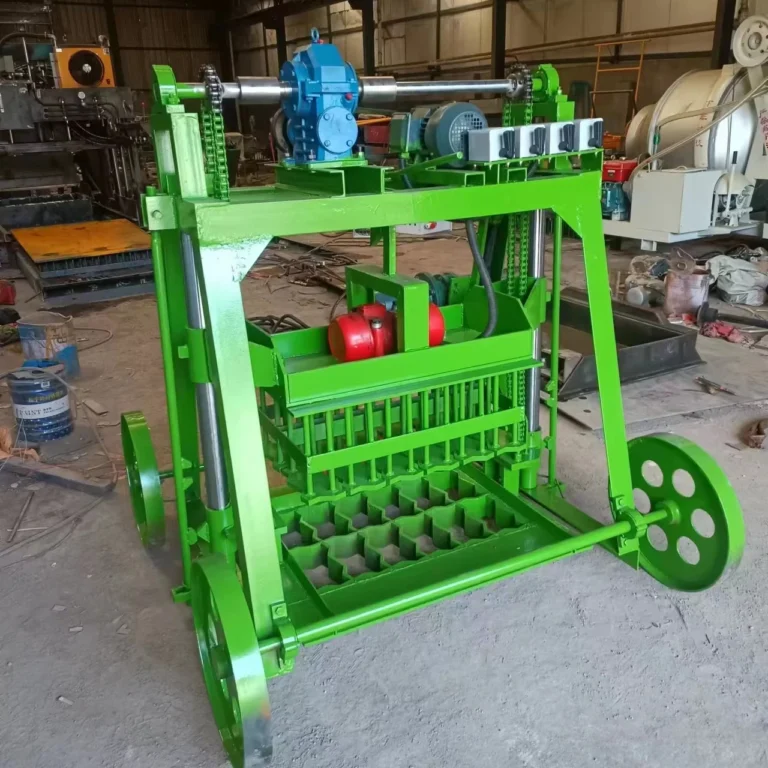 Mobile block machine