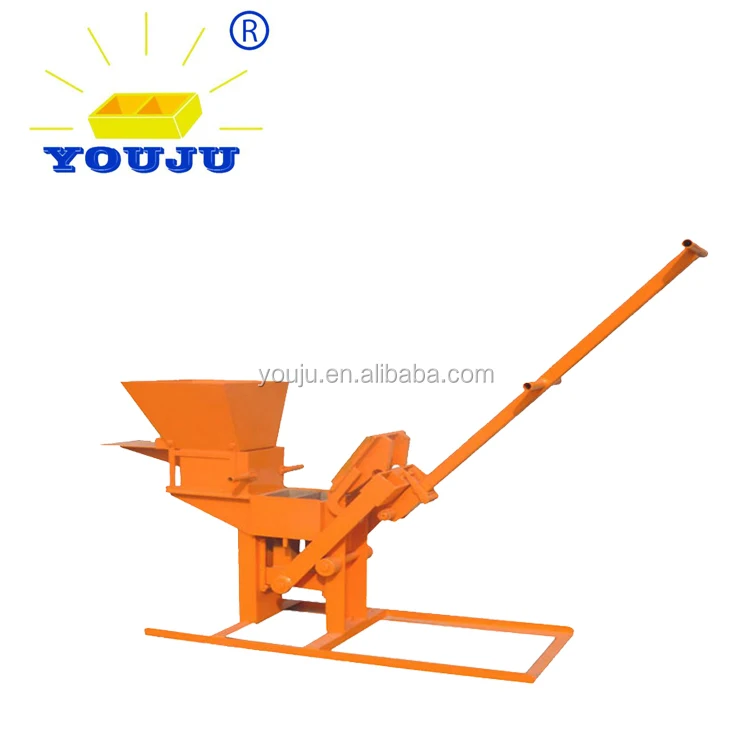
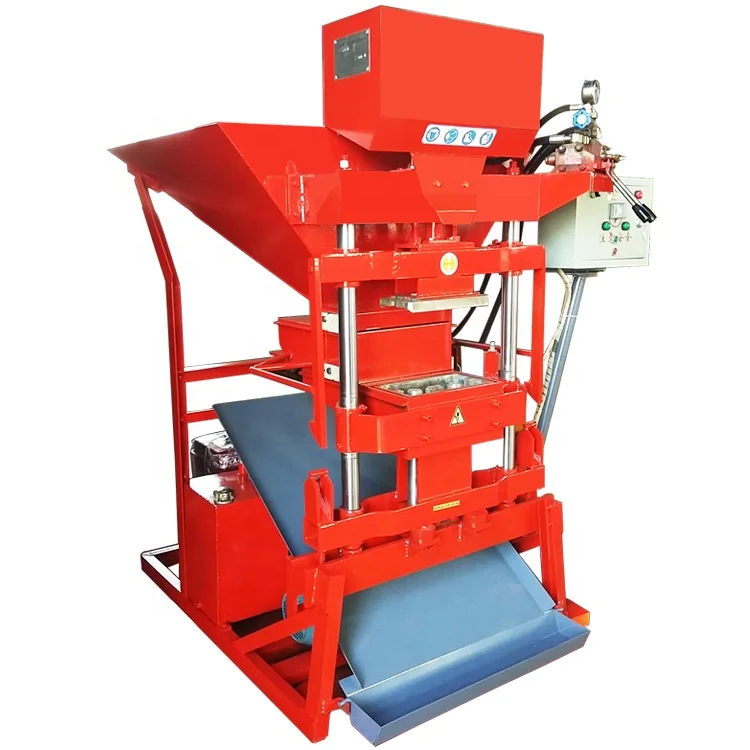
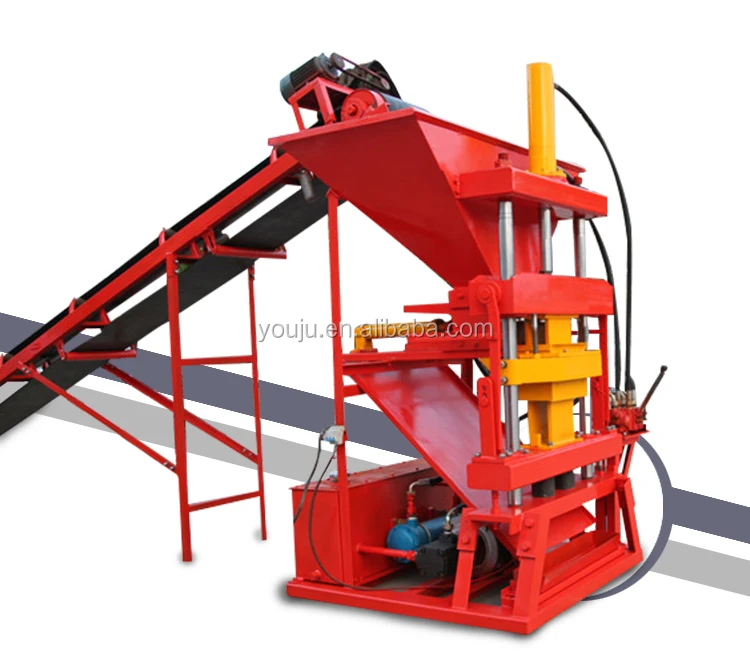
Diesel-Hydraulic Standalone Design — The ECO 2700 operates as a self-contained interlocking brick press with integrated cooling, so buyers without grid infrastructure can run production directly on site.
Technical Specifications
| Parameter |
Value |
| Model |
ECO 2700 |
| Product Type |
Clay Interlocking Brick Machine |
| Overall Dimensions (L×W×H) |
1600 × 1300 × 2330 mm |
| Net Weight |
1100 kg |
| Engine |
7.5 kW / 12 hp diesel |
| Hydraulic Pressure |
16 MPa |
| Mould Format |
Interlocking brick, changeable |
| Cycle Time |
10–15 s |
| Output Capacity |
2800 pcs/day (basis not stated in source) |
| Raw Material |
Clay, cement, sand, soil, shale, fly ash, white lime |
| Control System |
Hydraulic with temperature-controlled cooling switch |
| Achievable Block Strength |
Above 12 MPa with matched mix |
| Assembly State |
Standalone unit |
Application Suitability
| Application |
Material or Output |
| First-plant entrepreneur setup |
Clay and soil mixes with cement binder |
| On-site housing project production |
Local soil, sand and fly ash blends |
| Small distributor format expansion |
Interlocking brick alongside existing solid blocks |
| Rural or off-grid construction sites |
Diesel-powered operation without grid connection |
What "2800 Pieces per Day" Leaves Out About This Clay Interlocking Brick Machine
Capacity figures that omit block format, wall thickness and mix design leave buyers guessing at real output.
I have watched site managers unpack a machine expecting a certain daily volume, only to find the quoted number assumed a solid format half the size of what their market actually sells. The cycle time on the ECO 2700 is listed as 10–15 seconds, but that window shifts depending on the interlocking profile depth, the moisture content of the clay, and whether the operator is hand-feeding or using an auxiliary conveyor. Without a line layout that names the exact brick dimensions and the assumed mix, the daily total is little more than a starting point for conversation [NEED_CITE: capacity calculation methods for manual and semi-automatic block presses].

Where the ECO 2700 Sits in the Full Block Machine Range
The ECO 2700 occupies the entry tier for interlocking brick production. Buyers who need to move brick volumes that justify a full automatic line with pallet return conveyors and stacking stations typically look further up the range. This machine serves the space between a hand-operated press and a semi-automatic stationary plant, making it a practical choice when capital is limited or site conditions are still being established.
Diesel Power as a Site-Condition Decision
Choosing a diesel engine over an electric motor is not about preference — it is about whether the site has a stable three-phase supply. In regions where grid voltage fluctuates or commissioning timelines cannot wait for transformer installation, the 12 hp diesel on the ECO 2700 removes an entire category of delay. The trade-off is fuel logistics and noise, which matters less on a greenfield housing project than in an urban yard [NEED_CITE: diesel versus electric drive selection for construction site machinery].
Reading the Pressure and Cycle Numbers Together
Hydraulic pressure at 16 MPa provides the compressive force that, combined with the mix design, determines the density and bearing strength of each brick. A higher pressure rating alone does not guarantee a stronger brick if the clay-sand-cement ratio has not been tuned to the local aggregate. The 10–15 second cycle time is achievable only when the operator can load, press and eject without waiting for the hydraulic fluid to cool — which is why the temperature-controlled cooling switch matters on long shifts in hot climates.
The Cost of Skipping Mould and Mix Verification
When a buyer orders an interlocking brick machine without confirming that the available clay matches the tested mix, the first production run often produces bricks that crack during curing or fail the drop test. Retuning vibration and pressure on site takes days, not hours, and every day of adjustment is a day of lost output and wasted raw material [NEED_CITE: common causes of brick breakage during initial production runs].
Why Sourcing from a Machinery-Focused Supplier Matters
Block machines, moulds, pallets and handling equipment are specified as one matched system here, not assembled from separate catalogues. The ECO 2700 is configured against the buyer’s actual clay composition and target brick format, not shipped as a default build. Mould design covers the interlocking profiles the buyer’s market actually sells. The automation level is selectable, so starting with a standalone press does not close the door on future upgrades. Installation support includes operator training on mix proportioning and hydraulic adjustment, and wear parts lists are provided before dispatch.
Documentation & Verification
- Machine specification sheet confirming hydraulic pressure, cycle time and mould format list for the ECO 2700
- Capacity calculation stating the exact interlocking brick dimensions and mix ratio assumed
- Hydraulic and electrical schematic for on-site troubleshooting and local electrician reference
- Factory test record on the buyer’s specified clay-cement mix before crating
- Wear parts and mould list with part numbers for first replacement orders
- Operation and maintenance manual covering cooling system checks and daily hydraulic inspection
Installation, Commissioning & Support
- Concrete pad or compacted ground required for the 1100 kg standalone unit to prevent settlement under pressing load
- Diesel engine needs fuel storage and exhaust clearance planned into the site layout
- Mould changeover procedure trained on site so operators can switch interlocking profiles within a shift
- First-run commissioning covers hydraulic pressure adjustment and cooling switch calibration to local ambient temperature
- Wear parts kit supplied at delivery so liners and seals are on hand for the first scheduled maintenance interval
Starting the Conversation on Configuration
Before a quotation is prepared, useful details include the target interlocking brick dimensions, the local clay or soil type available, daily volume requirements, and whether the site has grid power or will run entirely on diesel. Knowing the curing area dimensions and the handling equipment already on site helps determine whether auxiliary pallet systems should be included in the proposal.
Frequently Asked Questions
Q: How is the 2800 pcs/day capacity calculated, and which interlocking brick format does it assume?
A: The figure is based on continuous cycle operation, but the exact brick dimensions, wall thickness and mix ratio behind it are not stated in the source documentation. A confirmed capacity calculation should accompany any proposal, listing the specific interlocking profile and the clay-cement blend assumed so buyers can compare it against their actual product.
Q: Where does the ECO 2700 sit in the full block machine range compared to semi-automatic and automatic tiers?
A: It is the entry-tier standalone press for interlocking brick production. Semi-automatic lines add pallet feeding and manual stacking stations, while automatic tiers include conveyor-based pallet return, automatic stacking and cubing for substantially higher daily volumes.
Q: Can I start with this machine and upgrade to a higher automation level later?
A: The ECO 2700 can operate as a standalone unit initially. Buyers planning to scale typically move to a semi-automatic line configuration that incorporates pallet handling and stacking equipment around the press rather than retrofitting the ECO 2700 itself.
Q: What voltage, frequency and auxiliary electrical requirements apply if my site has grid power?
A: The standard configuration is diesel-driven, but any auxiliary electrical components such as the cooling switch or optional conveyor motors must match the local supply. Voltage and frequency should be confirmed before production to avoid commissioning delays.

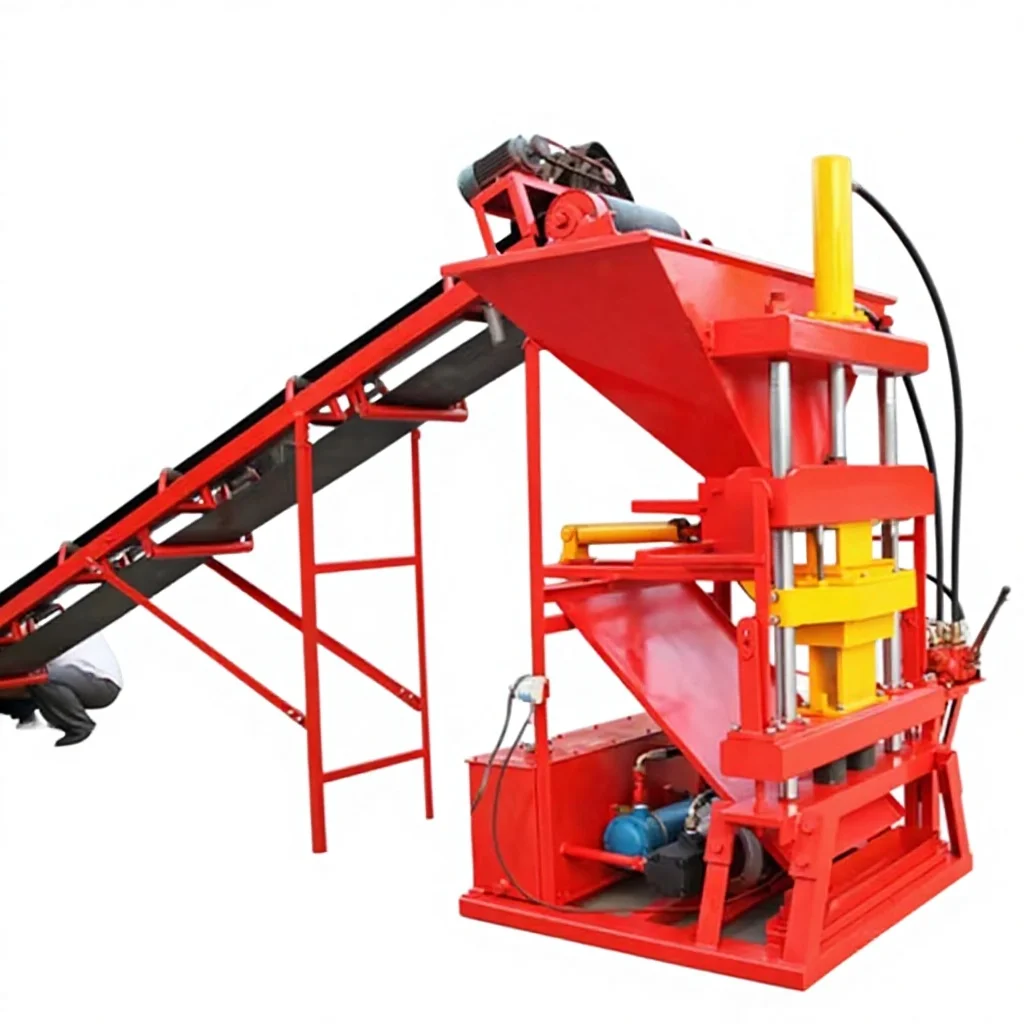
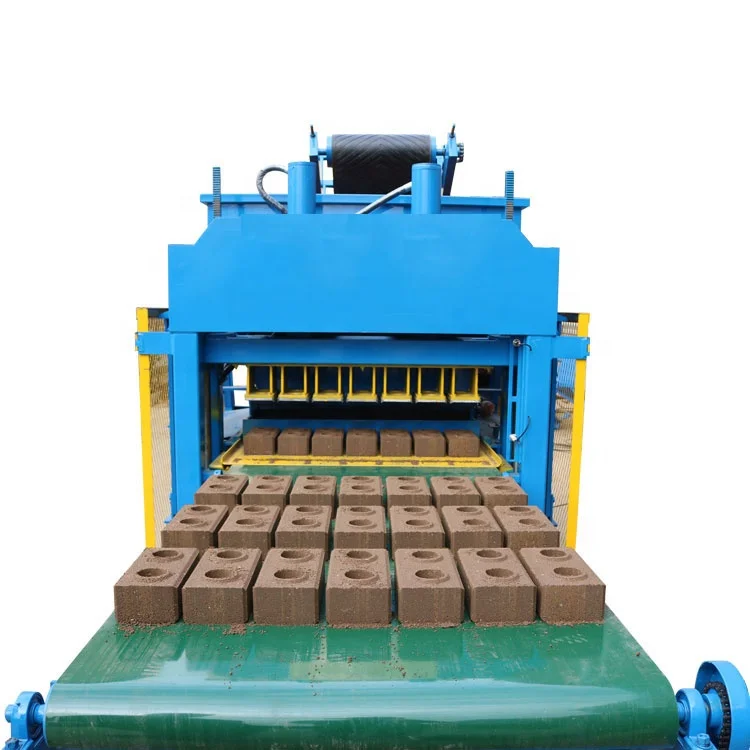 Clay interlocking brick