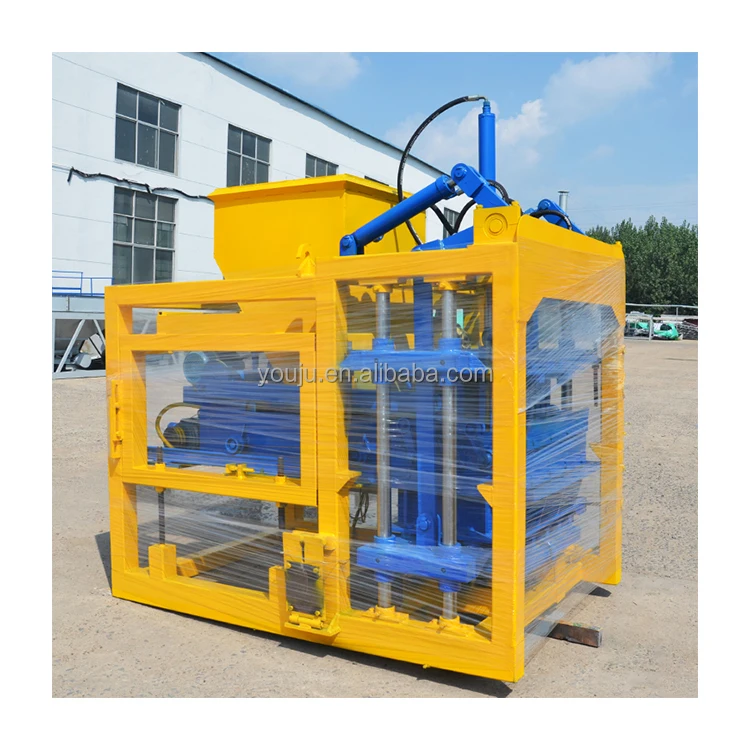
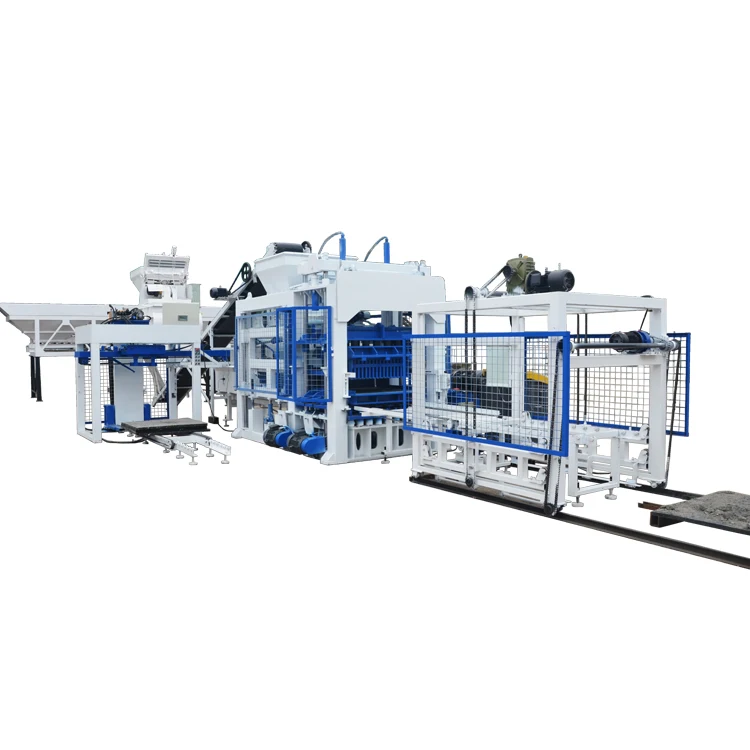
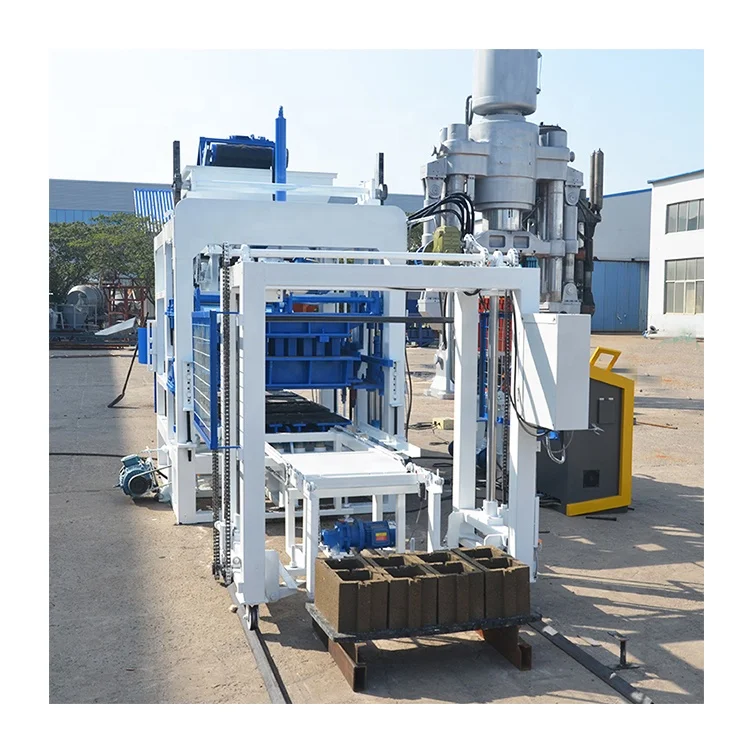
Mid-tier automation anchored to actual mix conditions — the QT5-15 block making machine sits at a configurable starting point where every output tier is stated per format rather than averaged across a brochure.
Technical Specifications
| Parameter |
Value |
| Product Type |
Automatic Concrete Block Making Machine |
| Model |
QT5-15 |
| Overall Dimensions (L×W×H) |
7400 × 1950 × 2800 mm |
| Total Mass |
5000 kg |
| Overall Power |
32 kW |
| Vibration Form |
Platform Vibration |
| Vibration Force |
80 kN |
| Vibration Frequency |
0–60 Hz (adjustable) |
| Moulding Mode |
Automatic load, vibration moulding |
| Demolding Method |
Hydraulic |
| Pallet Size |
1100 × 550 mm |
| Molding Cycle |
15–20 s (basis: hollow block format and standard mix; cycle varies by product thickness and material) |
| Control System |
PLC (Programmable Logic Controller) |
| Hydraulic System |
Independent integrated hydraulic station |
| Recommended Factory Area |
1000 m² |
| Automation Level |
Automatic (PLC-controlled pallet feeding, material feeding, vibrating, demoulding) |
| Raw Material Compatibility |
Fly ash (up to 70%), slag, gangue, sand, crushed stone, cement, water |
| Output — Hollow Block 400×200×200 mm |
900–1200 pcs/h, 7200–9600 pcs/8hr (basis: 5 pcs/mould, 15–20s cycle) |
| Output — Hollow Block 400×150×200 mm |
1080–1440 pcs/h, 8640–11520 pcs/8hr (basis: 6 pcs/mould, 15–20s cycle) |
| Output — Solid Brick 240×115×53 mm |
5760–7680 pcs/h, 46080–61440 pcs/8hr (basis: 32 pcs/mould, 15–20s cycle) |
| Output — Rectangular Paver 200×100×60 mm |
3600–4500 pcs/h, 28800–36000 pcs/8hr (basis: 25 pcs/mould, 20–25s cycle) |
| Output — Zigzag Paver 225×112.5×60 mm |
2304–2880 pcs/h, 18432–23040 pcs/8hr (basis: 16 pcs/mould, 20–25s cycle) |
| Assembly State |
Multi-station line (pallet feed machine, block making machine, storage hopper, conveyor, hydraulic unit, PLC cabinet) |
| Warranty |
1 year (excluding spare parts) |
Application Suitability
| Application |
Material or Output |
| Hollow block production (400×200×200 mm, 400×150×200 mm) |
Crushed stone, sand, cement, fly ash blends |
| Solid brick production (240×115×53 mm) |
Sand-cement or fly ash-cement mixes |
| Rectangular paving brick (200×100×60 mm) |
High-density aggregate and cement for surface wear resistance |
| Zigzag / interlocking paving brick (225×112.5×60 mm) |
Fine aggregate with cement for interlock precision |
| Fly ash and industrial residue utilization |
Up to 70% fly ash content in the raw mix |
| On-site block production for construction contractors |
Mobile plant setup within 1000 m² working area |
| First block plant for entrepreneurs |
Semi-automatic to automatic scaling path |
What the "Pieces per Hour" Figure Never Tells You
Capacity only means something when it names the block format and cycle time behind it.
I have walked onto production floors in Southeast Asia where the owner showed me a daily tally barely reaching half the brochure number. The machine was running fine; the problem was the quotation listed a cycle rate based on a thin solid brick, while the plant was producing 200 mm hollow blocks with a local volcanic ash blend that demanded a longer press cycle. When an automatic block machine manufacturer quotes output without naming the format, the buyer has no baseline to hold anyone to [NEED_CITE: block format assumptions in capacity quotations]. That gap between expectation and reality is what causes most commissioning disputes, not mechanical failure.

Where the QT5-15 Sits in a Full Machine Range
Buyers comparing options across a complete block machine lineup need to understand tier placement before narrowing down. The QT5-15 occupies the mid-range of the Shiyue automatic block machine manufacturer portfolio, positioned above small workshop semi-automatic presses and below the high-capacity lines designed for continuous three-shift operation. Its 1100 × 550 mm pallet size and 32 kW total power draw define a plant footprint that fits within a 1000 m² area, making it a realistic choice for buyers who have outgrown manual pallet handling but are not yet ready to invest in a fully cubed and racked operation.
Scaling Automation Without Replacing the Press
One advantage of selecting from a unified range is the upgrade path. A buyer can start with the QT5-15 in its standard automatic configuration — PLC-controlled pallet feeding, material feeding, vibration, and hydraulic demoulding — and later add automatic stacking and curing rack handling as demand grows [NEED_CITE: automation upgrade paths in block production lines]. Because the press, moulds, pallets, and handling equipment are specified as a matched system from the outset, adding downstream automation does not require retrofitting the core machine. This approach matters for entrepreneurs and building material distributors who need to phase capital expenditure across two or three budget cycles.
How Vibration Force and Hydraulic Pressure Shape Block Density
The 80 kN vibration force and adjustable 0–60 Hz frequency on the QT5-15 are not isolated numbers — they work together with the independent hydraulic station to determine how densely the raw mix is compacted inside the mould cavity. Platform vibration transmits energy through the pallet into the mix, while hydraulic pressure closes the mould head and holds the block geometry during the press cycle. If the vibration frequency is set too high for a coarse aggregate blend, the larger particles segregate to the surface; too low, and the block comes out with voids that reduce compressive strength below the 15 MPa threshold. Getting this balance right depends on running test cycles with the buyer’s actual mix, not a laboratory standard [NEED_CITE: vibration and hydraulic pressure interaction in block compaction]. The independent hydraulic station, isolated from the host vibration and dust, keeps pressure consistent across thousands of cycles without the valve spool wear that plagues integrated units.
The Cost of Skipping the Mix-to-Machine Conversation
When a block plant is configured around a catalogue default rather than the buyer’s local aggregate, the consequences show up within the first production week. Blocks crack during curing because the vibration force was too aggressive for the fines content in the sand. Moulds wear unevenly because the abrasive silica level was never factored into the wear plate specification. Pallets warp because the curing area temperature was not matched to the pallet material [NEED_CITE: pallet deformation causes in block curing]. None of these are machine defects — they are configuration errors that no amount of on-site adjustment can fully correct. The QT5-15 supports raw material compatibility ranging from fly ash at up to 70% content to crushed stone and slag, but that range only delivers results when the specific proportions are mapped to the vibration and pressure settings before the machine leaves the factory.
Why Buyers Place Repeat Orders Here
Block machinery is the single focus of Shiyue’s engineering and production, which means the QT5-15 is not assembled from a catalogue of generic sub-assemblies. The machine, mould, pallet, and handling equipment are specified as one matched system. Every configuration is set against the buyer’s actual mix design and target block format — not a default template. Mould design covers the formats the buyer’s market actually sells, including custom drawings when standard formats do not match local building codes. Documentation includes a line layout and capacity calculation that names the block format behind every output figure, so there is no ambiguity at commissioning. Installation and operator training are conducted on-site, and mould and wear parts support continues through the production life of the plant.
Documentation & Verification
- Line layout and capacity calculation stating the specific block format and cycle time assumed for each output figure
- Machine specification sheet confirming voltage, frequency, and PLC display language before production begins
- Mould drawing and format list showing included and available add-on block geometries
- Pallet specification matched to the buyer’s curing area dimensions and existing forklift capacity
- Hydraulic and electrical schematic for local maintenance teams
- Factory test record using the buyer’s target mix proportions before dispatch
Installation, Commissioning & Support
- 1000 m² recommended factory area with level concrete foundation to support the 5000 kg machine mass and vibration loads
- Dedicated 32 kW power circuit with voltage and frequency confirmed against local grid before wiring
- Multi-station line assembled on-site from pallet feed machine, press, hopper, conveyor, hydraulic unit, and PLC cabinet
- First-run parameter tuning of vibration frequency and hydraulic pressure using the buyer’s local raw material blend
- Operator training covering PLC interface navigation, mould change procedure, and daily maintenance checkpoints
- Wear parts and mould inventory list provided at handover for first reorder planning
Before You Request a Quote
To match the QT5-15 to your production requirements, share the block formats your market demands along with target daily output per format. Specify the raw materials available locally — including any industrial residues like fly ash or slag — and the proportions you typically use. Confirm your site’s voltage, frequency, and preferred PLC display language so the control cabinet is built correctly before shipment. If you already have curing racks and forklifts on-site, include their dimensions so pallet sizing aligns with your existing handling equipment.
Frequently Asked Questions
Q: How does the QT5-15 compare to other models in the automatic block machine range?
A: The QT5-15 sits in the mid-tier, offering PLC-controlled automatic production on a 1100 × 550 mm pallet within a 1000 m² plant footprint. It bridges the gap between small semi-automatic presses suited for low-volume workshops and high-capacity lines designed for continuous multi-shift output. Buyers can scale up to larger pallet sizes and full stacking automation as demand increases.
Q: What block formats can this machine produce, and how is capacity calculated?
A: The QT5-15 produces hollow blocks, solid bricks, rectangular pavers, and zigzag interlocking pavers through mould changes. Each capacity figure is calculated per format based on the number of cavities per mould and the cycle time for that specific block thickness and mix. Output is stated per format rather than as a single averaged number.
Q: Can the automation level be upgraded after initial installation?
A: Yes. The QT5-15 ships with automatic pallet feeding, material feeding, vibration, and hydraulic demoulding. Downstream functions such as automatic stacking, curing rack handling, and cubing can be added later. Because the press and handling equipment are specified as a matched system from the start, upgrades integrate without replacing the core machine.
Q: What voltage, frequency, and PLC language options are available?
A: Voltage and frequency are configured to match the buyer’s local grid specification before production begins. The PLC display language is confirmed during the order process so operators can navigate the control interface in their preferred language upon commissioning. These details are locked in before the machine enters assembly.
Q: What plant footprint is needed, and what supporting equipment completes the line?
A: The recommended factory area is 1000 m² to accommodate the press, pallet feed machine, storage hopper, conveyor, hydraulic station, and PLC cabinet. Supporting equipment for raw material feeding, mixing, automatic stacking, and curing rack handling can be included to form a complete production line matched to the buyer’s output target and site layout.

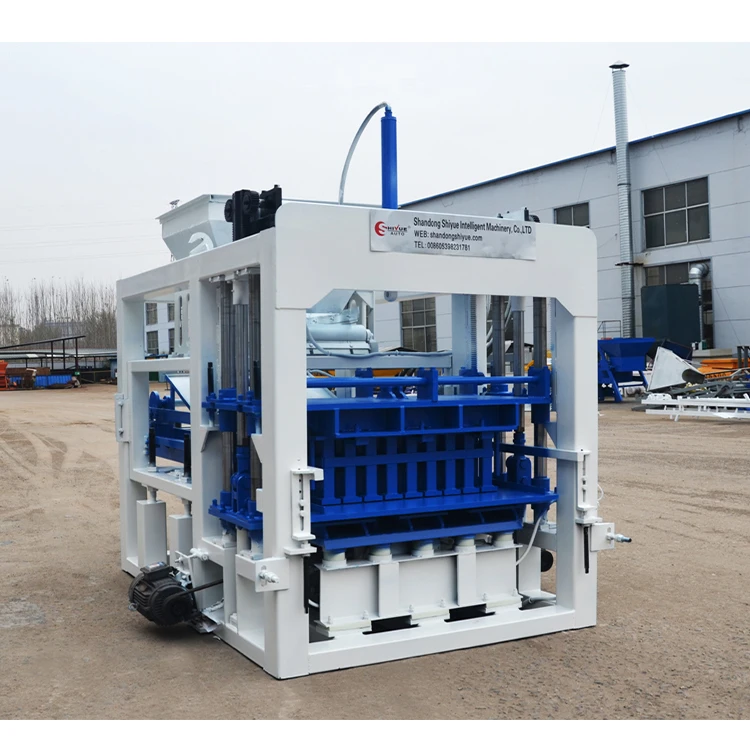
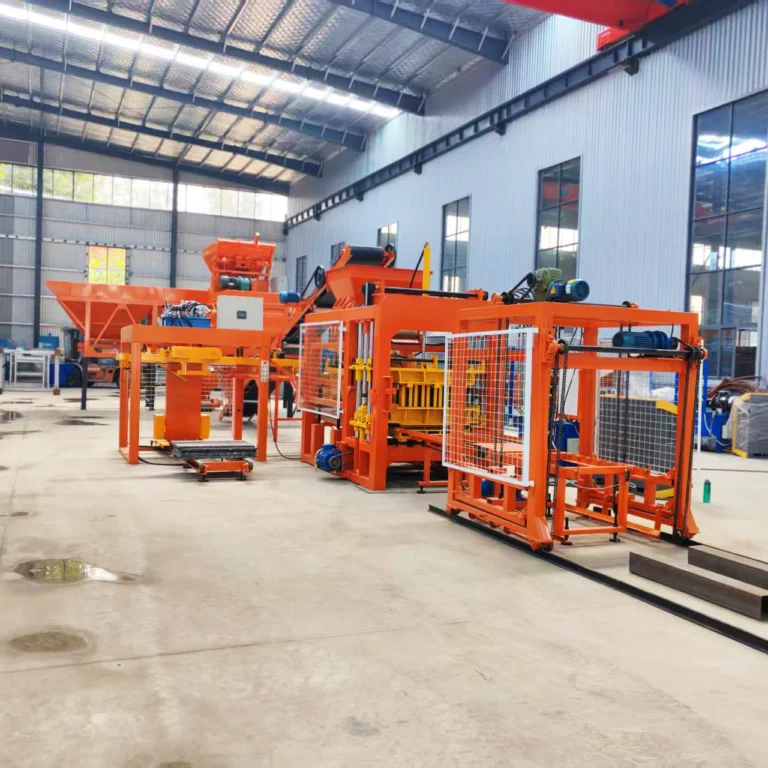 Automatic block machine