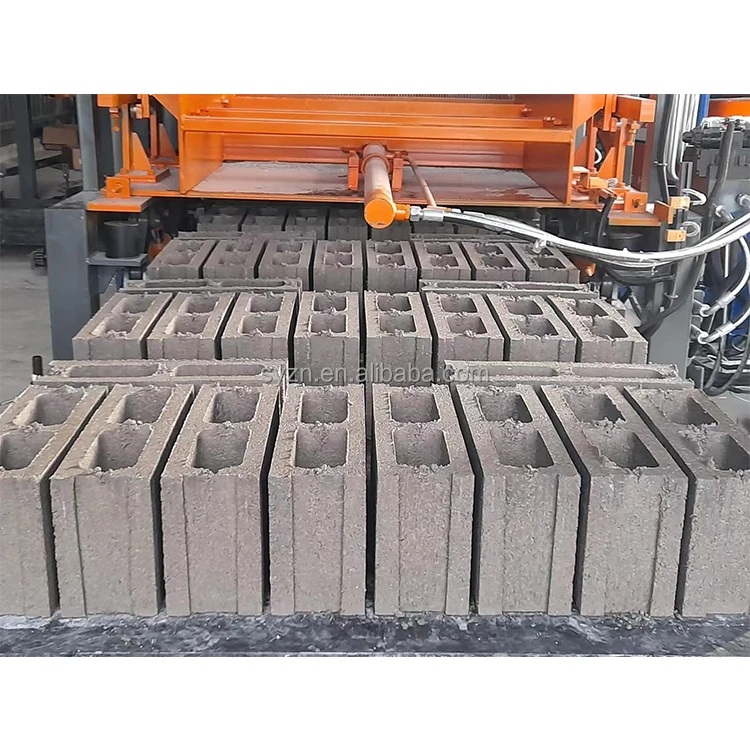
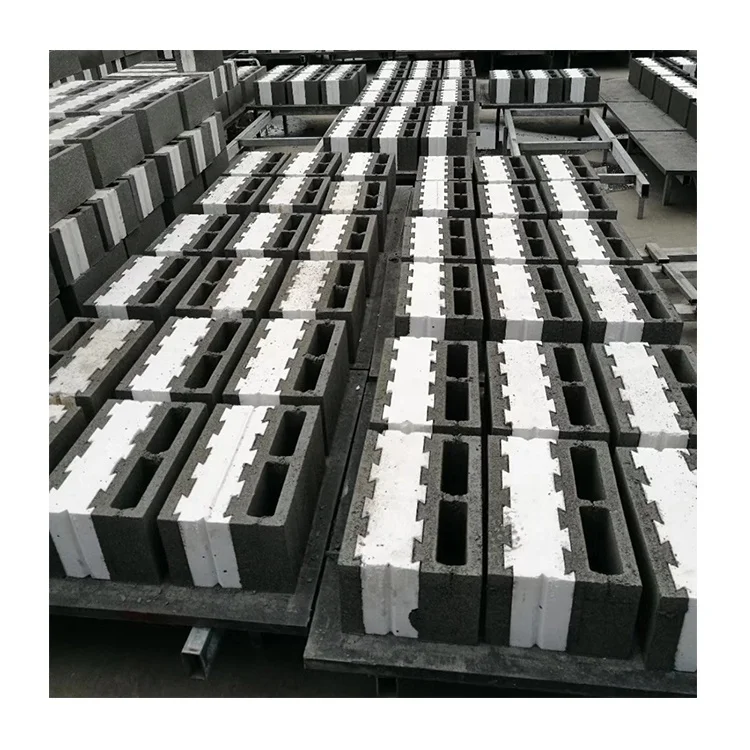
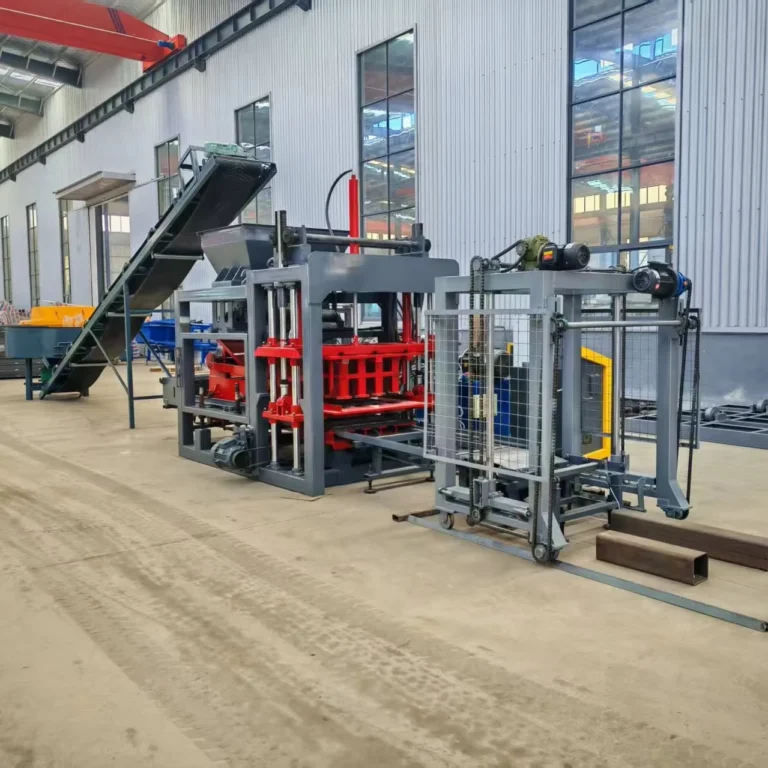
Matched System Specification — Every component from the press to the pallet handling is selected as a complete, tested unit rather than assembled from disconnected suppliers.
Technical Specifications
| Parameter |
Value |
| Model |
QT7-15 |
| Product Type |
Hydraulic Concrete Block Making Machine |
| Pallet Size |
1150×700 mm |
| Vibration Force |
100 kN |
| Vibration Frequency |
0–60 Hz (adjustable) |
| Overall Power |
45 kW |
| Total Mass |
8 T |
| Molding Cycle |
15–20 s (basis to be confirmed per block format) |
| Control System |
PLC with touch screen interface |
| Demolding Method |
Hydraulic |
| Output Capacity (Hollow 400×200×200 mm) |
1,260–1,680 pcs/h based on 7 pcs/mould and 15–20 s cycle |
| Output Capacity (Paver 200×100×60 mm) |
3,888–4,860 pcs/h based on 27 pcs/mould and 20–25 s cycle |
Application Suitability
| Application |
Material or Output |
| Standard hollow block production |
Concrete mixes with local crushed stone or volcanic aggregate |
| Rectangular paving brick production |
High-density mixes requiring platform vibration up to 100 kN |
| Solid block and interlocking brick |
Configurable via mould change within the QT7-15 range |
| On-site contractor production |
Semi-automatic to automatic tiers based on site conditions |
What "1,680 Pieces per Hour" Leaves Out
Real capacity depends on the block format, not just the machine cycle.
A concrete block making machine for sale is often advertised with a single peak number, but that figure assumes a specific mould, material, and block size. The 1,680 pieces per hour rating for the QT7-15 applies only when running 400×200×200 mm hollow blocks with a 15–20 second cycle. If you switch to pavers or a different hollow block size, the hourly output shifts. I have been on sites where buyers were shocked to see their actual daily output fall short because the quotation only listed the best-case scenario. [NEED_CITE: capacity calculation standards for block making machinery]

Locating the QT7-15 in the Output Tier Range
The QT7-15 sits in the mid-to-high automatic tier of the Shiyue block machinery range. It is designed for buyers moving beyond entry-level semi-automatic setups who need consistent daily volume without the capital requirement of a high-capacity fully automatic line. The 1150×700 mm pallet size positions it for plants with moderate curing area space.
Matching Automation Level to Your Plant Footprint
Automation on this concrete block making machine for sale is selectable. The standard configuration includes automatic pallet feeding, hydraulic demolding, and PLC control, but the stacking and curing rack handling can be configured based on your labour availability and site layout. A buyer can start with semi-automatic pallet handling and add automatic stacking later, which is a practical path for a first plant. [NEED_CITE: automation levels in concrete block production]
Why Vibration Force and Mix Design Must Align
The 100 kN platform vibration and 0–60 Hz adjustable frequency are not arbitrary numbers; they must match the buyer’s specific mix design. In Kenya, a client using local volcanic aggregate found that the default vibration settings produced blocks with inconsistent strength. We had to adjust the frequency and hydraulic pressure to match the density and abrasion characteristics of the local stone. A machine configured for a standard river sand mix will not produce the same results with porous volcanic rock.
The Cost of Ignoring Pallet and Curing Logistics
Selecting a machine without confirming pallet size against the existing curing area and forklift capacity leads to immediate operational bottlenecks. The QT7-15 requires 1150×700 mm pallets, and if your curing racks or forklifts are sized for a different dimension, the entire post-press handling process becomes a manual, inefficient task. This mismatch is a frequent source of delay on projects working to tight deadlines. [NEED_CITE: block plant layout and material handling integration]
Why Sourcing From a Single-Focus Supplier Matters
Shiyue focuses exclusively on block machinery, meaning the QT7-15 press, mould, pallet, and handling equipment are specified as one matched system. The configuration is set against your actual mix design and target block format, not a catalogue default. Mould design is provided for the formats your market sells, including custom drawings. The voltage, frequency, and PLC display language are confirmed before production to avoid commissioning delays.
Documentation & Verification
- Line layout and capacity calculation stating the block format assumed for each output figure
- Machine specification sheet confirming vibration force and hydraulic pressure matched to your target block
- Mould drawing and format list with cycle time per format
- Voltage and control language confirmation record before production
- Factory test record on your specific block format before dispatch
Installation, Commissioning & Support
- Foundation plan for the QT7-15’s 8 T mass and 45 kW power requirement
- Electrical schematic and dedicated circuit specification for the PLC cabinet
- Machine dismantling plan for container loading and on-site reassembly
- On-site commissioning and operator training for the touch screen interface
- Wear parts and mould availability list for first replacement cycle
Moving Forward With Your Inquiry
To provide an accurate configuration, please provide your target block format, required daily output, and the type of local aggregate you plan to use. Confirming your local voltage, frequency, and the preferred PLC display language upfront prevents delays. If you have an existing plant, specify the pallet size you currently use and the available curing area footprint.
Frequently Asked Questions
Q: How is the QT7-15’s capacity verified — what block format does each output number assume?
A: Every output figure for the QT7-15 is tied to a specific block size and mould cavity count. For example, 1,260–1,680 pieces per hour applies to 400×200×200 mm hollow blocks (7 per mould, 15–20 s cycle). Paver output is higher because the mould holds 27 pieces. Real daily output depends on the format you produce.
Q: Where does the QT7-15 sit in the full machine range — automatic vs semi-automatic vs mobile tiers?
A: The QT7-15 is a mid-to-high automatic hydraulic press. It sits above entry-level semi-automatic and mobile egg-laying machines in output capacity, but below high-capacity fully automatic lines. It is suited for a first serious plant or an upgrade from manual production.
Q: How is voltage, frequency and PLC language confirmed to match my country’s standard?
A: We confirm voltage, frequency, and PLC display language before production starts. This is a mandatory step in our sales process to ensure the machine arrives ready for commissioning without electrical or interface delays.
Q: What plant footprint and supporting equipment does the QT7-15 require for a complete block production setup?
A: The QT7-15 requires a foundation for its 8 T mass, a 45 kW power supply, and space for the 1150×700 mm pallet circulation, storage hopper, and curing area. The line can be configured with manual or automatic pallet handling and stacking based on your site conditions.

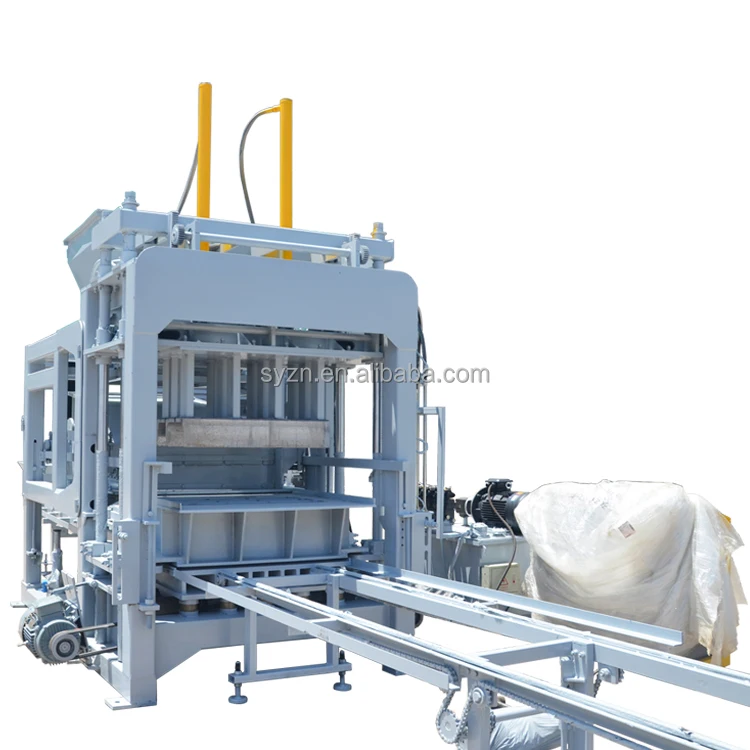
![QTJ4-35 Block Making Machine for Hollow Block – Manufacturer 记录ID 80035 数字之和:8+0+0+3+5=16 第一层:shiyueblockmachine.com → FULL MACHINE RANGE → 全品类目录类角色 → Manufacturer / Factory Supply / Full Range 第三层:16 % 3 = 1 → Factory Supply 第二层:16 % 6 = 4 → [品类词] with [核心配置] – [站点修饰词] Block Making Machine with Belt Conveyor – Factory Supply](https://shiyueblockmachine.com/wp-content/uploads/2026/04/H226555bf51f44687a8dd9cee247a6ab2c.webp) High quality block machine
High quality block machine