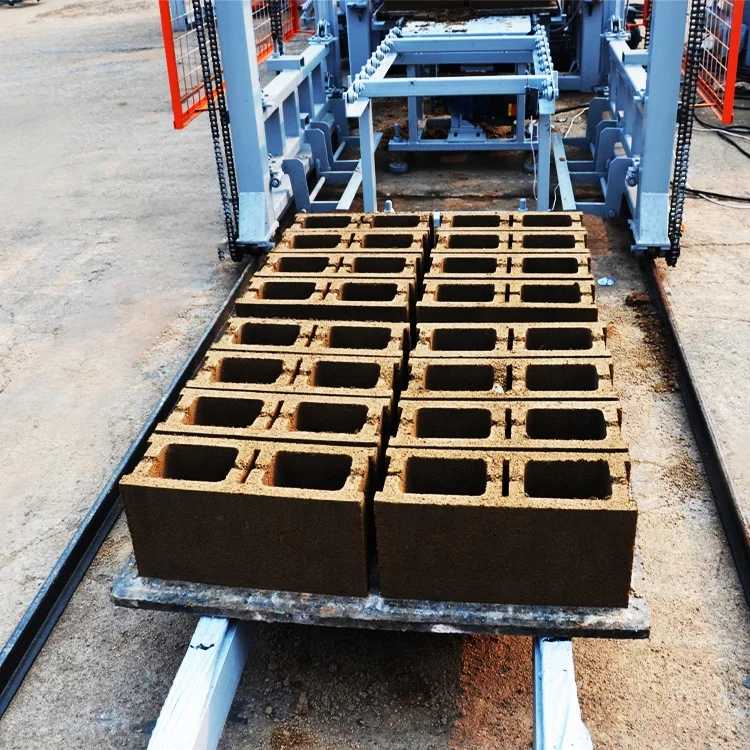
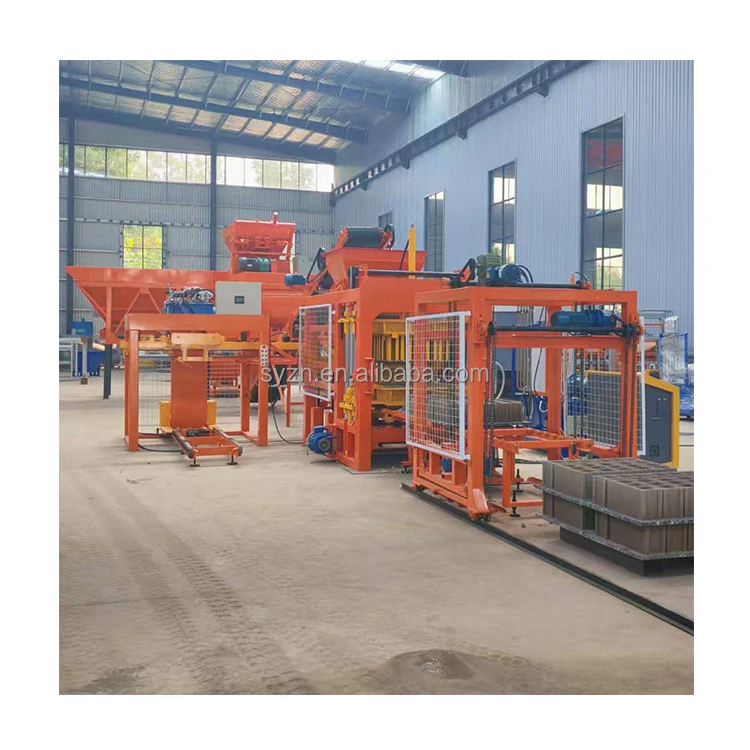
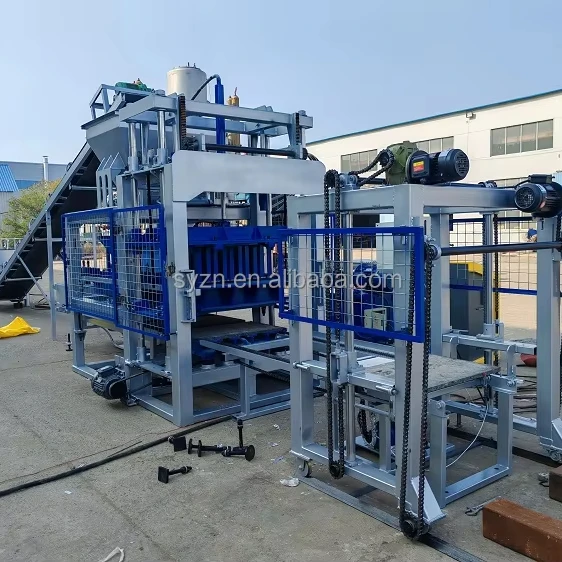
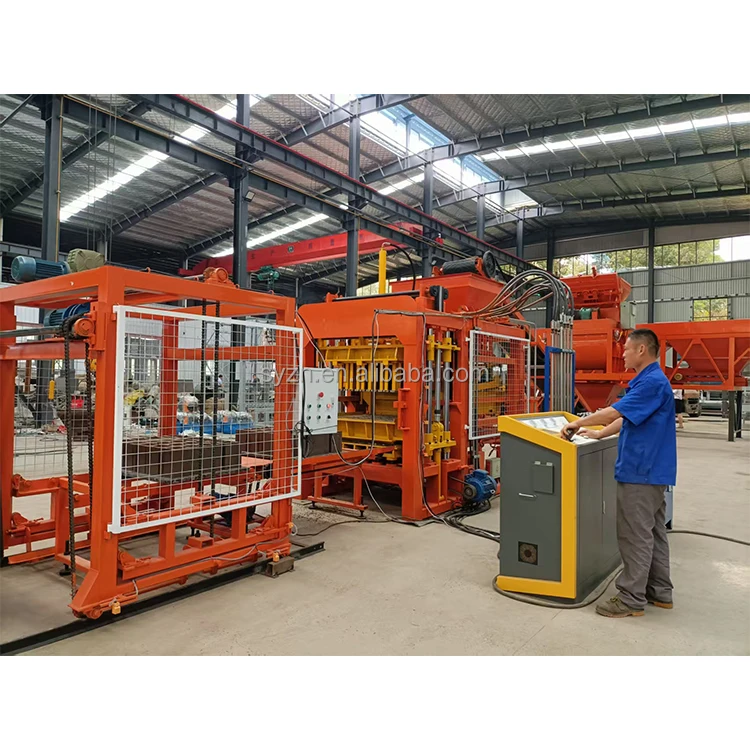
Hydraulic Vibration Moulding — The QT6-15 operates as an automatic hydraulic press within the Shiyue block machine range, covering hollow block, solid brick, and paver formats on a single pallet size to help buyers map capacity against investment before committing to a specific tier.
Technical Specifications
| Parameter |
Value |
| Model |
QT6-15 |
| Product Type |
Hydraulic Concrete Block Making Machine |
| Overall Dimensions (L×W×H) |
8200×1700×2950 mm |
| Total Mass |
7 T |
| Overall Power |
37 kW |
| Vibration Force |
45 kN |
| Vibration Frequency |
0–60 Hz |
| Vibration Form |
Platform Vibration |
| Moulding Mode |
Load automatically, vibration moulding |
| Demolding Method |
Hydraulic |
| Pallet Size |
880×850 mm |
| Molding Cycle |
15–20 s (basis not stated in source — confirm block format / material / thickness) |
| Factory Area |
1200 m² |
| Control System |
PLC with touch screen, fault diagnosis, safe logic interlock |
| Hydraulic System |
Independent integrated hydraulic station |
| Output — Hollow Block 400×200×200 mm |
6 pcs/mould, 1080–1440 pcs/h, 8640–11520 pcs/8hr (based on 15–20 s cycle) |
| Output — Hollow Block 400×150×200 mm |
8 pcs/mould, 1440–1920 pcs/h, 11520–15360 pcs/8hr (based on 15–20 s cycle) |
| Output — Solid Brick 240×115×53 mm |
32 pcs/mould, 5760–7680 pcs/h, 46080–61440 pcs/8hr (based on 15–20 s cycle) |
| Output — Rectangular Paver 200×100×60 mm |
21 pcs/mould, 2160–2880 pcs/h, 17280–23040 pcs/8hr (based on 20–25 s cycle) |
| Output — Zigzag Paver 225×112.5×60 mm |
15 pcs/mould, 2160–2880 pcs/h, 17280–23040 pcs/8hr (based on 20–25 s cycle) |
| Block Compressive Strength |
>15 MPa |
| Raw Material Adaptability |
Waste ash, slag, various aggregates; reduced cement dosage supported |
| Automation Level |
Automatic (PLC controlled with touch screen HMI) |
| Voltage & Frequency |
To be confirmed before production |
| PLC Display Language |
To be confirmed before commissioning |
| Warranty |
1 year for whole machine (excluding spare parts) |
| Certification Scope |
CE (verify per shipment) |
Application Suitability
| Application |
Material or Output |
| Hollow block production for building walls |
Crushed stone, sand, cement, fly ash blends |
| Solid brick manufacturing |
Fine aggregate and cement mixes |
| Rectangular and interlocking paver production |
High-strength aggregate blends for outdoor paving |
| On-site block production for construction contractors |
Local quarry aggregates with site-available cement |
| Format expansion for existing concrete product plants |
Multiple mould sets sharing the 880×850 mm pallet |
What "15–20 Seconds Per Cycle" Actually Means for Your Daily Tonnage
Cycle time only matters when tied to a specific block format and mix design.
A QT6-15 block machine manufacturer will quote a cycle range, but that window assumes a particular block geometry, aggregate gradation, and moisture level. I have stood on curing yards where buyers expected the upper end of the capacity range on every format, only to find that thicker hollow blocks demanded longer vibration to reach full density, stretching the cycle well past the quoted baseline. The pallet leaves the press every 15–20 seconds for standard hollow blocks, yet switching to a 60 mm paver pushes the cycle to 20–25 seconds. Without a capacity calculation that names the exact block format, daily output estimates remain guesswork [NEED_CITE: block cycle time variance by format and aggregate type].

Positioning the QT6-15 Across the Automatic Tier
The QT6-15 occupies the mid-to-high band of Shiyue’s automatic concrete block making machine for sale lineup. Below it sit semi-automatic models that require manual pallet handling and suit lower-volume workshops. Above it, higher-capacity automatic lines add fully automated stacking and cubing for plants running multiple shifts. A buyer surveying options for a first plant can use this model as a reference point: automatic PLC control and hydraulic demolding are already included, while the 1200 m² factory area footprint leaves room to scale pallet circulation and curing racks as demand grows.
How Format Flexibility Shapes the Investment Decision
This platform vibration press accepts mould changes across hollow block, solid brick, and paver formats, all riding on the same 880×850 mm pallet. That shared pallet size means a buyer does not need separate curing racks or forklifts when adding a new product line. The trade-off is that each format carries its own cycle time and output rate, so a plant planning to split production between hollow blocks and pavers must calculate daily capacity per format, not as a blended average. Getting this calculation right before the order prevents the common situation where a distributor promises one output figure and the buyer’s actual product mix delivers another [NEED_CITE: pallet size standardisation and curing area planning].
Reading the Spec Sheet Against Real Production Conditions
The 45 kN vibration force paired with 0–60 Hz adjustable frequency lets the operator tune compaction to local aggregate. Coarse crushed stone with low fines content needs higher amplitude and longer vibration to consolidate, while fine sand-fly ash blends compact faster but risk over-vibration and surface cracking. The independent integrated hydraulic station sits away from the main vibration zone, which protects valve response and seal life during continuous shifts. Hydraulic demolding then strips the block from the mould with controlled pressure, reducing corner damage that mechanical knockout systems tend to cause on thin-wall hollow blocks. The PLC touch screen manages these parameters through recipe storage, so shift operators can recall the correct settings without manual trial and error.
When the Wrong Configuration Follows You to the Curing Yard
Ordering a QT6-15 without confirming pallet size against the buyer’s existing curing racks and forklift capacity leads to pallets that either do not stack in the rack slots or exceed the forklift’s rated load once covered in wet blocks. I have seen plants where the press ran fine but the curing area became the bottleneck because pallets were specified in isolation from the rest of the handling chain. Similarly, specifying a machine for a mix design the buyer cannot source locally — such as a blend requiring graded silica sand when only crusher dust is available — forces either a costly material import or a compromise on block strength that surfaces as customer complaints months later [NEED_CITE: mismatch between specified mix design and locally available aggregates].
Why Buyers Source This Tier from Shiyue
Block machinery is the single product focus here, so the QT6-15 is specified as a matched system of press, mould, pallet, and handling equipment rather than assembled from unrelated suppliers. Configuration is set against the buyer’s actual mix design and local aggregate, not a catalogue default. Mould design covers the formats the buyer’s market actually sells, including custom drawings for non-standard block dimensions. The automation level is selectable — a buyer can start with the automatic PLC platform and later add automatic stacking and cubing as volume justifies the investment. Installation support includes on-site commissioning and operator training so the first production run is not left to guesswork.
Documentation & Verification
- Line layout showing capacity calculation per block format with cycle time stated
- Machine specification sheet confirming voltage, frequency, and PLC display language
- Mould drawing and format list covering every block type in the buyer’s range
- Pallet specification matched to curing rack dimensions and forklift capacity
- Hydraulic and electrical schematic for local maintenance teams
- Factory test record with photographs before container loading
Installation, Commissioning & Support
- Foundation must support the 7 T total mass with level tolerances for the 8200 mm machine length
- 37 kW overall power requires a dedicated circuit with voltage and frequency confirmed before production
- Machine ships dismantled for container loading; reassembly aligns the hydraulic station and vibration platform
- First commissioning sets vibration frequency and hydraulic pressure against the buyer’s actual mix
- PLC touch screen language configured to operator preference before training begins
- Wear parts list and mould inventory supplied for first replacement cycle planning
Before You Request a Quote
A meaningful proposal starts with the block formats your market demands and the daily volume per format, not a single headline number. Share your local aggregate type, cement availability, and the curing space you can allocate so the line layout accounts for pallet circulation and stacking. Confirming your site voltage, frequency, and preferred PLC language at the inquiry stage avoids commissioning delays after the machine arrives.
Frequently Asked Questions
Q: How do I verify the real daily output of the QT6-15?
A: Request a capacity calculation that lists each block format separately with its cycle time and pallet size. A single output number without format context is unreliable. The QT6-15 produces between 8640 and 11520 hollow blocks per eight-hour shift based on a 15–20 second cycle for 400×200×200 mm blocks, but switching to pavers changes that figure entirely.
Q: Where does the QT6-15 sit compared to semi-automatic and mobile models?
A: It sits in the mid-to-high automatic tier with full PLC control and hydraulic demolding. Semi-automatic models below it require manual pallet handling and suit lower investment. Mobile egg-laying machines above or beside it produce on-site without fixed pallets. The right choice depends on whether you need format flexibility and consistent daily volume or occasional on-site production.
Q: What must I confirm about voltage and PLC language before production starts?
A: Your site voltage, frequency, and the language your operators read must be confirmed before the electrical cabinet is wired. The QT6-15 control system supports touch screen operation with fault diagnosis, but the display language is set during assembly. Late confirmation delays commissioning or requires a panel modification on site.
Q: Can I add new block formats after the initial purchase?
A: Yes. The 880×850 mm pallet accommodates multiple mould sets, from 400×200×200 mm hollow blocks to 200×100×60 mm pavers. New moulds are designed to buyer drawings and share the same pallet circulation and curing infrastructure. The PLC stores separate recipes for each format, so changeover involves swapping the mould and recalling the matching cycle parameters.

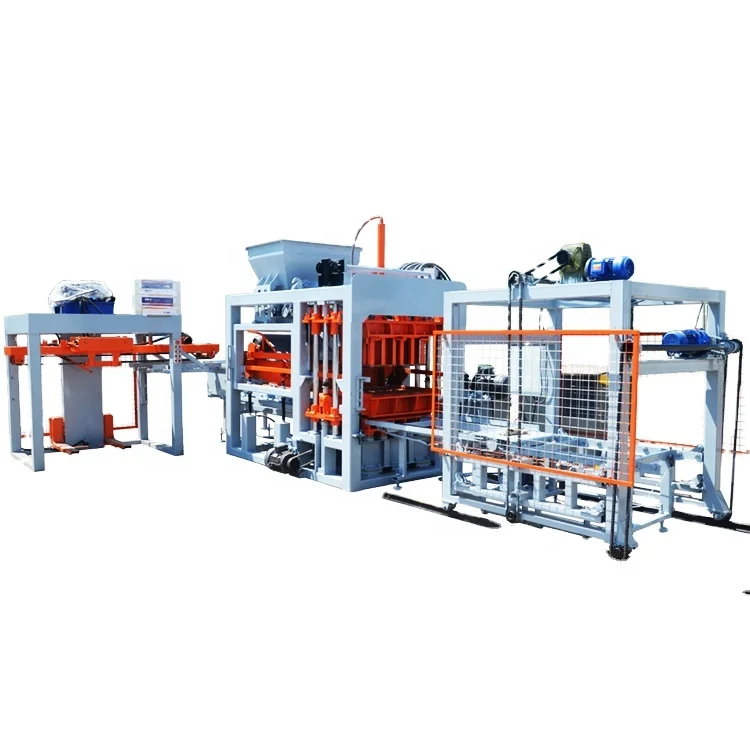
 High quality block machine