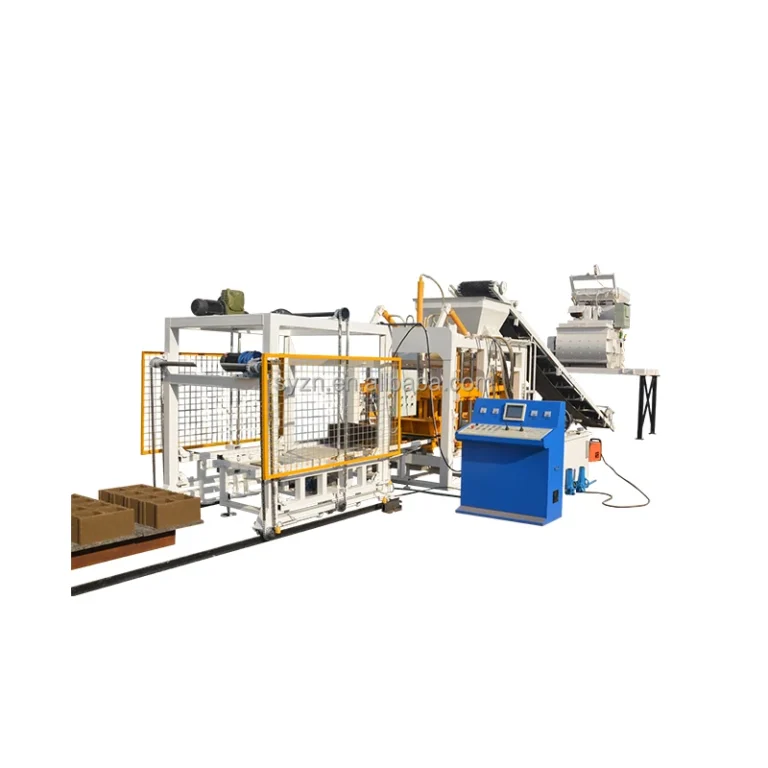
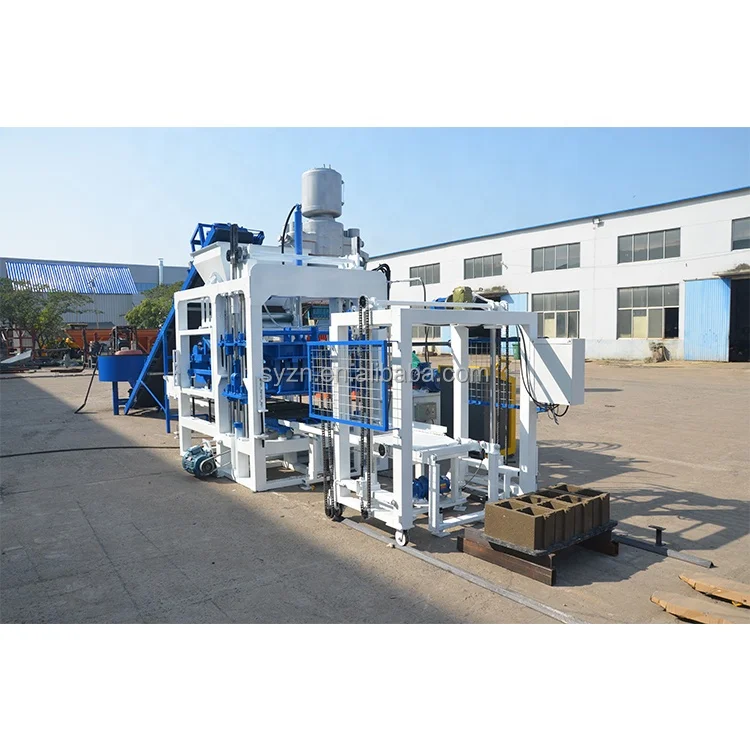
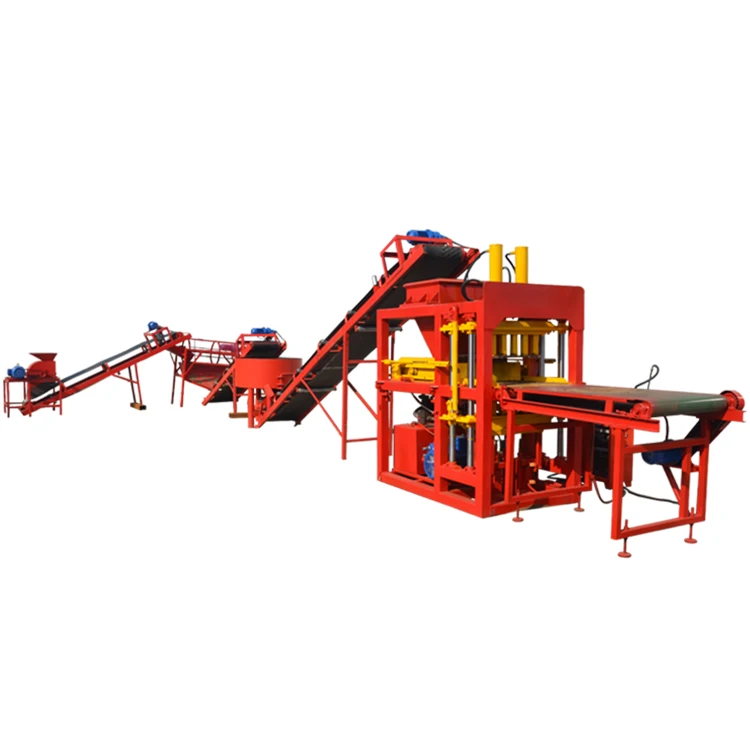
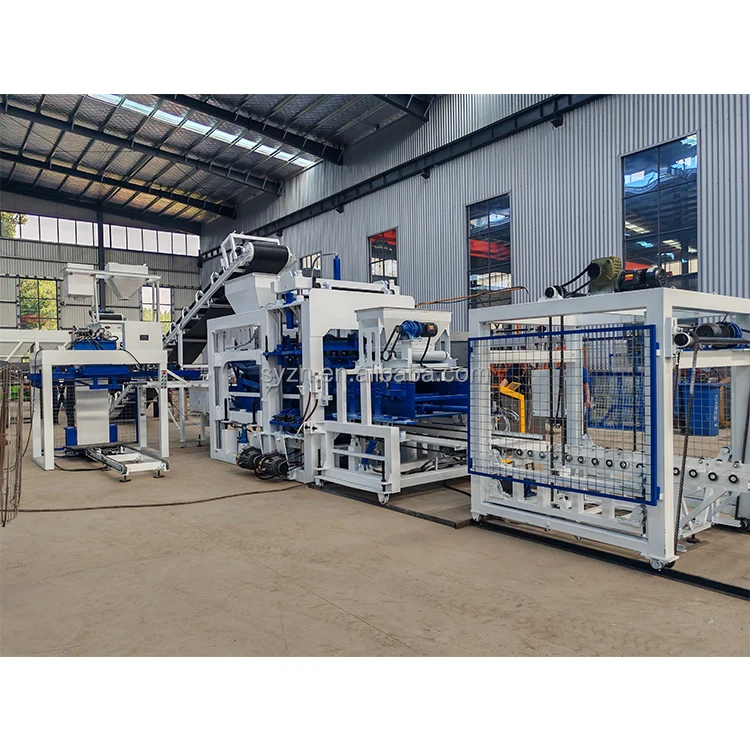
Matched System Sizing — the QT4-18 is positioned within a full range where press, mould, pallet and handling are specified as one coordinated line, so buyers see exactly where this semi-automatic tier fits before committing to a footprint or investment level.
Technical Specifications
| Parameter |
Value |
| Model |
QT4-18 |
| Product Type |
Hydraulic Concrete Block Making Machine |
| Overall Dimensions |
3900 × 1600 × 2300 mm |
| Total Weight |
3 T |
| Rated Power |
24 kW |
| Voltage & Frequency |
Configurable — confirm with buyer before production |
| Control System |
PLC control system |
| Vibration Force |
40–50 kN |
| Molding Cycle |
15–25 s |
| Mixer Model |
JQ350 |
| Pallet Size |
850 × 550 × 25 mm |
| Applied Products |
Paver, solid block, hollow block, curbstone |
| Raw Materials |
Crushed stones, sand, cement, dust, fly ash |
| Output Capacity (Hollow 400×200×200 mm) |
1200–1680 pcs/hr (basis: source value — verify against manufacturer catalog) |
| Output Capacity (Hollow 400×150×200 mm) |
1800–2400 pcs/hr (basis: source value — verify against manufacturer catalog) |
| Output Capacity (Solid 240×115×53 mm) |
3240 pcs/hr (basis: source value — verify against manufacturer catalog) |
| Hydraulic Station |
Included |
| Automation Level |
Semi-automatic (PLC controlled, manual pallet handling) |
| Included Equipment |
Block making machine, hydraulic station, PLC control system, pallet feeder, brick conveyor, block sweeper |
| Free Accessories |
Manual hydraulic trolley, spare parts, tools |
| Mould Change System |
Manual — change time to be confirmed |
| Stacking Method |
To be confirmed with buyer |
| PLC Display Language |
To be confirmed before production |
| Certification |
CE (verify applicability to this model) |
Application Suitability
| Application |
Material or Output |
| Hollow block production for building walls |
Crushed stone, sand, cement, fly ash mixes on 850×550 mm pallets |
| Solid brick manufacturing for masonry |
Cement and dust blends, 240×115×53 mm format |
| Paver production for walkways and yards |
Aggregate-rich mixes with higher cement content |
| Curbstone forming for road and kerb projects |
Dense concrete mixes requiring full hydraulic pressure |
| On-site block production for contractors |
Local aggregates including quarry dust and river sand |
Why Capacity Numbers Mean Nothing Without the Block Format
A rated cycle only becomes real output once the mould, mix and pallet cycle are all accounted for.
When a buyer sees a block machine quoted at several thousand pieces per hour, the missing variable is almost always which block size that figure assumes. I have watched a Ghana project fall nearly thirty percent short of schedule because the local stone powder carried high clay content, lengthening the molding cycle well beyond the catalog number. The QT4-18 block making machine manufacturer specification lists different outputs for 400×200×200 mm hollow blocks, 400×150×200 mm hollow blocks, and 240×115×53 mm solid bricks — and every one of those figures shifts once the buyer’s actual aggregate and moisture content enter the press. [NEED_CITE: effect of aggregate clay content on concrete block cycle time]

Where the QT4-18 Sits Across the Full Range
The QT4-18 occupies the semi-automatic tier in a lineup that stretches from mobile egg-laying units up through high-capacity fully automatic lines with stacking and cubing. Buyers planning a first block plant often start here because the PLC control system and pallet feeder remove the most physically demanding tasks while keeping the initial investment and plant footprint moderate. For a contractor who needs hollow blocks and pavers on a single project site, this tier offers format flexibility through mould swaps without the infrastructure a fully automatic line demands.
Reading the Range Before Committing to a Tier
Choosing a tier is not just about today’s volume — it is about whether the buyer’s site, curing area and forklift can support the pallet flow a larger line generates. The 850×550×25 mm pallet on the QT4-18 was selected so that curing racks and manual hydraulic trolleys stay within practical reach for a semi-automatic operation. A buyer who later needs higher throughput can move to an automatic tier where pallet handling, stacking and cubing are fully mechanized, but that step requires a larger curing yard and different material feed configuration. [NEED_CITE: block plant layout planning for semi-automatic versus automatic lines]
How Vibration Force and Hydraulic Pressure Shape the Block
The 40–50 kN vibration force works together with the hydraulic station to compact the concrete mix inside the mould cavity. Higher vibration alone produces a block that looks dense on the surface but may crumble at the core if hydraulic pressure is insufficient to hold the mix during the cycle. On the QT4-18, the 15–25 second molding cycle gives the vibration and pressure time to work through mixes ranging from fly ash blends to crushed stone aggregates. The JQ350 mixer prepares the batch upstream, and consistent moisture content from that mixer is what allows the press to repeat the same density block after block. Pallet thickness at 25 mm also matters — a thinner pallet flexes under vibration, wasting energy that should be driving aggregate particles together.
What Happens When Configuration Is Skipped
Ordering a QT4-18 without confirming voltage, frequency and PLC display language before production means the machine can sit idle on arrival while an electrician rewires the panel or the operator struggles with an unreadable interface. I have seen commissioning delayed by weeks because the pallet size was chosen without checking the curing racks the buyer already owned. The mould format list is another common gap — a buyer pays for format flexibility but discovers the moulds shipped do not match the block dimensions their local market actually buys. [NEED_CITE: common commissioning delays from unconfirmed voltage and control language]
Why Sourcing the Press as Part of a Matched Line Matters
Block machinery is the single focus here, so the QT4-18 is specified alongside its mould, pallet and handling equipment rather than assembled from separate suppliers. Configuration is set against the buyer’s actual mix design and local aggregate, not pulled from a catalog default. Mould design covers the formats the buyer’s market sells, including custom drawings when standard sizes do not match. The automation level is selectable, so a buyer can begin with the semi-automatic setup and plan an upgrade path. Installation support includes operator training so the crew understands cycle timing, mould change procedure and daily maintenance from the first production run.
Documentation & Verification
- Line layout and capacity calculation stating the block format assumed for each output figure
- Machine specification sheet confirming voltage, frequency and PLC display language
- Mould drawing and format list matched to buyer’s local market block dimensions
- Hydraulic and electrical schematic for on-site troubleshooting
- Factory test record and packing photographs provided before dispatch
- Operation and maintenance manual with wear parts and mould list
Installation, Commissioning & Support
- Foundation pad sized to the 3900×1600 mm footprint with level tolerance for stable vibration transfer
- Dedicated power circuit matching confirmed voltage and frequency for the 24 kW rated load
- Machine arrives with hydraulic station pre-assembled; pallet feeder and brick conveyor aligned on site
- PLC control system powered up and molding cycle tuned to the buyer’s confirmed mix design
- Operator training covers mould change, pallet loading sequence and daily hydraulic checks
- Wear parts list and spare tools shipped with the first container for early replacement needs
What We Need to Size Your Line Correctly
To give you an honest capacity figure rather than a catalog number, share your target block format and dimensions, the aggregate and cement available locally, and your daily output target. Tell us the voltage and frequency at your site, the PLC display language your operators read, and the curing area and forklift you already have so the pallet specification fits your existing setup.
Frequently Asked Questions
Q: How is the QT4-18 positioned within the full machine range?
A: The QT4-18 sits in the semi-automatic tier, above mobile egg-laying machines and below fully automatic lines with stacking and cubing. It includes PLC control, a pallet feeder and brick conveyor, removing the heaviest manual tasks while keeping the plant footprint and investment moderate. Buyers who outgrow this tier can move to a higher-capacity automatic line later.
Q: What block format is assumed in the stated hourly capacity?
A: Each output figure is tied to a specific block size — for example, the hollow block capacity assumes either 400×200×200 mm or 400×150×200 mm formats. Switching to a different mould changes the cycle time and pieces per cycle, so real output shifts accordingly. We calculate daily capacity against your confirmed target format before quotation.
Q: What plant footprint and investment level does the QT4-18 require?
A: The machine itself measures 3900×1600×2300 mm, but the working line includes the JQ350 mixer, pallet feeder, brick conveyor and curing area. Compared to higher-tier automatic lines, the semi-automatic setup needs a smaller curing yard and less infrastructure, making it practical for first-time plants and on-site contractor operations.
Q: Can I start semi-automatic and upgrade to full automation later?
A: Yes. The automation level is selectable, and the QT4-18 can be configured so that pallet handling, stacking and cubing are added as the plant grows. Starting semi-automatic lets a buyer validate the local market and mix design before investing in the additional equipment a fully automatic line requires.
Q: Which voltage and frequency options are available, and how is this confirmed?
A: Voltage and frequency are configurable to match the buyer’s local power supply, and the PLC display language is set before production. We confirm these details during the quotation stage so the electrical panel and control interface are correct when the machine arrives, avoiding commissioning delays.

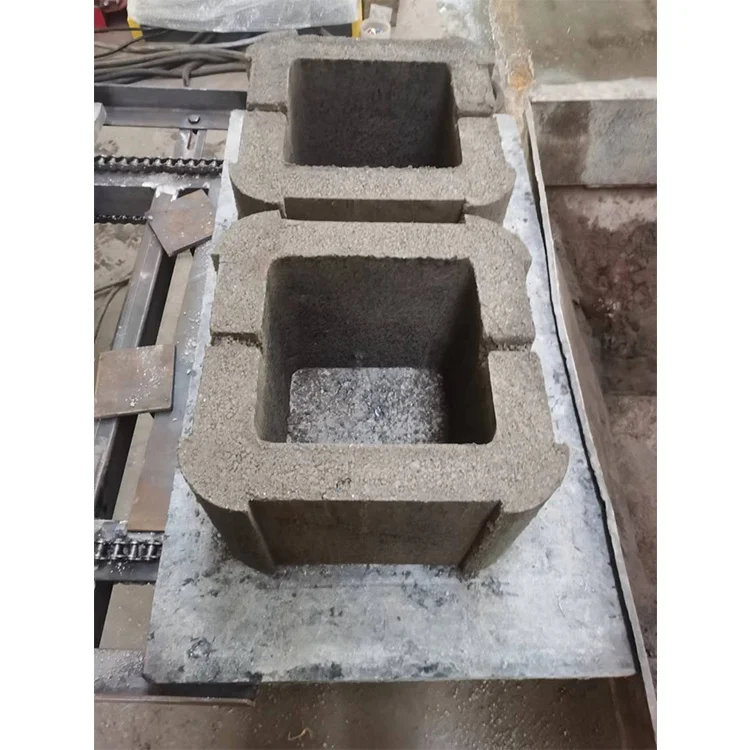
 High quality block machine