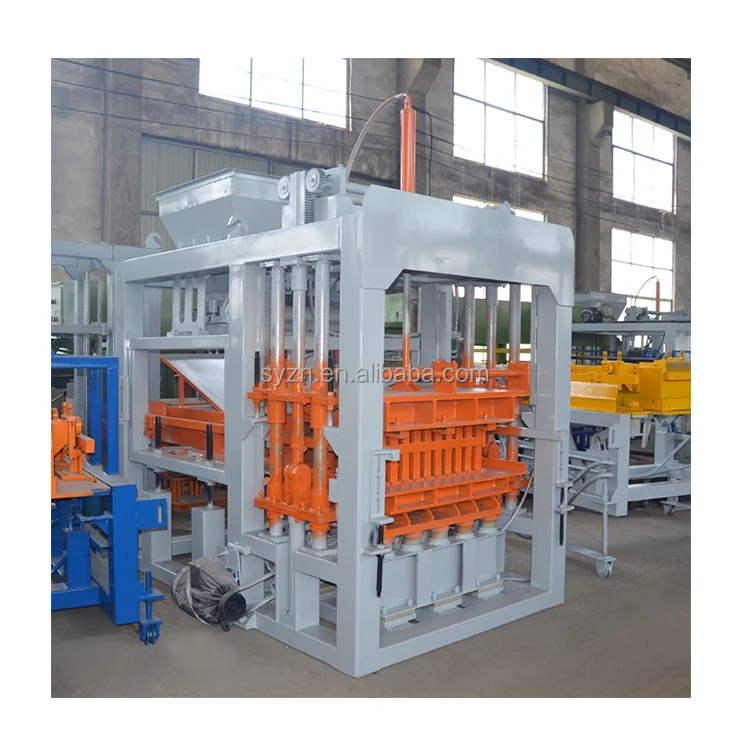
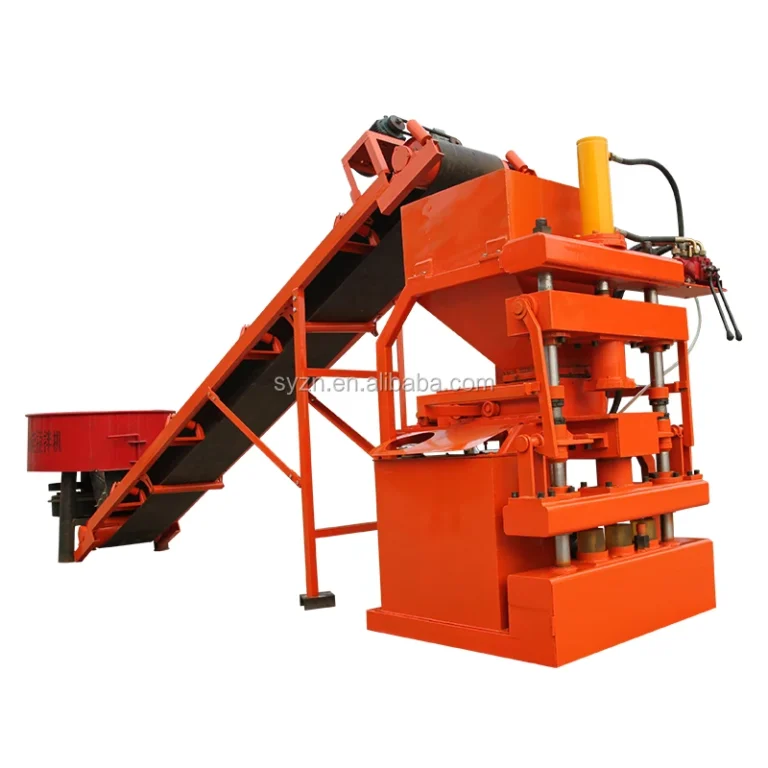
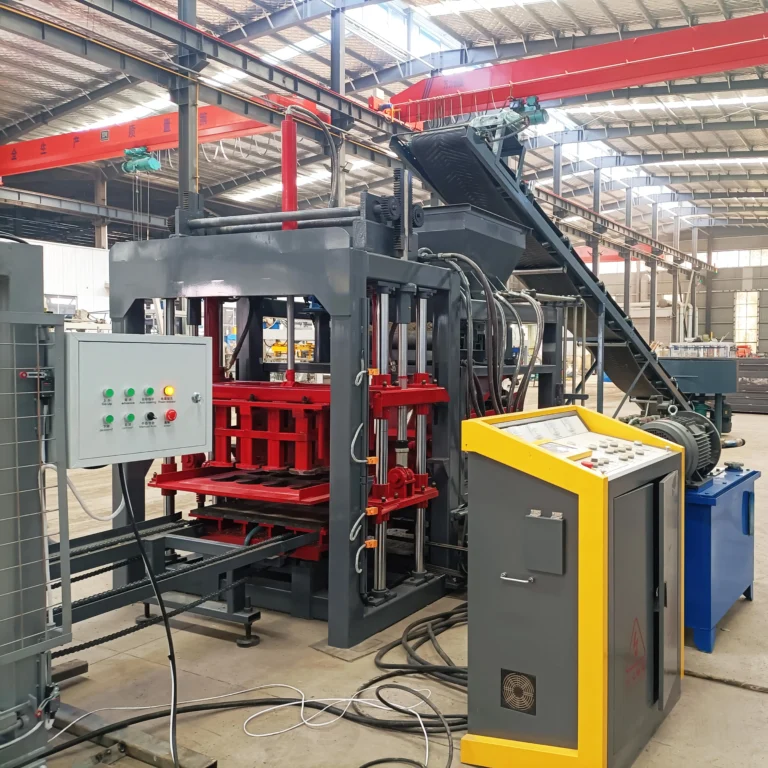
Compact system footprint — the 2-10 clay interlocking brick making machine for sale fits a small workshop layout, letting first-plant buyers start production without committing to a large-scale facility footprint.
Technical Specifications
| Parameter |
Value |
| Model |
2-10 (LY2-10) |
| Product Type |
Clay Interlocking Brick Making Machine |
| Machine Type |
Semi-automatic clay and cement interlocking brick making machine |
| Rated Power |
7.5 kW |
| Molding Cycle |
10 s |
| Output Capacity |
6000 pcs/8hours (basis not stated in source — confirm block format, material, and thickness) |
| Raw Material Compatibility |
Clay, soil, earth, mud, concrete, cement, fly ash |
| Overall Dimensions (L×W×H) |
1300 × 1800 × 2400 mm |
| Mould Format Options |
300×150×100 mm / 250×125×75 mm / 230×220×115 mm |
| Bricks per Mould |
1 (per capacity table) / 2 (stated in description — source conflict, verify with manufacturer) |
| Automation Level |
Semi-automatic |
| Key Features |
Interlocking brick design, multi-material compatibility, compact footprint for mobile or fixed site |
Application Suitability
| Application |
Material or Output |
| On-site project production |
Interlocking clay or soil bricks for immediate construction use |
| First-plant entrepreneur setup |
Low-volume cement and fly ash interlocking bricks for local distribution |
| Small-scale brick plant |
Daily runs of earth and mud bricks using locally sourced aggregates |
| Building material distributor |
Expanding existing inventory with specific interlocking format options |
What "6000 Pieces per Shift" Actually Means for Your Site
Capacity numbers on a clay interlocking brick making machine for sale are meaningless until you lock in the exact block format and material mix.
When I see a spec sheet quoting a flat 6000 pieces per 8-hour shift, my first step is to check the mould size and the bricks-per-mould count. If the machine is pressing one large 300×150×100 mm brick per cycle, the daily volume of finished cubic meters looks very different than if it were pressing two smaller units. Buyers often sign off on a machine based on a headline number, only to find their specific target format yields far less volume than expected. We always calculate the daily output based on your exact target block dimensions and local material density before the order is finalized [NEED_CITE: capacity calculation based on block format and material density].

Placing the 2-10 Within the Block Machine Range
The 2-10 semi-automatic clay interlocking brick making machine for sale occupies the entry-to-mid tier of our equipment lineup. It is designed for buyers who need format flexibility but are not yet ready for the capital outlay and floor space requirements of a fully automatic stacking and cubing line. This tier allows you to establish a market presence and validate local demand for interlocking formats before scaling up.
Matching the Machine to Local Aggregate and Mix
A major advantage of this semi-automatic tier is its ability to handle varied material inputs, from heavy clay and soil to cement and fly ash blends. The 7.5 kW rated power provides sufficient force for standard interlocking formats, but the actual block strength depends on matching the machine’s vibration and pressure to your specific mix design. We configure the machine parameters around the raw materials you can actually source in your region, rather than forcing you to import specific aggregates [NEED_CITE: matching machine vibration to local aggregate properties].
Interpreting the 7.5 kW Motor and 10-Second Cycle
The 7.5 kW motor is a practical choice for a 1300 × 1800 × 2400 mm frame, keeping energy consumption manageable for smaller sites while providing the necessary torque for the 10-second molding cycle. In brick machinery, the cycle time is a balance between the hydraulic press speed and the vibration duration needed to settle the material into the interlocking lugs. A shorter cycle might seem faster, but if the clay or soil mix is not fully compacted, the bricks will crack during curing or handling. This 10-second baseline ensures the interlocking geometry is formed with enough density to survive transport from the press to the curing area.
The Hidden Cost of Ignoring Voltage and Control Language
I once had a fully automatic line stalled for two days in South Asia because the control interface arrived in a language the local operators could not read. With a semi-automatic machine like the 2-10, the electrical and control setup is just as critical. If the voltage and frequency are not confirmed against your local grid standards before production begins, you risk burning out the 7.5 kW motor or damaging the control components upon first startup. Confirming these specifications upfront prevents costly delays and component replacements during the commissioning phase [NEED_CITE: voltage and frequency standards by export market].
Why Source the 2-10 Through This Range
Our approach to the 2-10 clay interlocking brick making machine for sale focuses on treating the press, the moulds, and the pallet handling as a single matched system. We do not rely on catalogue defaults; instead, the configuration is set against your actual mix design and target block format. We provide custom mould design for the specific interlocking profiles your market requires, and because this is a semi-automatic unit, we offer a clear upgrade path within the same system ecosystem when your volume outgrows manual pallet handling.
Documentation & Verification
- Line layout and capacity calculation stating the exact block format assumed.
- Machine specification sheet confirming voltage and frequency for your market.
- Mould drawing and format list matching your target interlocking profile.
- Factory test record demonstrating cycle time on your chosen mix design.
- Operation and maintenance manual with clear semi-automatic control instructions.
Installation, Commissioning & Support
- Foundation requirements for the 1300 × 1800 × 2400 mm frame to ensure level press operation.
- Dedicated power circuit setup for the 7.5 kW motor to prevent voltage drop during the 10-second cycle.
- On-site assembly and leveling of the interlocking mould to ensure precise brick geometry.
- Operator training on semi-automatic material feeding and pallet handling sequences.
- Provision of initial hydraulic and mechanical wear parts specific to the 2-10 configuration.
Next Steps for Machine Selection
To provide an accurate layout and quotation, please share your target interlocking block dimensions, the specific type of clay or soil available on your site, and your local electrical voltage and frequency. We also need to know your available workshop space to determine how manual pallet handling will flow around the 2-10 press.
Frequently Asked Questions
Q: How is the 6000 pcs/8h capacity calculated for the 2-10?
A: This figure is a general estimate. The actual daily output depends entirely on the specific mould format you choose (e.g., 300×150×100 mm vs. 230×220×115 mm) and whether the machine is pressing one or two bricks per cycle. We provide a detailed capacity calculation based on your chosen format before you order.
Q: Where does the 2-10 semi-automatic tier sit compared to fully automatic machines?
A: The 2-10 is an entry-to-mid tier machine designed for lower initial investment and smaller footprints. It requires more manual labor for pallet handling and stacking compared to fully automatic lines, making it ideal for first-plant buyers or on-site project production where space and capital are limited.
Q: What voltage and control language options are available for my market?
A: We configure the electrical system to match your local voltage and frequency standards. For semi-automatic machines, we also confirm the language of any digital displays or control interfaces to ensure your operators can manage the molding cycle and troubleshooting without language barriers.
Q: Can I upgrade the 2-10 to higher automation later?
A: Yes, our machine range is designed with upgrade paths in mind. While the 2-10 is a semi-automatic unit, you can later integrate automatic pallet feeding or stacking systems as your production volume increases and your capital allows for further automation investment.
Q: What plant footprint do I need for the 2-10 and its supporting equipment?
A: The machine itself is compact (1300 × 1800 × 2400 mm), but you must allocate space for raw material storage, a mixer, and a curing area. For semi-automatic setups, you also need clear pathways for manual pallet movement between the press and the drying or stacking zones.

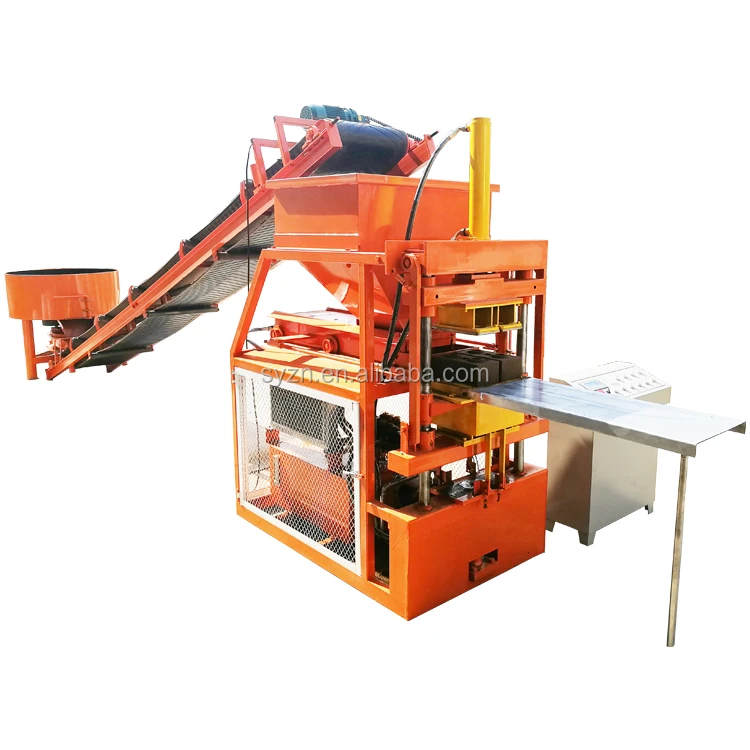
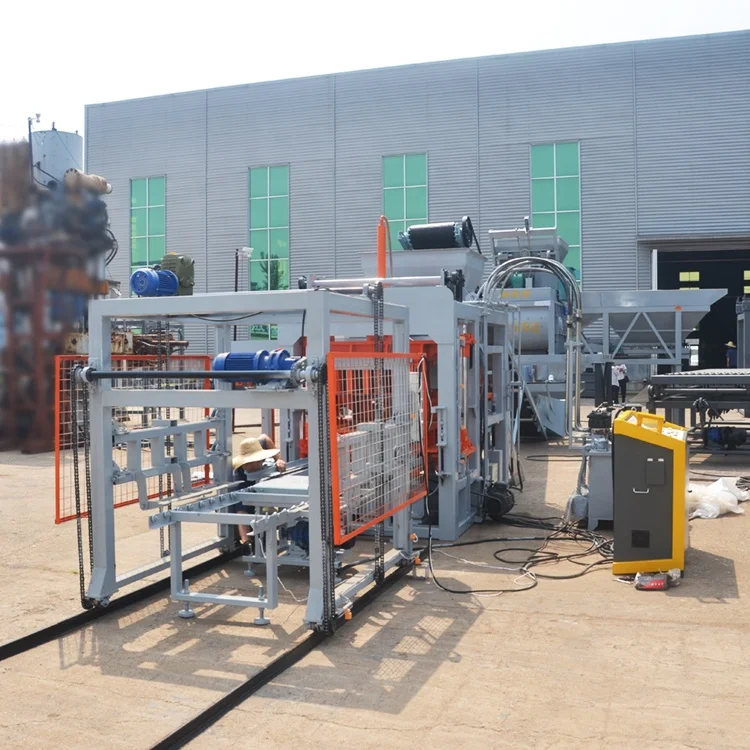 High quality block machine