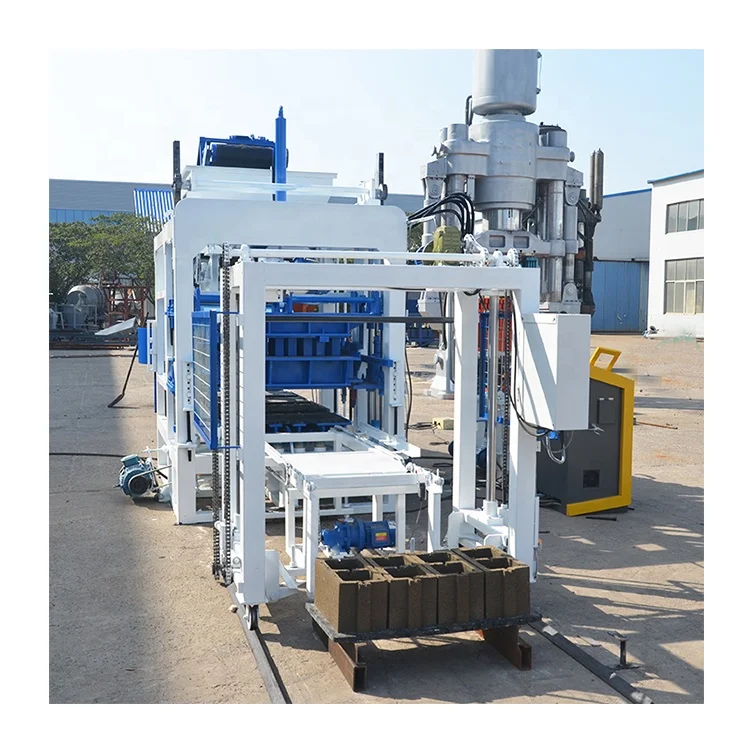
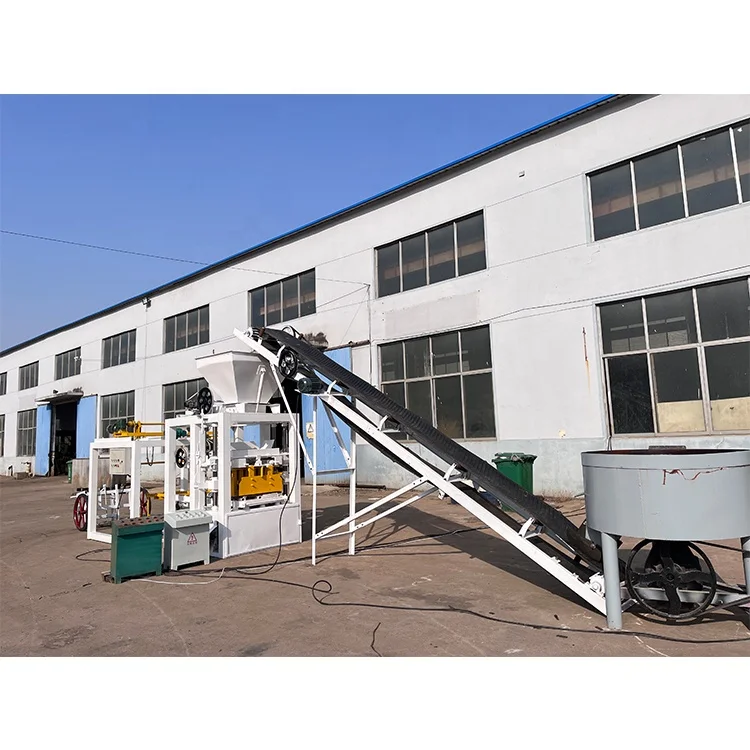
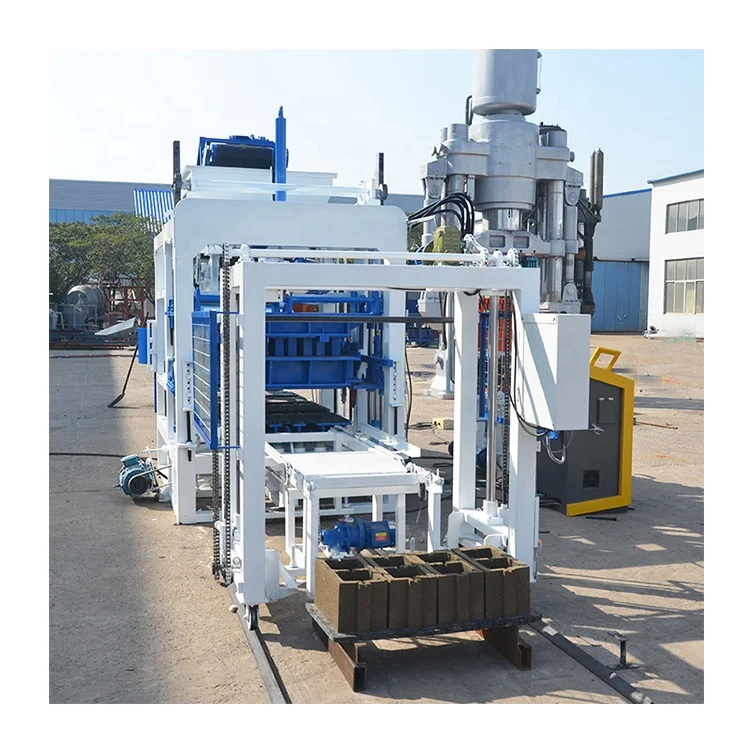
Semi-Automatic Range Positioning — The QTJ4-40 anchors the entry tier of our block machine lineup, configured with matched moulds and pallets so first-time buyers avoid undersized auxiliary equipment.
Technical Specifications
| Parameter |
Value |
| Product Type |
Semi-Automatic Concrete Block Making Machine |
| Model |
QTJ4-40 |
| Rated Power |
10.4 kW |
| Voltage & Frequency |
Configurable to buyer’s local grid (basis to be confirmed) |
| Control System |
Semi-automatic operation with top die push-pull and automatic scraper |
| Overall Dimensions (L×W×H) |
1350 × 1460 × 1800 mm |
| Net Weight |
1 T |
| Molding Cycle |
40 s |
| Output Capacity (Hollow Block 400×200×200 mm, 4 pcs/mould) |
360 pcs/h, 2800 pcs/day (based on 8-hour shift) |
| Output Capacity (Block 400×150×200 mm, 5 pcs/mould) |
450 pcs/h, 3600 pcs/day (based on 8-hour shift) |
| Output Capacity (Interlocking Brick 225×112.5×60 mm, 9 pcs/mould) |
800 pcs/h, 6400 pcs/day (based on 8-hour shift) |
| Pallet Size |
850 × 450 mm |
| Vibration System |
Bed mould vertical vibration combined with upper mould compression vibration |
| Stacking Method |
Manual |
Application Suitability
| Application |
Material or Output |
| Small-scale hollow block plant |
Concrete, sand, cement, fly ash, lime, gypsum |
| On-site construction contracting |
Solid blocks and interlocking bricks for local housing projects |
| Distributor format testing |
Multiple block formats via interchangeable moulds |
| Entrepreneur first plant |
Low-footprint setup with manual pallet handling |
Why Quoted Output Figures Often Miss the Mark
A semi-automatic block machine manufacturer must state the exact block format behind every capacity number, because a single cycle time produces vastly different daily totals depending on mould cavity count and block dimensions.
Buyers routinely see a headline figure like 2800 pieces per day and assume it applies across all formats. In reality, that number assumes a specific 400×200×200mm hollow block at four pieces per mould over an eight-hour shift. Switch to a smaller interlocking brick and the same machine delivers more units per cycle, but the pallet turnover and curing space requirements change entirely. [NEED_CITE: block machine capacity calculation standards by format]

Where the QTJ4-40 Sits in the Range
This model occupies the semi-automatic tier, meaning the operator handles pallet feeding and stacking manually while the press cycle itself runs through a push-pull top die and automatic scraper. The footprint stays compact compared to fully automatic lines, making it suitable for workshops with limited floor space. A semi-automatic block machine manufacturer typically positions this tier for buyers who want lower capital outlay now and the option to add automatic pallet feeders or stackers later.
Output Verified Format by Format
Rather than quoting a single blanket capacity, the QTJ4-40 output is broken down per mould: 360 pieces per hour on 400×200×200mm hollow blocks, 450 per hour on 400×150×200mm solid blocks, and 800 per hour on 225×112.5×60mm interlocking bricks. Each figure assumes a 40-second molding cycle and continuous operation over an eight-hour shift. [NEED_CITE: realistic shift utilization rates in semi-automatic block production] Buyers comparing machines across suppliers should always request the format-specific breakdown before committing to a purchase.
Vibration, Pressure, and Pallet Matching
The QTJ4-40 uses bed mould vertical vibration combined with upper mould compression vibration to compact the mix. This dual-action approach improves block density consistency compared to single-axis vibration, but the result still depends on the buyer’s actual aggregate gradation and cement ratio. The 850 × 450 mm pallet size must align with the curing rack spacing and forklift capacity already in place at the buyer’s site — ordering without checking these dimensions leads to costly rehandling. Mould change is manual, so buyers planning frequent format switches should factor in the labor time per changeover.
The Cost of Skipping Configuration Checks
When a semi-automatic machine ships without confirming local voltage and frequency, commissioning stalls until a transformer or rewiring is arranged on-site. Pallet material chosen without regard to curing humidity leads to warping and uneven block curing. A buyer who never received a format-specific capacity calculation may discover the machine cannot meet daily contract obligations on the block type their market actually demands. [NEED_CITE: common commissioning delays in exported block machinery]
Why Source This Model Through Shiyue
Block machinery is our single focus, so the QTJ4-40 is specified as a matched system — machine, mould, pallet, and manual handling sequence — rather than assembled from separate vendors. Configuration is set against the buyer’s actual mix design and local aggregate, not a catalogue default. Mould design covers the formats the buyer’s market sells, with custom drawings available. Automation level is selectable, so a buyer starting with the QTJ4-40 can add pallet feeders or stacking stations within the same range as production scales. Installation support includes operator training and a wear parts list.
Documentation & Verification
- Line layout and capacity calculation stating the exact block format assumed for each output figure
- Machine specification sheet with voltage and frequency confirmation in writing
- Mould drawing and format list matching the buyer’s local market demand
- Pallet specification confirming size and material against curing area dimensions
- Factory test record on the buyer’s target block format before dispatch
- Operation and maintenance manual with wear parts and mould replacement schedule
Installation, Commissioning & Support
- Foundation pad leveled to 1350 × 1460 mm footprint with anchor bolt provisions
- Dedicated circuit sized for 10.4 kW rated power at confirmed local voltage and frequency
- Machine ships partially assembled; top die and vibration motor require on-site alignment
- First production run supervised to set molding cycle and vibration duration per mix design
- Operator training covers mould change procedure, scraper adjustment, and daily lubrication points
- Wear parts list supplied with recommended reorder intervals for vibration springs and scraper blades
What to Include in Your Inquiry
Send your target block format, daily output requirement, and local raw material description so the capacity calculation reflects your actual production conditions. Confirm your site voltage, frequency, and preferred control panel language to prevent delays during commissioning. If you already have curing racks or forklifts, share their dimensions and load ratings so the pallet specification is matched before production begins.
Frequently Asked Questions
Q: How is the QTJ4-40 output verified per block format, and what shift length is assumed?
A: Each capacity figure is calculated from the 40-second molding cycle multiplied by the pieces per mould for that specific format. The daily totals assume continuous operation over an eight-hour shift. Buyers should request the format-specific breakdown rather than relying on a single headline number, because cavity count and block dimensions change the output significantly.
Q: Where does the QTJ4-40 sit compared to automatic and mobile block machines?
A: The QTJ4-40 occupies the semi-automatic tier with manual pallet handling and stacking, requiring lower capital and a smaller footprint than fully automatic lines. Mobile egg-laying machines sit below it for on-site production without fixed infrastructure. Buyers can start here and add automatic pallet feeders or stackers as volume grows within the same range.
Q: Which block formats can the QTJ4-40 produce, and are custom moulds available?
A: Standard moulds cover 400×200×200mm hollow blocks, 400×150×200mm solid blocks, and 225×112.5×60mm interlocking bricks. Custom moulds can be designed and manufactured to buyer drawings for formats not in the standard range. A format list and mould drawing are provided for verification before production.
Q: What supporting equipment is needed around the QTJ4-40 for a complete line?
A: A basic line requires a mixer for raw material blending, manual or powered pallet feeding, and a curing area with racks sized to the 850 × 450 mm pallet. Stacking and cubing are handled manually at this tier. Buyers planning higher throughput can add automatic pallet feeders and stackers as upgrades within the Shiyue range.
Q: What voltage configurations are available, and is control panel language selectable?
A: Voltage and frequency are configured to the buyer’s local grid specification, confirmed in writing before production. Control panel language is selectable. Buyers should provide exact voltage, frequency, and preferred display language during inquiry to avoid commissioning delays after the machine arrives on-site.

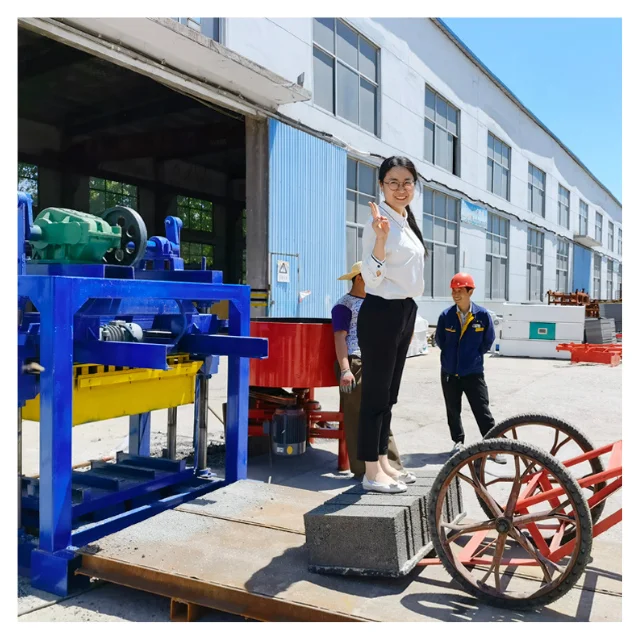
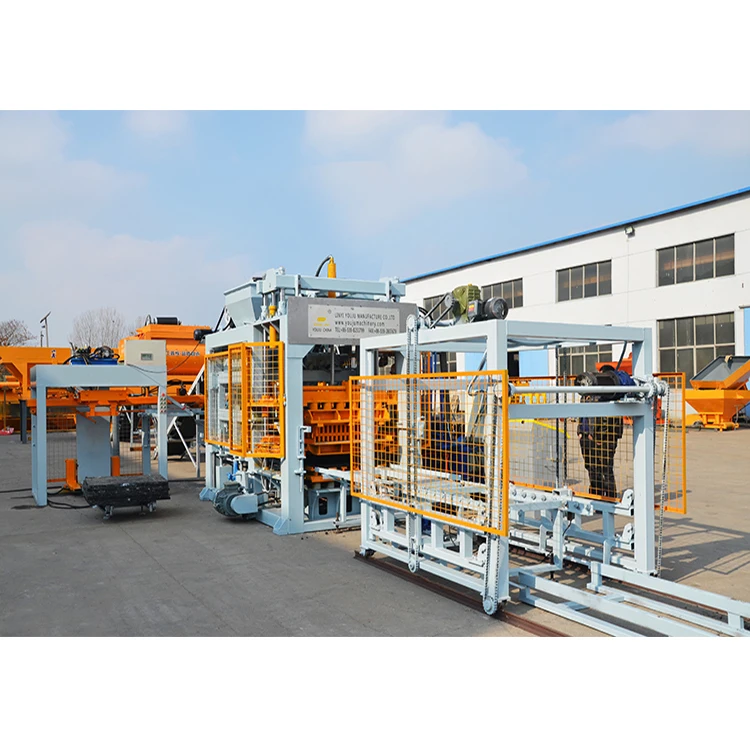 High quality block machine