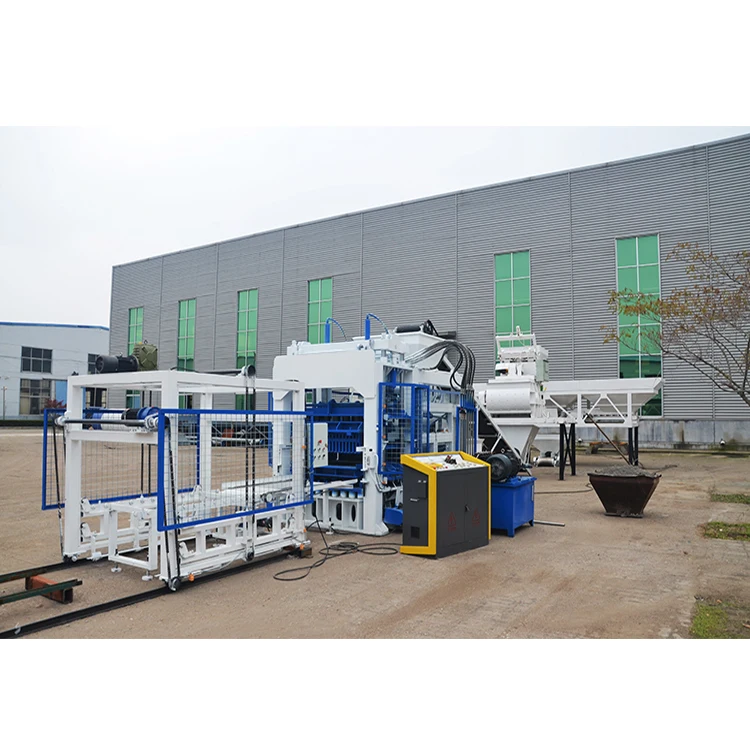
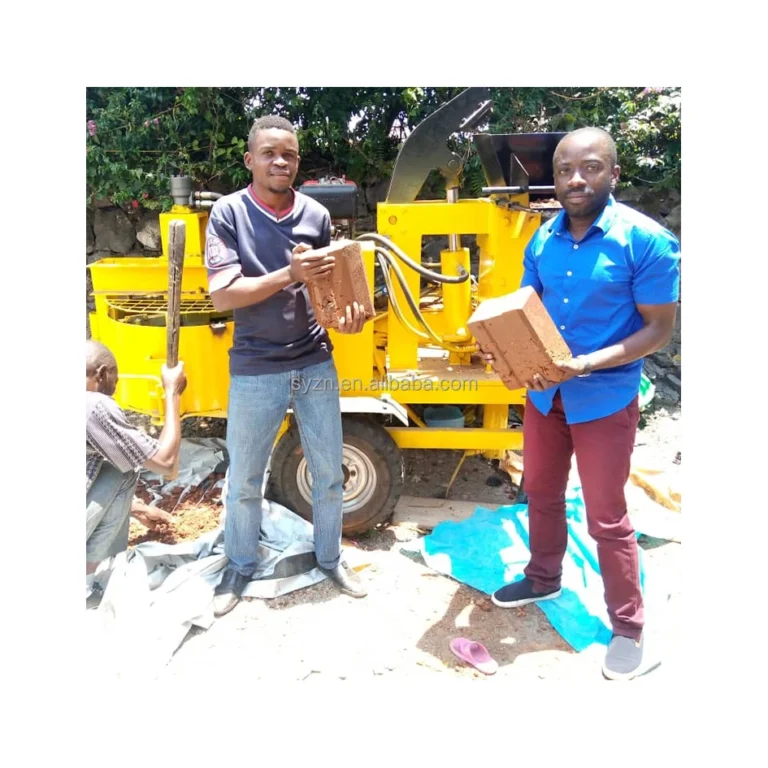
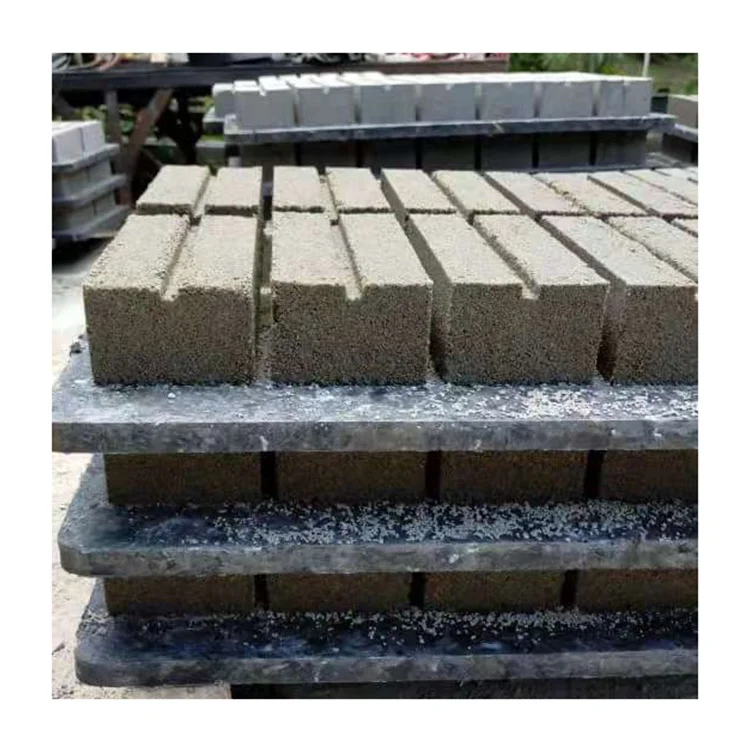
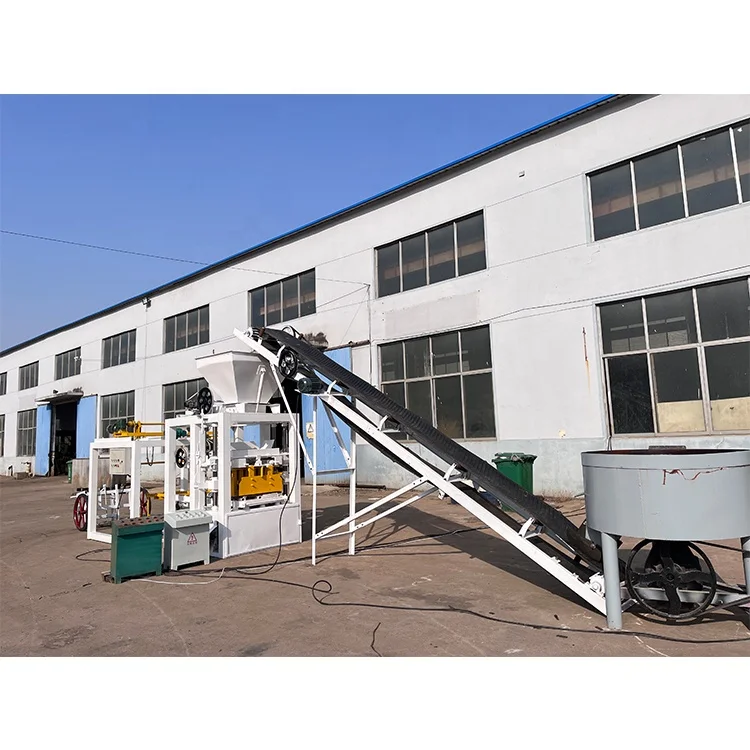
Specified as one matched system — the QTJ4-40 block press, moulds, pallets and supporting equipment are configured together against your actual mix design and target format rather than pulled from separate catalogues.
Technical Specifications
| Parameter |
Value |
| Model |
QTJ4-40 |
| Product Type |
Semi-Automatic Concrete Block Making Machine |
| Rated Power |
10.4 kW |
| Molding Cycle |
40 s |
| Theoretical Output — 400×200×200 mm hollow block (4 pcs/mould) |
360 pcs/h, 2800 pcs/day |
| Theoretical Output — 400×150×200 mm hollow block (5 pcs/mould) |
450 pcs/h, 3600 pcs/day |
| Theoretical Output — 225×112.5×60 mm solid brick (9 pcs/mould) |
800 pcs/h, 6400 pcs/day |
| Vibration System |
Bed mould vertical vibration + upper mould compression vibration |
| Mould Operation |
Top die push and pull with automatic scraper |
| Pallet Size |
850 × 450 mm |
| Overall Dimensions (L×W×H) |
1350 × 1460 × 1800 mm |
| Net Weight |
1 T |
| Automation Level |
Semi-automatic |
| Voltage |
Configured to local voltage and frequency (basis to be confirmed before production) |
| Raw Materials |
Concrete, sand, cement, fly ash, lime, gypsum |
Application Suitability
| Application |
Material or Output |
| First block plant for entrepreneurs |
Hollow and solid blocks from concrete, sand and cement on a limited investment |
| On-site production for construction contractors |
Hollow blocks from locally sourced aggregate without a fixed plant setup |
| Format expansion for small-to-medium plants |
Solid bricks and hollow blocks using fly ash, lime or gypsum-based mixes |
| Rural housing project supply |
Standard hollow blocks at a molding cycle of 40 s with semi-automatic pallet handling |
What "2000–2500 Pieces per 8 Hours" Actually Means on Site
Every capacity figure we quote is tied to a specific block format, mould cavity count and cycle time — never a single headline number.
I spent years on the assembly floor before moving into machine configuration, and one pattern keeps repeating: buyers see a daily output number on a brochure, place the order, and then discover that the figure assumed a solid brick format while their market actually buys 200 mm hollow blocks. The real daily throughput drops noticeably because each hollow block cycle produces fewer pieces and demands longer vibration. With the QTJ4-40, the output ranges from 360 pieces per hour on a 400×200×200 mm hollow block to 800 pieces per hour on a 225×112.5×60 mm solid brick — and every number is stated per format so you can match it to the block your customers actually order. [NEED_CITE: capacity calculation methods for concrete block machines]

Where the QTJ4-40 Sits in the Full Machine Range
This press occupies the entry tier of our block machinery line. It targets buyers who need dependable daily output from a Semi-Automatic Block Making Machine manufacturer without committing to the floor space, power supply and capital outlay of a full automatic line. The semi-automatic configuration means an operator handles pallet loading and removal, keeping the machine compact and the initial investment contained.
As demand grows, the same buyer can move up to higher tiers — adding automatic pallet feeding, stacking and cubing — without replacing the entire plant infrastructure. The QTJ4-40 serves as a practical starting point for entrepreneurs, site contractors and smaller plants that want to prove their market before scaling.
Matching Machine Tier to Your Actual Project Deadline
The decision between semi-automatic and automatic comes down to labour availability and daily volume targets. On a construction site where a contractor needs hollow blocks for their own walls, a full automatic line with stacking and curing rack handling is difficult to justify. The QTJ4-40 fills that gap: it produces blocks at a 40-second molding cycle, fits inside a standard container for shipment, and can be running within days of arrival. [NEED_CITE: typical site conditions for on-site block production]
For buyers serving a growing local market, the machine leaves a clear path upward. Pallet handling and stacking can be added as separate stations later, and the press itself does not need replacement when the line expands around it.
Reading the Specs That Matter on the Shop Floor
The dual vibration system combines bed mould vertical vibration with upper mould compression vibration. This two-direction approach compacts the concrete mix from below and above simultaneously, which matters when your aggregate contains a share of fines or when fly ash replaces part of the cement. Uniform density across the block face reduces breakage during curing and handling.
The pallet size of 850 × 450 mm determines how many blocks sit on each board and what racking or forklift setup you need in the curing yard. Confirming this dimension before you order means your existing curing area and handling equipment stay compatible.
The rated power of 10.4 kW keeps electrical demand within reach of a standard workshop supply, yet the motor sizing still supports the vibration force needed for hollow block compaction. Voltage and frequency are configured to your local grid before production starts — a detail that, if left unconfirmed, delays commissioning by weeks once the machine arrives.
The Hidden Cost of Skipping Configuration Checks
When a Semi-Automatic Block Making Machine manufacturer ships a press without confirming your local aggregate and mix design, the vibration settings calibrated at the factory may not compact your material properly. Blocks leave the mould with inconsistent density, cracking during curing or failing compressive strength tests on site. I have watched an entire first production run get scrapped because the machine was tuned for clean river sand while the buyer’s local quarry supplied high-clay crusher dust.
Pallet handling is another frequent gap. If the quotation does not include pallet specification and curing rack layout, the buyer ends up moving wet blocks by hand — adding labour, increasing breakage, and erasing the cycle time advantage the press was supposed to deliver. [NEED_CITE: common commissioning delays in block machine installations]
Why Buyers Source This Tier From Us
Block machinery is our single focus, so the QTJ4-40 press, its moulds, pallets and any supporting conveyors are specified as one matched system rather than assembled from separate suppliers. Every configuration is set against the buyer’s actual mix design and local aggregate, not a default catalogue setting.
Mould design covers the formats your market sells, including custom drawings when standard cavities do not match. The automation level is selectable — start semi-automatic and add pallet feeding or stacking stations later as volume justifies the investment. Installation and commissioning support includes operator training at your site, and wear parts lists are provided so the first replacement order can be planned before the original parts run out.
Documentation & Verification
- Line layout and capacity calculation stating the block format assumed for each output figure
- Machine specification sheet with vibration and pressure ratings matched to your mix design
- Voltage, frequency and control language confirmation signed off before production begins
- Pallet specification aligned to your curing area dimensions and forklift capacity
- Factory test record on your block format before dispatch
- Wear parts and mould list with part numbers for reordering
Installation, Commissioning & Support
- Foundation pad sized to the 1350 × 1460 mm footprint with anchor bolt template provided
- Dedicated circuit rated for 10.4 kW with voltage and frequency confirmed before wiring
- Machine shipped as a single unit — no major sub-assembly dismantling required on arrival
- First-run parameter tuning against your local aggregate and cement ratio during commissioning
- Operator training covering mould change, scraper adjustment and daily lubrication points
- Wear parts list with hydraulic seals and vibration springs identified for first reorder
Preparing Your Enquiry
To size the QTJ4-40 correctly, share the block formats your market demands along with target daily output per format. Include your local aggregate type and any available mix design data so the vibration and pressure settings can be matched before the machine enters production. Let us know your site voltage, frequency and preferred control display language so the electrical cabinet is wired and labelled for your market on arrival.
Frequently Asked Questions
Q: How is output capacity calculated, and which block format does each figure assume?
A: Every output figure for the QTJ4-40 is stated per specific block format and mould cavity count. For example, 360 pieces per hour applies to a 400×200×200 mm hollow block with 4 cavities, while 800 pieces per hour applies to a 225×112.5×60 mm solid brick with 9 cavities. This lets you compare against the block your market actually orders rather than a single headline number.
Q: Where does the QTJ4-40 sit compared to higher-tier automatic machines in the range?
A: The QTJ4-40 is the entry tier, configured for semi-automatic operation where an operator handles pallet loading and removal. Higher tiers add automatic pallet feeding, stacking and cubing for larger daily volumes. The QTJ4-40 is suited to first plants, on-site contractors and smaller operations that want proven output without the footprint of a full automatic line.
Q: What voltage and frequency configurations are available for my market?
A: The electrical cabinet is configured to your local voltage and frequency before production starts. You confirm the supply specification during the order process, and the control display language is set to match your operators. This avoids commissioning delays that occur when voltage or language is left unspecified until the machine arrives.
Q: What is the plant footprint and what supporting equipment do I need alongside this press?
A: The press itself measures 1350 × 1460 × 1800 mm and weighs 1 T. Alongside it you need a mixer, raw material feeding arrangement, pallet stock matched to the 850 × 450 mm pallet size, and a curing area sized for your daily output. Supporting equipment can be specified as part of the line or sourced locally depending on your existing setup.
Q: Can I move from this semi-automatic machine to a higher automation level later?
A: Yes. The QTJ4-40 is designed so that automatic pallet feeding, stacking and cubing stations can be added to the line as your volume grows. The press itself does not need replacement — the supporting equipment around it is what changes, keeping your initial investment working while the plant scales.

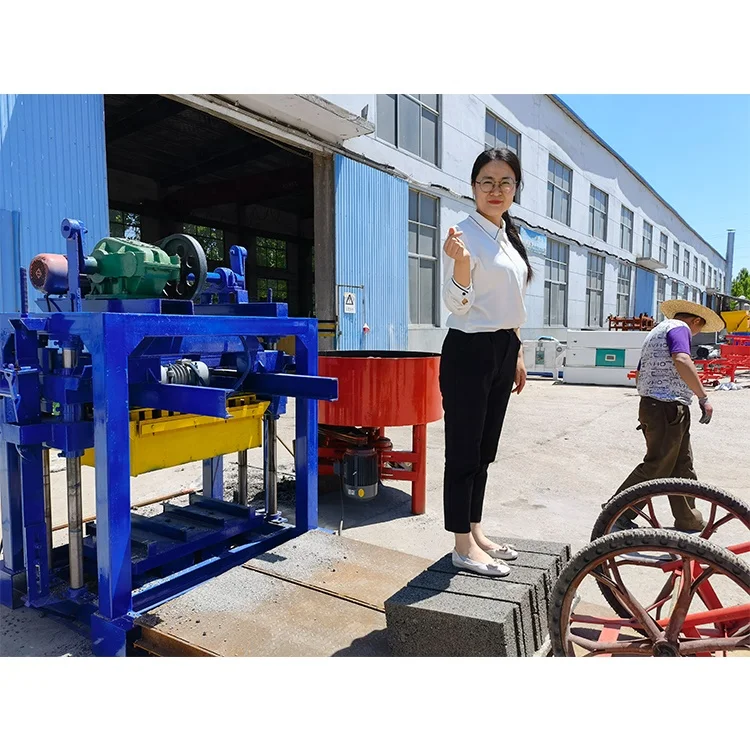
 High quality block machine