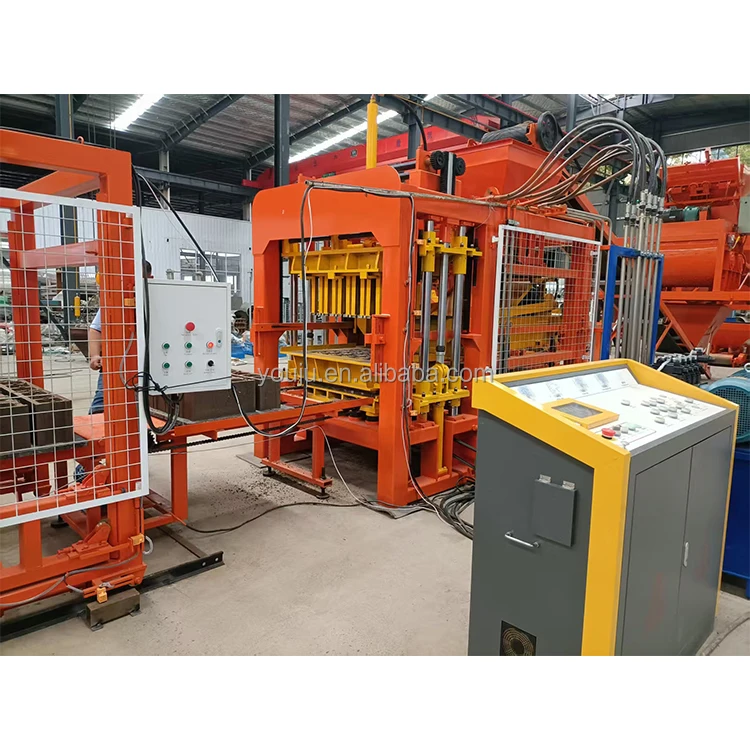
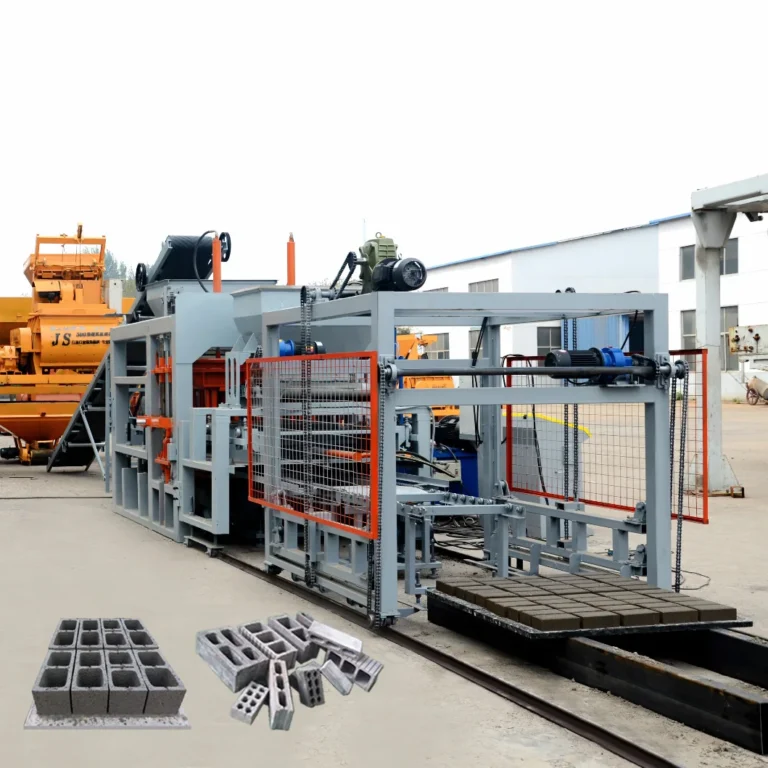
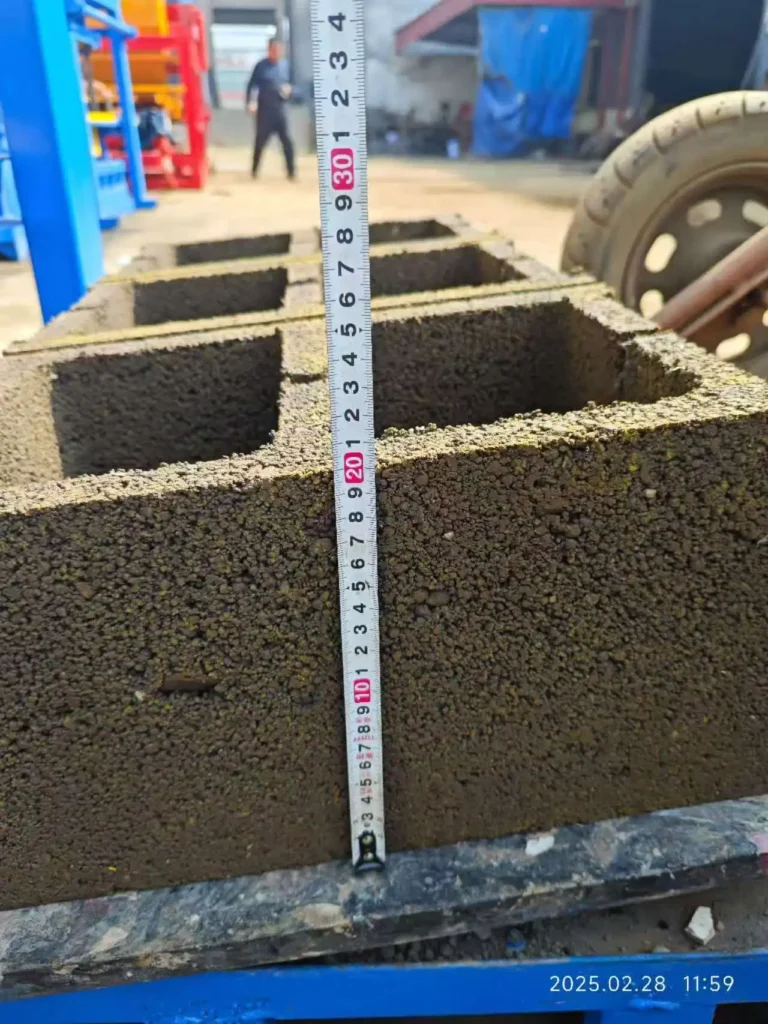
Matched System — the QTJ4-40 is specified as a complete press, mould, and pallet package rather than a standalone machine, so output assumptions align with your shop floor reality from day one.
Technical Specifications
| Parameter |
Value |
| Model |
QTJ4-40 |
| Product Type |
Semi-Automatic Concrete Block Making Machine |
| Overall Dimensions (L×W×H) |
1350×1460×1800 mm |
| Machine Power |
10.4 kW |
| Net Weight |
1.2 T |
| Moulding Cycle |
40 s |
| Vibration System |
Bed mould vertical vibration + upper mould compression vibration |
| Pallet Size |
850×450×20 mm |
| Control System |
Semi-automatic operation (basis not stated in source — confirm PLC / MCC / manual) |
| Voltage & Frequency |
Configurable to local supply (basis to be confirmed) |
| Output Capacity (Hollow Block) |
360 pcs/h, 2880 pcs/day based on 400×200×200 mm, 4 pcs/mould |
| Output Capacity (Hollow Block) |
450 pcs/h, 3600 pcs/day based on 400×150×200 mm, 5 pcs/mould |
| Output Capacity (Solid Brick) |
800 pcs/h, 6400 pcs/day based on 225×112.5×60 mm, 9 pcs/mould |
| Raw Materials |
Concrete, sand, cement, fly ash, lime, gypsum |
| Mould Formats |
Hollow, solid, paver (8", 6", 5", 4", other sizes on request) |
| Automation Level |
Semi-automatic with manual pallet handling |
| Assembly State |
Host machine + mould + pallets (mixer optional) |
Application Suitability
| Application |
Material or Output |
| Small-scale hollow block plant |
400×200×200 mm and 400×150×200 mm hollow blocks from crushed stone, sand, and cement |
| Solid brick production for masonry |
225×112.5×60 mm solid bricks from fly ash, lime, and sand mixes |
| On-site block production for contractors |
Hollow and solid formats produced within a temporary yard using locally sourced aggregate |
| Paving block runs for landscaping projects |
Interlocking pavers in multiple thicknesses from high-density concrete mixes |
| First block plant for entrepreneurs |
Multi-format output covering hollow, solid, and paver within a single machine footprint |
Why "Pieces per Hour" Without a Block Size Is Meaningless
Every capacity figure here is tied to a named block format and mould cavity count — no hidden assumptions.
A Semi-Automatic Block Machine manufacturer will often quote a single hourly number that sounds impressive until you discover it was measured on a small solid brick, not the 8-inch hollow block your market actually buys. I have watched buyers receive machines that fell noticeably short of their production plan simply because the format behind the quoted output was never disclosed. The QTJ4-40 capacity is therefore broken out by format: hollow blocks at 400×200×200 mm yield a different daily total than solid bricks at 225×112.5×60 mm, and both numbers sit in the table above for direct comparison. [NEED_CITE: block format assumptions in capacity quotations across the industry]

Where the QTJ4-40 Sits in the Full Machine Range
The QTJ4-40 occupies the semi-automatic tier, positioned between mobile egg-laying machines at the entry end and fully automatic lines with stacking and cubing at the upper end. For a buyer surveying options, this Semi-Automatic Block Machine manufacturer tier offers a fixed-plant press with consistent vibration and hydraulic output while keeping the capital outlay manageable. The manual pallet handling requirement means labour costs remain a factor, but the machine itself delivers the same moulding cycle and block density as higher tiers on the formats it supports.
Choosing Between Tiers Based on Your Actual Daily Target
A mobile machine suits a contractor who needs blocks on a remote site for a single project and then moves on. The QTJ4-40 suits a buyer who has a permanent yard, a curing area, and a daily volume target that justifies a stationary press but does not yet demand the throughput of a fully automatic line. The upgrade path is worth considering: if your market grows to require continuous pallet feeding and automatic stacking, the next tier up in the range addresses those stations without replacing the core press concept. [NEED_CITE: typical production scaling paths for block plants in emerging markets]
How Vibration and Pressure Interact at This Output Class
The QTJ4-40 uses bed mould vertical vibration combined with upper mould compression vibration, a two-axis system that compacts the mix from below while the head applies downward force. This dual action determines the density and therefore the compressive strength of every block that leaves the machine. The 40-second moulding cycle gives the vibration enough dwell time to settle aggregate particles into a tight matrix, which matters especially when your local sand has a high fines content. Pallet size at 850×450×20 mm must match the curing racks and forklift tines you already own — a mismatch here causes bottlenecks downstream even if the press itself runs smoothly. The 10.4 kW total power draw means a standard industrial circuit can handle the load, but the voltage and frequency must be confirmed against your local grid before the control cabinet is wired.
The Cost of Skipping the Voltage Conversation
I once shipped a semi-automatic press to a West African yard where the local supply was 415V/50Hz, yet the motor and control panel had been configured for 380V. The machine sat idle for three weeks while replacement contactors and a step-down transformer were sourced locally. That delay cost the buyer an entire production month and eroded trust in the equipment before the first block was even made. Confirming voltage, frequency, and control panel language before production starts is a non-negotiable step on every QTJ4-40 order now. [NEED_CITE: voltage and frequency standards by export market]
What You Receive When You Buy Here
The QTJ4-40 is specified as a matched system: host machine, mould, and pallets are sized together so the press cycle, mould cavity count, and pallet dimensions all align. Configuration is set against the mix design and local aggregate you confirm during the inquiry, not pulled from a catalogue default. Mould design covers the hollow, solid, and paver formats your market actually sells, with custom drawings available when a non-standard size is needed. Installation support includes on-site commissioning and operator training so your crew understands mould change procedure and daily maintenance from the first shift. Factory test records and packing photographs are shared before shipment, giving you visibility into what is inside the container before it leaves the yard.
Documentation & Verification
- Line layout drawing stating the QTJ4-40 output per block format and assumed curing arrangement
- Mould drawing and format list confirming cavity count and dimensional tolerances for each block type
- Pallet specification sheet with material grade and thickness matched to 850×450×20 mm size
- Voltage, frequency, and control language confirmation signed off before cabinet wiring
- Factory test record showing the QTJ4-40 running your requested block format before crating
- Packing photographs documenting machine condition and pallet count prior to container loading
Installation, Commissioning & Support
- Foundation pad sized for the 1350×1460 mm footprint with level tolerance and drainage allowance
- Dedicated circuit rated for the 10.4 kW draw at your confirmed voltage and frequency
- Host machine arrives assembled; mould and pallets ship alongside for immediate fit-up
- First-run commissioning includes moulding cycle timing and vibration force adjustment to your mix
- Operator training covers mould change procedure, pallet feeding rhythm, and daily greasing points
- Wear parts list and mould cavity spares identified before shipment for early reorder planning
Before You Request a Quote
To size the QTJ4-40 accurately for your operation, share the block formats your market buys most, the daily volume you need per format, and the local aggregate and cement type available in your area. Confirm your site voltage, frequency, and the language you want on the control panel so the electrical cabinet is built right the first time.
Frequently Asked Questions
Q: How is the daily output of the QTJ4-40 calculated for each block format?
A: Each output figure is tied to a specific block size and mould cavity count. For example, 400×200×200 mm hollow blocks produce 4 pieces per mould at a 40-second cycle, yielding 360 pieces per hour and 2,880 over an 8-hour shift. Different formats have different cavity counts and therefore different daily totals, all listed in the specification table.
Q: Where does the QTJ4-40 sit compared to fully automatic and mobile tiers?
A: The QTJ4-40 is the semi-automatic tier — a stationary press with manual pallet handling. Mobile machines suit temporary on-site work, while fully automatic lines add pallet feeding, stacking, and cubing. The QTJ4-40 gives you a fixed-plant press at a lower investment, with a clear upgrade path when volume grows.
Q: Can I configure the voltage and control language for my country?
A: Yes. Voltage and frequency are confirmed during the inquiry stage and the electrical cabinet is wired accordingly. Control panel language is also locked in before production. This step prevents commissioning delays caused by mismatched power supply or unreadable interface text on arrival.
Q: What plant footprint and utilities does the QTJ4-40 require?
A: The machine itself occupies roughly 1350×1460 mm, but you must also allocate space for raw material storage, a mixer if used, pallet return area, and curing racks. A level concrete pad, a dedicated 10.4 kW circuit at your confirmed voltage, and water access for the mix are the minimum utility requirements before delivery.

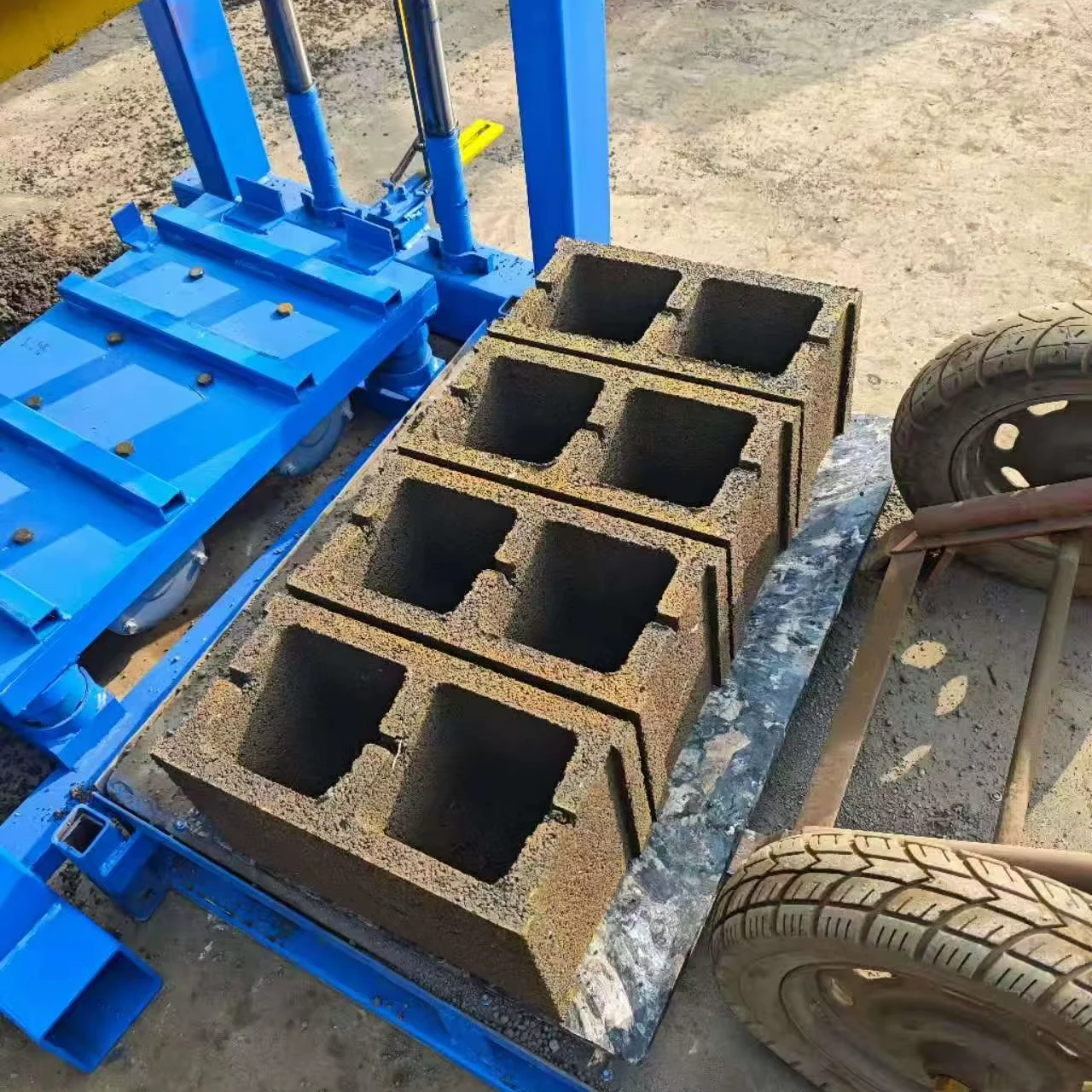
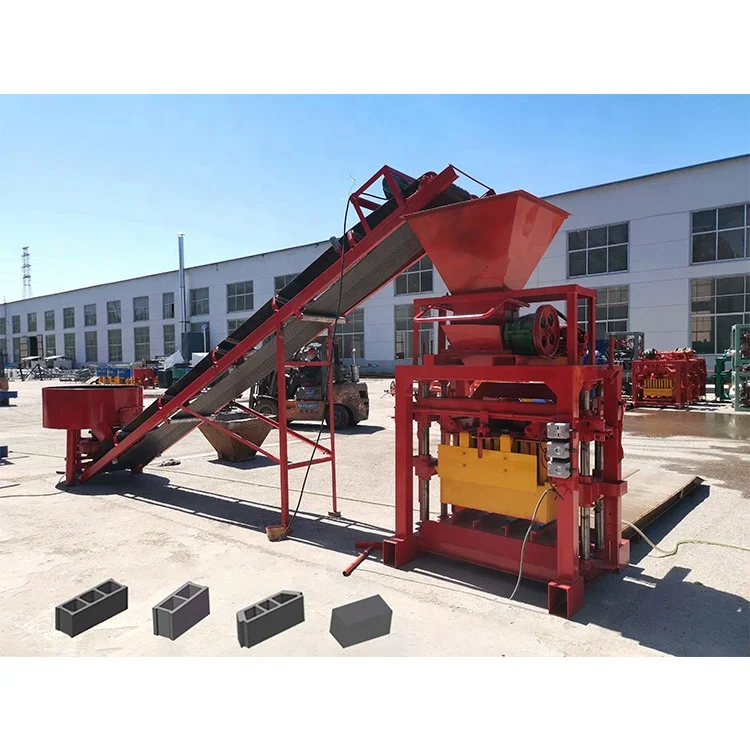 Stationary block machine